Section 01
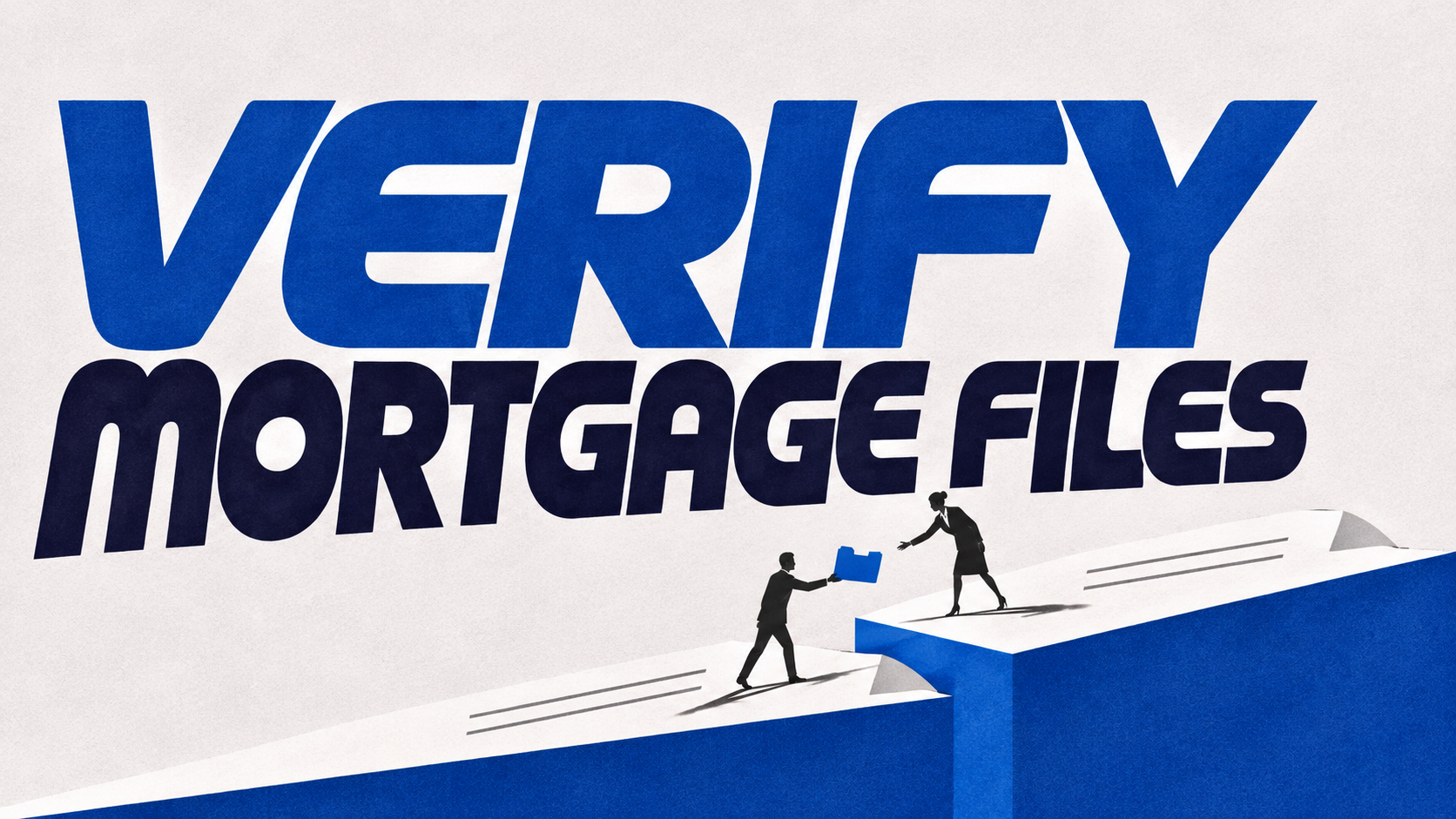
Mortgage document fraud red flags are inconsistencies that require careful verification, not proof that a borrower committed fraud. When a bank statement, pay stub, tax document, identification record, or gift letter looks altered, a loan officer should preserve the original, avoid accusations, request approved verification, and escalate through the company’s underwriting, fraud, or compliance process.
The loan officer’s role is not to conduct a private investigation or repair the document. It is to recognize a concern, protect the integrity of the file, and follow the authorized workflow.
Section 02
The VERIFY Framework
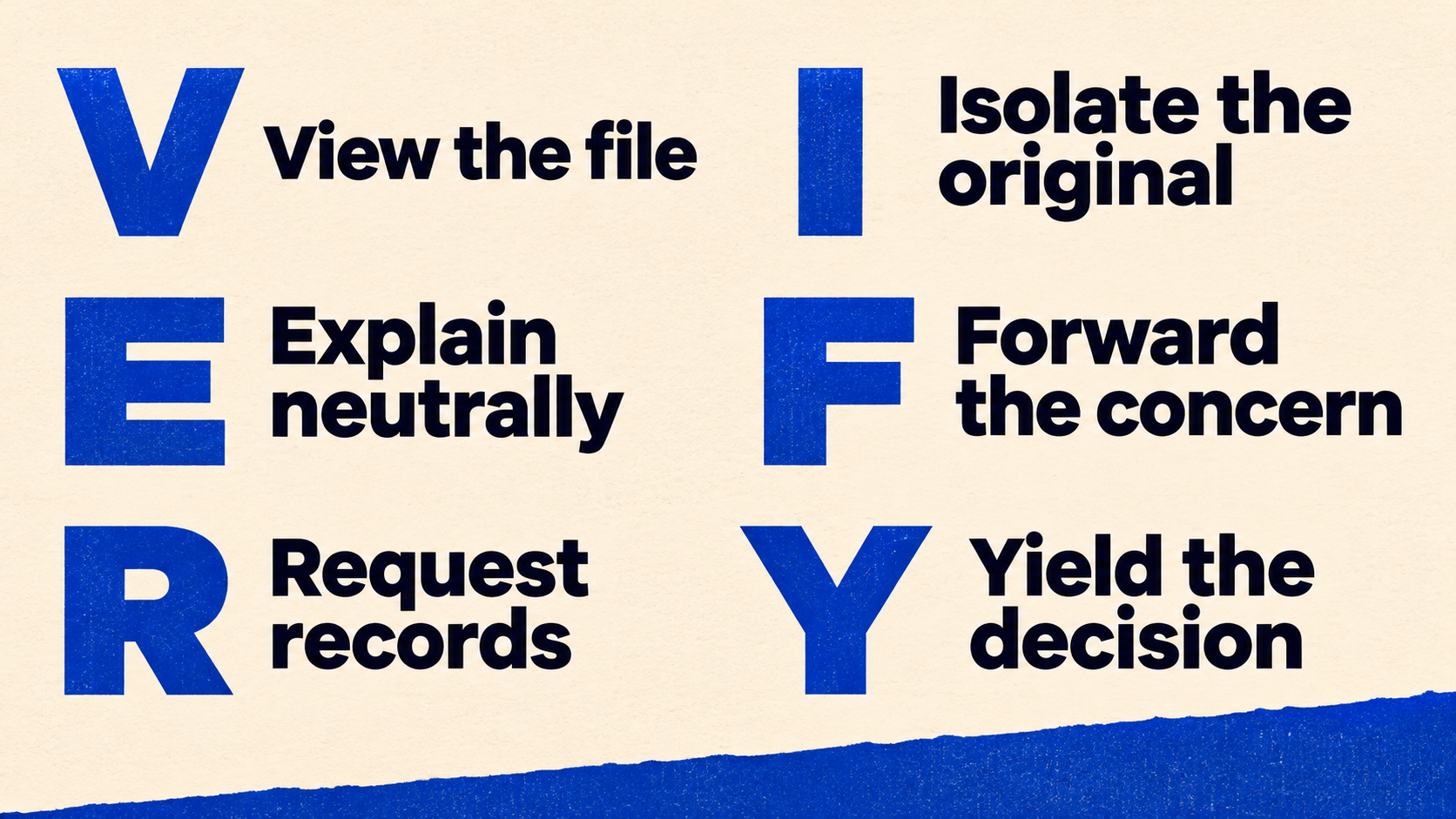
Use six steps:
- V: View the complete file, not one isolated clue
- E: Explain the verification request neutrally
- R: Request records through approved channels
- I: Isolate and preserve original evidence
- F: Forward the concern through escalation procedures
- Y: Yield the decision to authorized reviewers
V: View the Complete File
Fannie Mae describes mortgage fraud as a material misstatement, misrepresentation, or omission relied upon in a mortgage decision. It also warns that one red flag does not automatically establish fraudulent intent.
Possible document concerns include:
- Different fonts or text sizes within one statement
- Misaligned numbers
- Missing pages
- Dates out of sequence
- Balances that do not reconcile
- Pay periods that overlap
- Year-to-date income inconsistent with prior pay stubs
- Employer or bank information that cannot be independently verified
- Statements converted from screenshots without account details
- Metadata inconsistent with the stated source
- Transaction descriptions that appear duplicated or removed
- Tax forms inconsistent with official transcripts or other records
- Gift letters that do not match transfer activity
A legitimate explanation may exist. A bank may change statement formats. Payroll systems may correct prior earnings. A borrower may download a partial view instead of the complete PDF. Verification should test the inconsistency without assuming intent.
E: Explain the Request Neutrally
Do not tell a borrower, “This statement is fake,” based only on appearance.
A neutral request sounds like this:
“The document does not contain enough information for the lender to complete verification. Please provide the complete statement directly from the institution using the approved method, including every page.”
If a specific conflict exists:
“The ending balance on this statement does not reconcile with the transaction activity. Underwriting may need an institution-issued copy or direct verification before the file can move forward.”
Neutral language protects the borrower from an unsupported accusation and keeps the conversation focused on what the file needs.
R: Request Records Through Approved Channels
Depending on company and lender procedures, verification may involve:
- Original institution-generated PDF
- Secure borrower portal upload
- Approved asset-verification service
- Verification of deposit
- Payroll or employment verification provider
- IRS transcript process
- Direct creditor or institution confirmation
- Complete statements showing all pages
- Updated documentation covering the relevant period
Do not ask a borrower to email passwords, share online banking credentials, or send sensitive data through an unapproved personal account.
Wonder Rates explains ordinary asset preparation in How to Prepare Bank Accounts Before Applying for a Mortgage.
I: Isolate and Preserve the Original
Never edit, crop, annotate over, resave, or “clean up” the suspicious file in a way that destroys the original.
Follow company procedures for:
- Preserving the originally received file
- Recording the receipt date and source
- Saving relevant email or portal history
- Limiting access to authorized staff
- Avoiding downloads to personal devices
- Keeping notes factual and professional
- Maintaining version history when corrected documents arrive
A corrected document should be stored as a new item, not substituted in a way that erases what was originally provided.
Do not upload borrower documents to a public AI tool, personal cloud account, unapproved PDF editor, or private messaging platform. Mortgage files contain sensitive personal and financial information.
F: Forward the Concern Through the Escalation Process
The appropriate recipient may be:
- Processor
- Underwriter
- Branch manager
- Quality control
- Fraud investigation team
- Compliance officer
- Information-security team
- Legal counsel
Company policy determines the path. A loan officer should not decide independently whether a Suspicious Activity Report is required. SAR filing and confidentiality involve specialized legal obligations.
FinCEN publishes mortgage-fraud information and SAR guidance for covered financial institutions. Follow company AML and fraud procedures rather than attempting an individual filing or discussing a possible SAR with the borrower.
Y: Yield the Decision to Authorized Reviewers
The underwriter or designated team decides whether the documentation is acceptable, whether more verification is required, and whether the loan can proceed.
The loan officer should not:
- Override a fraud hold
- Coach a borrower to change facts
- Create a replacement explanation
- Break a large deposit into a more convenient story
- Suggest a different employer contact to avoid verification
- Promise that corrected documents will result in approval
- Delete notes or files
- Warn the borrower about a confidential SAR decision
If the file is denied, suspended, or withdrawn, follow the lender and company’s notice and communication procedures.

Section 03
Red Flag 1: Altered Bank Statements
Examples may include:
- Ending balance inconsistent with the ledger
- Missing transaction pages
- Deposits unsupported by account history
- Fonts or spacing that change around balances
- Institution branding that does not match current statements
- Account ownership inconsistent with the application
- Screenshots presented instead of full statements
The correct response is not to recalculate the statement manually and declare it valid. Request an approved source document or direct verification.
An unexplained large deposit is not automatically fraud. It may come from another account, an asset sale, a gift, payroll, or another eligible source. The lender needs a traceable paper trail.

Section 04
Red Flag 2: Pay Stubs That Do Not Reconcile
Possible inconsistencies include:
- Year-to-date earnings do not match pay frequency
- Tax withholding appears mathematically unusual
- Employer cannot be independently contacted
- Pay dates overlap
- Gross and net figures do not calculate correctly
- Income differs materially from the application or verification
The lender may use a third-party verification, contact an independently verified employer number, or request additional records. Do not use only the phone number printed on the questionable document without following verification procedures.
Section 05
Red Flag 3: Tax Documents That Conflict With Transcripts
A borrower-provided return may differ from a transcript because of an amended return, processing delay, identity-theft issue, or an altered document.
The loan team should document the difference and use the approved transcript or tax-verification process. A loan officer should not provide tax advice or tell the borrower how to amend a return to qualify.
Section 06
Red Flag 4: Gift Funds Without a Matching Transfer
A gift letter may name one donor while the deposit comes from another account. The stated amount may not match the transfer, or the donor’s capacity may be unclear.
Request the documents required by the program. Do not rewrite the gift letter or tell parties to relabel borrowed funds as a gift.
Review gift-fund documentation requirements for the ordinary process.
Section 07
Red Flag 5: Digital Documents With Strange Metadata
Metadata, document properties, and visual anomalies can support further review, but they should not be treated as conclusive on their own. Legitimate documents can be processed through portals, scanners, payroll systems, and accessibility tools.
AI or fraud-detection software can flag inconsistencies. A human and approved verification process must interpret the result.
Wonder Rates discusses the limitations in AI Mortgage Document Review: What AI Can and Cannot Do.
Section 08
A Practical Escalation Record
Keep notes factual:
| Record | Appropriate example |
|---|---|
| Observation | “Page 2 is missing; ending balance cannot be reconciled.” |
| Request | “Requested complete institution-generated statement through secure portal.” |
| Response | “Borrower uploaded a four-page PDF on November 9.” |
| Escalation | “Forwarded both versions to underwriting and fraud review.” |
| Status | “Pending authorized review; no conclusion communicated.” |
Avoid notes such as “Borrower is lying” unless an authorized finding and documentation support the statement and company policy directs that wording.
Section 09
Manager Checklist for Building the Process
- Define who receives suspected-document escalations.
- Establish secure upload and preservation procedures.
- Train staff on neutral borrower communication.
- Restrict personal email, devices, and unapproved AI tools.
- Maintain approved verification vendors.
- Document confidentiality requirements.
- Define after-hours coverage for urgent purchase files.
- Audit whether staff replace or delete original documents.
- Include fair-lending review so similarly situated borrowers receive consistent verification.
- Refresh training as fraud patterns and technology change.
The Wonder Rates guides to mortgage file preparation and mortgage underwriting red flags provide related workflows.
Section 10
Frequently Asked Questions
Does one altered-looking number prove mortgage fraud?
No. It is a reason to verify. Formatting issues, incomplete downloads, and institutional corrections can have legitimate explanations.
Should a loan officer confront the borrower?
The loan officer should request acceptable documentation neutrally and escalate under company procedures, not make an unsupported accusation.
Can a loan officer fix a bank statement for the borrower?
No. The borrower should obtain an accurate record from the institution. Editing a financial document can compromise the file.
Can AI determine that a document is fraudulent?
AI may flag anomalies, but the result needs approved verification and human review. Do not rely on a single automated score as proof.
Who decides whether a SAR is filed?
The company’s authorized AML or compliance function handles SAR obligations. Loan officers should follow escalation procedures and maintain required confidentiality.
Section 11
Protect the File Without Prejudging the Borrower
The strongest fraud-control process is consistent, evidence-based, privacy-conscious, and neutral. Identify the inconsistency, obtain reliable verification, preserve the record, and let authorized reviewers decide.
Loan officers interested in Wonder Rates compliance and career resources can explore Wonder Rates loan officer training.
Duc Pham, Mortgage Broker | NMLS# 844897
Wonder Rates, Inc. | NMLS# 1518655
Equal Housing Lender.
AZ, CA, CO, FL, GA, LA, MI, OK, PA, SC, TX, VA, WA, OH, AL, OR, NC
This article is for mortgage-professional education only and is not legal advice. Follow company fraud, AML, SAR, privacy, information-security, fair-lending, underwriting, and document-retention procedures. A red flag does not by itself prove fraud. Do not disclose confidential SAR information or upload borrower data to unapproved systems.