
Section 01
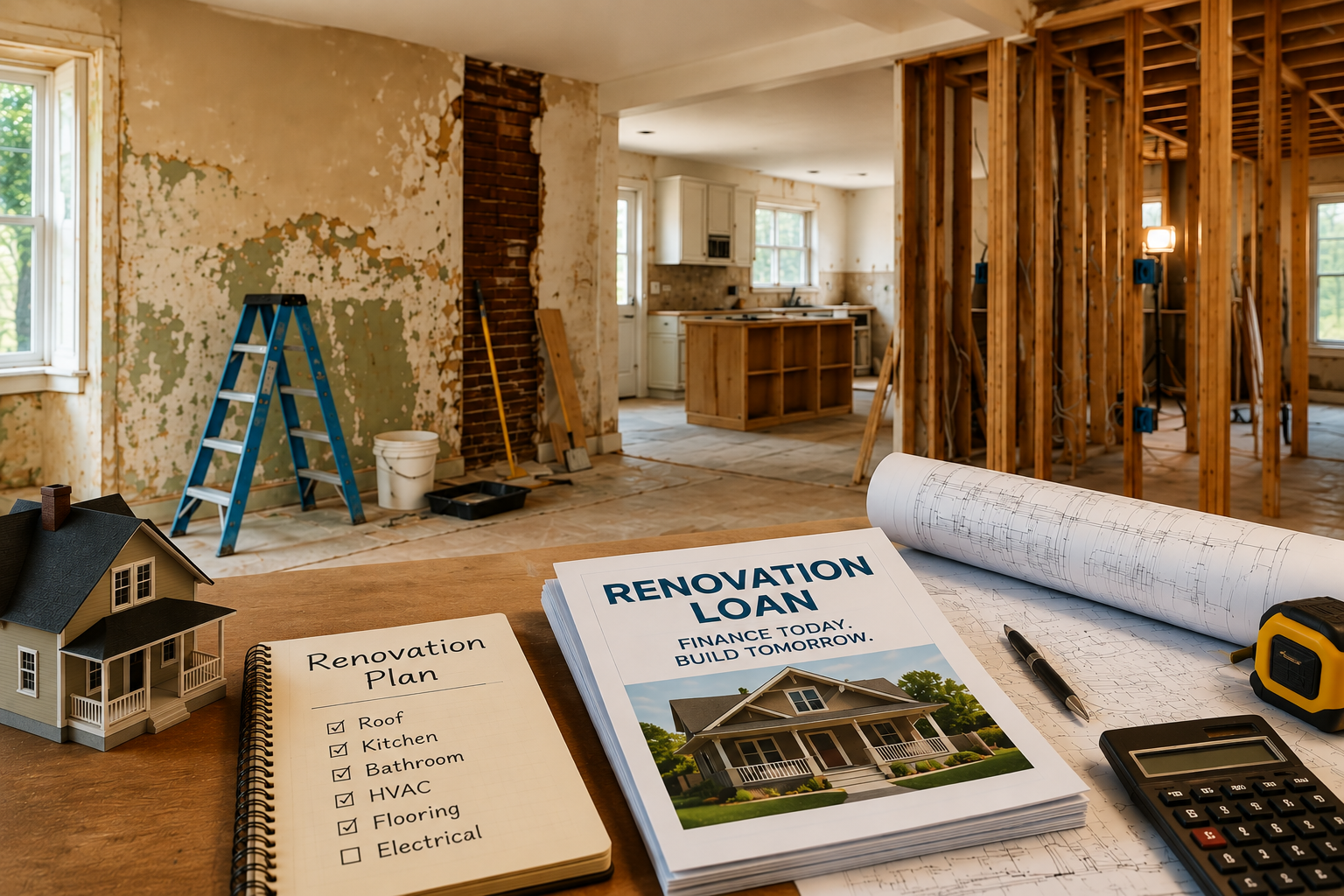
A renovation loan combines the cost of buying a home and making improvements into one mortgage. It can help buyers finance fixer-uppers that may not qualify for traditional home loans.
A fixer-upper can look like a good deal because it may offer a lower purchase price, customization options, and potential equity growth after renovations. In markets with few or high-priced ready homes, a fixer-upper is often the best choice. It can lead to homeownership or a smart investment.
Fixer-upper financing is not like standard mortgages. If you pick the wrong loan, a good deal can quickly become a headache. This can happen even before you start any work.
Here are seven things worth understanding before you decide.
Section 02
Thing 1: A Standard Mortgage May Not Work for a Home That Needs Major Repairs
This surprises a lot of buyers.
Conventional and FHA loans require the home to meet basic safety standards before closing. A lender may not approve the loan if the property has major issues, such as a damaged roof, broken heating system, or structural problems.
The problem is obvious: you need the loan to buy the property, but the property needs to be fixed before you can get the loan. Renovation loans exist to break that cycle by combining the purchase price and the estimated renovation costs into a single loan.
Section 03
Thing 2: Renovation Loans for Fixer-Uppers Have Different Program Options
The two most common renovation loan options are FHA 203(k) and Fannie Mae HomeStyle Renovation. Both help finance repairs, but they differ in eligibility, renovation scope, and property requirements.
| FHA 203(k) Standard | FHA 203(k) Limited | Fannie Mae HomeStyle | |
|---|---|---|---|
| Min credit score | 580 (lender dependent) | 580 (lender dependent) | 620 |
| Down payment | 3.5% | 3.5% | 3% to 5% |
| Renovation limit | No cap (must be cost-effective) | $75,000 in repairs | Up to 75% of as-completed value |
| Structural repairs allowed | Yes | No | Yes |
| Luxury improvements | Limited | Limited | Allowed |
| Primary residence only | Yes | Yes | No (investment eligible) |
| Mortgage insurance | MIP for life of loan (most cases) | MIP for life of loan (most cases) | PMI until 20% equity, then removable |
Program details are based on current guidelines and are subject to change. Lender overlays may apply. Consult your loan officer for current requirements.
The FHA 203(k) Standard is the more flexible option for properties needing significant structural or systems work. The Limited version caps renovation costs at $75,000 and does not cover structural repairs, making it better suited for cosmetic upgrades.
HomeStyle can be a good fit for buyers with stronger credit who want more flexibility, including the ability to remove mortgage insurance later or finance eligible investment properties.
Section 04
Thing 3: The Loan Is Based on the After-Repair Value, Not the Current Value
This is the mechanism that makes renovation loans work.
When a lender underwrites a renovation loan, they assess the property’s future value after repairs. This is known as the after-repair value, or ARV. Depending on the program and lender requirements, the appraisal may consider the home’s expected value after renovations are completed.
For a buyer, this means you might borrow more than the property’s current value. The lender bases the loan on what the property will be worth after the work is finished.
A lender may approve a loan for a $200,000 property. With $70,000 in planned renovations and an ARV of $295,000, they might evaluate the loan based on the property’s expected value after improvements rather than only its current purchase price.
This is a simplified example. Actual loan amounts depend on borrower qualifications, program rules, appraisal results, and lender requirements.
Section 05
Thing 4: You Need a HUD-Approved Consultant for the FHA 203(k) Standard
The FHA 203(k) Standard loan requires a HUD-approved consultant. The consultant reviews the home, creates the work plan, and checks the renovation progress.
The consultant’s job is to make sure the planned work meets program requirements. They estimate project costs, prepare the work plan, and inspect completed repairs before renovation funds are released through draws. Their fee varies depending on the project scope and current program guidelines.
This adds a step that standard purchase transactions lack. It’s one reason 203(k) loans often take longer to close than conventional loans, usually 45 to 60 days or more. If you’re up against buyers with conventional financing, pay attention to your timeline. It’s important for your offer.
The FHA 203(k) Limited does not require a consultant, which is one reason it moves faster and is simpler to manage for smaller projects.
Section 06
Thing 5: Contractor Selection Is Not Fully Up to You
FHA 203(k) loans require contractors to meet lender rules. They usually need proper licenses, insurance, and approval before starting work. Self-help or sweat equity is usually not allowed, except for limited cases involving licensed borrowers in certain trades.
HomeStyle offers more flexibility, but lenders still have contractor requirements. Most prefer licensed, insured contractors with experience handling similar projects.
Because renovation loans require contractor bids to set the project budget, it is helpful to start looking for contractors early. If possible, line up bids before making an offer, since finding qualified contractors familiar with renovation loans can take time.
Section 07
Thing 6: The Money Does Not Go to You in One Lump Sum
Renovation funds are not given to you at closing. Instead, the money is held in an escrow account and paid in stages as work is completed.
The lender reviews each project milestone before releasing the next payment. This process helps track progress, manage contractor payments, and keep the renovation on schedule.
During construction, many renovation loans require you to make full mortgage payments even if the property is not ready to live in. Some programs may allow you to include up to six months of mortgage payments in the renovation budget if you cannot occupy the home during construction. However, this varies by program and increases the total loan amount.
Section 08
Thing 7: Your Renovation Budget Needs to Work Before and After the Project
Renovation loans are not inherently good or bad deals. They are tools, and like any tool, the outcome depends on how you use them.
Before buying a fixer-upper, ask if the numbers work. First, compare the purchase price to similar sales. Next, check the renovation budget against contractor bids. Don’t forget to include a contingency. Lastly, look at the after-repair value (ARV) and see what renovated homes sell for nearby.
A common mistake is assuming the ARV based on the best comparable sales in the area rather than the most relevant ones. A renovated home on a street where the best houses sell for $350,000 likely won’t appraise at $380,000. High-quality updates don’t guarantee a higher value. The neighborhood puts a ceiling on value that renovation cannot overcome.
| Scenario | Purchase Price | Renovation Budget | ARV | Potential Value Cushion (Illustrative Only) |
|---|---|---|---|---|
| Conservative | $200,000 | $55,000 | $285,000 | $30,000 |
| Realistic | $200,000 | $70,000 | $295,000 | $25,000 |
| Optimistic | $200,000 | $65,000 | $320,000 | $55,000 |
| Stretched | $210,000 | $80,000 | $295,000 | $5,000 |
Figures are illustrative examples only. Actual renovation costs, ARV, and equity outcomes depend on property condition, local market, contractor pricing, and scope of work. These figures do not constitute an offer of credit or investment advice.
The stretched scenario shows what happens when the purchase price and renovation costs take up most of the ARV. This can lead to problems. A $5,000 equity cushion, not counting closing and renovation costs, is a slim margin. Projects often go over budget, so this amount may not be enough.
Section 09
Frequently Asked Questions
How long does it take to close a renovation loan compared to a standard mortgage?
Longer. A standard purchase mortgage typically closes in 30 to 45 days, while an FHA 203(k) Standard loan may take 45 to 60 days or more because of additional requirements, including consultant inspections, detailed work plans, and contractor bid reviews.
The 203(k) Limited and HomeStyle programs may move faster depending on the project, but they still require additional documentation and review compared with a standard purchase loan.
Can I use a renovation loan on an investment property?
FHA 203(k) loans require the property to be your primary residence. You cannot use a 203(k) on an investment property or a second home. The Fannie Mae HomeStyle Renovation loan allows one-unit investment properties.
This option can work well for investors because HomeStyle allows eligible investment properties. Investors can use the loan to purchase and renovate a property they do not plan to occupy. For larger renovation projects or house flips, other financing options such as hard money loans and fix-and-flip financing may also be worth exploring, depending on the project and borrower situation.
What happens if the renovation goes over budget?
If renovation costs exceed the approved budget, the extra expenses are typically not covered by the renovation loan. You may need to pay the difference yourself, adjust the project scope, or explore other financing options. Building a contingency fund into your renovation budget can help prepare for unexpected costs.
Section 10
Conclusion
Buying a fixer-upper starts with understanding your financing options. Talk with Duc Pham or the Wonder Rates team to explore which renovation loan may fit your property, budget, and home goals before you make an offer.
Disclaimer: All figures, program details, renovation limits, and examples in this article are for illustrative and educational purposes only and do not constitute an offer of credit or financial advice. FHA 203(k) and HomeStyle Renovation loan guidelines, limits, and requirements are subject to change. Lender overlays may apply. Actual renovation costs, ARV, timelines, and outcomes vary significantly by property, location, contractor, and project scope. Consult your loan officer for current program details and guidance specific to your situation.
Duc Pham, Mortgage Broker | NMLS# 844897 | Wonder Rates, Inc. | NMLS# 1518655 | DRE# 02047445 | DFPI# 60DBO-59134 | Equal Housing Opportunity. Equal Housing Lender. | Licensed in: AL, AZ, CA, CO, FL, GA, LA, MI, NC, OH, OK, OR, PA, SC, TX, VA, WA.