
Section 01
CFPB Enforcement Actions: Why Mortgage Professionals Pay Close Attention
When people hear about the Consumer Financial Protection Bureau (CFPB), they often think about consumer complaints or financial education. Inside the mortgage industry, however, another area receives just as much attention: CFPB enforcement actions.
Every enforcement action tells lenders something important. It shows how regulators interpret existing rules and where they believe companies have failed to protect consumers.
That is why compliance teams often read enforcement cases as carefully as they read new regulations.
Section 02
What Is a CFPB Enforcement Action?
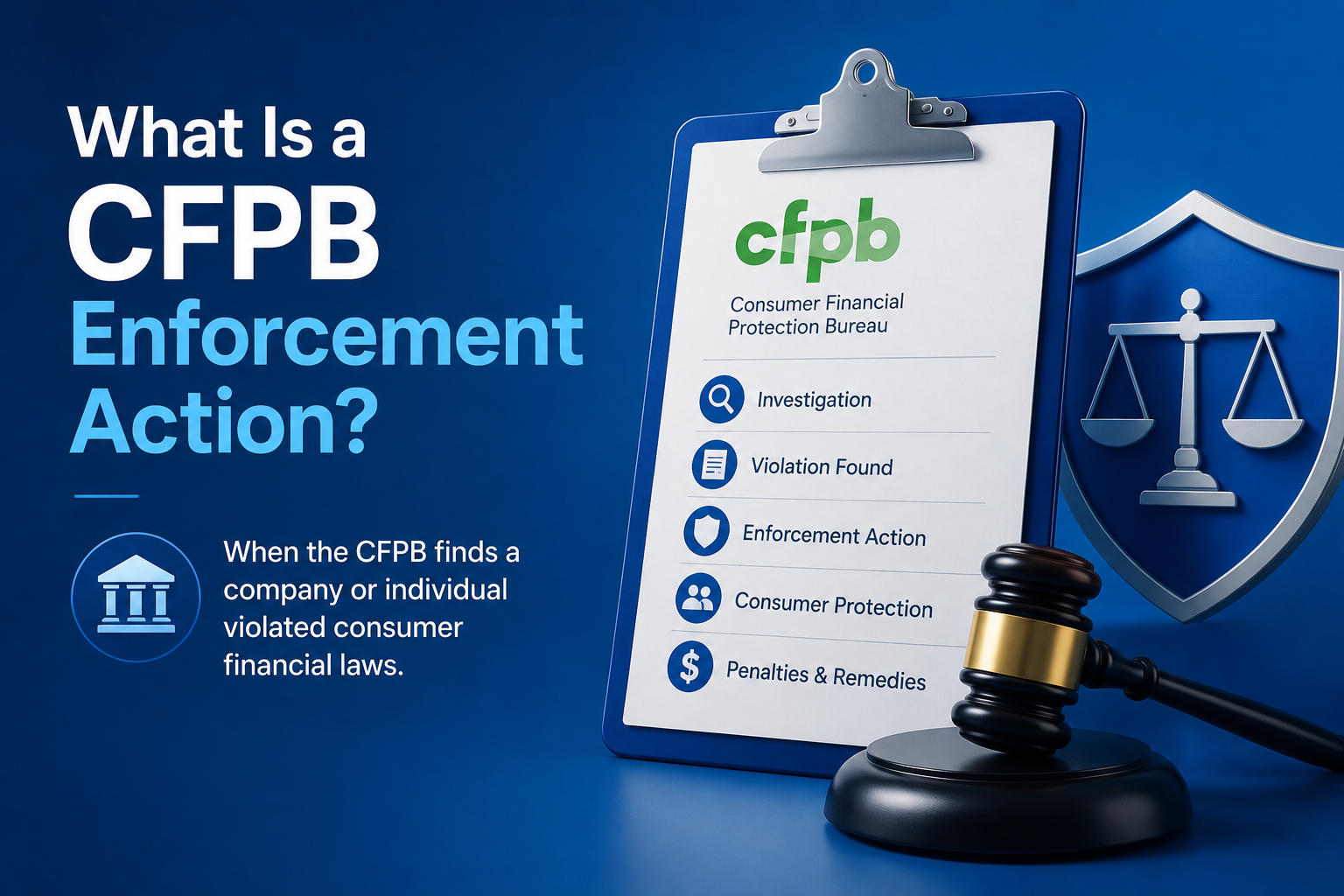
A CFPB enforcement action is a legal or administrative action taken against a financial company that the Bureau believes has violated federal consumer financial laws.
These actions do not create new laws. Instead, they show how the CFPB applies existing laws in real situations.
Depending on the case, an enforcement action may include:
- Civil money penalties
- Customer refunds
- Changes to business practices
- Compliance monitoring
- Court orders or settlements
For mortgage companies, each action becomes a valuable learning tool because it highlights risks that other lenders may also face.
Section 03
Why Mortgage Lenders Watch These Cases
Most mortgage regulations are written broadly. Enforcement actions show how those rules are applied in everyday business.
For example, suppose a lender advertises very low mortgage rates but fails to clearly explain the assumptions behind those rates. The CFPB may determine that the advertisement could mislead consumers, even if the numbers themselves are technically accurate.
After a case like this becomes public, many lenders immediately review their own marketing materials to make sure similar issues do not exist.
The goal is not simply to avoid penalties. It is to reduce compliance risk before regulators identify a problem.
Section 04
Common Issues Found in CFPB Enforcement Cases
Although every case is different, several themes appear repeatedly.
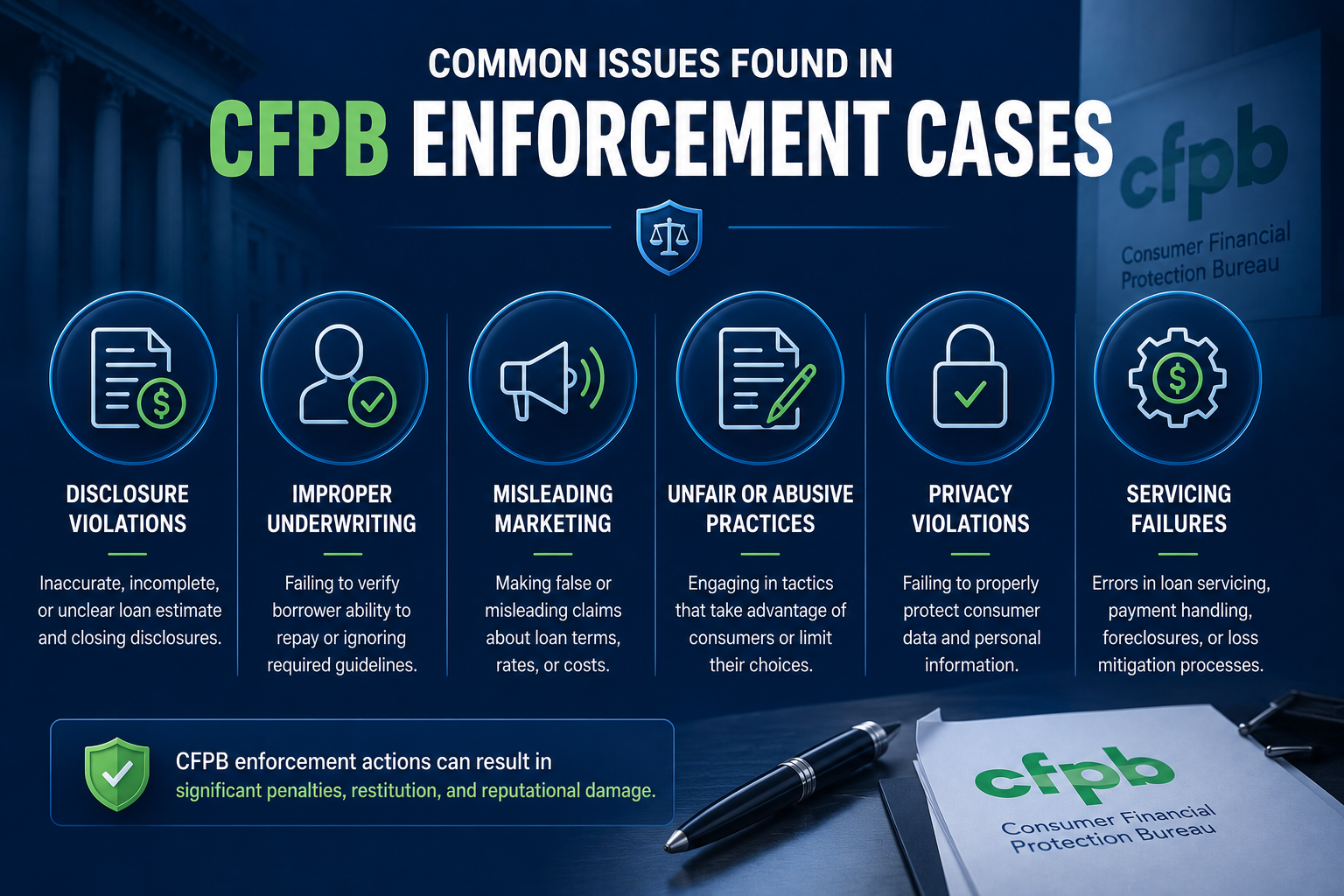
| Area | Example of Regulatory Concern |
|---|---|
| Advertising | Misleading rate or payment claims |
| Loan servicing | Errors in payment processing |
| Consumer disclosures | Missing or unclear information |
| Fair lending | Inconsistent treatment of applicants |
| Complaint handling | Failure to investigate consumer concerns |
| Recordkeeping | Inadequate documentation |
These cases remind lenders that compliance extends well beyond underwriting. Marketing, customer service, servicing, and internal controls all play an important role.
Section 05
Enforcement Actions Can Change Industry Practices
One enforcement action rarely affects only one company.
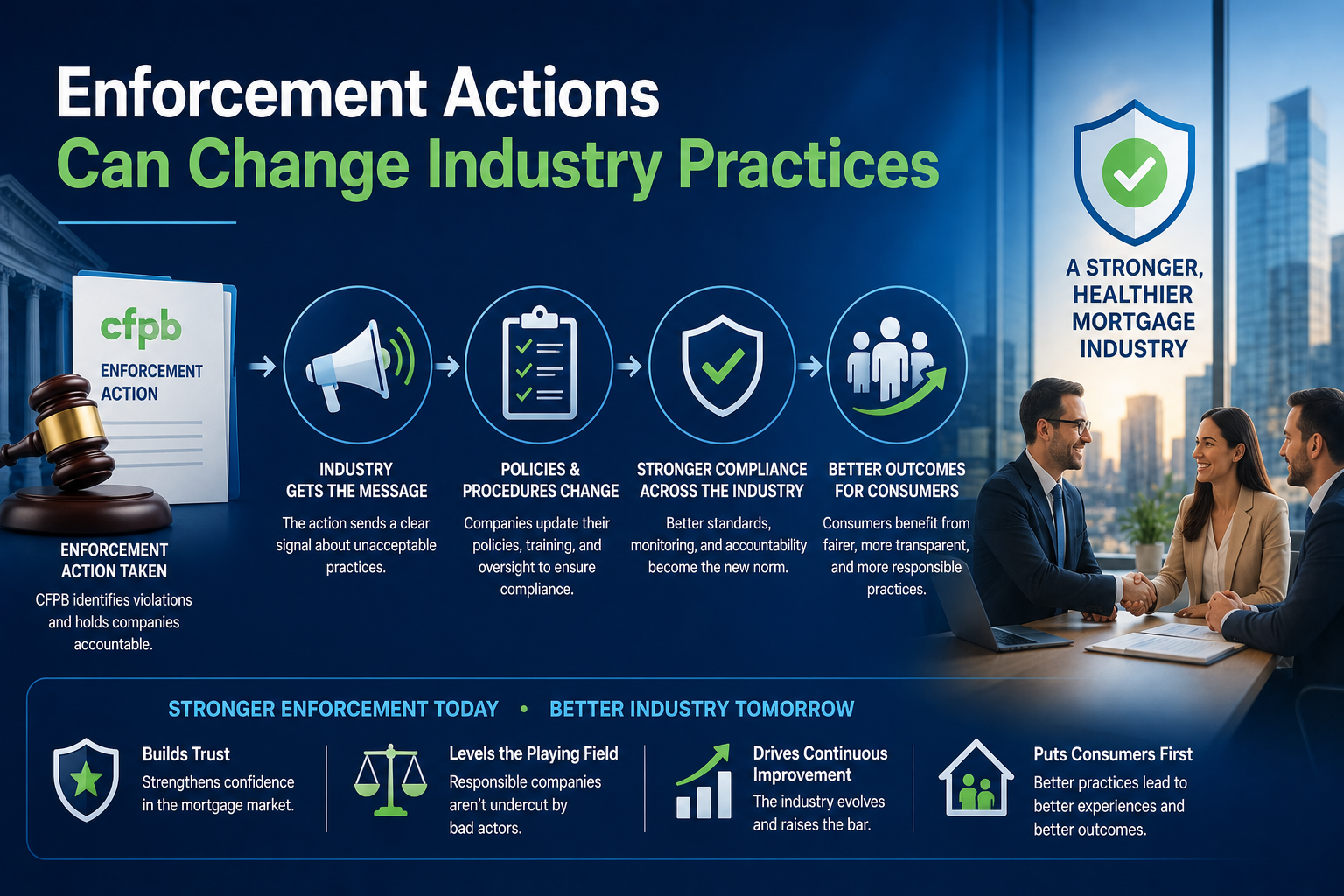
Imagine that the CFPB identifies weaknesses in how a mortgage company explains adjustable-rate mortgages. Other lenders will likely review their own disclosures, employee training, and quality control procedures, even if they were not involved in the investigation.
This is one reason enforcement actions often influence industry practices long before any new regulation is published.
In many cases, lenders voluntarily strengthen their compliance programs after studying enforcement trends.
What Borrowers Can Learn
Borrowers sometimes assume that compliance rules exist mainly to protect lenders, or that they are simply paperwork requirements that slow down the mortgage process.
The opposite is true.
Many mortgage regulations are designed specifically to help consumers receive accurate, timely, and understandable information before making one of the largest financial decisions of their lives. A home loan can last 15 to 30 years, and small misunderstandings about rates, fees, or loan features can cost a borrower thousands of dollars over time.
Disclosure requirements are a good example. Under federal rules, borrowers generally receive a Loan Estimate within three business days after submitting a loan application, which outlines the estimated interest rate, monthly payment, closing costs, and key loan features. Before closing, borrowers receive a Closing Disclosure at least three business days in advance, giving them time to compare the final terms with what they were originally offered and to ask questions about any changes. For adjustable-rate loans, lenders must also provide information explaining how the rate and payment can change over the life of the loan.
These documents help borrowers understand estimated monthly payments, closing costs, loan terms, and important deadlines before signing final documents. They also make it easier to compare offers from different lenders on an equal basis.
When the CFPB takes enforcement action, the purpose is generally to improve compliance with these consumer protection standards and, where appropriate, to require remedies for affected borrowers. For consumers, following enforcement news can be a useful way to learn which parts of the mortgage process deserve extra attention, such as reviewing fees carefully, asking how an adjustable rate is calculated, or questioning any unexpected changes between the Loan Estimate and the Closing Disclosure.
Enforcement Does Not Mean Every Company Is Breaking the Rules
It is important to keep enforcement actions in perspective.
The mortgage industry processes millions of loans every year, involving a wide range of lenders, brokers, servicers, and service providers. Most lenders invest significant time and resources in compliance management systems, employee training, quality control reviews, and internal audits. Many maintain dedicated compliance staff whose job is to monitor regulatory changes, test loan files, and correct problems before they affect borrowers.
An enforcement action does not suggest that the entire industry has a problem, nor does it mean that every lender offering a similar product is acting improperly. Instead, it provides specific examples of situations where regulators concluded that a company’s practices fell short and that improvements were necessary. Each case reflects particular facts, policies, and circumstances that may not apply to other organizations.
Many lenders use these cases as educational resources. Compliance teams often summarize recent actions for management, use them as real-world examples in staff training, and compare the described failures against their own processes. By learning from others’ mistakes, lenders can strengthen their policies, reduce future regulatory and legal risk, and ultimately provide a clearer, more reliable experience for the borrowers they serve.
Section 06
Final Thoughts
CFPB enforcement actions are more than legal headlines. They provide practical guidance on how regulators expect mortgage companies to apply consumer protection laws in everyday operations.
For borrowers, these cases help improve transparency and fairness. For lenders, they serve as valuable lessons that support stronger compliance programs and better risk management.
Understanding enforcement actions does not require a legal background. It simply helps explain why mortgage companies devote so much attention to documentation, disclosures, training, and consumer communication throughout the lending process.
Thinking about buying a home or refinancing? Try the Wonder Rates team’s mortgage calculator to estimate your monthly payment, then connect with Duc Pham and the Wonder Rates team for guidance on the loan options that fit your situation.
Disclaimer: Wonder Rates NMLS #1518655, Duc Pham NMLS #844897. Equal Housing Lender. Rates and terms are subject to change. This article is for educational purposes only and should not be considered financial, tax, or legal advice. Any examples in this article are hypothetical and are provided for educational purposes only.