
Section 01
You checked your credit. You showed your income. You provided your assets. Your lender gave you a pre-approval.
Then you found the condo you wanted. And suddenly, there was a problem.
The problem may not be you. It may be the property.
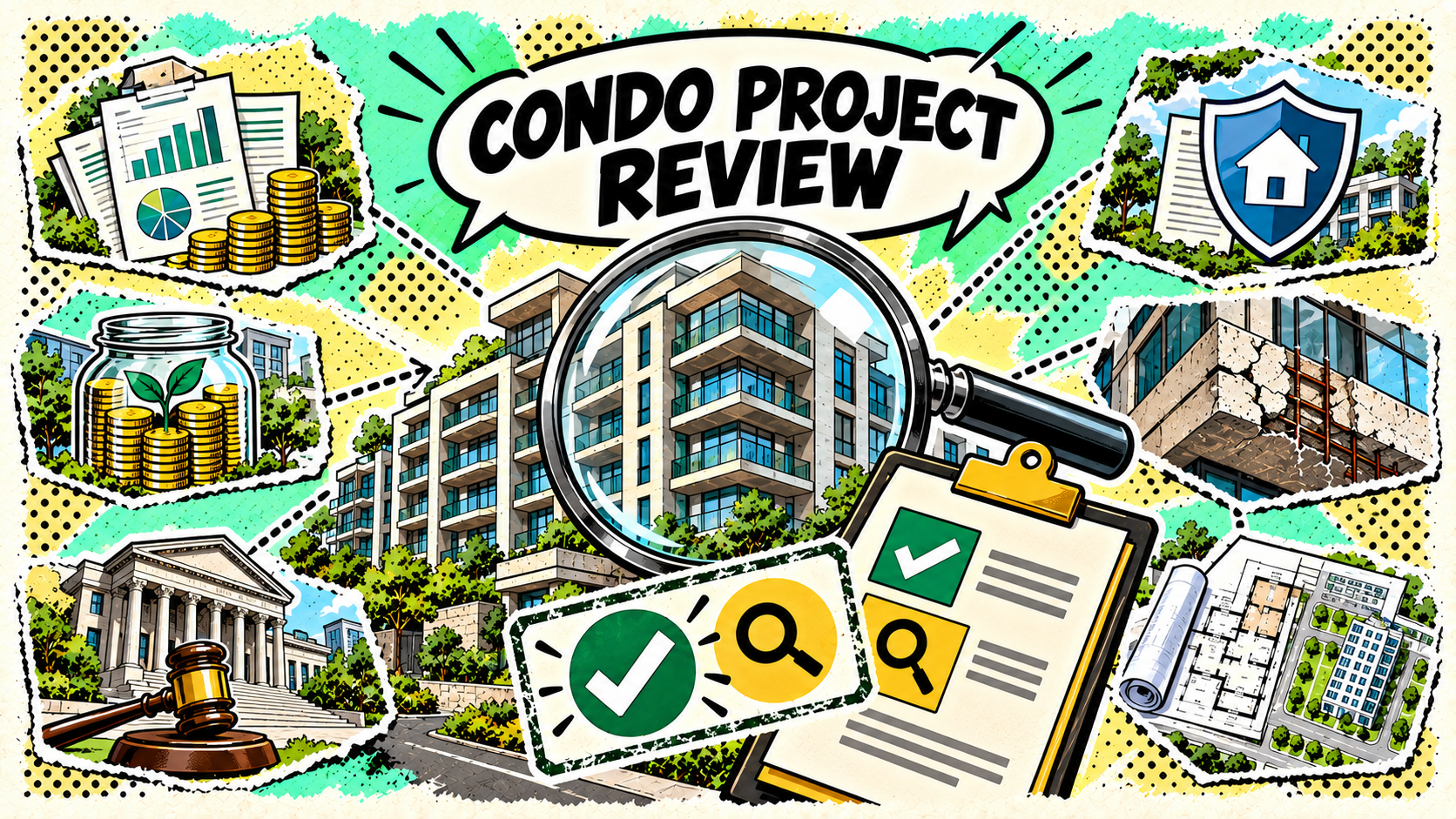
With a single-family home, a mortgage mostly comes down to two things: can you qualify, and is the home itself worth what you’re paying for it. A condo adds a third layer. The lender may also need to look at the building behind your unit, including the HOA’s finances, the project’s insurance, its reserves, and its physical condition.
Fannie Mae is direct about this in its Selling Guide: the quality of a mortgage secured by a condo unit can be affected by the characteristics of the entire project, and a lender must determine that the project meets the applicable eligibility requirements before that mortgage can be sold.
Section 02
A Mortgage Has Two Different Questions to Answer
Most buyers only think about the first of these two questions. With a condo, the second one matters just as much.
Question 1: Can the Borrower Qualify?
This is what most people picture when they hear “mortgage approval.” It covers:
- Credit history and score
- Income and employment
- Assets and reserves
- Existing debt and debt-to-income ratio
- Down payment
- Overall financial profile
This is the part a pre-approval is built around, and it’s the part most buyers spend the most time preparing for.
Question 2: Is the Property Eligible?
With a condo, this question goes beyond the unit itself. The lender may also need to evaluate:
- The project type and ownership structure
- The HOA’s financial condition
- The project’s insurance coverage
- Reserve funding
- Building condition and any needed repairs
- Litigation involving the HOA or project
- Commercial space and other project characteristics
If you want a broader overview of what lenders evaluate when you buy a condo, including both borrower and project requirements, see our guide to mortgage requirements for buying a condo. You can qualify for the mortgage and still have a problem with the property. That single sentence is worth remembering, because it explains most of the confusion buyers run into with condo financing.
Section 03
What Is Condo Project Eligibility?
Project eligibility is the piece that catches a lot of buyers off guard, mostly because it isn’t something they’re used to thinking about.
The Lender May Review the Entire Condo Project
With a single-family home, a lender is primarily evaluating the borrower and the individual property. With a condo, that evaluation expands to include the project as a whole. Fannie Mae’s Selling Guide notes that project characteristics can affect the quality of mortgages secured by individual condo units, which is why lenders are required to evaluate the project before a loan secured by one of its units can be sold.
Why the Building Matters to the Lender
A condo lender isn’t only asking, “Is this unit worth $400,000?” It’s also asking a second question: “Is this project financially and physically sound enough to meet the requirements of the loan program?”
That second question is really about risk. A unit can be in excellent condition while the building around it has financial or physical issues that create risk for the loan. That’s the gap that catches buyers by surprise.
Section 04
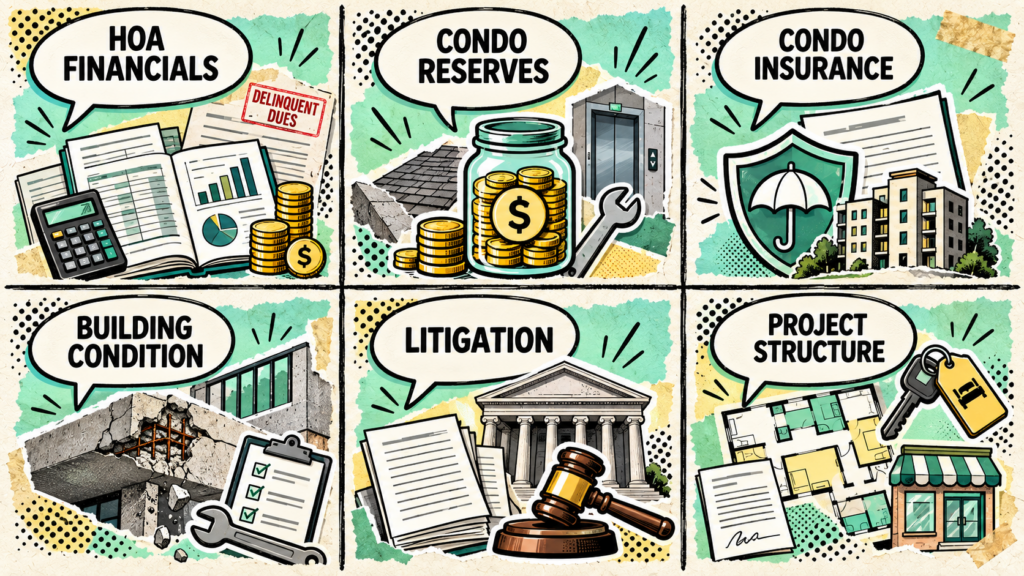
The Six Things That Can Affect Condo Mortgage Approval
This is the part of condo financing most buyers have never heard explained clearly. Here are the six categories lenders commonly evaluate at the project level.
1. HOA Financials
An HOA isn’t just the entity that collects monthly dues. As part of project review, a lender may need to look at the HOA’s budget, financial statements, delinquent assessments, special assessments, reserve funding, and operating expenses.
Fannie Mae’s Full Review requirements include limits related to delinquent common expense assessments, and lenders are required to review the HOA’s projected budget as part of that process.
Why delinquent HOA dues matter. When a meaningful share of owners aren’t paying their dues, the HOA collects less revenue, which can leave less money available for operations and maintenance. That doesn’t automatically sink a loan, but it can create a project-level eligibility issue under certain review standards, and it’s one of the first things a lender’s project review is designed to catch.
2. Condo Reserves
Reserves are the funds an HOA sets aside for major, non-recurring costs, things like roofs, elevators, exterior work, plumbing, structural components, and other significant capital expenses.
Under Fannie Mae’s Full Review requirements, the HOA’s budget generally needs to allocate at least 10% of it to replacement reserves, subject to the applicable requirements and available alternatives, such as a qualifying reserve study. Freddie Mac applies a comparable standard: for Established and New Condominium Project reviews, the budget must allocate 10% to reserves, and special assessments cannot be substituted for that budgeted reserve allocation.
Why reserves matter to a lender. This isn’t about a lender wanting the HOA to sit on a large cash balance for its own sake. Underfunded reserves can be a signal of deferred maintenance, future special assessments, financial stress, or difficulty covering major repairs when they come up, all of which affect the long-term risk profile of the loan. If you’re considering a condo with an existing or planned special assessment, see our guide to what buyers should review before purchasing a condo with a special assessment.
A 2026 update worth knowing about. Freddie Mac’s current guidance states that for condominium unit mortgages with an Application Received Date on or after August 3, 2026, if a qualifying reserve study is used as an exception to its standard reserve requirements, the baseline funding methodology can no longer be used, and the highest funding recommendation in the reserve study must be applied instead.
This is Freddie Mac-specific guidance and does not automatically apply to every condo loan or every lender. Requirements can differ by investor, loan program, and review type.
3. Condo Insurance
This is one of the areas that has drawn the most attention in 2026, and for good reason.
Condo buildings typically carry a master property insurance policy that covers the common elements and residential structures of the project, separate from any individual unit owner’s own policy. Fannie Mae describes its master property insurance requirements as designed to provide adequate coverage for a project’s common elements and residential structures.
Why insurance has become a bigger issue. Insurance costs have shifted in a number of markets in recent years, and coverage can be harder to secure in some areas than it used to be. Deductibles, exclusions, and total coverage limits all factor into whether a project’s insurance meets applicable requirements. Fannie Mae identifies insufficient master property insurance as one of the more common reasons a project ends up with an ineligible status.
A buyer can have excellent credit and enough income, and the project’s insurance can still create a financing issue. That combination surprises a lot of otherwise well-qualified buyers.
4. Building Condition and Critical Repairs
This category covers the physical state of the project: structural concerns, significant deferred maintenance, mechanical problems, issues with major building systems, safety concerns, or unresolved inspection findings.
Fannie Mae’s ineligible-project guidance includes projects that are in need of critical repairs. Freddie Mac’s guidance goes further, defining critical repairs to include things like issues with balconies, elevators, foundations, parking structures, stairwells, and electrical systems, and stating that if a seller cannot determine whether a project needs critical repairs, the project may not be eligible for delivery at all.
“Old” does not automatically mean “bad.” It’s tempting to assume an older building is automatically a harder building to finance. That isn’t quite right. The age of a project by itself does not determine eligibility. What matters is the condition of the project and whether there’s enough documentation available to actually evaluate that condition.
What buyers may not see during a showing. A buyer touring a unit typically sees a renovated kitchen, new flooring, and a nice view. What the lender may need information about is the roof, the structural systems, the exterior, the elevators, and other shared building systems, none of which show up on a walkthrough of one unit.
5. Litigation
Litigation involving the HOA or the project is another factor that can affect project eligibility. Fannie Mae’s list of ineligible project characteristics includes certain types of litigation or pre-litigation activity.
It’s worth being precise here, because this is a spot where buyers often assume the worst. Not every lawsuit sinks a condo loan. Certain litigation can affect project eligibility, depending on the nature and circumstances of the case. A minor dispute is not the same thing as litigation involving the safety, structural integrity, or habitability of the building.
6. Project Structure and Other Eligibility Issues
A handful of other project characteristics can also affect eligibility, including:
- Hotel or condotel characteristics
- Excessive commercial space within the project
- Single-entity ownership of multiple units
- Unusual ownership structures
- Mandatory membership requirements unrelated to the HOA
- Incomplete project documentation
- Incomplete construction
- Mixed-use characteristics
Fannie Mae’s current ineligible-project list addresses several of these categories directly. This is a useful reminder that condo project review is about more than just HOA reserves. It’s a broader look at how the project is structured and documented.
Section 05
The 2026 Condo Financing Changes Buyers Should Know
This section covers what’s new in 2026. It’s worth reading, but it’s separate from the evergreen fundamentals above, since these details will continue to be updated over time.
Fannie Mae Updated Condo Project Standards in 2026
On March 18, 2026, Fannie Mae published Lender Letter LL-2026-03, announcing targeted updates to condo project standards and property insurance requirements. According to Fannie Mae, the changes were implemented in alignment with Freddie Mac and in coordination with the Federal Housing Finance Agency (FHFA), and covered general project standards and project eligibility, property insurance requirements for one-to-four-unit properties, master property insurance requirements for project developments, and individual unit insurance requirements.
Fannie Mae’s Selling Guide has continued to be updated since that announcement, with more recent revisions covering project review requirements, reserve studies, and other project standards.
Freddie Mac’s 2026 Project Review Changes
Freddie Mac has made several related changes for 2026. Its current guidance confirms that, for condominium unit mortgages with an Application Received Date on or after August 3, 2026, Sellers may no longer use Streamlined Review, and the 50% owner-occupancy requirement, along with the related Project Waiver Request category, has been retired for Established Condominium Projects. The August 3, 2026 date also applies to the reserve-study funding methodology change described earlier in this article.
These updates do not mean every condo buyer faces the same requirements. The applicable review depends on the specific loan, the project, the review type used, the lender, and the investor’s requirements, all of which can vary from one transaction to the next.
Section 06
How a Condo Can Fail Financing Even When the Buyer Looks Strong
Illustrative example: A buyer has strong credit, stable income, and enough funds for the down payment. The buyer receives a pre-approval and makes an offer on a condo. During project review, the lender discovers that the HOA’s financial documentation raises questions about reserve funding, and the project has an unresolved building repair issue. The borrower may still qualify individually, but the lender may need additional documentation, or may determine that the project does not meet the requirements of the applicable loan program.
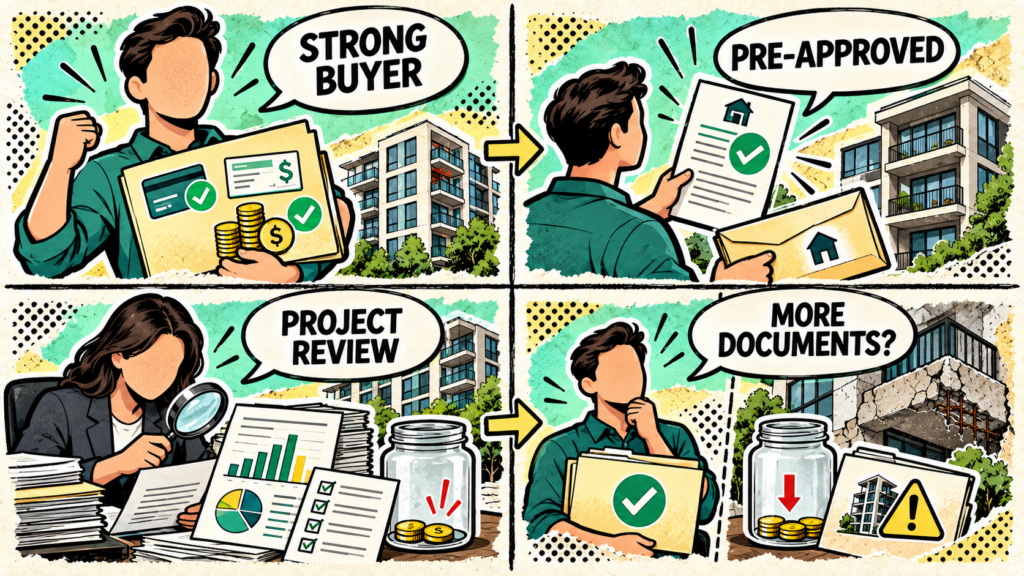
Example disclaimer: This is a simplified illustration. Actual outcomes depend on the specific project, loan program, lender, documentation, and current agency requirements. A project issue does not automatically mean every lender or every loan program will reach the same result. Some projects with an issue under one review type or investor may still be eligible under a different program.
Section 07
Pre-Approval Does Not Mean Every Property Is Approved
This distinction is one of the most useful things a buyer can understand before shopping for a condo.
What Pre-Approval Actually Tells You
A pre-approval is generally focused on you as the borrower, based on the income, credit, assets, and debt information available at the time it was issued. It’s a strong signal about your own financial readiness.
Why the Property Review Comes Later
Once you identify a specific property, the lender typically needs additional pieces before the loan can move forward, including an appraisal, a title review, and, for a condo, project information such as HOA documents, insurance information, and a formal project review.
A pre-approval is not a guarantee that every property will qualify for financing. It’s a strong starting point, not a finish line.
Section 08
What Documents Can a Condo Buyer Expect?
Depending on the project and review type, a lender may request several categories of documentation.
HOA documents. This can include the HOA’s budget, financial statements, reserve information, insurance documents, meeting minutes, and information about any special assessments. Fannie Mae notes that lenders may draw on a range of sources for project information, including HOAs, management companies, real estate agents, developers, engineers, and insurance professionals.
Building and inspection documents. Depending on the project, this may include inspection reports, engineer reports, structural reports, or information about planned or completed repairs. Freddie Mac’s guidance notes that project documentation can include HOA board meeting minutes, engineer reports, structural or mechanical inspection reports, reserve studies, and special assessment information.
Insurance documentation. The lender needs evidence that the project satisfies applicable insurance requirements. Fannie Mae is explicit that lenders are responsible for verifying and documenting compliance with applicable insurance requirements.
Section 09
What Condo Buyers Should Ask Before Making an Offer
A little bit of due diligence before writing an offer can save a lot of frustration later.
Ask about the HOA.
- Is the HOA financially healthy?
- Are there major special assessments, planned or in place?
- Are HOA dues current across the project?
- Is there a recent budget available?
- Is there a reserve study on file?
Ask about the building.
- Are there recent inspection reports?
- Are there known major repairs pending?
- Are there unresolved structural issues?
- Are there large capital projects planned?
Ask about insurance.
- Does the project carry the required master insurance?
- Are there any known coverage gaps or issues?
- Have premiums or deductibles changed significantly recently?
Ask about legal issues.
- Is the HOA currently involved in litigation?
- Are there pending matters that could affect the project?
Buyers should not assume that the mere existence of a lawsuit automatically makes a project ineligible. The nature and circumstances of the case matter more than the fact that litigation exists at all.
Section 10
Why Realtors and Lenders Need to Work Together on Condo Deals
The Lender Needs Project Information Early
When condo project review starts too late in a transaction, it can create real timing pressure. The buyer may lose time, the appraisal may already have been ordered, and the closing timeline can get harder to hit, especially against a tight contract deadline. That doesn’t mean a deal will fail, but delayed project documentation can create timing risk that’s avoidable with earlier coordination.
Condo Financing Is a Team Process
Getting a condo financed smoothly usually depends on several parties working together in sequence: the buyer, the real estate agent, the lender, the HOA or management company, whoever holds the project’s insurance and documentation, and finally underwriting itself. When that sequence starts early, project issues tend to surface with enough time to address them.
Section 11
What Does "Warrantable Condo" Mean?
This term comes up constantly in condo shopping, and it’s worth explaining clearly.
Warrantable vs. Non-Warrantable
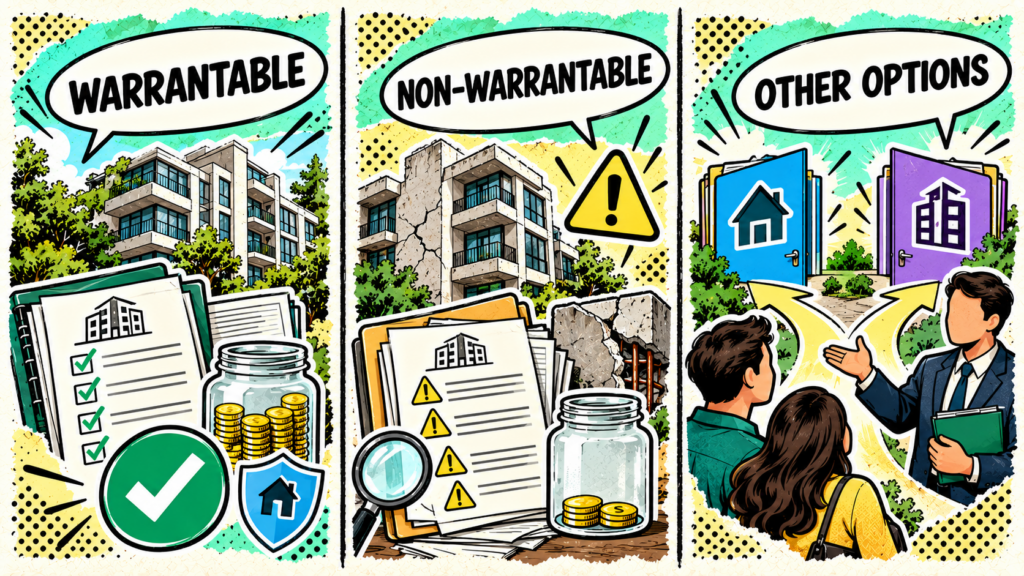
“Warrantable” is industry shorthand for a condo project that meets the applicable agency or investor eligibility standards for conventional financing. “Non-warrantable” generally means the project does not meet those conventional eligibility requirements.
Important note: the term “warrantable” is used widely across the mortgage industry, but actual eligibility is determined by the specific requirements of the applicable loan program and investor. A condo project described as “non-warrantable” for one financing option may still have other financing possibilities available.
Non-Warrantable Does Not Always Mean Impossible to Finance
A non-warrantable status under conventional guidelines doesn’t necessarily rule out financing altogether. Depending on the situation, options like portfolio loans or specialty condo loan programs may be available through certain lenders. Whether any of those options apply to a specific project is something to discuss directly with a lender, since availability varies significantly by lender and circumstance.
Section 12
Does a High HOA Fee Make a Condo Harder to Finance?
HOA Fee Amount Is Not the Same as Project Ineligibility
A high monthly HOA fee, by itself, doesn’t mean a project has an eligibility problem. Monthly dues can be high for a lot of reasons unrelated to financial health, including amenities, staffing, insurance costs, maintenance scope, location, and the age of the building.
Why the Lender Still Cares About HOA Payments
The dollar amount of HOA dues still matters to a lender in a different way. Monthly dues count as part of the borrower’s overall monthly housing expense, which factors directly into how the loan is qualified. If you’re comparing condos with different HOA dues, you can use the Wonder Rates Mortgage Payment Calculator to estimate how the home price, taxes, insurance, PMI, and HOA costs can affect your monthly payment.
It’s worth keeping two separate ideas apart here: the HOA’s overall financial health is a project-level eligibility question, while the borrower’s monthly HOA payment amount is a personal affordability and qualification question. A project can have healthy finances and still come with dues that push a specific borrower’s budget.
Section 13
What Buyers Should Not Assume About Condo Financing
A handful of common assumptions tend to trip buyers up. None of the following statements are reliably true.
“My credit is excellent, so I’m safe.” Not necessarily. Strong personal credit addresses the borrower side of the equation, not the project side.
“The seller financed it before, so I can finance it too.” Not necessarily. Project circumstances, lender requirements, and review standards can all change between transactions.
“It’s a beautiful luxury building, so it must qualify.” Not necessarily. A project’s appearance says nothing about its reserve funding, insurance coverage, or legal status.
“The HOA has money, so there is no issue.” Not necessarily. Financial health is one factor among several, alongside insurance, building condition, and project structure.
“There is a lawsuit, so the loan is dead.” Also not necessarily. As covered earlier, the nature and circumstances of litigation matter more than its mere existence.
Section 14
What Should You Do If Your Condo Loan Runs Into a Project Issue?
Ask what the actual issue is. “The condo doesn’t qualify” isn’t a complete answer. Ask specifically which project requirement is creating the problem.
Ask whether more documentation can resolve it. A documentation gap is a very different problem from a permanent project defect, and it’s often the easier one to fix.
Ask whether another loan program may apply. Depending on the circumstances, your lender may be able to walk through other financing options that fit the specific project. This isn’t guaranteed, but it’s worth asking directly.
Talk to the right professionals. That can include your lender, your real estate agent, the HOA or management company, an insurance professional, and, if a legal issue is involved, an attorney.
Section 15
The Bigger Lesson for Condo Buyers
Buying a condo means buying more than the four walls inside your unit. You’re also buying into an HOA, shared building systems, shared financial responsibilities, a shared insurance structure, shared maintenance obligations, and shared risks.
When you buy a condo, the financial health of the building becomes part of the financing story. That’s the single idea worth carrying away from this whole article.
Section 16
Frequently Asked Questions About Condo Mortgage Approval
Can I get denied for a condo if I have good credit?
Yes. Good personal credit addresses your side of the mortgage equation, but it does not address the condo project’s eligibility. A financially or physically troubled project can still create a financing issue even for a well-qualified borrower.
What makes a condo project ineligible for financing?
Several factors can contribute, including insufficient HOA reserves, inadequate master insurance, critical repairs that haven’t been completed, certain types of litigation, and specific project characteristics such as excessive commercial space or condo-hotel operations. Requirements vary by loan program and investor.
Does the HOA affect mortgage approval?
Yes. Lenders commonly review HOA financial documents, including the budget, delinquency rates, and reserve funding, as part of evaluating whether a condo project meets applicable eligibility requirements.
Do condo reserves affect financing?
Yes. Underfunded reserves can point to deferred maintenance or future special assessments, which is why agencies like Fannie Mae and Freddie Mac have specific reserve funding requirements, generally around 10% of the HOA’s budget, subject to program-specific alternatives.
Can condo insurance affect mortgage approval?
Yes. Lenders need to verify that a project’s master property insurance meets applicable coverage requirements. Insufficient insurance is one of the more common reasons a project can be found ineligible.
Does a special assessment affect condo financing?
It can, depending on the purpose of the assessment, how it’s funded, and applicable review requirements. A special assessment by itself does not automatically make a project ineligible.
Does a lawsuit make a condo non-warrantable?
Not automatically. Certain types of litigation, particularly those involving safety, structural integrity, or habitability, can affect eligibility. Other, more limited disputes may not.
What is a warrantable condo?
“Warrantable” is common mortgage industry shorthand for a condo project that meets the applicable conventional agency or investor eligibility standards. The precise standard depends on the specific loan program.
Can I finance a non-warrantable condo?
Sometimes. A project that doesn’t meet conventional warrantable standards may still be eligible under other financing options, such as portfolio loans or specialty condo programs, depending on the lender and the specific circumstances.
Section 17
Conclusion
A strong borrower is only one part of a condo mortgage. The lender may also need to understand the building behind the unit.
So before falling in love with the kitchen, the view, or the monthly payment, it’s worth asking a less exciting question first: can this specific condo project actually be financed under the loan program you need?
Your credit may be fine. The condo might be the part that needs a closer look. If you’re considering a condo and want to understand how the borrower, property, and project requirements may affect your financing options, you can get started with Wonder Rates and speak with a licensed mortgage professional.
Section 18
Sources
- Fannie Mae Selling Guide, General Information on Project Standards
- Fannie Mae Selling Guide, Full Review Process
- Fannie Mae Selling Guide, Ineligible Projects
- Fannie Mae, Lender Letter LL-2026-03: Updates to Project Standards and Property Insurance Requirements
- Fannie Mae, Announcement: Updates to Single-Family Project Standards and Property Insurance Requirements
- Fannie Mae Condo Status Finder
- Freddie Mac, Condominium Unit Mortgage FAQ
- Freddie Mac, Condo Project Advisor FAQ
Disclaimer: This article is for general informational and educational purposes only. It is not mortgage, financial, legal, tax, insurance, or real estate advice. Condo project eligibility requirements are set by individual loan programs, agencies, and investors, and can vary by project type, location, review type, lender, and the specific facts available during underwriting. They are also subject to change over time; the figures and dates cited in this article reflect requirements in effect as of the sources linked above and should be confirmed with a lender before relying on them. Examples in this article are simplified illustrations only and are not guarantees of approval, denial, or any specific outcome. A project issue described in this article does not mean every lender, investor, or loan program will reach the same conclusion about that project. Buyers should work directly with their lender, real estate agent, and other qualified professionals to evaluate a specific property and project before making a purchase decision.
Duc Pham, Mortgage Broker | NMLS# 844897 | 408-600-1900 | dp@wonderrates.com
Wonder Rates, Inc. | NMLS# 1518655 | DRE# 02047445 | DFPI# 60DBO-59134
Equal Housing Opportunity. Equal Housing Lender.
Licensed in: AL, AZ, CA, CO, FL, GA, LA, MI, NC, OH, OK, OR, PA, SC, TX, VA, WA