
Section 01
A construction loan works differently from a traditional mortgage. Many first-time builders get confused because they expect the process to work the same way. You don’t get one lump sum at closing. You get money released in stages, tied to how much of the house actually exists.
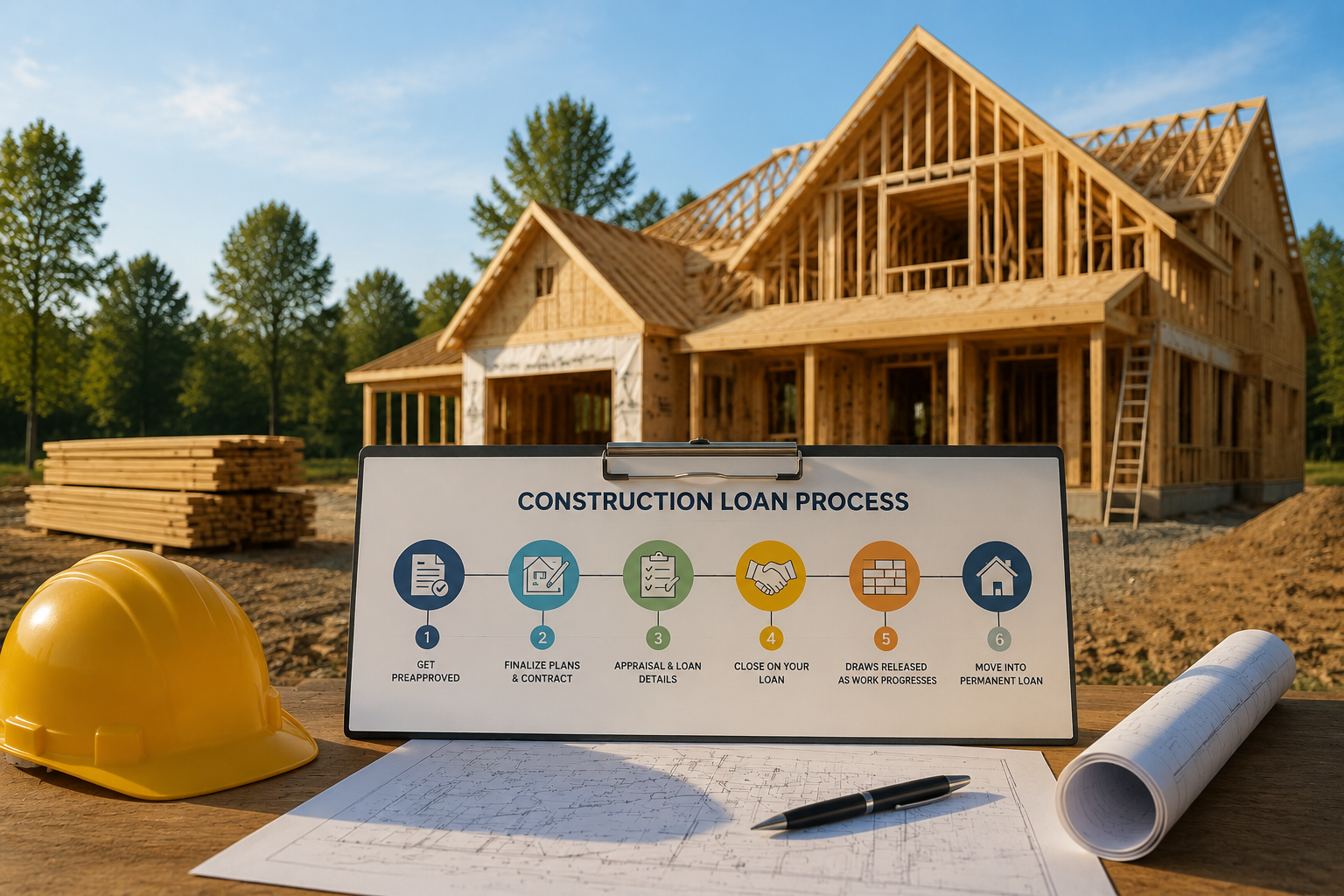
A construction loan is a short-term mortgage designed to finance the cost of building a new home. You do not receive the full loan amount at closing. Instead, your lender releases money in stages as construction milestones are completed.
The process involves several stages, from getting approved for the loan to completing construction and moving into permanent financing.
Section 02
Step 1: Get Preapproved Before You Finalize Plans
Lenders typically review your income, credit profile, assets, and down payment resources before you finalize your construction plans. This helps determine whether your budget, lot, and building costs align with your financing options.
This step helps you understand your potential budget range, which can guide decisions about your lot, home design, and construction plans.
Section 03
Step 2: Choose Your Builder and Finalize the Construction Contract
Your lender will typically require information about your builder and a detailed construction contract before moving forward. The contract needs a firm price, a materials and finishes specification, and an estimated timeline.
This is also where most construction loans start to differ. Some construction loans are stand-alone loans that require separate permanent financing after completion. Others are construction-to-permanent loans that may convert into a long-term mortgage after the building phase.
Construction-to-permanent loans combine the construction phase and long-term mortgage into one loan. This means you can complete the building process and move into permanent financing with one closing instead of going through two separate closings. The exact process depends on the loan program and your lender’s requirements.
Section 04
Step 3: Complete the Appraisal and Finalize Loan Details
Unlike a purchase loan, the appraisal here isn’t based on what the property is worth today. It’s based on what the home will be worth once it’s built, called an as-completed or as-improved appraisal. The lender looks at the home’s expected value after construction and reviews your budget, financial profile, and loan requirements before determining the loan amount.
Section 05
Step 4: Close on Your Construction Loan
Closing follows many of the same steps as a traditional mortgage, including receiving a Closing Disclosure and reviewing closing costs. However, construction funds are not typically released all at once. Instead, your lender distributes funds through scheduled draws as construction reaches specific milestones.
Section 06
Step 5: Draws Get Released as Construction Progresses
This is the core of how a construction loan actually works. Instead of one disbursement, your lender releases money in stages, or draws, as each phase of construction is completed and verified, usually through an inspection.
Below is an example of a construction draw schedule based on a $400,000 construction loan. Actual draw amounts and milestones vary by lender, builder, and project.
| Construction Phase | Percentage of Loan | Draw Amount | Cumulative Drawn |
|---|---|---|---|
| Site prep and foundation | 15% | $60,000 | $60,000 |
| Framing | 20% | $80,000 | $140,000 |
| Roofing, exterior, and windows | 15% | $60,000 | $200,000 |
| Plumbing, electrical, and HVAC rough-in | 15% | $60,000 | $260,000 |
| Insulation and drywall | 10% | $40,000 | $300,000 |
| Interior finishes | 15% | $60,000 | $360,000 |
| Final completion and certificate of occupancy | 10% | $40,000 | $400,000 |
This example is for educational purposes only. Actual construction phases, percentages, inspections, and draw requirements vary by lender and project.
Section 07
Step 6: Interest-Only Payments During the Build
Many first-time builders are surprised by this. During construction, borrowers only pay interest. This interest is based on the funds that have been released, not on the total loan amount. As additional draws are approved, the outstanding balance may increase, which can affect monthly payments.
| Construction Stage | Amount Drawn | Potential Payment Impact |
|---|---|---|
| Early construction | Initial funds released | Interest costs may be lower |
| Mid construction | More funds released | Interest costs may increase |
| Final stages | Most funds released | Interest costs may be higher |
This example is for educational purposes only. Actual payment structures vary by lender, loan terms, and project details.
Section 08
Step 7: Convert to Permanent Financing (or Pay It Off)
Once construction is complete and the home passes final inspection, the next step depends on your loan structure.
A construction-to-permanent loan may convert into a long-term mortgage after the building phase, often without requiring a separate closing. A stand-alone construction loan requires borrowers to get separate permanent financing to pay off the construction loan.
Construction financing and permanent mortgage financing may have different terms because lenders evaluate the additional risks involved during the building process. When you move to permanent financing, your loan terms will change. Payment details will also vary. This depends on your lender, the loan program, and your finances.
Section 09
Frequently Asked Questions
What happens if construction costs more than the original loan amount?
This is called a cost overrun. It means your project costs more than expected. Depending on your lender and loan structure, you may need to cover additional costs yourself or discuss available options with your lender.
This is why having a detailed construction contract, realistic budget, and clear cost estimates before starting the project is important.
Do I need a down payment for a construction loan?
Construction loans typically require a down payment, but the amount varies based on the lender, borrower qualifications, project details, and loan structure.
If you already own the land, the equity you have built in the lot may potentially be considered as part of your investment in the project, depending on lender guidelines.
What happens if the builder falls behind schedule?
Construction delays can affect your project timeline and may impact your financing plans. Before construction begins, ask your lender how they handle timeline extensions, inspection requirements, and changes to the construction schedule.
Having a detailed contract with your builder and a clear project timeline can help you better prepare for unexpected delays.
Section 10
Conclusion
A construction loan has more moving parts than a standard mortgage, but understanding each stage can help you feel more prepared throughout the process.
Send a message to Duc Pham or the Wonder Rates team. We can help you understand your construction loan options, review your project details, and explain the next steps.
Disclamer: This article is for educational purposes only and does not constitute an offer of credit or financial advice. Construction loan terms, requirements, rates, and eligibility vary by lender and borrower situation. Contact a licensed loan officer for guidance specific to your circumstances.
Duc Pham, Mortgage Broker | NMLS# 844897 | Wonder Rates, Inc. | NMLS# 1518655 | DRE# 02047445 | DFPI# 60DBO-59134 | Equal Housing Opportunity. Equal Housing Lender. | Licensed in: AL, AZ, CA, CO, FL, GA, LA, MI, NC, OH, OK, OR, PA, SC, TX, VA, WA.