Section 01
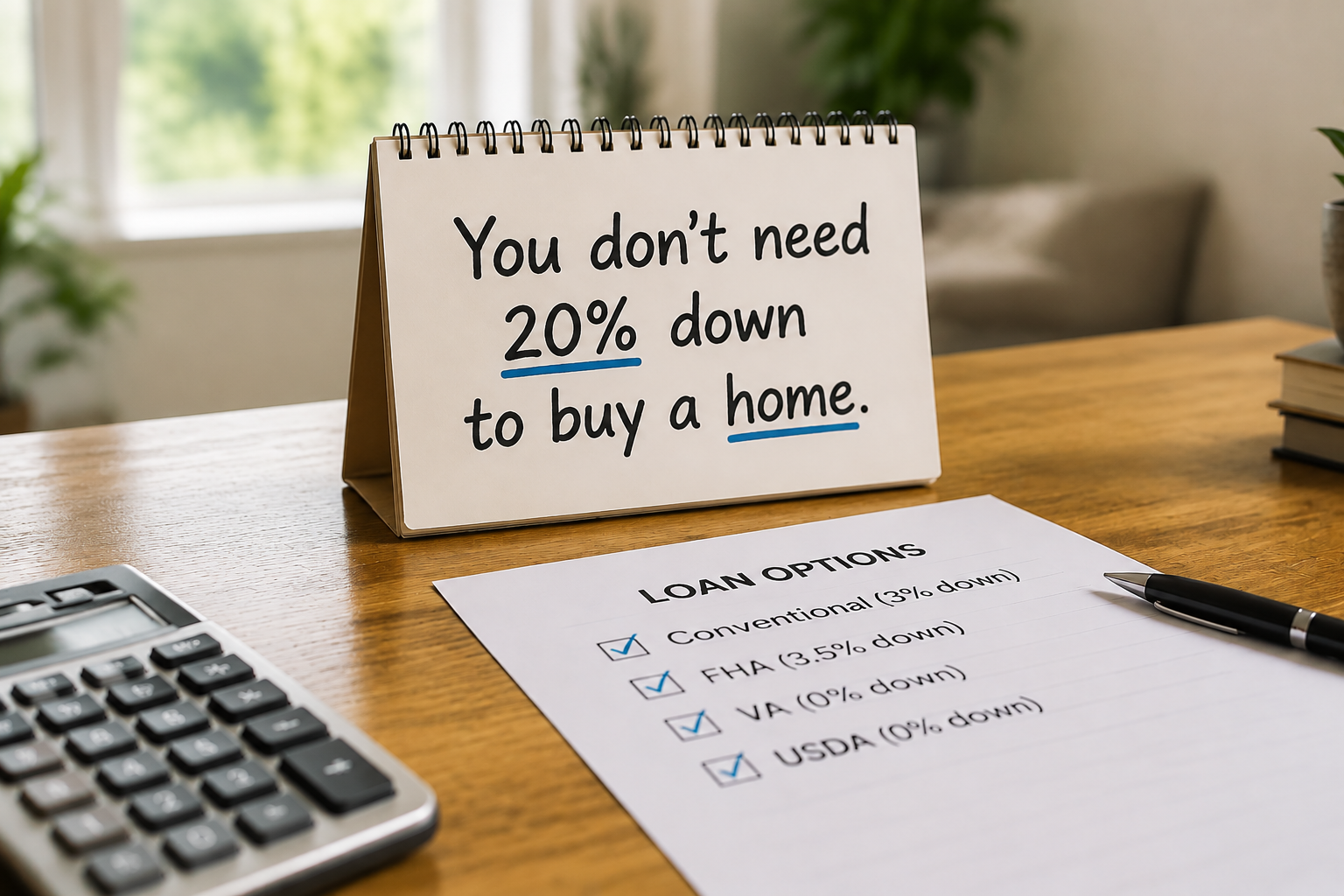
Do you need 20% down to buy a house? No. Many loan programs allow qualified buyers to purchase with as little as 3% down, while FHA, VA, and USDA loans may require even less. Although putting less down often means mortgage insurance or a larger loan balance, it can also help you buy sooner and preserve cash.
Here are five reasons a smaller down payment might genuinely be the smarter move, not just the easier one.
A smaller down payment can make buying a home more accessible, but it also comes with trade-offs. Putting less money down usually means a larger loan balance, potentially higher monthly payments, and possible mortgage insurance costs depending on the loan program. The right down payment amount depends on your financial situation, monthly budget, and long-term goals not just reaching a specific percentage.
Section 02
Reason 1: Multiple Loan Programs Go Well Below 20%
The 20% figure was never a requirement. It’s the threshold that avoids PMI on a conventional loan, and it stuck in people’s minds as a rule. Several programs allow far less:
| Loan Program | Minimum Down Payment |
|---|---|
| Conventional | As low as 3% for qualifying buyers |
| FHA | 3.5% |
| VA | 0% for eligible service members and veterans |
| USDA | 0% for eligible rural and suburban areas |
If you qualify for one of these, the 20% target isn’t a wall you have to climb before you can buy at all.
Section 03
Reason 2: PMI Is Only One Part of the Cost Equation
PMI is one of the costs buyers should consider when putting down less than 20%, but it may not last for the entire life of a conventional loan.
PMI protects the lender if a borrower defaults. For conventional loans, PMI may be removed once the borrower reaches the required equity threshold based on loan terms and applicable rules.
Mortgage insurance rules vary by loan program. Conventional loans use PMI, while FHA loans use Mortgage Insurance Premium (MIP), which may remain for the life of the loan depending on the original down payment and loan terms. VA and USDA loans have their own fee structures and eligibility requirements.
The Consumer Financial Protection Bureau (CFPB) provides additional information about how Private Mortgage Insurance (PMI) works and when it may apply to conventional mortgages.
PMI should not be viewed in isolation. A lower down payment may increase your loan balance and interest costs, while a larger down payment reduces borrowing costs but uses more of your available cash.
- Monthly mortgage payment
- Total interest paid over the life of the loan
- PMI costs, if applicable
- Cash reserves after closing
- How much equity they build in the home
For example, putting 5% down instead of 20% may help a buyer keep more cash available for emergencies, repairs, or other financial goals. But it may also mean a larger loan balance and additional costs over time.
The right choice depends on your budget, financial goals, and how long you plan to own the home.
Section 04
Reason 3: Down Payment Assistance and Gift Funds Can Close the Gap
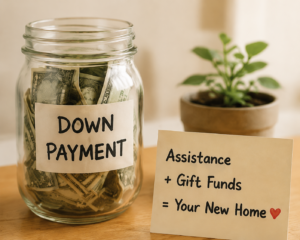
You don’t have to save every dollar of your down payment from your own paycheck. Family gift funds and local down payment assistance programs are common, legitimate ways to bridge part of the distance.
Depending on where you live, you may also qualify for a down payment assistance program offered by a state housing agency or local organization. These programs may provide grants, deferred-payment loans, or forgivable loans for eligible borrowers. Eligibility requirements vary by location, income, and loan program.
Say you’ve saved $20,000 and receive a $15,000 gift from family:
| Source | Amount |
|---|---|
| Personal savings | $20,000 |
| Gift funds | $15,000 |
| Total available | $35,000 |
That $35,000 covers 5% down with room to spare, but it doesn’t come close to 20%, which shows how differently the math works depending on which target you’re aiming for.
Section 05
Reason 4: Waiting Has Costs and Benefits
Waiting to save a larger down payment is not always the wrong choice, but it is important to consider what happens during that time. Home prices, interest rates, rent costs, and your personal financial situation may all change while you wait.
This approach may work well if you are able to build savings faster, home prices remain stable, or market conditions become more favorable. However, if prices rise while you save, your target down payment could increase as well.
One factor many buyers overlook is how waiting may affect the overall cost of buying a home. If you decide to save an additional $750 per month to close the $45,000 gap between a 5% and 20% down payment, it would take about 5 years to reach that goal. During that time, home prices may change depending on market conditions.
Home prices may also decline or remain flat depending on market conditions, so this example is only one possible scenario. The example below shows a hypothetical scenario where a $300,000 home increases in value by 4% annually. This is only an illustration and does not represent a prediction of future home prices.
| Timeline | Hypothetical Home Price | Hypothetical 20% Down Payment |
|---|---|---|
| Today | $300,000 | $60,000 |
| After 5 years (assuming 4% annual increase) | $364,996 | $72,999 |
These figures are for illustrative purposes only and assume a hypothetical 4% annual home price increase. Actual home values vary by location, market conditions, and timing. Past performance does not guarantee future results, and this example does not constitute an offer of credit or investment advice.
Section 06
Reason 5: Cash Reserves Matter More Than Hitting an Arbitrary Number
Draining your entire savings account to hit 20% down can leave you with no cushion when unexpected expenses come up. Some borrowers choose to keep 3 to 6 months of housing payments in reserve as a financial cushion, separate from the money used for closing.

On a $2,307 total monthly payment, a 3-month reserve is $6,921. Keeping that reserve intact may provide more financial flexibility than putting 20% down and using most of your available cash at closing.
This is an illustrative estimate only and does not constitute an offer of credit. Actual reserve recommendations vary by individual circumstances.
Section 07
Frequently Asked Questions
Doesn’t putting 20% down always save you money in the long run?
Not always, but it depends on your specific situation. A larger down payment reduces your loan balance and may lower your monthly payment and total interest costs. However, a smaller down payment may allow you to keep more cash available for emergencies, investments, or other expenses.
The better option depends on factors such as your loan terms, PMI costs, expected time in the home, and overall financial goals.
Is PMI ever tax deductible?
The deductibility of mortgage insurance premiums has changed multiple times in tax law over the years and depends on your income and the current tax year. This isn’t something to assume either way. Check with a tax professional about your specific situation rather than relying on outdated general advice.
How much more would I need to save if home prices rise while I’m saving for 20% down?
It depends entirely on the appreciation rate and how long you take to save. In this hypothetical example, a 4% annual home price increase would raise the 20% down payment target from $60,000 to about $72,999 after five years.
Section 08
Final Thought

A smaller down payment isn’t necessarily the right choice for everyone. Depending on your financial goals, loan options, and budget, it may help you buy a home sooner while keeping more cash available for other expenses.
Send a message to Duc Pham or the Wonder Rates team to discuss your options and understand which down payment strategy may fit your financial situation.
All figures, calculations, and examples in this article are for illustrative and educational purposes only and do not constitute an offer of credit or financial advice. Down payment requirements, PMI costs, appreciation rates, and reserve recommendations vary significantly by lender, location, and market conditions and are subject to change. Consult your loan officer for guidance specific to your situation.
Duc Pham, Mortgage Broker | NMLS# 844897 | Wonder Rates, Inc. | NMLS# 1518655 | DRE# 02047445 | DFPI# 60DBO-59134 | Equal Housing Opportunity. Equal Housing Lender. | Licensed in: AL, AZ, CA, CO, FL, GA, LA, MI, NC, OH, OK, OR, PA, SC, TX, VA, WA.