

Section 01
Selling and buying rarely line up on the same day. A bridge loan exists for the gap in between, letting you use the equity in your current home to fund your next purchase before the old one sells. It solves a real timing problem, but it is one of the more expensive tools in a homebuyer’s toolkit, and it is worth understanding exactly what you are paying for before you use one.
Section 02
What a Bridge Loan Actually Does
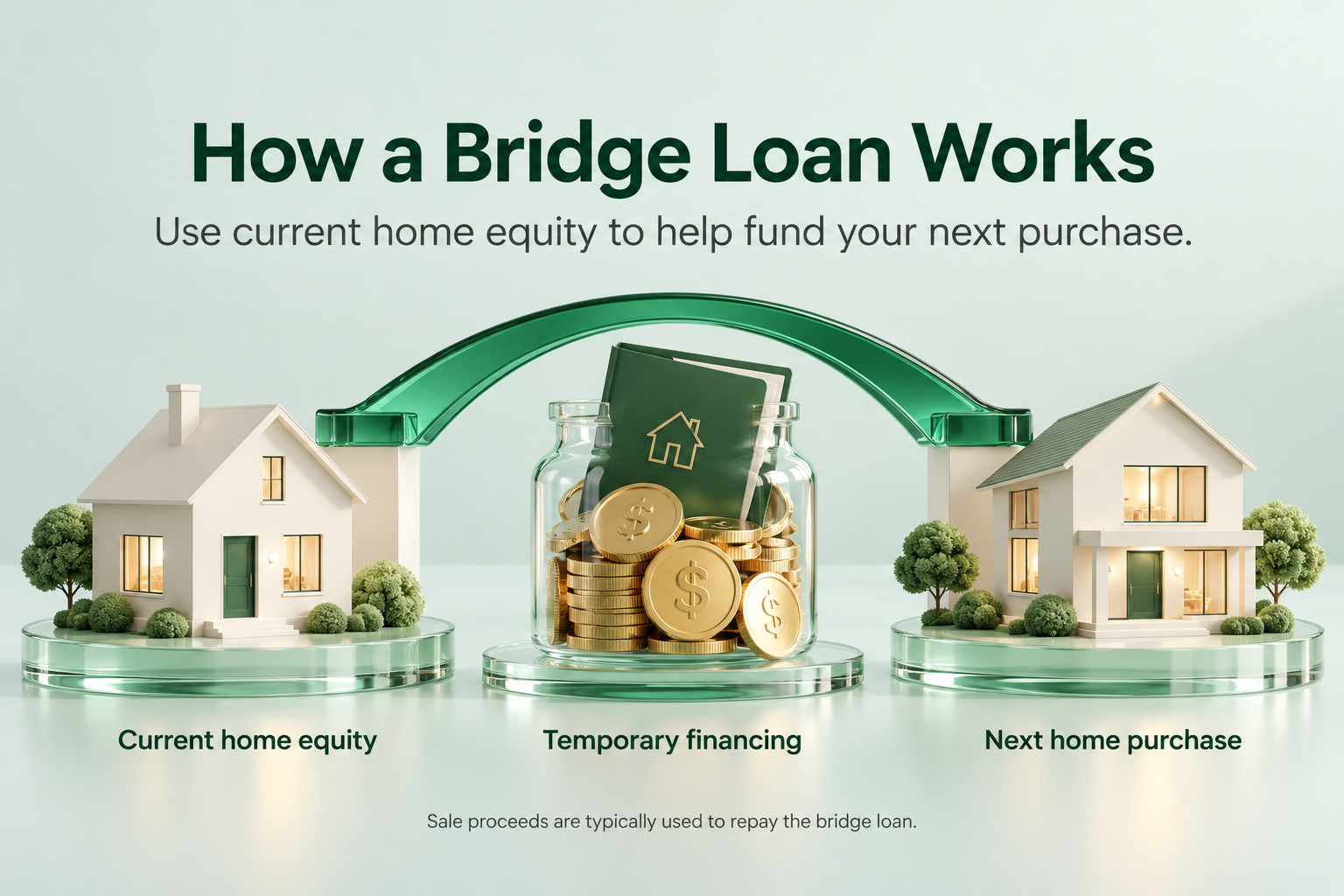 A bridge loan is a short-term loan, generally lasting 6 to 12 months, secured by the equity in your current home. The funds are typically used toward the down payment and closing costs on your new home, letting you close on the purchase before your existing home has sold. Once your old home sells, the proceeds are used to pay off the bridge loan.
This is different from simply carrying two mortgages at once, though it can feel similar. The bridge loan is specifically structured around the expectation that your current home will sell within a defined window, and it is priced accordingly.
Section 03
Why Bridge Loan Costs Need a Written Comparison
Bridge financing can involve interest, origination charges, appraisal and title expenses, and other lender-specific fees. Request a written breakdown showing the amount you will receive, required payments, total estimated borrowing cost, and balance due at maturity.
Compare the interest rate and APR separately. APR may already reflect certain financing charges, so avoid adding an origination-fee percentage to the APR as though they were the same measure.
Ask whether interest is paid monthly, withheld from the proceeds, or added to the amount due. Also confirm any minimum-interest requirement, early-payoff charge, extension fee, and conditions for renewal before choosing a loan.
Section 04
What Lenders Review Before Approving the Financing
vailable equity and existing liens. The lender reviews the property value, outstanding mortgage debt, and permitted loan-to-value limits. Total equity is not necessarily the amount available to borrow.
Credit, income, and reserves. Requirements vary by lender and product. Ask for the actual eligibility criteria rather than relying on a universal credit-score or equity threshold.
Overlapping obligations. During the mortgage underwriting process, the lender must determine how the current mortgage, proposed mortgage, bridge financing, and other debts affect qualification.
For example, Fannie Mae’s bridge-loan guidance requires documentation of the borrower’s ability to carry the relevant payments. Its monthly debt-obligation rules also describe circumstances in which a bridge-loan obligation may be excluded from DTI with specified sale documentation. These are program-specific rules, not a guarantee that every lender treats the transaction identically. Fannie Mae
A documented repayment strategy. Confirm how the bridge loan will be repaid, how much net sale proceeds are reasonably expected, and what happens if the sale is delayed or produces less money than planned.
Section 05
The Real Risk Worth Understanding Before You Sign
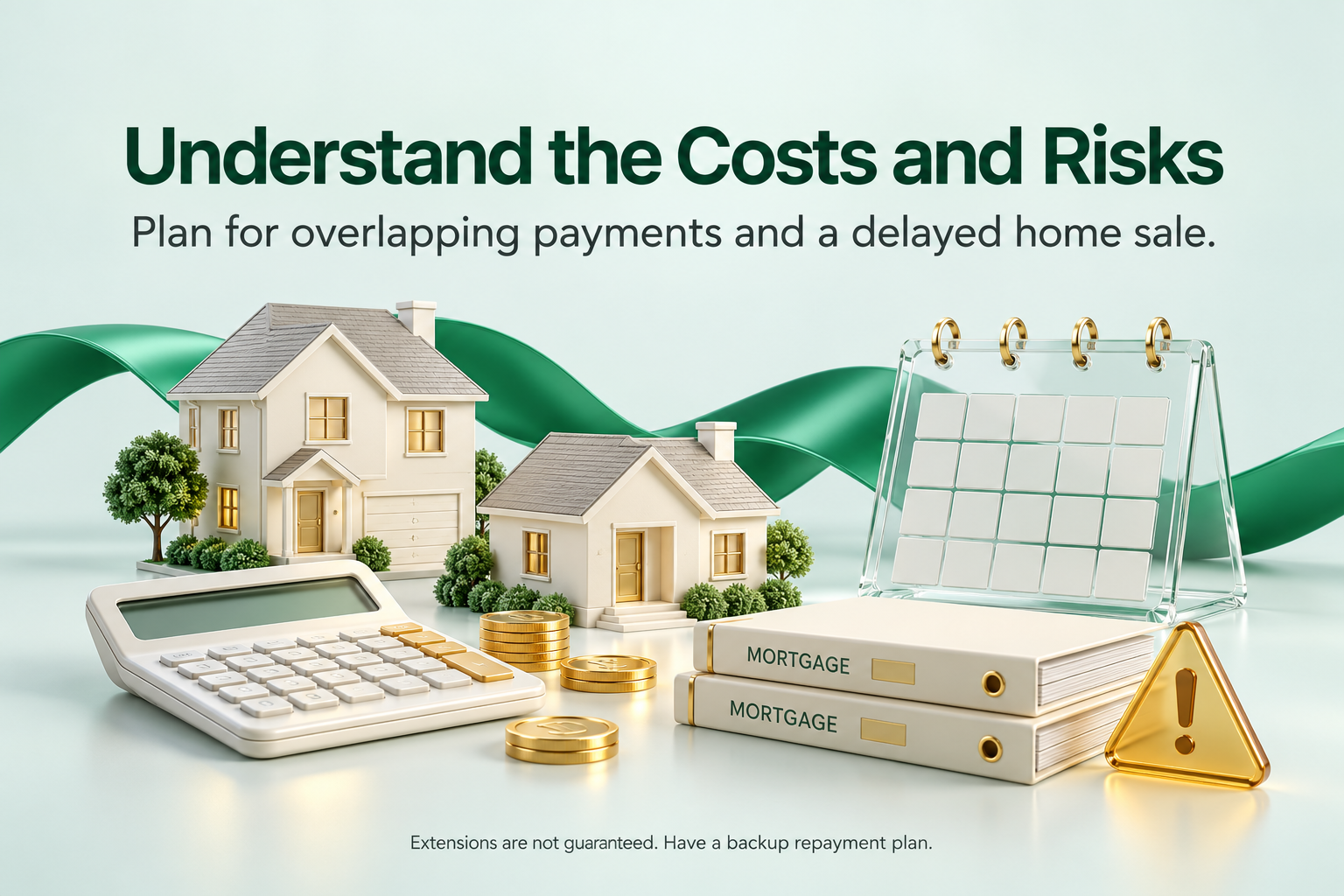 If your current home does not sell within the bridge loan’s term, you are still responsible for repaying the full loan amount. Some lenders offer extensions, but these are not guaranteed and typically cost more. In a worst-case scenario, failing to repay a bridge loan secured by your departing home could put that property at risk, since it is the collateral behind the loan.
This is why a realistic pricing strategy and a genuine backup plan matter as much as the loan itself. A bridge loan removes the timing pressure of a purchase, but it does not remove the pressure of actually selling your old home at a reasonable price within the loan term.
Section 06
When a Bridge Loan Tends to Make Sense
You need to move on a timeline you cannot control. Relocating for work or a family situation sometimes leaves little room to wait for your current home to sell first.
You have strong equity but need a financing structure for the overlap period. A bridge loan can use that equity to help solve the timing gap, but the buyer still must qualify under the bridge lender’s debt-to-income, payment, and exit-strategy requirements.
You need funds to prepare your current home for sale. Some buyers use bridge financing partly to cover repairs or updates needed to list their current home competitively, in addition to funding the new purchase.
Section 07
Estimate the Cost of Owning Both Homes Temporarily
Use the Wonder Rates Mortgage Payment Calculator to estimate the new home’s payment. Then separately add the current home’s payment, bridge-loan costs, utilities, maintenance, and other expenses during the overlap period.
Compare a shorter sale timeline with a longer delay. The calculator does not price bridge financing or determine eligibility; use the lender’s written bridge-loan terms for those figures.
Section 08
Alternatives Worth Comparing First

A bridge loan is not the only way to solve a buy-before-you-sell timing problem, and it is often not the cheapest.
A HELOC or home equity loan may be another way to access equity, but compare actual pricing, fees, payment requirements, and closing timelines. Ask whether the lender permits the current home to be listed for sale and whether the new mortgage lender accepts the borrowed funds. Do not assume a HELOC will always be cheaper or that a bridge loan will always close faster.
A contingent offer on your new home, made dependent on selling your current home within a specified window, avoids the cost of short-term financing entirely. Sellers in competitive markets may prefer offers without this contingency, though.
A sale-leaseback arrangement, where you sell your current home but arrange to rent it back from the buyer for a short period, can also solve the timing problem without a bridge loan. This depends on whether the buyer is willing to agree to it.
Section 09
Tax Considerations Worth Asking About
Do not assume bridge-loan interest is deductible simply because the money helps purchase a home. The IRS explains that home mortgage interest deductions depend on requirements involving the secured property, use of proceeds, itemization, and applicable limits. Internal Revenue Service
A loan secured by the departing home and used to purchase another property deserves specific tax review. Give your tax professional the loan documents and a record of how the funds will be used before including an assumed deduction in your cost comparison.
Section 10
Frequently Asked Questions
How long does a bridge loan last?
The maturity date is set by the loan agreement. Confirm the original term, repayment schedule, and any extension conditions. Do not rely on an extension unless the lender has approved it in writing.
How much equity do I need for a bridge loan?
There is no single requirement across all lenders. Available financing depends on the property value, existing liens, permitted leverage, fees, and the lender’s eligibility rules.
Is a bridge loan or a HELOC better for buying before selling?
Compare written offers based on total cost, timing, collateral, required payments, and sale restrictions. The appropriate option also depends on whether the new mortgage lender accepts the financing structure.
Is a bridge loan or a HELOC better for buying before selling?
It depends on your timeline and equity. A HELOC is generally less expensive but typically takes longer to approve. A bridge loan is usually faster to close but costs more, making it more suited to time-sensitive situations.
Do all lenders offer bridge loans?
No. Bridge loans are typically portfolio products offered by specialized lenders rather than a standard product available everywhere, so availability and terms vary significantly.
Section 11
This Article Is for General Education
This article is for educational purposes only and is not a commitment to lend, and is not tax advice. Bridge loan terms, rates, and requirements vary significantly by lender. Consult a tax professional regarding any potential interest deductibility for your specific situation.
Section 12
Next Steps
Before committing to bridge financing, compare the funds available for closing, overlapping housing costs, expected net sale proceeds, and a backup repayment plan.
If you want help evaluating the mortgage side of buying before selling, talk with a Wonder Rates loan officer about your purchase and sale timeline. Available financing options depend on lender programs, property details, and borrower eligibility.
Duc Pham, Mortgage Broker | NMLS# 844897
Wonder Rates, Inc. | NMLS# 1518655
Equal Housing Lender.
AZ, CA, CO, FL, GA, LA , MI, OK, PA, SC, TX, VA, WA, OH, AL, OR, NC
This article is for educational purposes only and is not a commitment to lend. Loan approval is subject to creditworthiness, income verification, property eligibility, and current underwriting guidelines. Loan programs, interest rates, and lender fees may change without notice. Always review your official Loan Estimate before making a financing decision.



