
Section 01
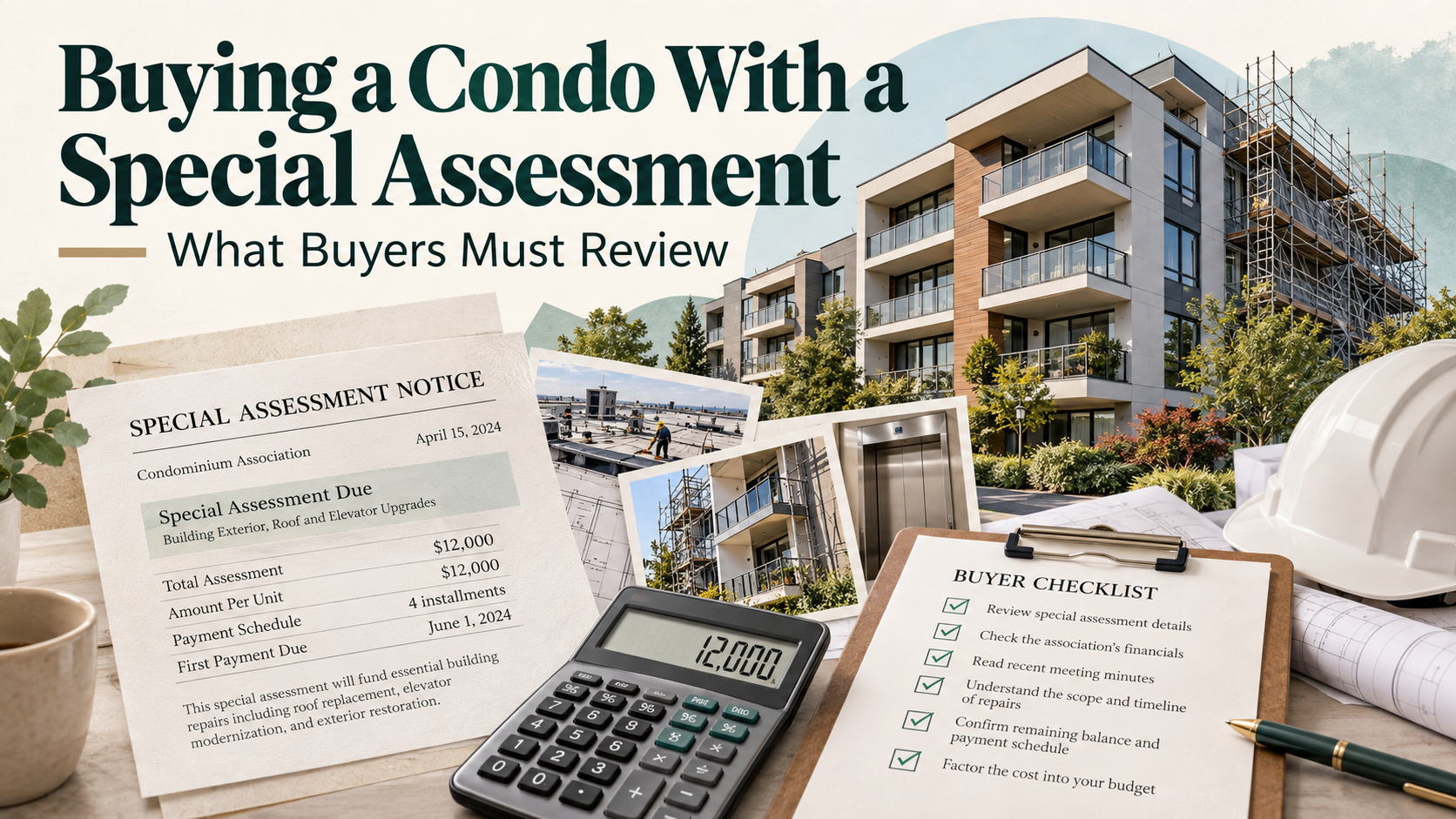
A condo special assessment is an additional charge imposed by a homeowners association when regular dues or reserves are not enough to pay for a major expense. Buyers should review the amount, purpose, payment schedule, association finances, insurance, litigation, and lender requirements before committing to the purchase.
The assessment itself is not always a reason to walk away. It may fund a necessary roof, elevator, structural repair, insurance deductible, or safety project. The more important question is whether the association identified the problem early, created a credible plan, and can complete the work without repeated financial surprises.
Section 02
What Is a Condo Special Assessment?
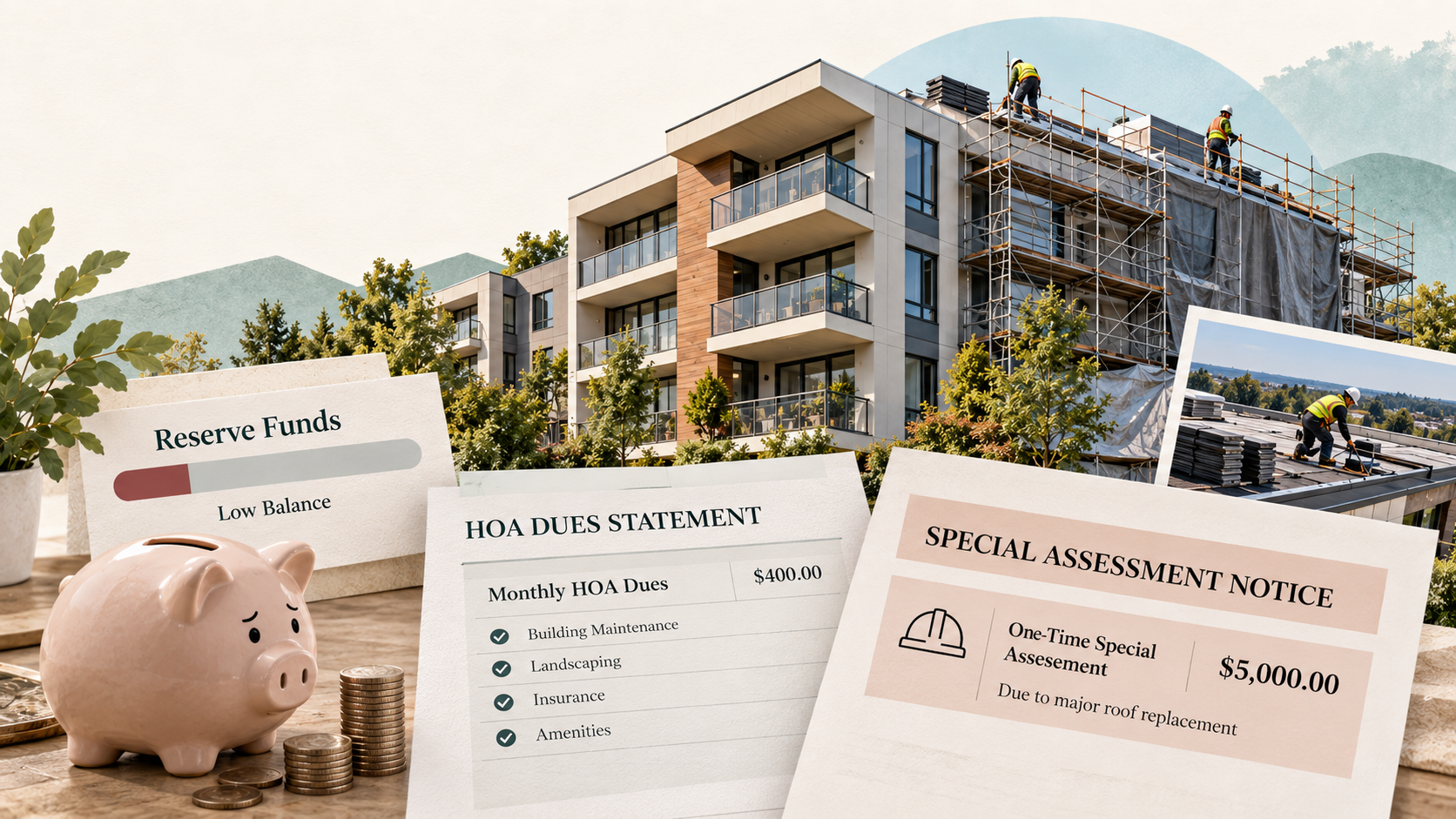
Condo owners normally pay recurring association dues. Those dues support operating costs and, ideally, contributions to reserves for future repairs. When available funds are not sufficient, the association may charge owners an additional amount known as a special assessment.
An assessment can be collected once or through installments. It may already be approved, under discussion, or connected to work that has started but is not complete. Buyers should not rely only on the seller’s summary. Request the official notice, board minutes, budget, reserve study, engineering reports, and payment schedule.
Section 03
Read the Story Behind the Condo Special Assessment

The advertised balance may not be the full exposure
The seller may disclose the remaining balance of an approved assessment while the association is considering another phase of work. Read recent meeting minutes for references to bids, inspections, deferred maintenance, insurance claims, or funding shortfalls.
Ask whether the quoted assessment covers the entire project and whether cost overruns are possible. A low initial charge can be misleading if the scope remains uncertain.
The assessment may reveal weak reserves
Major building components eventually need repair. A special assessment can indicate that reserves were not sufficient, but the reason matters. An unexpected event is different from years of underfunding.
Review the reserve study and compare planned contributions with anticipated projects. Low dues are not automatically a benefit if they postpone necessary work.
Owner delinquencies can weaken the plan
If many owners do not pay their dues or assessment, the association may have difficulty funding repairs. Delinquencies can also affect project eligibility under certain mortgage programs.
Fannie Mae’s full condo project review guidance includes requirements involving assessment delinquencies. Other investors and lenders may apply different standards.
The repair may affect safety or marketability
Structural, water-intrusion, electrical, balcony, roof, and elevator problems may affect more than the individual unit. Ask whether permits, engineering reports, contractor bids, and completion dates are available.
An appraisal is not a substitute for reviewing the project or inspecting the unit. Cathryn’s explanation of appraisal versus inspection clarifies why a value opinion and a condition review serve different purposes.
Insurance may be part of the underlying problem
An assessment may be needed because premiums, deductibles, coverage gaps, or uninsured damage created a funding need. Request information about the master policy and ask an insurance professional what the unit owner must cover separately.
Insurance conditions can change after closing. Cathryn’s guide to a home insurance nonrenewal explains why continuing coverage deserves attention.
The payment may affect the buyer’s cash plan
Even when the seller agrees to pay an assessment, the contract must explain how and when that happens. If the buyer assumes installments, the lender may need to consider the obligation in the transaction.
Do not spend every available dollar on the down payment while assuming the association will have no other needs. Preserve reserves for moving, unit repairs, and ownership costs.
Resale may become more difficult
Future buyers may ask the same questions about the project. Incomplete repairs, pending litigation, inadequate insurance, or recurring assessments can reduce the pool of interested buyers and eligible financing options.
That does not mean the unit cannot be sold. It means the buyer should evaluate the project, not only the interior finishes.
Section 04
Who Pays a Condo Special Assessment at Closing?

Responsibility depends on the purchase contract, association documents, local law, and the timing of approval. Possible arrangements include:
- The seller pays the assessment before closing.
- Funds are collected from the seller through escrow.
- The buyer assumes remaining installments.
- The parties negotiate a credit, subject to loan-program limits.
- The association requires payment upon transfer.
The purchase agreement should identify the assessment precisely. A general statement that the seller will pay “existing assessments” may not address a project discussed but not formally approved.
Ask the title or settlement professional to confirm the association’s demand and outstanding balance. Legal questions should be reviewed by an attorney where appropriate.
Section 05
How a Special Assessment May Affect Mortgage Approval
Condo financing includes review of both the borrower and the project. The lender may request information about the assessment’s purpose, amount, owner delinquencies, repair status, structural safety, insurance, litigation, and reserves.
Fannie Mae notes in its condo appraisal requirements that the appraiser considers the amount and purpose of association assessments. An appraisal alone does not establish full project eligibility.
Avoid assuming that a pre-approval guarantees approval of any condo. A borrower may qualify financially while a particular project requires additional review or does not meet the selected program’s requirements.
Section 06
Documents Buyers Should Request
- Current budget and recent financial statements
- Reserve study and reserve balance
- Special-assessment notice and payment schedule
- Board and owner meeting minutes
- Engineering or structural reports
- Contractor bids and construction contracts
- Master insurance declaration and deductible information
- Pending litigation disclosures
- Owner delinquency information
- Rules, bylaws, and transfer requirements
Read the documents together. A reserve study may identify work that appears again in meeting minutes but is missing from the approved budget.
Section 07
Questions to Ask Before Removing Contingencies
Ask the association or management company:
- What problem is the assessment intended to solve?
- Has the complete scope been approved?
- Is the contract fixed-price or subject to change?
- How many owners are delinquent?
- Is another assessment being discussed?
- Are permits and insurance claims resolved?
Ask the lender:
- What condo review is required?
- Does the assessment require additional documentation?
- How will assumed installments be treated?
- Has the project insurance been reviewed?
- Could the repair status affect closing?
Section 08
A Decision Framework: Proceed, Renegotiate, or Pause
Proceed when the repair scope is clear, funding appears credible, insurance is acceptable, the contract assigns responsibility clearly, and the project meets financing requirements. Renegotiate when the issue is understandable but the price, credit, closing date, or seller responsibility does not reflect the buyer’s exposure. Pause when material documents are missing, the scope keeps changing, coverage is uncertain, or the transaction depends on assumptions nobody will confirm in writing.
Section 09
Frequently Asked Questions
Is a special assessment always a red flag?
No. It may show that the association is addressing a necessary project. Buyers should evaluate the cause, financial plan, repair scope, and likelihood of additional costs.
Can the seller pay it off?
Possibly. The contract, association requirements, and settlement process determine how payment is handled.
Can I finance the assessment?
Options depend on the transaction and borrower. Do not assume the mortgage can simply absorb the assessment. Discuss the structure before signing the contract.
Does an inspection cover the building?
A unit inspection may not provide a complete review of common elements or engineering issues. Review project-level reports and consider appropriate specialists.
What if the assessment is not approved yet?
Pending discussions still matter. Review minutes, budgets, notices, and proposed projects, then address responsibility in the purchase agreement.
Section 10
Review the Project Before You Commit
A condo special assessment should trigger careful investigation, not an automatic yes or no. Review why it exists, whether the budget is credible, who pays, how repairs affect safety and insurance, and whether the project meets financing requirements. A well-managed repair can protect the building, while an unclear assessment may signal broader financial problems.
A Wonder Rates loan officer can review the proposed condo payment, explain what project documents the selected loan program may require, and help identify financing questions before important contract deadlines.
Start your condo financing review with Wonder Rates.
Duc Pham, Mortgage Broker | NMLS# 844897
Wonder Rates, Inc. | NMLS# 1518655
Equal Housing Lender.
AZ, CA, CO, FL, GA, LA, MI, OK, PA, SC, TX, VA, WA, OH, AL, OR, NC
This article is for educational purposes only and is not legal, engineering, insurance, financial, or tax advice and is not a commitment to lend. Condo requirements, contracts, assessments, insurance, and loan guidelines vary. Loan approval is subject to the complete application, project eligibility, property review, and current underwriting requirements. Consult qualified professionals before making a decision.



