

Section 01
Buying a home during divorce may be possible, but unresolved joint debts, support obligations, property ownership, and court orders can affect the mortgage review. Borrowers should coordinate with their attorney and lender before assuming that separation or a private agreement removes financial responsibility.
The emotional goal may be a fresh start. The mortgage file, however, must reflect current legal and financial facts.
Section 02
The Road From Separation to a New Home
- What remains financially connected
- What title documents do and do not change
- How support and property division enter the review
- What happens to the existing home
- When the new purchase becomes realistic
- Frequently asked questions
Section 03
Why Buying a Home During Divorce Is Complicated

A divorcing borrower may still own a home, remain obligated on a joint mortgage, pay or receive support, share accounts, or live under temporary court orders. State marital-property law can also affect title and signatures.
The lender is not deciding who behaved fairly in the marriage. It is determining legally enforceable obligations, acceptable income, assets, ownership, and the borrower’s ability to manage the proposed loan.
Section 04
What Must Be Settled Before the New Purchase Works
A divorce decree can assign responsibility for a debt between spouses without releasing either borrower from the creditor’s contract. The CFPB explains that divorce generally does not remove responsibility for joint debt unless the creditor releases the borrower or the debt is otherwise resolved.
Mortgage qualification is a separate question. Under Fannie Mae’s court-ordered debt assignment guidance, a lender is not required to include certain debts assigned to another party by court order in the borrower’s recurring monthly obligations. This does not release the borrower from legal liability.
Provide the lender with the applicable court order or agreement and ask which program rules apply. Do not assume that an informal arrangement or a former spouse making the payments produces the same result.
Section 05
What Happens to the Existing Home?

Common possibilities include selling, one spouse refinancing, one spouse remaining temporarily, or a court-ordered transfer. Each option affects the timeline differently.
If equity is needed for the new purchase, confirm when proceeds become available and whether liens or settlement obligations must be paid. If one spouse plans to refinance, approval is not guaranteed until that transaction is complete.
Home equity choices should be evaluated carefully. Cathryn’s article comparing a refinance with a HELOC helps explain that changing a first mortgage, adding a credit line, and removing a borrower are separate actions.
If one spouse is considering taking over the existing loan, review how an assumable mortgage works. Ask the servicer which transfer or assumption process applies and whether a separate release of liability is required. A transfer of ownership alone does not establish that the departing borrower has been released.
Section 06
Documents the Lender May Need
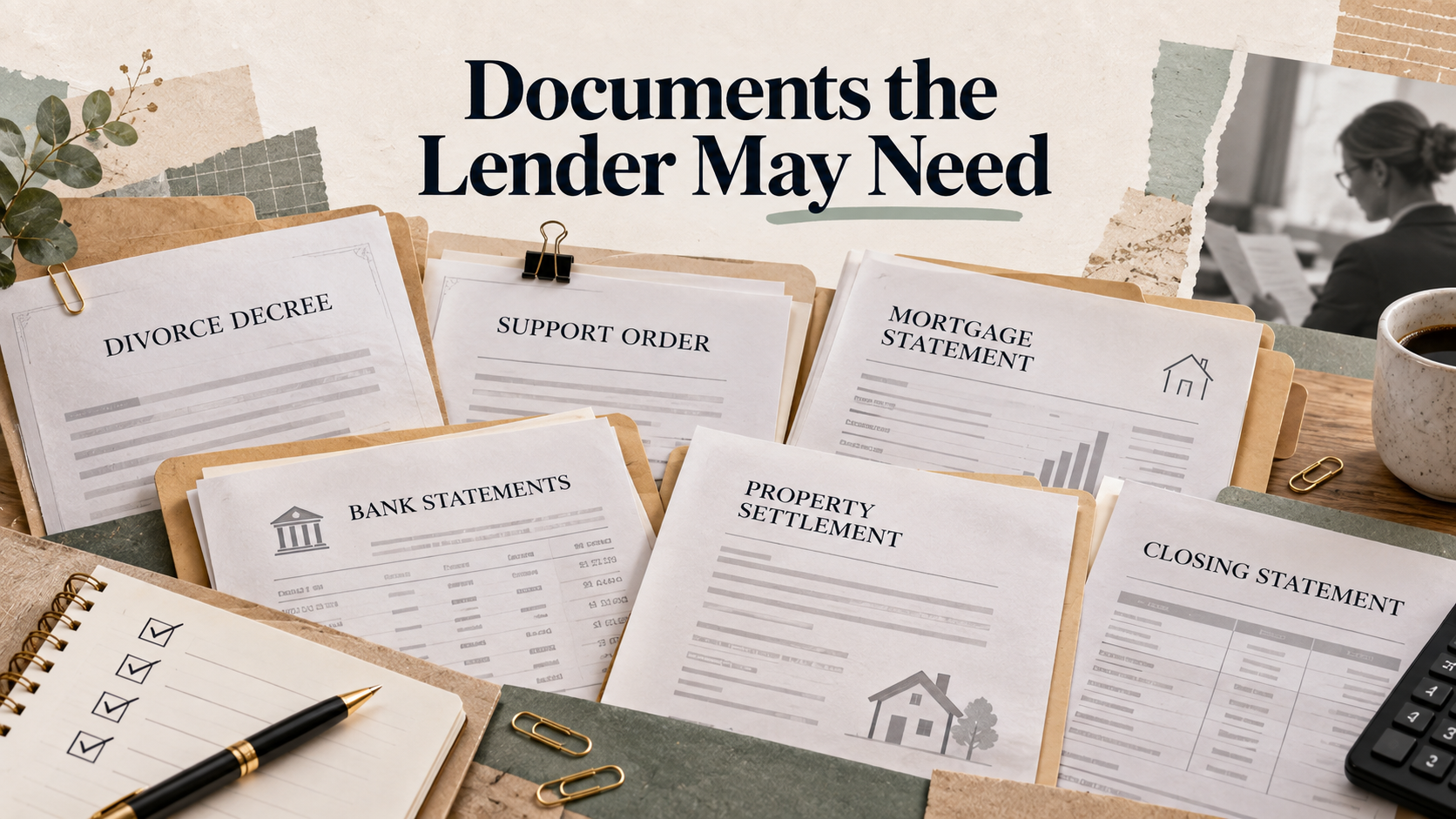
Depending on the stage and program, prepare:
- Divorce decree or separation agreement
- Temporary and final court orders
- Property-settlement agreement
- Support orders and payment evidence
- Existing mortgage statements
- Proof of who makes joint-debt payments
- Listing agreement or closing statement for a home sale
- Deeds and title documentation
- Bank statements showing asset division
- Attorney letters when clarification is appropriate
Requirements vary, and sensitive documents should be transmitted through approved secure channels.
Section 07
A Practical Decision Sequence
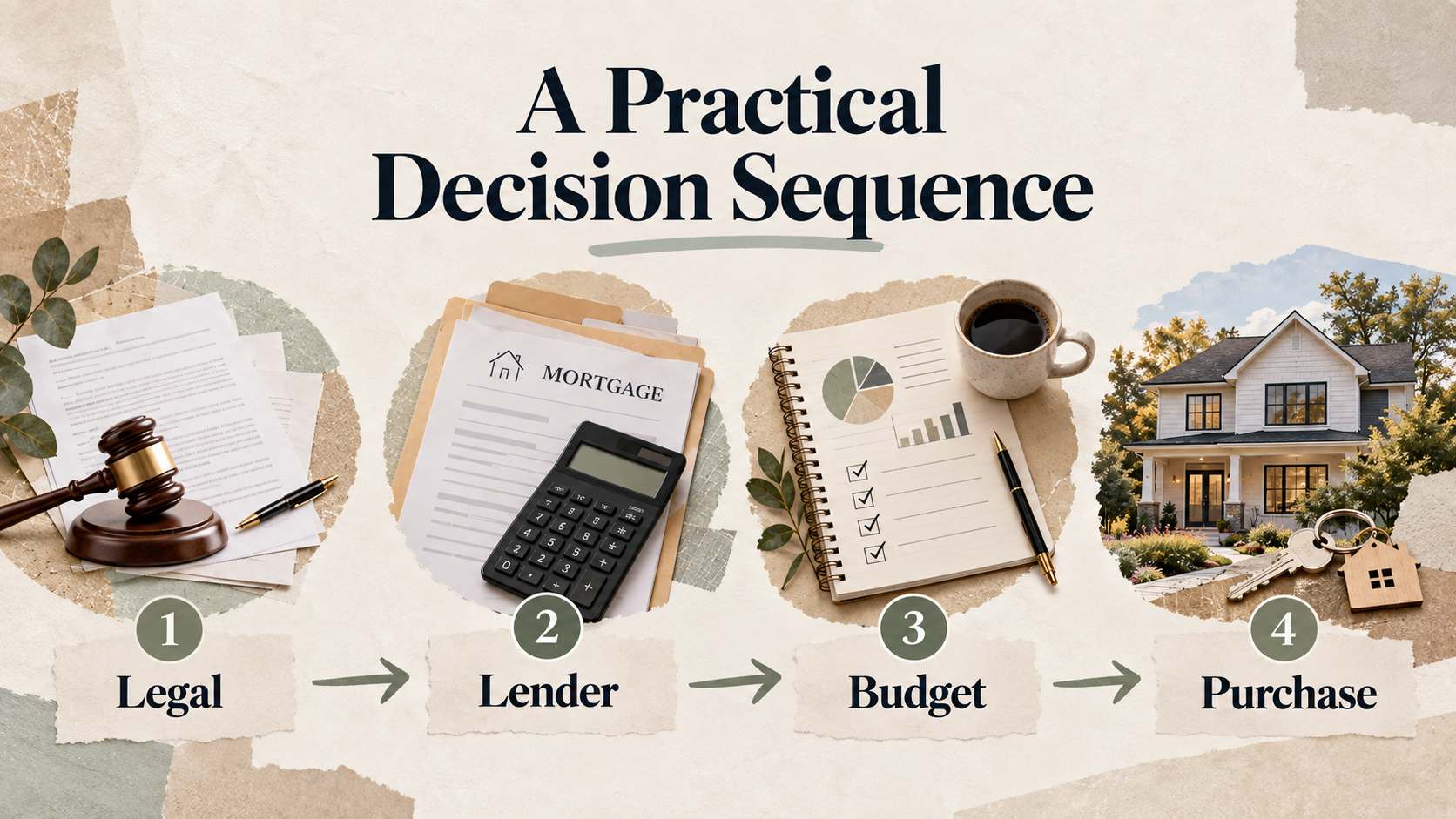
First, ask the attorney which obligations and property rights exist today. Second, ask the lender how those facts are treated for the proposed program. Third, establish a budget using post-divorce income and expenses. Fourth, choose a purchase timeline that does not depend on an uncertain refinance or sale.
Do not sign a purchase contract based solely on an expected settlement outcome. Include appropriate contingencies and professional review.
Section 08
Three Common Scenarios
The existing home will be sold
The borrower may need sale proceeds for the new purchase or may need the existing mortgage paid before qualification works. Coordinate listing, contract, closing, and possession dates. A delayed sale can affect both available assets and debt obligations.
One spouse will keep the home
The settlement may require that spouse to refinance or pursue another approved method of removing the other borrower. Until the creditor actually releases liability, the departing spouse may remain responsible. Set realistic deadlines and understand what happens if the refinance is not approved.
Both spouses remain on the mortgage temporarily
This arrangement can preserve housing stability, but it also keeps the financial connection alive. Late payments can affect both borrowers. The agreement should address payment monitoring, taxes, insurance, repairs, sale triggers, and communication with the servicer.
Section 09
Protect the New Purchase From Old Assumptions
Build the new budget without depending on voluntary support that is not documented or on a former spouse completing a future refinance. Keep sufficient reserves for legal fees, moving, childcare, and overlapping housing costs.
Review credit reports early and again before closing. Joint accounts that were expected to close may remain open. New late payments, increased balances, or disputes can change the underwriting picture.
The borrower should also confirm homeowners insurance and title requirements for the new property. If the divorce affects name changes or asset ownership, keep consistent identity and legal documents available.
Start with the income and expenses you expect to manage independently. Our guide to how much house you can afford explains why qualifying for a loan and feeling comfortable with the payment are separate decisions.
Use the Wonder Rates mortgage payment calculator to estimate a proposed housing payment. Then add support obligations, legal fees, childcare, moving expenses, and any overlapping housing costs to your personal budget.
The calculator does not determine how divorce-related debts, support income, or court orders will be treated in underwriting.
Section 10
Frequently Asked Questions
Can I buy before the divorce is final?
Possibly, but state law, existing obligations, ownership rights, and required signatures can affect the transaction.
Does a divorce decree remove me from a mortgage?
No. The creditor must release the borrower through an accepted process such as payoff, refinance, or approved assumption where available.
Can support income be used?
It may be considered when it meets applicable documentation, receipt, and continuance requirements.
Can my former spouse’s mortgage payment be excluded from my debts?
Potentially in some scenarios when program requirements and documentation are satisfied. It is not automatic.
Should I apply before signing a settlement agreement?
Early review can identify how proposed terms may affect qualification, but legal decisions should be made with the attorney, not designed solely around a mortgage result.
Section 11
Final Takeaway
Buying a home during divorce requires coordination between legal rights and mortgage rules. Clarify joint debt, support, assets, title, existing property, and timing before shopping. A clean plan protects both the transaction and the borrower’s financial reset.
Duc Pham, Mortgage Broker | NMLS# 844897
****Wonder Rates, Inc. | NMLS# 1518655
Equal Housing Lender.
AZ, CA, CO, FL, GA, LA, MI, OK, PA, SC, TX, VA, WA, OH, AL, OR, NC
This article is for educational purposes only and is not a commitment to lend or legal or tax advice. Divorce, property, title, and support laws vary by state. Loan approval is subject to creditworthiness, income verification, assets, property eligibility, and current underwriting guidelines. Consult qualified legal and tax professionals before making decisions.



