

Section 01
Qualifying for an FHA loan takes more than meeting the borrower side of things: your income, your credit, your down payment. The home itself has to clear its own bar too, through what FHA calls Minimum Property Requirements. At the simplest level, these requirements focus on whether a property is safe, sound, and secure. Minimum Property Standards, a related but separate set of rules, come into play mainly for new construction, so the two terms are not interchangeable in every situation. HUD’s Single Family Housing Policy Handbook 4000.1 is the official rulebook behind all of it.
Here is the good news before anything else: FHA does not expect a home to be new, recently renovated, or free of every cosmetic flaw. The appraisal process is built to flag conditions relevant to the applicable standards, and when something gets flagged, that might mean a repair is needed, or it might mean nothing changes at all. This guide walks through what counts, what an appraiser actually checks, which issues tend to trigger repairs, and what your options look like if a property falls short.
Disclaimer: This article is provided for general educational and informational purposes only and does not constitute financial, mortgage, legal, tax, engineering, or home inspection advice. FHA property requirements, appraisal standards, repair obligations, and loan eligibility decisions depend on applicable HUD regulations and policies, the property’s characteristics, the loan program, and the lender’s review. Requirements and guidance may change over time. The examples in this article are hypothetical and are intended to illustrate general concepts, not to predict the outcome of any specific transaction. Readers should consult an FHA-approved lender, qualified property inspectors, and other relevant professionals before making decisions about a property or mortgage.
Section 02
A Major Rewrite Is Coming, but It Is Not in Effect Yet
On September 22, 2026, HUD posted proposed revisions to its Minimum Property Requirements, calling it the biggest rewrite of FHA’s appraisal and property standards in more than twenty years. The proposal would retire the terms MPR and MPS entirely, folding them into one unified framework called Property Acceptability Criteria. This is still just a proposal. HUD opened it for public feedback through November 6, 2026, and has not set an effective date. Until FHA finalizes and publishes an update, every home and every borrower remains subject to the current Handbook 4000.1, last updated August 12, 2026. Everything in this guide reflects those current, effective rules. Ask your loan officer whether anything has changed by the time you are ready to make an offer.
Section 03
1. What Are FHA Property Requirements?
Understanding FHA Minimum Property Requirements (MPRs)
MPRs are property-condition requirements tied to FHA-insured financing. Their purpose is to help confirm that a property offers suitable collateral and meets the applicable standards for occupant safety and physical condition. Three broad principles sit underneath this framework.
Safe means the property should not present unacceptable health or safety hazards under the applicable standards. Soundmeans the property’s structure and major components should meet applicable condition requirements. Secure means the property should offer the protection and suitability expected for residential use. Treat these three words as a general explanatory framework, not a substitute for the specific criteria written into the current HUD handbook.
MPRs vs. Minimum Property Standards (MPS)
MPRs and MPS are related terms that get used interchangeably far too often, and that mix-up causes real confusion. MPRs concern the acceptability of properties under FHA review generally. MPS covers standards specific to new construction. This distinction actually matters to buyers, because the applicable requirements can differ depending on whether a property is an existing home, brand-new construction, or being financed through a specialized FHA program. Do not assume every existing property has to meet every construction standard that applies to new builds. Check HUD’s current handbook for the category that fits your specific property.
Do FHA Property Requirements Mean the Home Must Be in Perfect Condition?
No. Do not interpret FHA requirements as a demand for a flawless property. There is a real difference between ordinary wear and tear, cosmetic imperfections, deferred maintenance, and defects that actually affect safety, soundness, structural integrity, or another applicable standard. Here is the question that actually matters: not whether the home looks brand new, but whether its condition satisfies the standards that apply to this specific FHA transaction.
Section 04
2. FHA Appraisal Requirements: What Does the Appraiser Check?
The Purpose of an FHA Appraisal
An FHA appraisal does two things at once: it forms an opinion of the property’s market value, and it helps assess whether the property meets applicable FHA acceptability criteria. The appraiser observes the property and reports relevant deficiencies. From there, the lender evaluates the appraisal and any supporting documentation as part of its own underwriting responsibilities. An FHA appraisal is not the same thing as a comprehensive home inspection, and it does not guarantee the property is free of hidden defects or future repair needs.
Exterior and Site Conditions
The appraiser looks at visible roof or exterior damage, drainage concerns and signs of water intrusion, unsafe access or damaged walkways, conditions affecting the property’s use or structural integrity, and any environmental or site-related concerns that need a closer look. What happens next depends on the appraiser’s actual findings and the applicable FHA guidance. Not every crack, drainage issue, or exterior imperfection automatically makes a property ineligible.
Interior Condition and Major Systems
Inside the home, the appraiser reviews walls, ceilings, floors, and visible structural elements, plumbing and water supply, electrical systems and observable hazards, heating and other mechanical components, windows, doors, stairs, and safety-related features, and any evidence of moisture damage or other significant defects. The appraisal does not replace a specialist evaluation when a condition needs real technical diagnosis. If the appraiser cannot determine whether something meets the applicable criteria, the lender may ask for additional documentation.
What Happens When the Appraiser Cannot Determine Whether a Home Meets FHA Standards?
Sometimes an appraiser flags a condition that genuinely needs a closer look from a qualified professional. Depending on the concern, the lender might ask for an inspection report, repair documentation, or other evidence before deciding whether the property is acceptable. There is a real difference between an observation that simply needs clarification and a confirmed deficiency that must be corrected. A request for further evaluation does not mean your loan has been denied.
Section 05
3. FHA Property Requirements Checklist: Common Issues That May Require Repairs
The categories below are common areas of concern, not a universal list of automatic disqualifiers. Whether a specific condition needs repairs or further evaluation depends on the actual facts and current FHA guidance.

Roof Damage and Water Intrusion
Visible deterioration, active leaks, missing roofing materials, and water damage all fall under this umbrella. Unresolved water intrusion can damage interior materials and structural components over time, which is why the appraiser may require further evaluation or repairs if the condition affects the property’s acceptability. The age of a roof alone does not establish that it fails FHA requirements. Its actual condition, and the applicable program rules, are what matter.
Foundation Problems and Structural Damage
Visible foundation movement, significant cracking, unusual settlement, and damaged support components all fit here. Not every crack indicates a structural defect. When the appraiser flags a concern that cannot be resolved through the appraisal alone, the lender may request an evaluation from a qualified structural professional. Do not rely on photos or a general description to judge how serious structural damage actually is.
Electrical and Plumbing Problems
Exposed wiring, apparent electrical hazards, plumbing leaks, inadequate water supply, and drainage problems all get attention here. What the lender does next depends on the specific issue and whether it affects safety, functionality, or another applicable requirement. Some issues call for repair or specialist evaluation before the loan can move forward. An older electrical panel, fixture, or plumbing material does not automatically disqualify a home.
Heating, Cooling, and Mechanical Systems
The appraiser assesses observable mechanical components and whether the property meets applicable requirements for heating and other necessary systems. There is a real difference between an aging system that may need replacement someday and a system that is simply not functioning or does not meet the relevant standard today. Not every property needs central air conditioning. The specific requirement depends on the property’s circumstances and current FHA policy.
Peeling Paint and Potential Lead-Based Paint Hazards
Deteriorated paint can raise real concerns, particularly in older homes where lead-based paint rules may apply. Peeling paint is not purely cosmetic in every circumstance. The property’s age, the location and condition of the paint, and applicable HUD requirements all determine what action might be necessary. Homes built before 1978 deserve extra attention here, since federal lead-based paint disclosure and hazard rules often apply specifically to that era of construction. Confirm current rules and any applicable exceptions with your lender rather than assuming every instance of peeling paint triggers the same response.
Moisture, Mold, and Wood-Destroying Organisms
Visible moisture, damaged materials, suspected mold, or signs of wood-destroying organisms can all prompt a closer look. A standard appraisal may not fully establish the extent or cause of a suspected problem. Depending on what the appraiser finds, the lender may request an inspection by a qualified specialist or evidence that corrective work has already been done. A visible sign that warrants further investigation is not the same thing as a confirmed condition that makes a property unacceptable.
Windows, Stairs, Handrails, and Other Safety Concerns
Broken windows, unsafe stairs, and missing or damaged handrails all fall under this category when they are relevant to the property. The appraiser identifies deficiencies according to the applicable standards and professional judgment. Not every minor cosmetic defect needs correction, but a genuine safety hazard likely does.
Utilities, Water Supply, and Sanitation
Access to necessary utilities, along with adequate water supply and sanitation, matters to overall property acceptability. Nonfunctioning plumbing, an inadequate water supply, sewage disposal problems, or simply unavailable utilities can all raise concerns here. The exact criteria depend on the property type and applicable FHA requirements. If a condition cannot be fully assessed during the appraisal, further inspection or documentation may be needed.
Access, Drainage, and Other Site-Related Concerns
A property’s site conditions can matter when they affect safe access, use, drainage, or other applicable requirements. Flood exposure, retaining walls, drainage problems, and difficult access can all call for additional consideration, depending on the circumstances. A property is not automatically ineligible just because it sits in a flood zone or has a steep driveway. The current FHA handbook and your lender’s review together determine what action, if any, a specific deficiency requires.
Section 06
4. Which FHA Appraisal Repairs Are Mandatory, and Which Are Optional?
Repairs Required to Meet Applicable FHA Standards
When an appraisal identifies a condition that does not meet applicable property-acceptability criteria, the lender follows the relevant FHA requirements to determine whether the property can actually be approved. Depending on the finding, this might mean correcting the deficiency, getting a professional evaluation, or submitting documentation that establishes compliance. Neither the buyer, the seller, nor the appraiser can simply waive a mandatory requirement on their own, without an applicable exception or permitted alternative in place.
Cosmetic Issues and Routine Maintenance
Ordinary wear, outdated finishes, and minor cosmetic imperfections often do not affect a property’s eligibility at all. Appearing in an inspection report does not automatically mean something requires repair. What matters is whether the issue affects an applicable standard, and the lender may still want to look at a specific concern even when it seems minor. This distinction matters a lot for older homes that are perfectly functional but simply have not been recently renovated.
Who Decides Whether a Repair Is Required?
Four roles usually come into play. The appraiser observes and reports relevant property conditions and deficiencies. The lender, or mortgagee, reviews the appraisal and determines whether the loan’s property requirements are actually satisfied. A qualified specialist steps in to evaluate technical issues sitting outside the appraiser’s own expertise. The buyer and seller negotiate who is responsible for repairs and other contractual terms, subject to their contract and applicable law. HUD’s handbook describes the lender’s responsibility to underwrite the appraisal and confirm the property satisfies applicable requirements, which makes the lender the final decision-maker on whether a specific condition clears the bar.
Can the Seller Refuse to Make FHA Appraisal Repairs?
Yes, a seller can decline a buyer’s requested repairs. That decision does not make a property condition the lender requires disappear. From there, the parties can negotiate repairs, price, timing, or other options available under the contract. If a required condition cannot be resolved within the transaction, the buyer may need to look at the contract’s remedies or decide whether to proceed at all. There is no universal rule about cancellation rights or earnest money here. Those outcomes depend entirely on the contract, its contingencies, its deadlines, and applicable law.
Section 07
5. What Happens If a House Fails an FHA Appraisal?
An FHA Appraisal Does Not Always Mean the Property Is Permanently Ineligible
An appraisal that identifies deficiencies does not necessarily end the transaction. Depending on what was found, the lender might allow the issue to be corrected, or might ask for additional documentation before making a final call. There is a real difference between a property that simply needs a repair, one that needs further technical review, and one with defects that genuinely cannot be corrected or resolved under the applicable rules.
Step-by-Step: How to Address FHA Appraisal Deficiencies
Step 1, review the appraisal findings. Identify the specific deficiencies, required repairs, or requested evaluations in the report.
Step 2, ask your loan officer for clarification. Confirm exactly what the lender requires and what evidence will be acceptable. The lender’s review of these conditions is part of the broader mortgage underwriting process, which determines whether the loan and property meet the applicable requirements.
Step 3, coordinate with the seller and real estate agent. Determine who will arrange and pay for any work under the terms of the transaction.
Step 4, get qualified professional help. Bring in the right specialist when an issue needs technical diagnosis or repair work.
Step 5, submit documentation. Provide receipts, reports, photographs, or other evidence if your lender accepts and requires them.
Step 6, complete any required verification. The lender decides whether additional appraisal review or a reinspection is needed.
Step 7, confirm the property conditions are satisfied. Do not assume your mortgage is ready to close until your lender confirms the applicable requirements have actually been met.
The exact steps shift depending on the deficiency and the loan program. The whole point of this process is to resolve the issue in a way the lender can genuinely accept, not just to show that someone attempted a repair.
What If the Seller Will Not Complete the Required Repairs?
You have a few practical options here: negotiate a different arrangement, see whether an eligible alternative financing or rehabilitation program might work, or review your contractual options with your real estate agent and legal counsel where appropriate. Do not assume that simply paying for a repair yourself automatically resolves the issue. Your lender may have specific requirements around contractor qualifications, documentation, timing, or verification, even when you are the one footing the bill.
Can FHA Financing Be Used if the Property Needs Major Repairs?
FHA’s 203(k) Rehabilitation Mortgage program is built for exactly this situation. It can combine eligible acquisition or refinance financing with funds for qualifying repairs, subject to the program’s own rules and your lender’s approval. It is not a blanket workaround for every ineligible property or every kind of defect, and we will walk through how it actually works a little further down.
Section 08
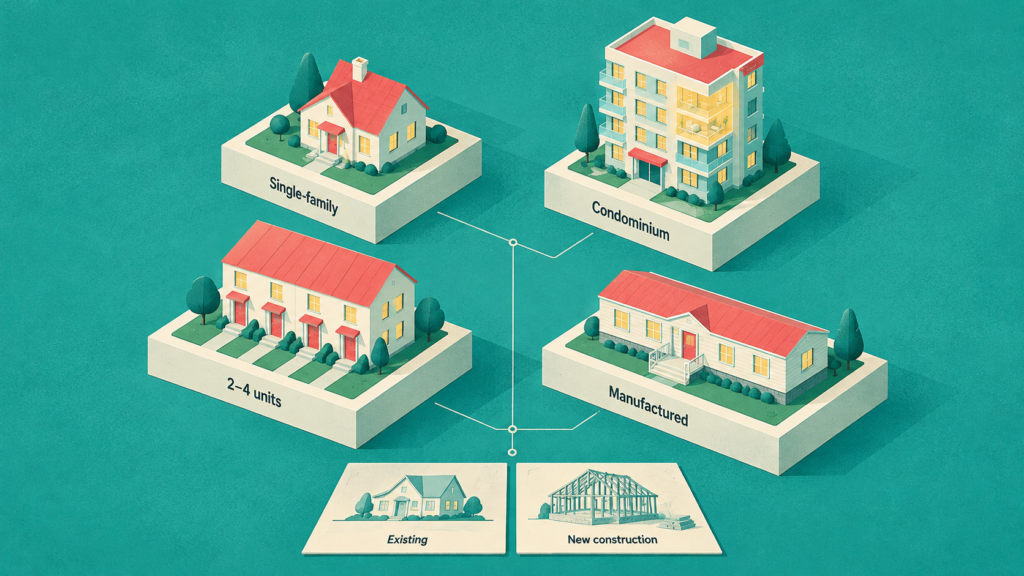
6. FHA Property Requirements by Property Type
Single-Family Homes
The appraisal evaluates the property under the applicable criteria for its condition, construction, site, and intended use. Common concerns include structural defects, roof damage, utilities, drainage, and safety issues, though no single checklist is exhaustive for every single-family property out there.
FHA Requirements for Condominiums
Condo financing involves two layers: the individual unit’s physical condition, and separate project or unit-approval requirements tied to the broader condominium project. A unit can look perfectly sound while still facing an eligibility issue connected to the condo project or the specific approval path it falls under. Confirm the current FHA condominium requirements directly with your lender rather than assuming a well-maintained unit automatically clears every hurdle.
Two- to Four-Unit Properties
Multi-unit properties get assessed according to applicable FHA rules for the building and the specific units involved in the transaction. The condition of shared areas, utilities, and individual units can all come into play. Rules written for a single-family home do not automatically apply the same way to a multifamily property.
Manufactured Homes
Manufactured homes can qualify for FHA financing when the property and transaction satisfy the applicable requirements. Relevant factors often include the foundation, how the home was installed, its property classification, construction documentation, and other criteria specific to manufactured housing. Confirm the exact current rules for your specific property and loan program rather than assuming a general set of requirements applies universally.
New Construction and Existing Homes
New construction can be subject to Minimum Property Standards and other requirements that differ from the MPR framework generally used for existing homes. For existing properties, the focus stays on the applicable acceptability criteria and the home’s actual condition. Check the current HUD handbook for the specific category that fits your property.
Section 09
7. Can You Buy a Fixer-Upper With an FHA Loan?
When a Property Needs Only Minor Repairs
A property that needs a limited amount of work can still be eligible, either because it already satisfies the applicable standards or because identified deficiencies get properly resolved along the way. Draw a clear line between work that is merely desirable and work your lender actually requires. A house does not need a full renovation just because its finishes look dated.
When Major Repairs May Prevent Standard FHA Financing
Substantial structural problems, serious safety concerns, or other unresolved deficiencies can prevent a property from meeting the applicable requirements for a standard FHA purchase loan. The specific finding is what matters here. Your lender may need additional inspections, repair evidence, or a different financing structure entirely before moving forward.
How the FHA 203(k) Loan Works
Standard 203(k): built for more substantial rehabilitation projects, including structural work. There is a minimum repair cost of $5,000, and using a HUD-approved 203(k) Consultant is mandatory. That consultant writes up the scope of work, reviews contractor bids, and inspects the property at each draw stage as the project progresses. There is no dollar cap on repair costs beyond your area’s standard FHA loan limit.
Limited 203(k): built for smaller, non-structural repairs and improvements, such as energy-efficiency upgrades or cosmetic updates. There is no minimum repair cost, and a HUD-approved Consultant is optional rather than required. Total rehabilitation costs under the Limited program are currently capped at $75,000, for FHA case numbers assigned on or after November 4, 2024.
Repair funds in either program flow through the program’s required procedures, not as unrestricted cash handed to the buyer.
Questions to Ask Before Making an Offer on a Fixer-Upper
Has this property had a recent inspection or structural evaluation? Are there known roof, foundation, plumbing, or electrical issues? Will the lender require repairs before closing? Could an FHA 203(k) loan be the right fit for the work you are planning? Can the repairs realistically be completed and documented within your transaction’s timeline? Talk to an FHA-approved lender before leaning on a renovation strategy to make a deal work. If you are comparing a fixer-upper with other homes, the Wonder Rates Mortgage Payment Calculator can help you estimate how the purchase price and loan scenario may affect your monthly payment before you move forward.
Section 10
8. Practical Examples of FHA Property Requirements
Example 1: A Home Has Peeling Paint but No Obvious Structural Damage
A buyer is looking at an older home with peeling paint around several exterior surfaces. The rest of the property appears well maintained. The appraiser’s response here depends on the property’s age, the paint’s actual condition and location, and the applicable FHA rules. Do not assume this issue is purely cosmetic, and do not assume the property is automatically ineligible either.
This is a hypothetical illustration for educational purposes only. Actual repair requirements depend on the property’s characteristics, applicable HUD guidance, the appraisal findings, and the lender’s review.
Example 2: The Appraiser Notices a Possible Foundation Problem
An appraiser spots a significant crack and other signs that might point to structural movement. The lender may request a qualified structural evaluation or other evidence before deciding whether the property meets the applicable requirements. A visible crack alone does not establish the underlying cause, and it does not determine the final loan outcome on its own.
This hypothetical example does not predict a lender’s decision or establish that a specific foundation condition is acceptable or unacceptable. Further evaluation and the applicable program requirements determine the next steps.
Example 3: A Home Has an Aging Roof but No Visible Active Leak
A buyer wants to purchase a home with an older roof. The inspection and appraisal findings do not necessarily establish that the roof is failing, though its age does raise a reasonable question about future costs. Age alone is not an automatic FHA disqualifier. The roof’s actual condition, what the appraiser actually finds, and any relevant lender requirements determine whether repairs or further evaluation are needed.
This is a hypothetical scenario and not a guarantee of FHA eligibility. The actual outcome depends on the property’s condition, current FHA requirements, and the lender’s assessment.
Example 4: A Buyer Wants a Home That Needs Extensive Repairs
A buyer finds a house at an attractive price but discovers major plumbing, roof, and structural concerns during due diligence. Before assuming a standard FHA loan can finance this purchase, it is worth discussing the findings directly with an FHA-approved lender. Depending on the property’s eligibility and the scope of planned work, a rehabilitation loan might be worth exploring, though approval is never guaranteed.
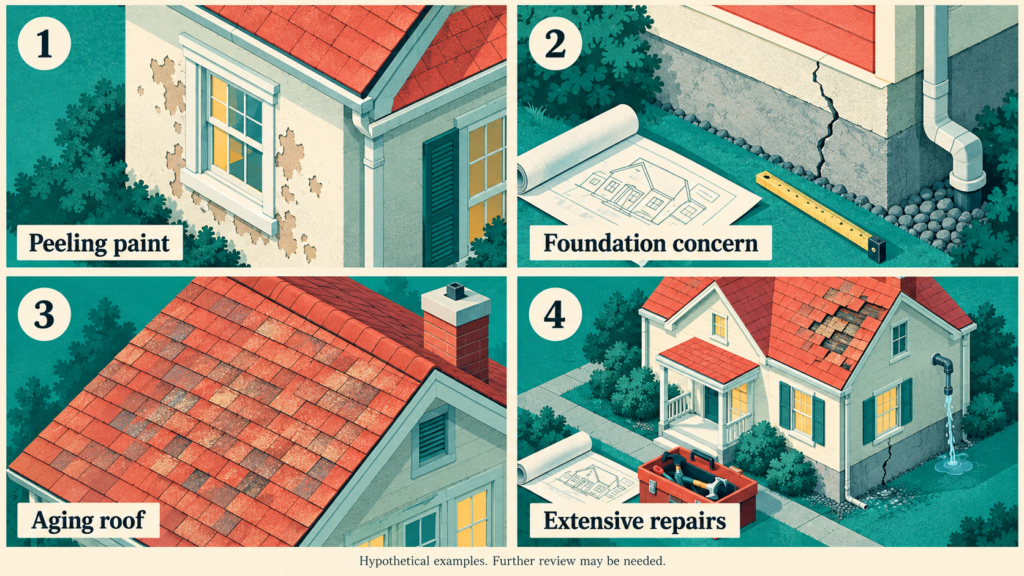
This hypothetical example is for general education only. The availability of FHA financing or a rehabilitation program depends on current program rules, lender requirements, property eligibility, repair scope, and borrower qualification.
Section 11
9. How Buyers Can Prepare for an FHA Appraisal
Before Making an Offer
Look for visible signs of water damage, roof deterioration, structural concerns, unsafe conditions, and major system problems. If a property seems to need substantial work, ask your agent and loan officer how those findings might affect financing before you get attached to the house. An independent home inspection is always worth considering. It can catch issues an appraisal might miss, though it does not guarantee FHA approval or replace your lender’s own review.
After the Offer Is Accepted
Schedule your inspection within the contractual timeline and review any major findings right away. If the property has real concerns, bring in specialist evaluations where appropriate, and ask your lender whether any issue is likely to need additional documentation. Getting ahead of this early can help you spot repair and closing-timeline problems before they become urgent.
Before Closing
Confirm whether the appraisal identified any unresolved deficiencies, whether repairs are required, and what evidence your lender needs to document that the work is actually done. Keep repair agreements and supporting documentation organized. A seller’s verbal promise or a contractor’s estimate alone does not satisfy a lender’s requirement for completed, verified work.
FHA Property Requirements Checklist
Review the property’s visible condition before committing to the purchase. Schedule an independent home inspection when it makes sense. Ask for specialist evaluation of any significant structural, roof, plumbing, or other concern. Review the FHA appraisal findings together with your loan officer. Confirm exactly which deficiencies, if any, require repairs or additional documentation. Coordinate repair responsibility and deadlines with the seller and your real estate agent. Confirm that required conditions have actually been resolved before assuming your loan is ready to close.
This is a buyer-preparation checklist, not an official HUD appraisal form or a complete statement of every FHA requirement.
Section 12
10. FHA Property Requirements vs. FHA Borrower Requirements
What Are FHA Borrower Requirements?
Borrower requirements concern your own financial and eligibility profile: applicable credit, income, employment, debt, down payment, and occupancy rules. These sit entirely separate from the property-condition rules this guide focuses on.
Can a Buyer Qualify for an FHA Loan but Have a Property That Does Not?
Yes. You can meet every borrower qualification your lender requires while the specific property you want still has unresolved conditions that stop the transaction from moving forward under FHA financing. The reverse holds true too: a property can meet every applicable standard while you, the buyer, do not qualify for the mortgage. Both halves of underwriting have to be satisfied before a loan closes.
What Should Buyers Do if the Property Does Not Qualify?
Start by understanding exactly why the property cannot proceed. Depending on the circumstances, your next step might involve repairs, a specialist evaluation, an eligible rehabilitation loan, or simply reassessing whether this is the right purchase. Switching lenders or loan types does not automatically resolve a property-level problem. Alternative financing comes with its own property and borrower requirements, which means the same underlying issue could still show up somewhere else.
Section 13
11. Final Takeaways: FHA Property Requirements
FHA property requirements focus on applicable standards for a home’s condition and eligibility, not on whether the house looks brand new. An FHA appraisal evaluates market value and relevant property conditions, but it is not a substitute for a comprehensive home inspection. Roof, foundation, utility, safety, moisture, and other issues may trigger repairs or further evaluation, depending on the facts and the applicable rules in effect. An appraisal finding does not automatically mean a home is permanently ineligible. Plenty of deficiencies can be resolved. Buyers eyeing a property that needs major work should ask about the FHA 203(k) program before assuming a standard FHA loan will cover the purchase. In the end, your lender’s review and current HUD policy determine which property conditions must be resolved before you can close.
Discuss property concerns with your loan officer early, and bring in qualified inspectors or specialists whenever a home’s condition feels uncertain. That one habit, more than any checklist, is what keeps a good property from turning into a closing-day surprise.
Section 14
Sources
- HUD Single Family Housing Policy Handbook 4000.1
- HUD Single Family Housing Policy Drafting Table
- FHA 203(k) Rehabilitation Mortgage Insurance Program
- HUD FHA Single Family Housing
This article also touches on loan-to-value ratio and mortgage points where the discussion turns to financing structure and overall loan costs.
Duc Pham, Mortgage Broker | NMLS# 844897, Wonder Rates, Inc. | NMLS# 1518655 | DRE# 02047445 | DFPI# 60DBO-59134 | Equal Housing Opportunity. Equal Housing Lender. | Licensed in: AL, AZ, CA, CO, FL, GA, LA, MI, NC, OH, OK, OR, PA, SC, TX, VA, WA.



