
Section 01
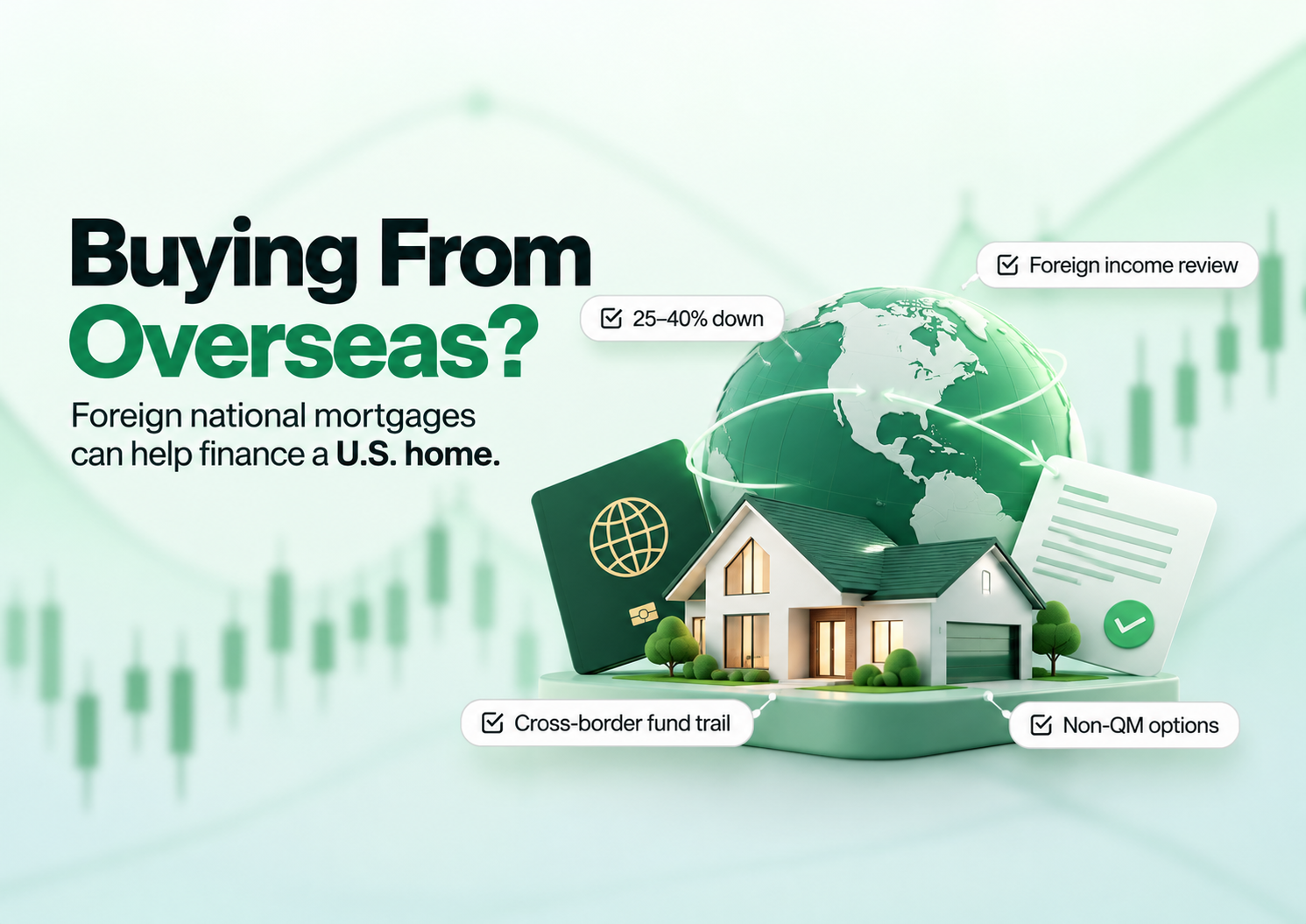
Many families outside the United States assume they cannot get a U.S. mortgage. No U.S. credit history, no Social Security number, no U.S. job. So they plan to pay all cash or not buy at all. In reality, a foreign national mortgage exists for exactly this situation, and it can make a U.S. purchase possible without tying up the full price in one property.
Here is a situation we see. Parents in Ho Chi Minh City have a son starting university in California. Rent near campus is high, and they would rather own a small condo he can live in for four years, then keep as a rental or sell. They have savings and steady income in Vietnam. They assume a U.S. lender will not look at them.
A lender can. The path just looks different from a typical U.S. mortgage. Expect a larger down payment, more documents, and careful planning around moving money across borders. This article explains what lenders usually require, the math to plan for, and the mistakes that slow international buyers down.
Section 02
Three Myths About Buying From Overseas
Myth: You need U.S. credit to get a U.S. mortgage. Reality: Foreign national programs are built for buyers without a U.S. credit history. Lenders may instead review an international credit report, reference letters from your bank, or your payment history on existing accounts. A U.S. credit score is not always required.
Myth: Any U.S. lender can do this. Reality: Most standard loans, including conventional loans backed by Fannie Mae and Freddie Mac, are generally not available to buyers who do not live in the U.S. Foreign national loans are usually non-QM loans, meaning they follow each lender’s own rules. Only some lenders offer them, and terms vary widely, which is why comparing several lenders matters.
Myth: Parents can buy a home for their child as a primary residence. Reality: A primary residence loan is for a borrower who lives in the home. If the parents live abroad and their child lives in the property, lenders typically treat it as a second home or an investment property, depending on the program. Always describe how the home will be used accurately. Misstating occupancy on a mortgage application is a serious problem, not a technicality.

Section 03
What Lenders Typically Require
Every lender sets its own rules, but most foreign national programs share a few patterns.
A larger down payment. Expect roughly 25% to 40% down, depending on the lender, the property, and your profile.
Reserves. Many lenders want 6 to 12 months of mortgage payments left in your accounts after closing, often in a U.S. account.
Higher rates. Rates are usually higher than standard U.S. loans, reflecting the extra work and risk for the lender.
Income or rent. Some programs verify your income abroad, often with an employer letter or an accountant’s letter. Investment property programs may qualify the loan based on the property’s expected rent instead. Our guide on how DSCR loans qualify a rental by its own rent explains that approach.
Doc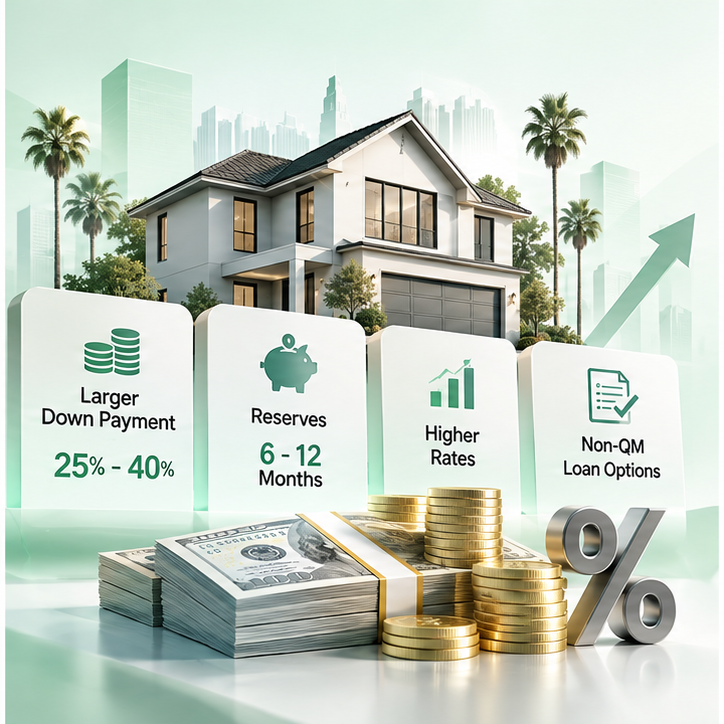 uments to prepare
- A valid passport, plus a U.S. visa if you have one
- Recent bank statements from your home country, often with certified English translations
- Proof of income, such as an employer letter, business registration, or accountant’s letter, if the program verifies income
- An international credit report or bank reference letter
- Records showing where your down payment came from, such as savings history or a property sale contract
- Wire transfer records showing the money moving into a U.S. account
Translations and certified copies can take weeks to arrange from overseas. Start gathering these before you make an offer.
Section 04
Example: How Much Cash to Plan For
Example for educational purposes only. The rate, tax, insurance, reserve, and exchange rate figures are assumptions chosen to show the math. They are not a quote and do not reflect current pricing.
The parents from the introduction are buying a $700,000 condo near their son’s university.
Step 1. Down payment, assuming 30% down. $700,000 × 30% = $210,000
Step 2. Loan amount. $700,000 – $210,000 = $490,000
Step 3. Monthly payment. Principal and interest at an assumed 7.5% rate: $3,426
Property tax, assumed at 1.2% a year: $700,000 × 1.2% = $8,400 per year $8,400 ÷ 12 = $700 per month
Insurance, assumed: $150 per month
Full monthly payment: $3,426 + $700 + $150 = $4,276
Step 4. Reserves, assuming 12 months. $4,276 × 12 = $51,312
Step 5. Total cash needed, before closing costs. $210,000 + $51,312 = $261,312
Condos may also have monthly HOA dues, which add to the payment and the reserve amount.
The currency swing
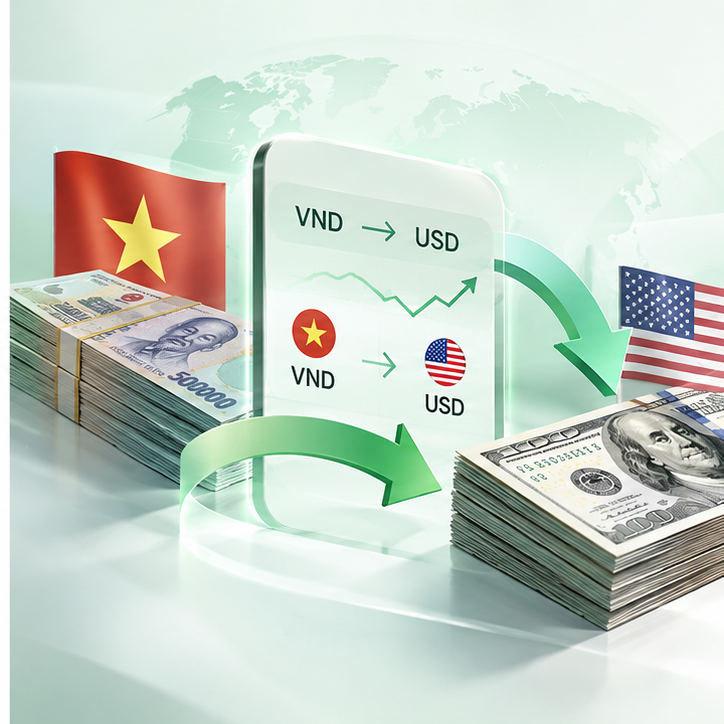
For buyers whose savings are in another currency, the exchange rate is part of the math. Assume 1 U.S. dollar equals 26,000 Vietnamese dong when the family starts planning.
Down payment in dong at the starting rate: $210,000 × 26,000 = 5,460,000,000 VND
Now assume the dong weakens 3% before the money is converted.
New exchange rate: 26,000 × 1.03 = 26,780 VND per dollar
Down payment in dong at the new rate: $210,000 × 26,780 = 5,623,800,000 VND
Extra cost from the currency move: 5,623,800,000 – 5,460,000,000 = 163,800,000 VND
The home did not change. The loan did not change. The family simply needs more of their own currency to reach the same dollar amount. Bank conversion fees can add to that gap.
Section 05
What to Do Before You Make an Offer
Move money early, and in a clean line. Lenders need to trace your down payment from its source in your home country to a U.S. account. Every extra stop, such as a relative’s account or several small transfers, adds paperwork. Moving money out of some countries, including Vietnam, can also involve currency rules and bank paperwork that take time. Talk with your bank at home before you need the funds. Our guide on how lenders review international transfers explains what a clean paper trail looks like.
Open a U.S. bank account if you can. Many lenders prefer, and some require, that your down payment and reserves sit in a U.S. account before closing. Having the funds there early also gives them time to season.
Be clear about how the home will be used. Tell your loan officer exactly who will live in the property and for how long. A child living in the home while parents live abroad, a vacation home, and a full rental are different situations, and they may fit different loan programs.
Plan for taxes on both sides. Owning U.S. property can create U.S. tax obligations, especially if you rent it out. When a foreign owner sells, a portion of the sale price is generally withheld under a federal rule known as FIRPTA unless an exception applies. Your home country may also have reporting rules. Talk with a tax professional familiar with both countries before you buy.
Think about how to hold title. Some buyers purchase in their own names. Others use an LLC, especially for investment properties. This affects taxes, liability, and which loans are available, so involve an attorney early.
Section 06
Frequently Asked Questions
Can a foreign national get a mortgage in the U.S.? Yes. Several lenders offer foreign national loans for buyers who live outside the United States. These are usually non-QM loans, so each lender sets its own rules. Expect a larger down payment, often 25% to 40%, higher rates than standard U.S. loans, reserves after closing, and documents from your home country that may need certified translation.
Do I need a U.S. credit score to get a foreign national mortgage? Not always. Many foreign national programs accept alternatives, such as an international credit report, a reference letter from your bank, or records of your payment history on existing accounts. Requirements vary by lender. If you already have a U.S. credit history, share it, because it may open more options or better pricing.
How much down payment does a foreign national need? Most foreign national programs require roughly 25% to 40% down, depending on the lender, the property type, and your financial profile. You will usually also need reserves, often 6 to 12 months of mortgage payments, after closing. Plan for closing costs and currency conversion on top of that, especially if your savings are held in another currency.
Can I buy a home in the U.S. for my child who is studying here? Yes, but it is usually not treated as a primary residence when the parents live abroad. Lenders typically classify it as a second home or an investment property, depending on the program and how the home will be used. Describe the occupancy accurately to your loan officer so the loan is set up correctly from the start.
Can I use money from Vietnam for my U.S. down payment? Yes, if you can document where it came from and how it moved. Lenders usually want records such as savings history or a property sale contract, plus the international wire into a U.S. account. Moving money out of Vietnam can involve currency rules and bank paperwork, so start early and keep every record of the transfer.
Section 07
Planning to Buy in the U.S. From Overseas?
A Wonder Rates loan officer can review your documents, compare foreign national programs from several lenders, and help you plan the timing of your transfers so your funds are ready and documented before you make an offer.
[Talk to a loan officer about foreign national financing →]
Duc Pham, Mortgage Broker | NMLS# 844897 Wonder Rates, Inc. | NMLS# 1518655 Equal Housing Lender. AZ, CA, CO, FL, GA, LA, MI, OK, PA, SC, TX, VA, WA, OH, AL, OR, NC
This article is for educational purposes only and is not a commitment to lend. It is not tax, legal, or immigration advice. Foreign national loans are non-QM products, and eligibility, rates, and terms vary by lender. Loan approval is subject to creditworthiness, income verification, property eligibility, and current underwriting guidelines. Loan programs, interest rates, and lender fees may change without notice. Always review your official Loan Estimate before making a financing decision.



