
Section 01
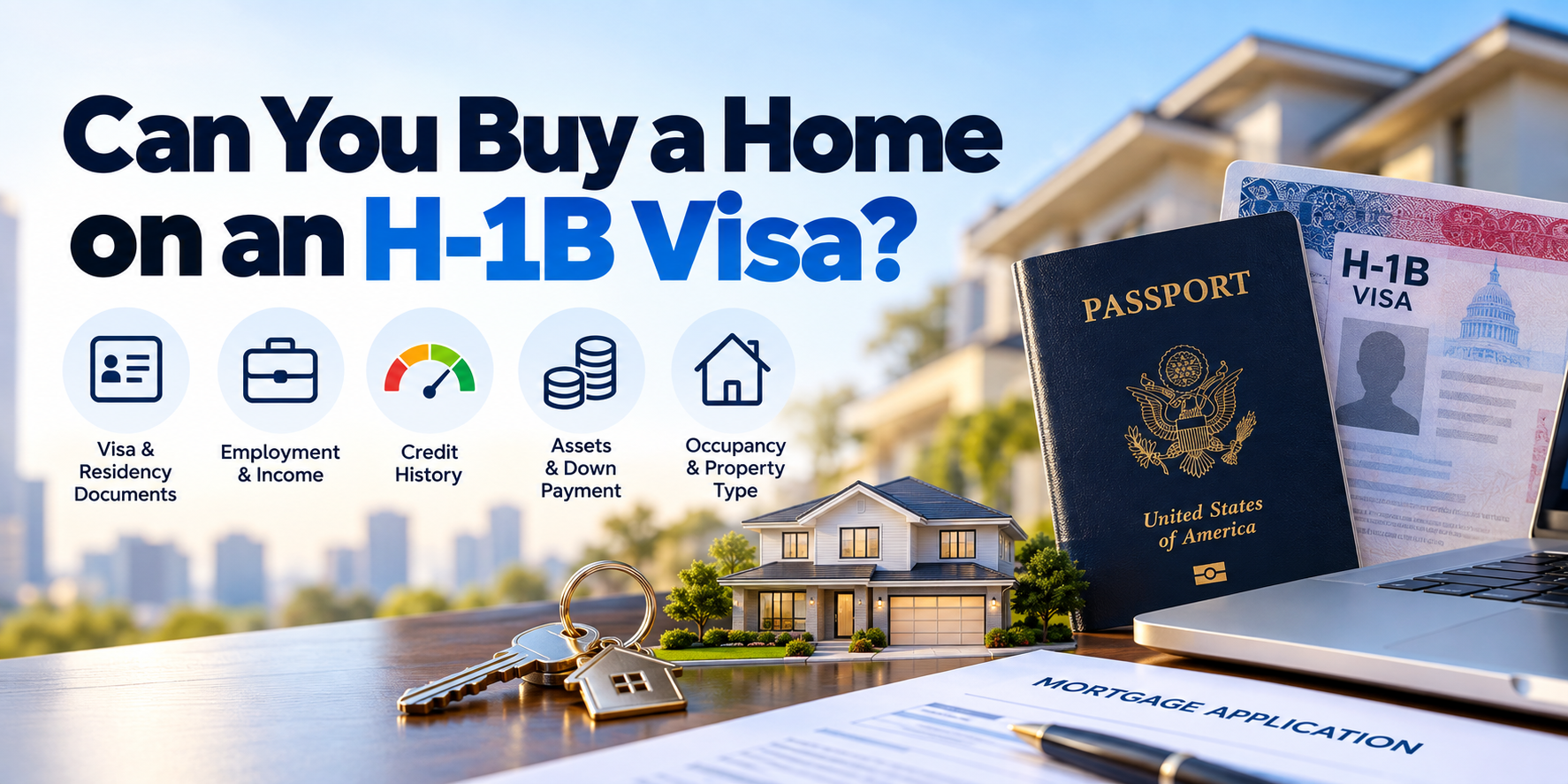
An H-1B visa holder may be able to obtain a mortgage without having a green card, provided the borrower and transaction meet the selected program’s requirements. Approval depends on the complete file, including residency documentation, employment, income, credit, assets, occupancy, property, and lender requirements.
This H-1B visa mortgage checklist explains what to prepare before making an offer. It is a mortgage-planning guide, not immigration advice, and no single visa document guarantees loan approval.
Section 02
Start With Three Separate Questions

H-1B homebuyers often combine three different questions:
- May a noncitizen own real estate in the state where the property is located?
- Does a specific mortgage program accept the borrower’s residency classification and documentation?
- Does the complete financial profile qualify under the program and lender requirements?
Those questions are related, but they are not interchangeable. The legal ability to own property does not guarantee mortgage eligibility. Likewise, an acceptable residency category does not replace the review of income, credit, assets, debts, occupancy, and property.
Fannie Mae publishes separate borrower eligibility guidance that includes requirements for non-U.S. citizen borrowers. Freddie Mac also addresses mortgages for non-U.S. citizens in its Single-Family Seller/Servicer Guide. A lender may apply additional requirements, so the current program and lender must be confirmed for the individual application.
Section 03
H-1B Visa Mortgage Checklist: Residency Documents

Provide current, complete documents rather than relying only on an unexpired or expired visa stamp in a passport.
Depending on the program and lender, the file may include:
- Passport identification page
- Current visa documentation
- Most recent Form I-94
- Current Form I-797 approval notice
- Prior approval notices when needed to explain continuity
- Employment authorization or other residency records when applicable
- Documents for an extension, amendment, or change of employer
- Social Security number or another accepted identifier
USCIS explains the H-1B classification and the employer-sponsored specialty-occupation framework on its official H-1B specialty occupations page.
The lender reviews documents for mortgage eligibility. Questions about maintaining status, portability, extensions, travel, or immigration consequences belong with a qualified immigration attorney.
Section 04
Employment Stability Requires a Mortgage Review

H-1B employment is generally connected to an employer and approved role. A job change, layoff, amended petition, future start date, or pending extension can affect the facts the lender must evaluate.
Wonder Rates’ guide to buying a home after starting a new job explains the broader mortgage questions around new employment. H-1B borrowers should also seek immigration advice when the change affects status.
The lender evaluates eligible income under the program. A strong job title or future promotion does not replace documentation of current acceptable income.
Section 05
Employment and Income Need Their Own Review
H-1B employment is generally connected to an approved employer and role. A job change, layoff, amended petition, pending extension, future start date, or relocation may change the documents the lender needs.
Prepare:
- Recent pay statements
- W-2 forms and other requested income records
- Employment verification
- Current job title and work location
- Offer letter or employment agreement when applicable
- Approved petition and amendment documents
- An explanation and supporting records for a recent job change
Do not assume that a high salary, strong job title, or future promotion will be enough. The lender must determine which income is acceptable and likely to continue under the applicable underwriting method.
If employment recently changed, review buying a home after starting a new job and disclose the change before pre-approval. Immigration consequences should be reviewed separately with an attorney.
Section 06
Build a U.S. Credit File Without Rushing
Some H-1B borrowers have stable income but a short U.S. credit history. Foreign credit does not automatically become a U.S. credit score, and a score from another country may not be usable in the same way as a domestic score.
Fannie Mae has separate guidance for documenting and assessing a nontraditional credit history. The available method depends on the loan, underwriting path, and lender.
Before applying:
- Review U.S. credit reports for errors
- Keep revolving balances manageable
- Pay every obligation on time
- Avoid opening several accounts merely to create activity
- Do not finance a car or large purchase without discussing the effect on qualification
- Ask whether additional credit documentation is needed
The ITIN loan process is a different topic and should not be treated as the standard route for every H-1B borrower. See Wonder Rates’ ITIN mortgage guide for that separate borrower scenario.
Section 07
Document Foreign Assets Before Moving the Money
Savings held outside the United States may be usable in some transactions, but acceptable documentation and transfer requirements vary.
The lender may need to verify:
- Account ownership
- Account history
- Source of deposits
- Currency conversion
- Transfer records
- Availability for closing
- Whether the institution and statements are acceptable
Do not move money through several family or business accounts to make the transfer faster. A complicated path can create more sourcing questions. Keep the original statements, transfer confirmation, receiving-bank record, and any documents explaining the source.
International transfers may also raise tax, gift, or reporting questions outside the mortgage review. Consult an appropriately qualified professional when needed.
If a relative is helping with the purchase, read how gift funds may be documented for a down payment before funds are transferred.
Section 08
Calculate Cash to Close and Keep Reserves
A down payment is only one part of the cash a buyer may need. The budget may also include closing costs, prepaid items, inspections, moving expenses, initial repairs, and emergency reserves.
The Wonder Rates Down Payment Calculator can help estimate down payment and cash needs. The result is an educational estimate and does not determine qualification or final closing figures.
Buyers can also use the Mortgage Payment Calculator to estimate principal, interest, taxes, insurance, PMI, and HOA. Use the result as a planning tool, then confirm the actual scenario with a licensed loan officer.
Do not use every available dollar for closing without considering how much cash remains afterward. Reserves may matter to the loan review and to the household’s ability to manage job, visa, travel, or home-repair changes.
Section 09
Occupancy Must Match the Real Plan
The borrower must accurately state whether the property will be a principal residence, second home, or investment property. The lender may consider employment location, remote-work arrangements, commuting distance, current housing, family occupancy, and the intended move-in timeline.
Do not select an occupancy type because it appears to offer easier terms. A false statement about occupancy can create serious mortgage and legal consequences. Review why accurate occupancy intent matters before applying.
If a transfer or job relocation is possible, discuss it early. The lender needs the real plan, not the plan that seems easiest for approval.
Section 10
A Non-Borrowing Spouse May Still Be Involved
When one spouse is not applying, state law, title, debts, property rights, and the selected loan program may affect documentation and signatures.
Being left off the mortgage does not necessarily mean the spouse has no connection to title or closing. Community-property rules and program requirements may also affect how certain debts are reviewed.
Wonder Rates explains these distinctions in its guide to buying a home with a non-borrowing spouse. Legal questions about ownership or marital property should be directed to a qualified attorney.
Section 11
Build the Timeline Backward From Closing
Before making an offer
- Review residency and employment documents
- Discuss any pending extension or employer change
- Check credit reports
- Trace down-payment and reserve funds
- Identify the intended occupancy
- Obtain a mortgage pre-approval based on current information
After the offer is accepted
- Provide updated statements and pay records promptly
- Follow the lender’s instructions before transferring foreign funds
- Report changes to employment, status, debt, or assets
- Keep records for all deposits and transfers
- Avoid opening new credit without discussing it first
Before closing
- Confirm final employment information
- Review the application for accuracy
- Verify cash-to-close instructions
- Confirm occupancy and insurance
- Review the Closing Disclosure
- Ask questions before signing
A pre-approval is not a final commitment to lend. The borrower, property, documents, and transaction remain subject to underwriting and final verification.
Section 12
Common H-1B Homebuyer Mistakes
Waiting until the offer is accepted to review status documents
A missing or outdated document can become a timing problem when the purchase contract is already running.
Treating the visa expiration date as the only issue
The lender may need to understand the complete status and employment documentation, not just one date printed in the passport.
Moving foreign funds without a paper trail
Multiple transfers, unexplained deposits, and missing statements can delay asset verification.
Hiding an employer change or pending extension
The information may surface during final employment verification. Report it early so the lender can determine what is required.
Assuming homeownership affects immigration status
Buying a home does not itself create, extend, or guarantee immigration status.
Section 13
Frequently Asked Questions
Is a green card required to buy a home with a mortgage?
Not necessarily. Mortgage eligibility depends on the selected program, residency documentation, lender requirements, and the complete borrower and property profile.
Can an H-1B borrower use a conventional mortgage?
Potentially, when the application satisfies the applicable noncitizen borrower, income, credit, asset, occupancy, property, and underwriting requirements.
What if an H-1B extension is pending?
Provide all current and pending documentation to the lender. The treatment depends on the program, lender, employment facts, and documents. Consult an immigration attorney for status advice.
Can foreign savings be used for the down payment?
Potentially, when ownership, source, transfer, currency conversion, and availability can be documented in an acceptable manner.
Does buying a house improve immigration status?
No. Homeownership does not itself create or guarantee immigration status.
Section 14
Review the File Before Shopping for a Home
The strongest first step for an H-1B homebuyer is an early document review. Confirm the mortgage program, residency documents, employment, income, credit, assets, occupancy plan, and likely property type before relying on a pre-approval amount.
A Wonder Rates loan officer can review the mortgage side of the file, explain which documents the selected lender requests, and help the borrower compare eligible options. Immigration, tax, and legal questions should be addressed by appropriately qualified professionals.
Section 15
Duc Pham, Mortgage Broker | NMLS# 844897
Wonder Rates, Inc. | NMLS# 1518655
Equal Housing Lender.
AZ, CA, CO, FL, GA, LA, MI, OK, PA, SC, TX, VA, WA, OH, AL, OR, NC
This article is for educational purposes only and is not a commitment to lend or immigration, legal, or tax advice. Loan approval is subject to creditworthiness, acceptable residency and income documentation, assets, occupancy, property eligibility, and current underwriting guidelines. Immigration laws, loan programs, and lender requirements may change without notice. Review current requirements with the lender and direct immigration questions to a qualified immigration attorney.



