

Section 01
Many buyers assume a home inspection is a formal step to get a mortgage. The truth is a bit more nuanced. This guide explains the home inspection requirements for a mortgage, so you know what a lender may ask for and what you should consider doing on your own.
Three points are worth knowing from the start. First, a standard home inspection ordered by the buyer is generally not a universal requirement for every mortgage. Second, a lender may still require an appraisal, a property review, a specialist report, or repairs, depending on the loan program and the home. Third, skipping your own inspection can leave you exposed to costly defects that an appraisal is not built to find.
We will cover conventional, FHA, and VA loans, along with other situations. The exact rules depend on your transaction, so always confirm the details with your Loan Officer.
Section 02
Is a Home Inspection Required for a Mortgage?
The honest answer is that it depends. It is not always optional, and it is not always mandatory. It helps to separate what a lender needs to approve financing from what a smart buyer should do before buying.
Are Home Inspections Mandatory for All Mortgage Loans?
A standard home inspection is generally a buyer’s due-diligence step. It is not a universal approval requirement. Buyers choose to get one to learn about the home’s physical condition and the repair costs that may be coming.
That said, a lender may add property review requirements under a specific loan program, valuation option, or property situation. Fannie Mae, for example, has a special case in selected rural high-needs areas. There, a valuation option may be offered without a prior appraisal, and the lender must obtain a home inspection to determine the property’s condition.
So the lack of a general inspection rule does not mean a lender will approve every property without a closer look.
What Property Checks Can a Mortgage Lender Require?
Several checks can come up during underwriting, which is the lender’s review of your loan file. They are not interchangeable.
- Appraisal: An estimate of the home’s market value that also notes observable features of the property.
- Valuation alternative: In some eligible cases, a lender may use an option other than a full appraisal. It is not the same as a full appraisal or a home inspection.
- Specialist inspection: A closer look by an expert when there is a concern about the roof, foundation, pests, water, a septic system, or something similar.
- Repair verification: Proof that required repairs were finished when a property problem has to be fixed.
The lender decides which evidence it needs to meet the rules of your loan.
Why Buyers Should Consider an Inspection Even When the Lender Does Not Require One
An appraisal is not designed to find every defect. A buyer’s inspection can reveal maintenance issues, visible damage, aging systems, and signs that a specialist should take a look.
This matters for your budget. A home may be affordable based on the monthly payment and still feel expensive once you add a roof replacement, plumbing repairs, or electrical work soon after closing. The goal is not to scare you into paying for every test. It is to help you understand a home’s condition before you commit. For a broader look at the upfront and ongoing costs that can affect your home buying budget, see our Home Buying Costs Checklist.
Section 03
Home Inspection vs. Mortgage Appraisal: What Is the Difference?
An appraisal tells the lender what the home is worth. An inspection tells you what condition the home is in. Mixing up the two is one of the most common buyer mistakes.
What Does a Home Inspector Evaluate?
A home inspector examines the accessible parts of the property. According to Fannie Mae’s homebuyer guide, an inspector will usually look at the electrical, gas, plumbing, roofing, insulation and ventilation, and heating and cooling systems. The inspector also checks major appliances, fireplaces, the foundation and wall structure, exterior features such as driveways, decks, and grading, and interior features such as stairways, garages, basements, and windows.
The scope depends on the inspector’s standards and the property. A standard inspection does not cover everything. Fannie Mae notes that you may need a separate specialist if you suspect pests, radon, asbestos, mold, or lead.
What Does a Mortgage Appraiser Evaluate?
An appraiser mainly forms an opinion of the home’s market value. Lenders compare that value to the loan amount, which is how they figure out the loan-to-value ratio. The appraisal may also describe the home’s observable condition and point out issues that matter for the value or the loan program.
An appraiser is not responsible for finding every hidden defect. HUD puts it simply: an appraisal is required to estimate the home’s value for your lender, and it does not replace a home inspection. A clean appraisal is not proof of a problem-free house.
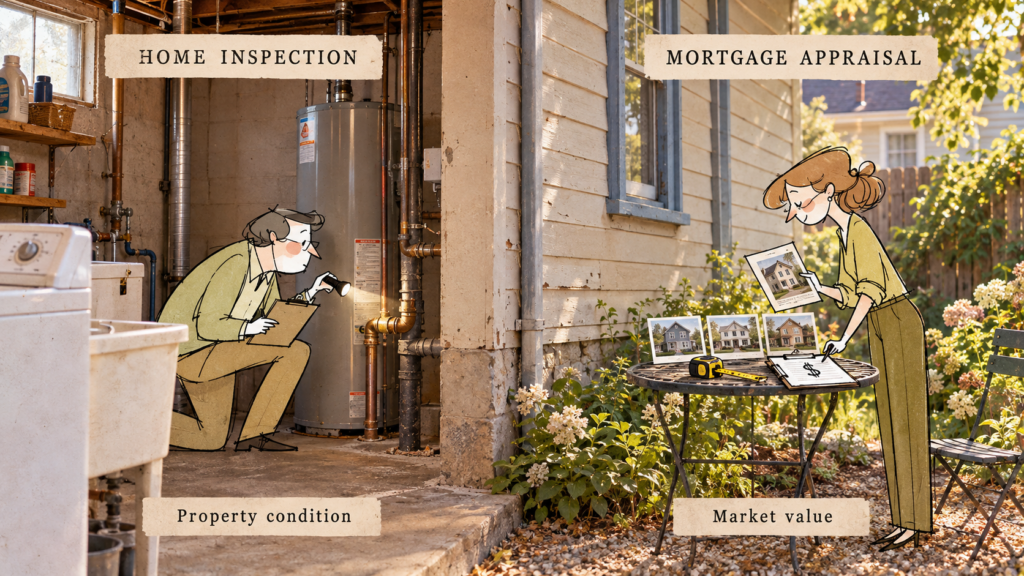
Home Inspection vs. Appraisal: Key Differences
| Category | Home inspection | Mortgage appraisal |
|---|---|---|
| Primary purpose | Assess the property’s condition | Estimate market value and support the lending decision |
| Main beneficiary | Usually the buyer | The lender relies on it for underwriting |
| Typical focus | Visible defects, systems, maintenance, and possible concerns | Market value, comparable sales, property features, and relevant condition issues |
| Finds every hidden defect? | No | No |
| Can affect the transaction? | Yes, through negotiation, contingencies, or the buyer’s decision | Yes, through value and property eligibility decisions |
| Always required for a mortgage? | Generally no, but exceptions exist | Often required, though some eligible loans use permitted alternatives |
Both can be important, and neither should be assumed to replace the other.
Section 04
Home Inspection and Property Condition Requirements by Mortgage Type
Rules differ by loan type. Lender add-on rules, investor requirements, the property itself, and current program guidelines can all change the final answer.
Conventional Mortgage Home Inspection Requirements
A conventional loan generally does not require every buyer to order a standard home inspection. The lender still has to confirm that the property meets the loan’s eligibility rules.
Fannie Mae’s property condition guidance shows how this works. Lenders must confirm the property meets Fannie Mae’s condition requirements. If an appraisal finds deficiencies that affect the safety, soundness, or structural integrity of the home, those problems must be repaired before the loan can be sold to Fannie Mae. The guide also allows an appraisal based on the home’s “as is” condition when existing conditions are minor and do not affect safety, soundness, or structural integrity.
In plain terms, minor deferred maintenance and serious safety or structural problems are treated differently. Not every cosmetic issue has to be fixed before closing.
FHA Loan Home Inspection Requirements
If you are wondering whether a home inspection is required for an FHA loan, start with what HUD says. HUD states that FHA does not perform home inspections, and that an inspection happens only if you arrange one. HUD also says an appraisal does not replace an inspection, and that FHA does not guarantee the value or condition of your new home.
An FHA appraisal serves the financing process and may also check whether the home meets FHA’s property standards. Issues such as safety hazards, structural problems, or inadequate utilities may trigger further review or required repairs. Do not assume FHA always requires a separate inspection, and do not assume every home must be perfect. The rules depend on current FHA guidance and the property, so confirm them with your lender.
VA Loan Home Inspection Requirements
A VA appraisal and a buyer’s home inspection serve different purposes. For VA purchase loans, the appraiser is generally expected to review the home against VA’s minimum property requirements, which focus on whether a home is safe, structurally sound, and sanitary. That review is not a full home inspection.
Do not assume every VA buyer must get a separate inspection. Still, an independent inspection is a smart way to protect yourself. Because VA rules and lender practices can change, check the current VA home loan guidance and ask your lender about any property-specific requirements.
USDA Loans and Other Mortgage Programs
USDA loans and lender-specific or portfolio programs may have their own property condition and eligibility rules. These depend on the program, the property type, and the underwriting requirements. Do not treat USDA, conventional, FHA, and VA rules as the same. Ask your lender for the current rules that apply to your loan.
When a Lender May Require an Additional Inspection Regardless of Loan Type
An appraiser’s visual review cannot always answer every question. Signs of structural movement, suspected pest damage, a roof that looks damaged, or water intrusion may call for a closer look.
When that happens, the lender may ask for an evaluation by a qualified professional or proof that the problem was corrected. Under Fannie Mae’s guide on verifying completion and postponed improvements, repairs generally must be complete when the loan is sold, and lenders must review the appraisal for conditions that affect safety, soundness, or structural integrity. The exact requirement depends on the finding and the program.
Section 05
What Do Home Inspectors Check Before a Mortgage Closing?
Knowing what you are paying for helps you get more from the visit.

Roof, Foundation, and Structural Components
Inspectors look for visible signs of roof damage, water getting in, foundation cracks, unusual settling, and other structural concerns. These signs may mean more evaluation is needed. A general inspection does not always find the full cause or the repair cost.
Major roof or structural problems deserve attention because they can be expensive, can disrupt your move, and may prompt further review during the mortgage process.
Electrical, Plumbing, and HVAC Systems
Inspectors review visible and accessible parts of electrical components, plumbing fixtures, water supply, drainage, heating, and cooling. An inspection can spot warning signs, but it cannot promise that every part of every system is free of defects. Older electrical systems, suspected leaks, or failing equipment may need a specialist.
Water Damage, Moisture, Mold, and Drainage
Inspectors watch for stains, dampness, damaged materials, poor grading, and signs of past or ongoing water problems. Moisture does not always mean mold, and it does not always show where the problem started. If a concern shows up, a mold specialist, plumber, roofer, or other expert may be needed.
Windows, Doors, Stairs, Appliances, and Other Visible Components
The report may also cover accessible windows, doors, stairways, handrails, garages, insulation, ventilation, and installed appliances. It may mix ordinary wear notes with more serious defects. Try to separate what needs immediate attention, what may need replacing soon, and what is routine upkeep.
When Specialized Inspections May Be Necessary
Depending on the home’s age, location, construction, and the findings, you may want extra testing, such as:
- Pest or wood-destroying organism inspection
- Radon testing
- Mold evaluation
- Sewer line inspection
- Septic system or well-water evaluation
- Lead-based paint or asbestos assessment
- Roof, foundation, or chimney evaluation
These are not automatically part of a standard inspection. Ask what your inspection covers and whether more testing makes sense. HUD notes that the EPA and the Surgeon General recommend that all houses be tested for radon.
Section 06
What Happens If a Home Inspection Finds Problems?
A report is a tool, not a verdict. The next step depends on what was found, what your contract says, and what your lender requires.
Minor Maintenance Issues vs. Major Property Defects
Routine maintenance findings are different from issues that affect safety, structure, water damage, or major systems. Not every item on a report requires the seller to make repairs. The result depends on your purchase contract, the nature of the problem, the lender’s rules, and the choices the parties make. When a property needs repairs, it can also help to look at the bigger monthly budget rather than the repair cost alone. The Wonder Rates Mortgage Payment Calculator can help you estimate how a different purchase price or loan scenario may affect the monthly payment.
Can a Mortgage Lender Require Repairs Before Closing?
Yes, it can. A lender may require repairs or more documentation when a property problem affects the loan’s eligibility standards. An appraisal may be completed subject to repairs, and the lender may need evidence that the work is done before the loan can move forward.
Keep in mind that your own inspection report may list many recommended repairs, and that does not mean every item becomes a lender requirement. Fannie Mae’s guide treats safety, soundness, and structural integrity problems differently from minor deferred maintenance.
Can the Seller Refuse to Make Repairs?
Sellers are not always required to complete every repair a buyer asks for. Whether you can negotiate, cancel, or get your earnest money back depends on your contract, your contingencies, your deadlines, and local law. HUD notes that if you request an inspection early, you may be able to make your purchase contract contingent on the results. Talk through the report with your real estate agent and, when needed, a qualified real estate attorney.
Can a Buyer Still Close on a House With Inspection Issues?
It depends on the type and size of the problem. A buyer may go ahead with small findings, ask for a price change, request repairs, or seek expert advice.
If the lender finds a problem that must be resolved, you may not be able to close until it is. Your willingness to accept a defect does not override the lender’s property rules.
What if the Inspection Delays the Closing Date?
Specialist visits, contractor quotes, repair talks, and verification can all slow things down. Tell your real estate agent and your Loan Officer quickly if a big issue appears. Extensions are not automatic, so review your contract deadlines and ask the lender what it needs, such as documents, repairs, or a reinspection.
Section 07
Who Pays for a Home Inspection and When Should It Be Scheduled?
Who Typically Pays for the Home Inspection?
Buyers commonly pay for a buyer-ordered home inspection, though arrangements can vary by transaction and local practice. Specialist inspections may come with separate fees. These costs are different from the appraisal fee and other lender charges. Ask your agent and your inspector what is included, what costs extra, and when payment is due. Prices vary by area, so ask for a quote instead of relying on a national average.
When Should You Schedule the Inspection?
Buyers usually arrange the inspection after an offer is accepted, within the time allowed by the contract. Fannie Mae’s homebuyer guide notes that your real estate agent will typically schedule it for you. Booking early gives you more time to read the report and decide whether to ask for repairs, negotiate, or call a specialist. Work with your agent so the visit fits your deadlines.
Should You Attend the Home Inspection?
Yes, when you can. Fannie Mae recommends touring the home with the inspector and pointing out any areas that concern you. Ask the inspector to explain the big findings and which issues may need a specialist. Even so, the written report is what counts, so do not rely only on a quick walkthrough.
What Should Buyers Ask the Inspector?
- Which findings need attention right away?
- Which issues may lead to large expenses in the next few years?
- Are any findings outside the scope of a standard inspection?
- Should a specialist look at any part of the home?
- What maintenance should I plan for after closing?
- What limits affected the inspection?
These questions help you with both the purchase decision and your future homeownership budget.
Section 08
What Happens if the Appraisal Finds a Problem the Home Inspection Missed?
Why Appraisal Findings Can Trigger Further Review
An appraiser may note a visible condition that matters for the value or eligibility, even if your inspection report did not stress it. The opposite can happen too. An inspector may find a concern that never shows up in the appraisal, because the two jobs have different goals. The lender reviews the appraisal findings to decide if it needs more evidence, repairs, or a professional evaluation.
What Does “Subject to Repairs” Mean?
An appraisal completed “subject to” repairs is not the same as an unconditional appraisal of the home as it stands today. It means certain work or conditions must be handled under the applicable rules. The general flow looks like this:
- The appraiser identifies a problem or a required condition.
- The lender reviews it and decides what proof or action is needed.
- The buyer and seller may need to coordinate the work, depending on the contract.
- The lender gets the required proof of completion or professional report before moving ahead, as the program allows.
The exact steps and the proof accepted depend on the finding and the loan.
Can a Buyer Use the Inspection Report to Resolve an Appraisal Concern?
Your inspection report may be helpful, but it does not automatically satisfy the lender. The lender decides whether the report is enough, whether the inspector meets the needed standards, and whether another evaluation or repair proof is required. Do not swap in your own document for what the lender asked for without checking first.
Section 09
Common Home Inspection Scenarios That Can Affect a Mortgage
These examples are made up. They show general ideas and do not promise any outcome.
Example 1: The Inspection Finds a Roof Leak
A buyer receives a report showing signs of active water getting in near the roof. The buyer asks the seller to fix it before closing.
The buyer may get a roofing specialist’s opinion and negotiate with the seller. If the appraisal or the lender’s review also finds a condition that must be resolved, the lender may require repairs or documents before the loan moves forward. The inspection finding alone does not decide the lender’s answer.
Disclaimer: This is a hypothetical illustration for educational purposes only. Actual repair obligations, underwriting decisions, and closing timelines depend on the property, loan program, lender requirements, purchase contract, and applicable law.
Example 2: The Appraisal Is Acceptable, but the Inspection Finds an Aging HVAC System
The appraisal does not flag a major issue, but the inspection notes that the heating and cooling system is old and may need replacing soon.
The buyer should think about the expected cost and the remaining life of the system. An aging system does not automatically mean the mortgage will be denied or that the seller must replace it. The result depends on the actual condition, the rules that apply, and the buyer’s contract options.
Disclaimer: This is a hypothetical scenario, not a prediction of mortgage approval or repair obligations. The lender’s decision and the parties’ responsibilities depend on the actual findings, program rules, contract terms, and applicable law.
Example 3: The Appraiser Identifies a Potential Structural Concern
An appraiser notices a condition that may affect the home’s structural integrity and says more professional review is needed.
The lender may ask for a qualified professional’s report or proof of corrective work, depending on the findings and the program. A standard home inspection alone may not satisfy that request.
Disclaimer: This hypothetical example is for general educational purposes only. The required evaluation, repair scope, and mortgage outcome depend on the property’s condition, the professional findings, the loan program, and the lender’s review.
Example 4: The Buyer Waives the Inspection and Finds a Major Defect Later
A buyer decides not to get a home inspection and later discovers a serious plumbing problem.
This shows the risk of relying only on the appraisal. Depending on the facts and the law, the buyer may have limited options after closing. HUD is clear that for FHA loans, FHA cannot give or lend money for repairs found after closing and cannot buy the home back.
Disclaimer: This scenario is hypothetical and does not establish anyone’s legal rights or obligations. Remedies, insurance coverage, seller disclosures, and responsibility for repair costs depend on the actual facts, contract, applicable law, and relevant policy terms.
Section 10
Home Inspection Checklist Before Closing on a Mortgage
This checklist helps you stay organized. Not every item is a lender requirement.
Before Making an Offer
- Check whether your contract will include an inspection contingency or similar protection.
- Ask your agent about local inspection habits and contract deadlines.
- Think about the age and look of the roof, foundation, HVAC, plumbing, and electrical systems.
- Budget for the inspection and possible specialist visits.
- Ask about known defects, recent repairs, and maintenance records.
After the Offer Is Accepted
- Schedule a qualified home inspector within your deadline.
- Review the scope and exclusions before the visit.
- Attend if you can, and ask about big findings.
- Get specialist evaluations when they are recommended.
- Review the report with your agent and decide what needs negotiation or more checking.
Before the Mortgage Closes
- Ask your Loan Officer whether the appraisal or lender review found any open property conditions.
- Confirm whether the lender needs repairs, specialist reports, or proof of completion.
- Keep documents for finished work when they are required.
- Make sure any seller repair agreement is written into the contract or an amendment.
- Confirm all lender property conditions are satisfied before assuming the loan is ready to close.
Questions to Ask Your Loan Officer
- Does my loan program require a separate home inspection?
- Has the appraisal found any property conditions that could affect approval?
- Does the lender need a specialist report or proof of repairs?
- If repairs are needed, what proof will the lender accept?
- Could these property issues change my expected closing date?
Your Loan Officer can explain the lender’s rules. Your inspector and other qualified professionals judge the home’s physical condition.
Section 11
Final Takeaways: Home Inspection Requirements for a Mortgage
A standard home inspection is generally not a universal requirement for every mortgage. A lender may still ask for an appraisal, another property review, a specialist evaluation, repairs, or proof of repairs, depending on the loan program and the home. An appraisal estimates value and notes relevant observable conditions, and it does not replace a full buyer’s inspection. Inspection findings do not automatically mean a lender will deny the loan or require every repair on the list. And it pays to line up your inspection deadlines, contract choices, and lender needs early, so you avoid preventable closing delays.
Before you waive an inspection or accept a home with big defects, understand the risks, review your contract options, and ask your Loan Officer whether the property has any open financing conditions.
Section 12
Disclaimer
This article is provided for general educational and informational purposes only and does not constitute financial, mortgage, legal, engineering, home inspection, or real estate advice. Home inspection practices, mortgage eligibility requirements, appraisal standards, property-condition requirements, and repair obligations vary depending on the applicable loan program, lender, property characteristics, purchase contract, and jurisdiction. A home inspection is not a guarantee that a property is free of defects, and a mortgage appraisal is not a substitute for a comprehensive home inspection. The examples in this article are hypothetical and are intended only to illustrate general concepts; they do not predict the outcome of any particular transaction. Requirements and guidelines may change. Buyers should consult their Loan Officer, qualified home inspector, real estate agent, and other relevant professionals to evaluate their individual circumstances before making a purchase or mortgage decision.
Duc Pham, Mortgage Broker | NMLS# 844897, Wonder Rates, Inc. | NMLS# 1518655 | DRE# 02047445 | DFPI# 60DBO-59134 | Equal Housing Opportunity. Equal Housing Lender. | Licensed in: AL, AZ, CA, CO, FL, GA, LA, MI, NC, OH, OK, OR, PA, SC, TX, VA, WA.



