
Section 01
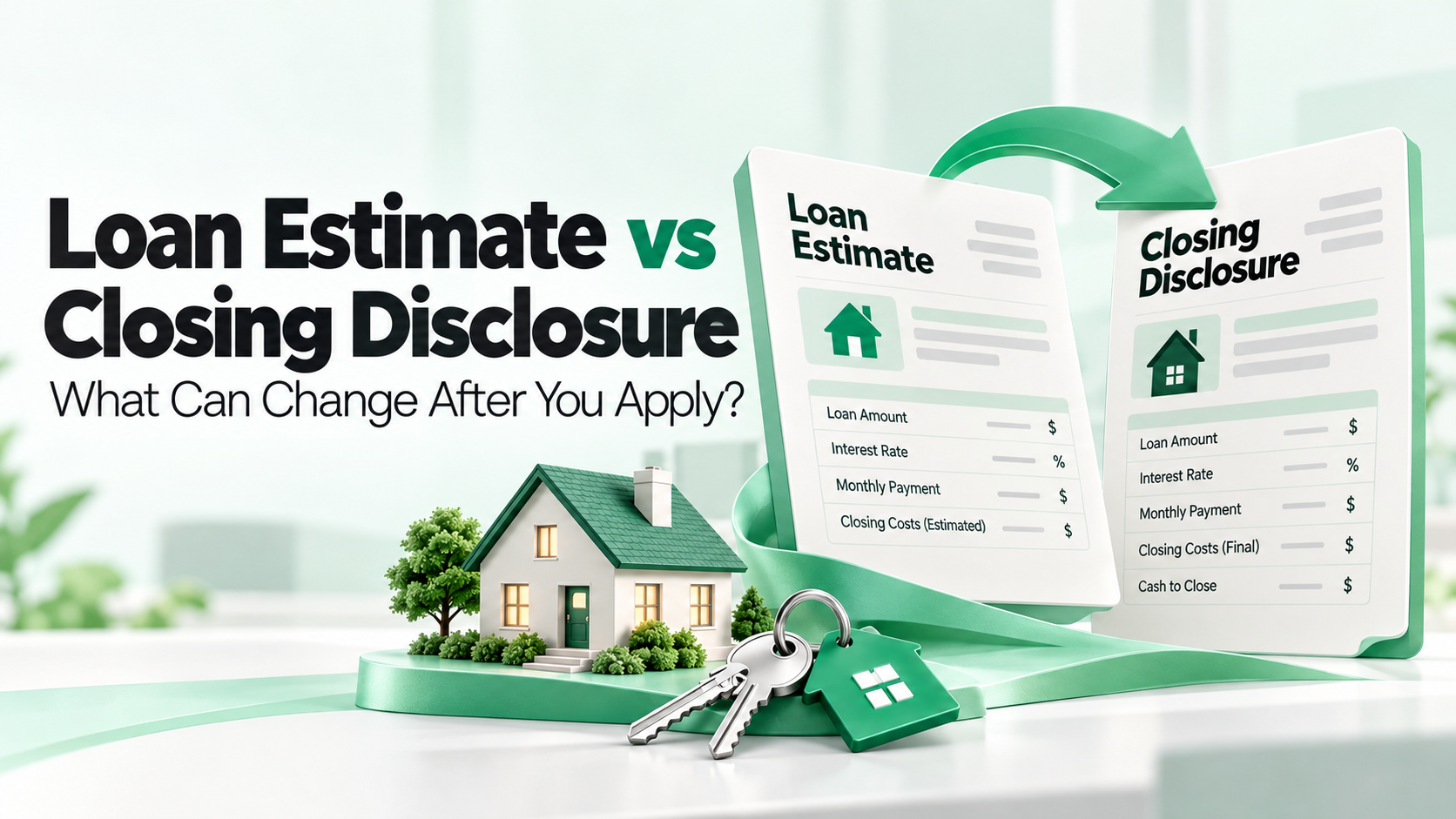
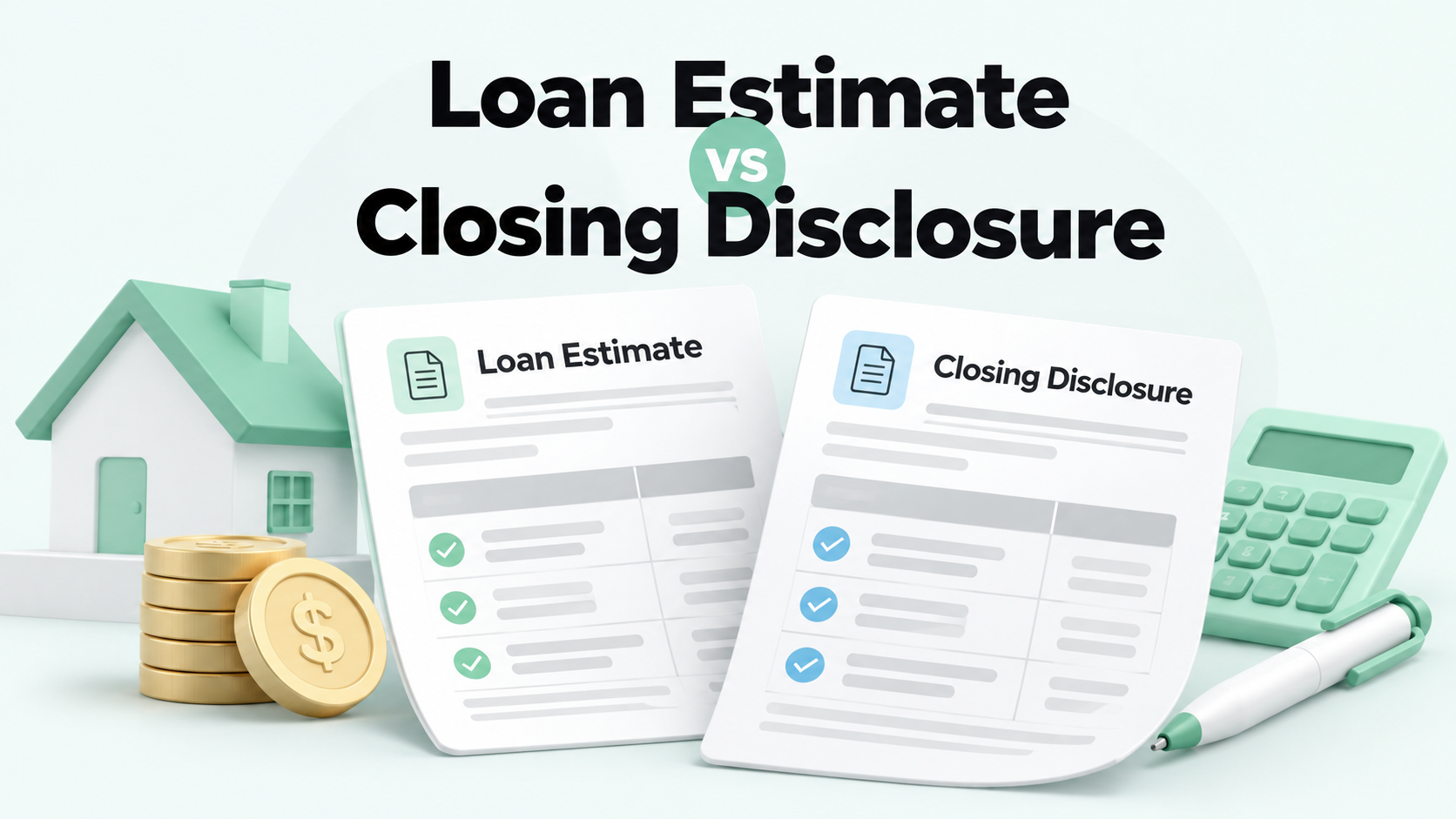
The Loan Estimate is an early standardized disclosure of proposed mortgage terms and estimated closing costs. The Closing Disclosure shows the final or near-final terms and amounts before closing. Buyers should compare the two forms line by line because some changes may be permitted while others require explanation or correction.
For most covered mortgages, the lender provides the Loan Estimate early in the application process and the Closing Disclosure at least three business days before closing.
Section 02
Loan Estimate vs Closing Disclosure: The Purpose of Each Form
The Loan Estimate helps borrowers understand and compare a proposed loan. It includes the loan terms, projected payments, closing-cost estimates, cash to close, and other transaction information.
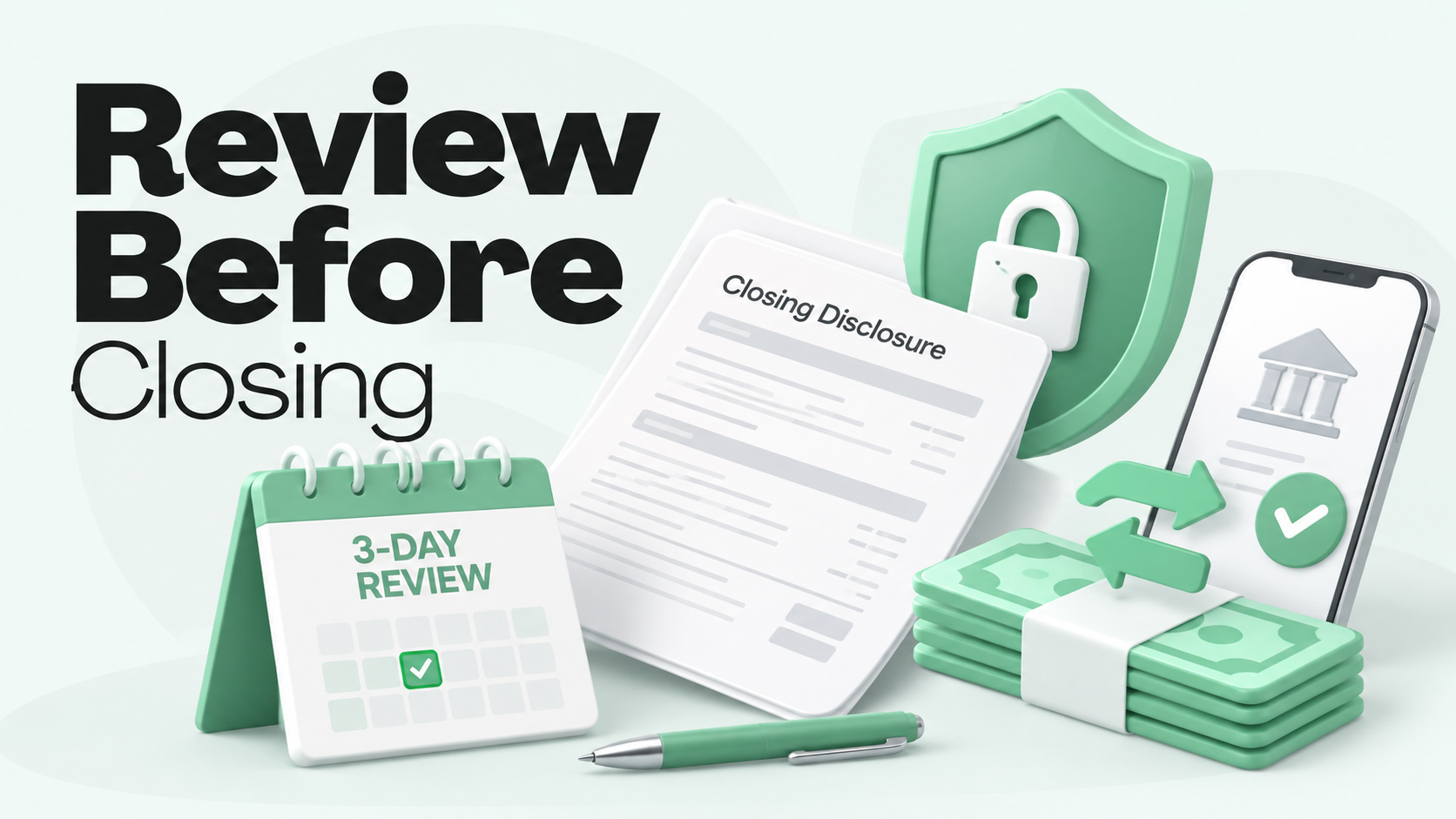
The Closing Disclosure is the final comparison document. The CFPB states that borrowers should receive it at least three business days before closing, giving them time to compare it with the Loan Estimate and ask questions.
Section 03
A Page-by-Page Review
Page 1: Loan terms and projected payments
Compare the loan amount, interest rate, monthly principal and interest, prepayment penalty, balloon payment, mortgage insurance, and estimated escrow.
Do not compare only the total projected payment. Taxes, insurance, and escrow assumptions can change independently from principal and interest.
Page 2: Closing-cost details
Review lender charges, services the borrower did or did not shop for, taxes, government fees, prepaids, initial escrow funding, and other costs.
Identify each difference and ask whether it reflects a changed circumstance, final invoice, borrower choice, rate-lock decision, seller credit, or correction.
Page 3: Cash to close and transaction summary
Confirm the down payment, deposit, seller credits, adjustments, loan amount, and funds already paid. A change here may come from several smaller changes elsewhere.
Pages 4 and 5: Loan features and contacts
Review late-payment terms, escrow information, servicing statements, calculations, and contact information for the lender, broker, agents, and settlement provider.
Section 04
Which Costs Can Change?
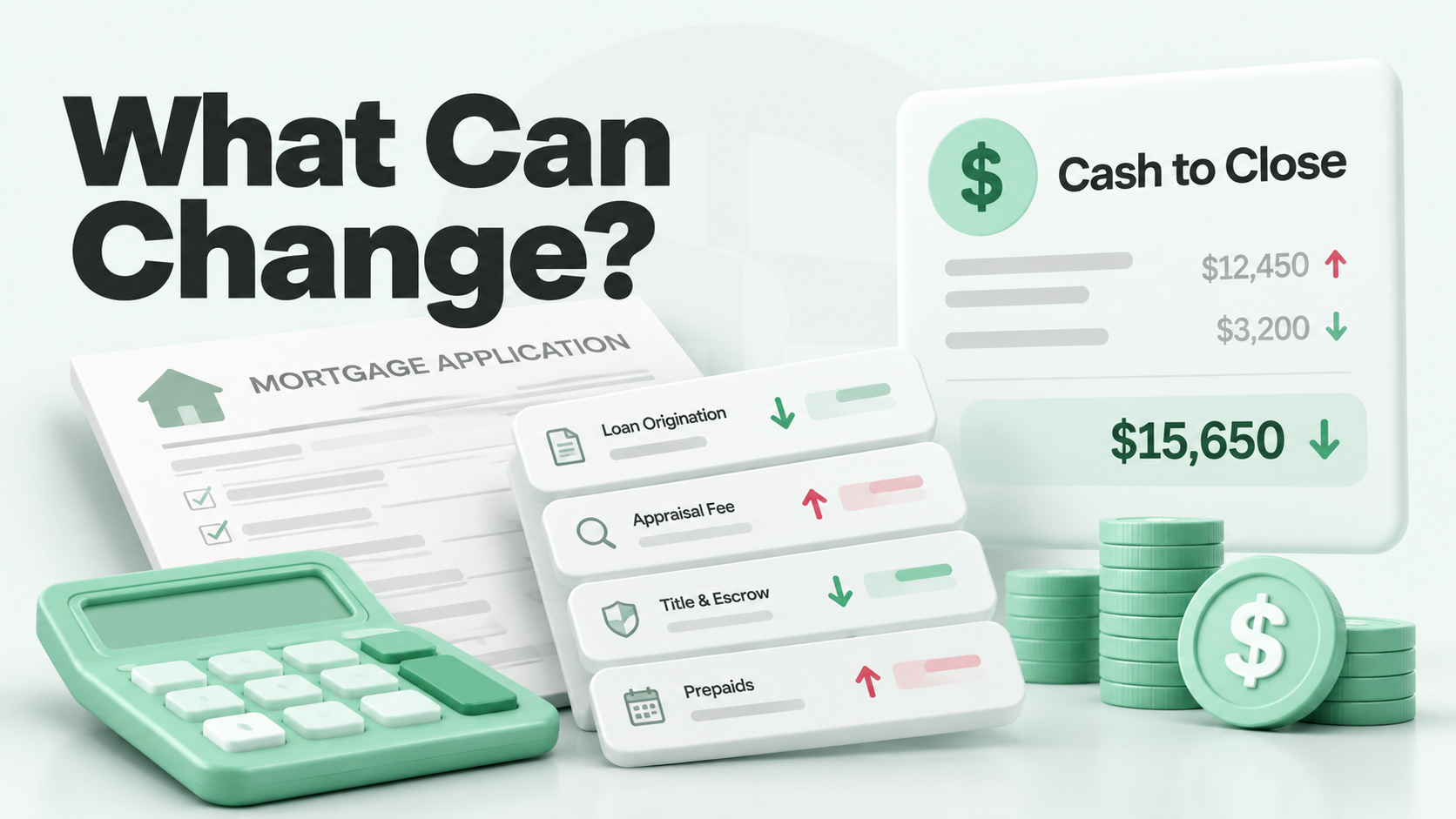
Federal disclosure rules place different tolerance treatment on different categories of costs. Some charges generally cannot increase beyond applicable limits without a valid reason and corrected disclosure. Other costs can change because they depend on services selected by the borrower, final usage, insurance, taxes, or third-party amounts.
Do not try to classify a disputed fee by memory. Ask the lender to identify the original estimate, final amount, permitted reason, and any lender credit or cure.
The CFPB advises borrowers whose rate or fees changed to request an explanation and compare the documents.
Section 05
When a Revised Loan Estimate May Appear
A revised disclosure may follow an allowable change, such as a borrower-requested loan change, rate lock, new information affecting the transaction, or another qualifying event under the rules.
A revised Loan Estimate should not become a tool for casually resetting estimates. The file should document the reason and timing.
Section 06
Does Every Change Restart the Three-Day Period?
No. Many changes can be disclosed on a corrected Closing Disclosure without creating a new three-business-day waiting period.
Certain significant changes can trigger a new waiting period under the applicable rule. Ask the lender and settlement team about the exact effect rather than assuming any correction delays closing.
Section 07
Protect the Final Funds
The Closing Disclosure helps identify cash to close, but it should not be treated as wire instructions. Criminals may impersonate a lender, title company, attorney, or agent and send false account information.
Use the verification steps in Wonder Rates’ guide to mortgage wire fraud. Confirm instructions through a trusted phone number obtained independently, especially when any message claims that the account changed.
Section 08
Why Escrow Can Change the Payment
The disclosed payment may include estimated property taxes, homeowners insurance, mortgage insurance, and initial escrow deposits. After closing, changes in tax or insurance bills can produce an escrow shortage or surplus.
Wonder Rates’ explanation of a mortgage escrow shortage shows why a later payment change does not necessarily mean the loan’s principal-and-interest terms changed.
Section 09
A Buyer Review Checklist
- Compare both forms side by side.
- Confirm names, property address, loan type, and occupancy.
- Review loan amount, rate-lock status, and loan term.
- Compare lender credits and points.
- Check every service and fee on page 2.
- Reconcile earnest money, seller credits, and cash to close.
- Ask about unexplained changes in writing.
- Verify wiring instructions independently.
- Keep the final signed disclosure with the permanent mortgage file.
Section 10
Frequently Asked Questions
Is the Loan Estimate a loan approval?
No. It is a disclosure of proposed terms and estimated costs, not a commitment to lend.
Can my cash to close change?
Yes. Final credits, taxes, insurance, prorations, fees, deposits, and transaction changes can affect it.
Is the Closing Disclosure completely final?
It should reflect final or near-final terms, but corrections can still occur. Review every updated version.
Should I sign if I do not understand a change?
Ask the lender and settlement provider for an explanation before closing. Obtain legal advice when the question concerns legal rights or contract obligations.
Does receiving the Closing Disclosure mean the loan is funded?
No. Remaining closing, verification, underwriting, and funding conditions may still apply.
Section 11
Final Takeaway
The Loan Estimate begins the cost conversation, and the Closing Disclosure tests whether the final transaction matches it. Compare every page, ask for the reason behind changes, protect your funds, and use the three-day review window to resolve questions before signing.
Duc Pham, Mortgage Broker | NMLS# 844897
Wonder Rates, Inc. | NMLS# 1518655
Equal Housing Lender.
AZ, CA, CO, FL, GA, LA, MI, OK, PA, SC, TX, VA, WA, OH, AL, OR, NC
This article is for educational purposes only and is not a commitment to lend or legal advice. Disclosure timing, tolerance rules, revised estimates, waiting periods, fees, and closing requirements depend on the transaction and current federal and state requirements. Review your official loan documents.



