
Section 01
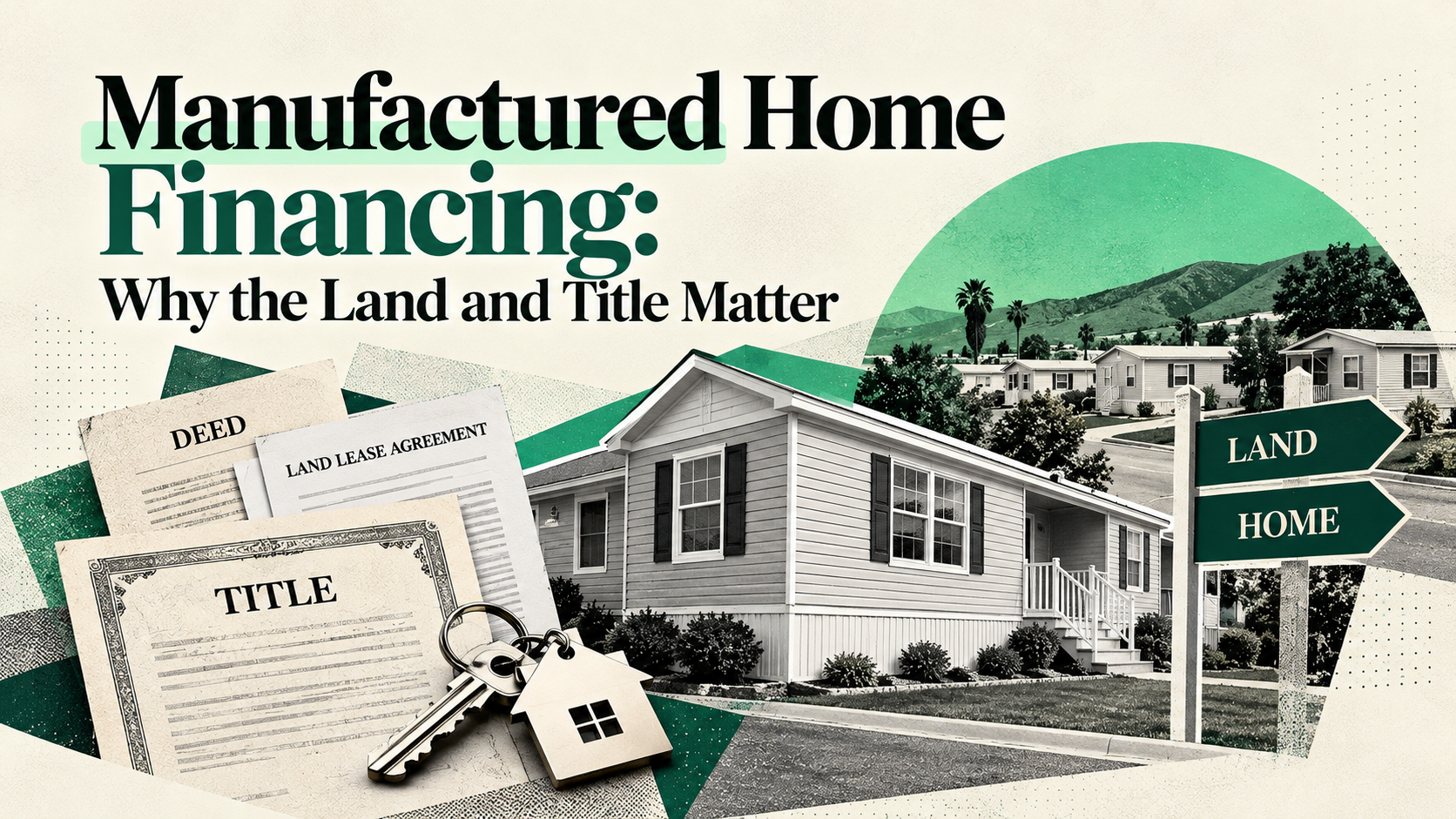
Manufactured home financing depends on whether the home is eligible real property, how the land is owned, whether title has been handled correctly, the foundation, property condition, occupancy, and the selected loan program. A home in a land-lease community may require a different financing path from one permanently attached to borrower-owned land.
The asking price alone does not reveal the structure. Buyers should first determine exactly what they are purchasing.
Section 02
Are You Buying the Home, the Land, or Both?
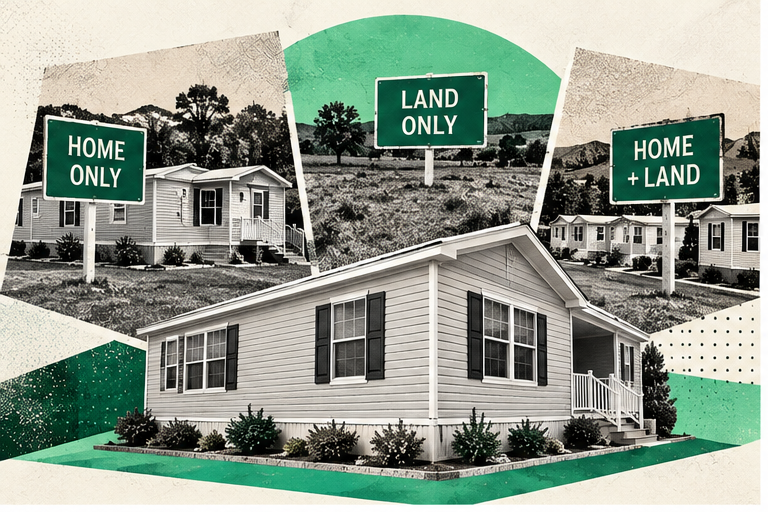
Three transactions can look similar in a listing but be financed differently:
- Manufactured home permanently attached to borrower-owned land
- Manufactured home on leased land or in a park
- Personal-property home without eligible real-property treatment
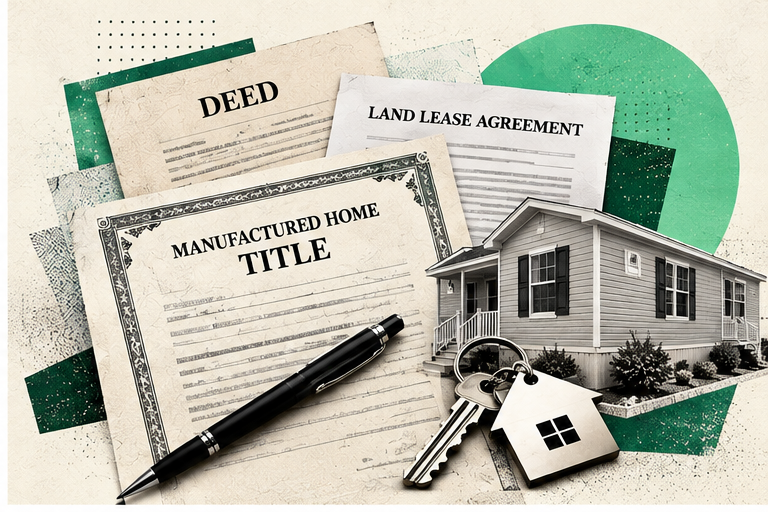
Ask for the deed, title or certificate information, land agreement, tax record, foundation details, and community documents before assuming a standard mortgage is available.
Section 03
Manufactured, Modular, and Mobile Are Not Interchangeable
A manufactured home is built under the federal HUD construction standard. A modular home is built to applicable state or local codes and assembled on site. “Mobile home” is often used informally and can refer to older units or legal classifications that differ from modern manufactured housing.
The HUD Manufactured Housing Program provides official information about federal construction and safety standards. Mortgage eligibility still depends on the specific property and program.
Section 04
Title Status Can Determine the Financing Path
Manufactured homes may begin with personal-property title documents. For real-property mortgage financing, the lender and title company may need evidence that the home and land are legally combined or titled as required by state law and the loan program.
Do not assume the title was retired or converted correctly because the home has been in place for years. Missing serial numbers, owner-name mismatches, unreleased liens, and incomplete conversion records can delay closing.
Section 05
The Foundation and Relocation History Matter
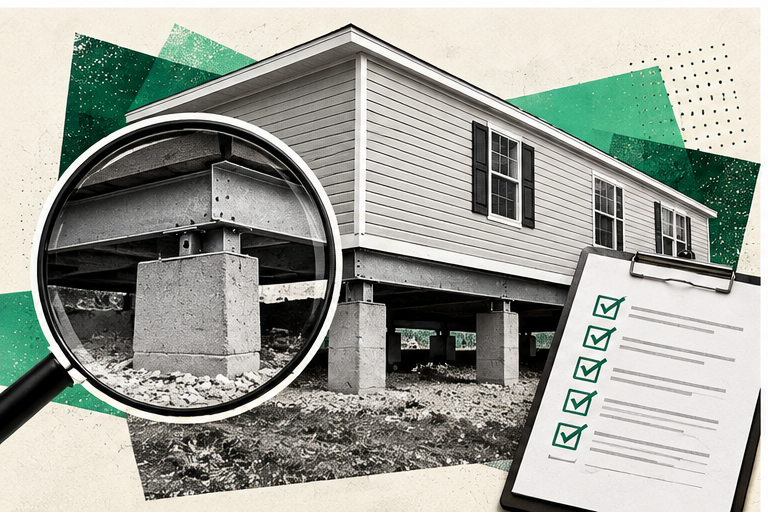
Mortgage programs may require permanent attachment to an eligible foundation and supporting engineering documentation. The lender may also review whether the home was moved from another site.
Additions such as porches, rooms, decks, garages, and roof structures require careful review. Unpermitted or structurally dependent additions can affect eligibility and safety. Cathryn’s article on mortgages involving unpermitted work explains why a completed-looking improvement is not automatically acceptable.
Section 06
Owned Land and Leased Land Create Different Risks
With owned land, the transaction can include both the home and parcel as real property when requirements are met. With leased land, the buyer must review the ground lease or community agreement, rent, increases, transfer approval, utilities, rules, and what happens when the lease ends.
A low home price can be offset by substantial site rent or community charges. Include those obligations in the real household budget.
Section 07
Appraisal, Inspection, and Engineering Are Separate
The appraisal addresses value and applicable property characteristics. The inspection evaluates condition within its scope. An engineer may evaluate the foundation or structural connections when required.
Cathryn’s guide to appraisal versus inspection explains why one report does not replace another.
Inspect the roof, plumbing, electrical system, moisture, skirting, supports, drainage, HVAC, additions, and tie-downs. Also verify water, sewer or septic, road access, and utility responsibilities.
Section 08
Insurance Requires the Correct Property Description
Tell the insurance professional the year, manufacturer, model, location, foundation, additions, land ownership, occupancy, and community arrangement. Coverage options and requirements can differ from a site-built home.
Do not wait until the final days before closing. An insurance issue can affect both approval and the ongoing ownership budget.
Section 09
Documents to Request Before Making an Offer
- HUD certification labels and data plate information
- Current title or conversion documents
- Deed and legal description
- Foundation or engineering certification where applicable
- Tax records
- Permit history for additions
- Community or land-lease agreement
- Insurance quote
- Utility and septic information
- Existing lien releases
- Seller disclosures and inspection reports
Missing documents do not always mean the property is ineligible, but they signal work that should happen before the buyer becomes deeply committed.
Section 10
Frequently Asked Questions
Can FHA, VA, USDA, or conventional financing be used?
Potentially, depending on the property, borrower, land, title, foundation, occupancy, and program-specific requirements.
Can I finance a manufactured home in a park?
Possibly, but the available financing may differ from a real-property mortgage. The land-lease and community terms matter.
Does the age of the home matter?
Yes. Construction date, HUD standards, condition, and program rules can affect eligibility.
Can a moved manufactured home qualify?
Relocation history can affect eligibility. The lender must review the property under the selected program.
Does a manufactured home always lose value?
No universal statement applies. Value depends on land, title, condition, market, supply, community, maintenance, and other factors.
Section 11
Final Takeaway
Manufactured home financing starts with classification. Confirm the home, land, title, foundation, relocation history, additions, insurance, and community obligations before choosing a loan path. A careful property review can prevent the buyer from treating a personal-property purchase like an ordinary site-built home transaction.
Talk with Wonder Rates about financing a manufactured home →
Duc Pham, Mortgage Broker | NMLS# 844897
****Wonder Rates, Inc. | NMLS# 1518655
Equal Housing Lender.
AZ, CA, CO, FL, GA, LA, MI, OK, PA, SC, TX, VA, WA, OH, AL, OR, NC
This article is for educational purposes only and is not a commitment to lend, legal advice, engineering advice, or insurance advice. Loan approval is subject to creditworthiness, income verification, title, land rights, foundation, appraisal, insurance, property eligibility, and current underwriting guidelines. Requirements vary by program and jurisdiction.



