

Section 01
Mortgage large deposits may require an explanation because the lender must determine whether funds used for closing or reserves came from an acceptable source and whether they created an undisclosed debt. The question is not automatically an accusation. It is part of documenting the financial picture used to approve the loan.
The cleanest file shows where the money started, how it moved, and why it belongs to the borrower.
Section 02
What Counts as Mortgage Large Deposits?
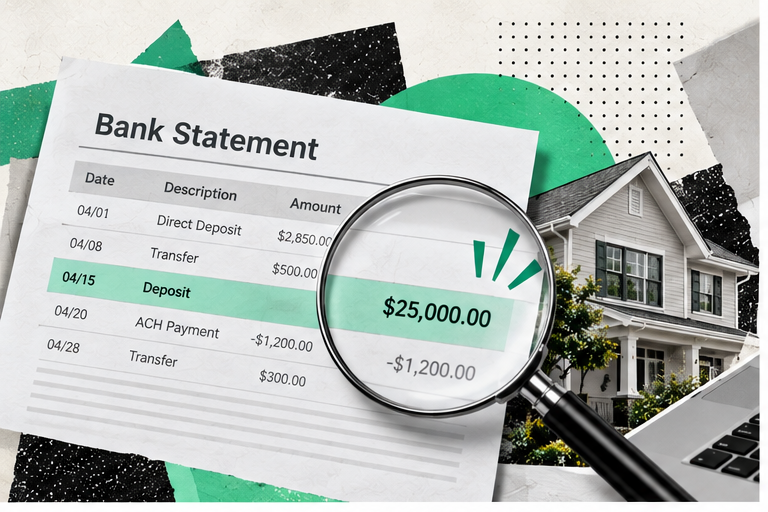
There is no single dollar amount that applies to every borrower and every loan. The program, account history, transaction type, income, asset needs, and automated or manual underwriting method can affect which deposits require review.
A deposit may attract attention when it is unusual compared with normal account activity or when the funds are needed for down payment, closing costs, or reserves.
Under Fannie Mae’s depository account guidance, a large deposit is a single deposit exceeding 50% of the total monthly qualifying income for the loan.
For example, with $8,000 in total monthly qualifying income, a $5,000 deposit exceeds that threshold. This is a Fannie Mae guideline, not a universal dollar limit for every mortgage program.
For purchases, large deposits needed for the down payment, closing costs, or reserves generally require acceptable sourcing. An undocumented amount may be excluded if sufficient verified funds remain. For refinances, this guideline does not require a large-deposit explanation, but borrowed funds and related liabilities must still be considered.
Section 03
What the Lender Is Trying to Verify

The review generally asks four questions:
- Is the money actually available to the borrower?
- Is the source acceptable under the loan program?
- Did the deposit create a new repayment obligation?
- Is the documentation consistent with the application?
Examples of potentially explainable deposits include payroll, business distributions, sale proceeds, tax refunds, gifts, transfers between owned accounts, and proceeds from selling an asset. The documentation differs for each source.
Fannie Mae’s guidance on depository accounts and large deposits illustrates how an unsourced deposit can affect the asset amount available for underwriting under its guidelines. Other programs may use different definitions and documentation methods.
Section 04
Transfers Between Your Own Accounts

Moving money between your own accounts does not create new income. Keep records identifying the originating and receiving accounts. When a transfer between verified accounts is clearly identified on the statements, Fannie Mae generally does not require further explanation unless questions remain about possible borrowing. Other programs or lender requirements may differ.
Section 05
Money From Family Members
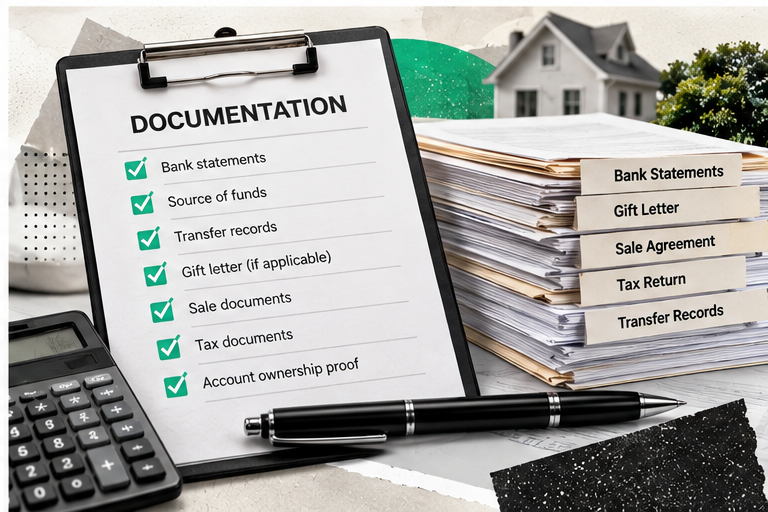
Family support may be acceptable under certain programs, but it should be documented as the correct type of transaction. A true gift generally should not be disguised as the borrower’s savings, and a private loan should not be described as a gift.
Before receiving money from family, review our guide to down payment gift funds and required paperwork. Confirm the donor, gift letter, and transfer process with your loan officer before funds move.
Section 06
Why Cash Deposits Are Difficult
Physical cash can be hard to trace. A receipt showing a deposit proves cash entered the account, but it may not prove where the cash came from.
This is especially important for business owners who receive cash. Business revenue should be handled through proper business records, accounts, and tax reporting. Do not accumulate unreported cash and expect it to function as mortgage funds without questions.
Section 07
Common Sources and Useful Records
| Deposit source | Records that may help |
|---|---|
| Transfer between owned accounts | Statements from both accounts |
| Payroll or bonus | Pay statement and bank record |
| Gift | Gift documentation and transfer evidence required by the program |
| Sale of a vehicle or asset | Ownership, bill of sale, and deposit evidence |
| Tax refund | Tax transcript or return and deposit record |
| Business distribution | Business records and evidence of ownership and liquidity |
| Foreign account transfer | Statements, transfer records, currency documentation, and ownership evidence |
The exact request can vary. Submit complete documents rather than cropped screenshots that hide account ownership, dates, or transaction details.
Section 08
What About Funds From Abroad?
Borrowers working in the United States, including some H-1B visa holders, may use funds held abroad when the program permits and the money can be documented, transferred legally, converted, and verified.
The lender may need evidence of account ownership, transaction history, exchange or transfer records, and the source of recent deposits in the foreign account. Wonder Rates’ H-1B visa home buying guide explains why immigration status, employment, assets, and program eligibility should be reviewed together.
Section 09
Does Leaving Money in the Account Solve the Problem?
Time can change which statements or deposits appear in the review period, but “seasoning” is not a universal cure. A lender may still request documentation when the source is relevant to the transaction or when other records raise questions.
Do not delay or restructure transactions solely to hide the source. Give the loan officer accurate information and let the applicable guidelines determine what must be documented.
Section 10
How to Prevent Last-Minute Problems
Use the Wonder Rates down payment calculator to estimate your upfront cash needs. Then identify which accounts and funding sources you expect to use.
Separate your available balance from the amount the lender has verified as eligible. A calculator can help with planning, but it cannot determine whether a deposit is acceptable or sufficiently documented.
- Keep closing funds in as few accounts as practical.
- Avoid unexplained cash deposits.
- Save full statements and transfer confirmations.
- Tell the loan officer before receiving a gift.
- Document asset sales at the time they occur.
- Do not borrow money without disclosing the obligation.
- Avoid moving funds repeatedly between family accounts.
- Use secure systems for sending financial documents.
Section 11
Frequently Asked Questions
Is every deposit questioned?
No. Normal, identifiable activity may not require the same review as an unusual deposit needed for closing.
Can I use money from my parents?
Possibly, if the program permits the gift and the required donor, transfer, and documentation conditions are met.
Can I use cash saved at home?
Cash without a verifiable source can be difficult or impossible to use. Ask before depositing it for a mortgage transaction.
Why does the lender need the statement from the other account?
The lender may need to confirm the transfer originated from an account you own and did not come from an undisclosed source.
Can a large deposit delay closing?
Yes, if the funds are required and supporting records arrive late or do not establish an acceptable source.
Section 12
Final Takeaway
Large-deposit questions are about traceability, ownership, and undisclosed obligations. Keep the money trail simple, preserve complete records, disclose gifts and loans accurately, and coordinate transfers with the loan team before the closing deadline.
Expecting a gift, asset-sale proceeds, or a transfer from another account? Start your mortgage review with Wonder Rates and ask which records your proposed loan program requires.
Confirm the documentation plan before moving funds, and submit sensitive records through the approved secure process.
Duc Pham, Mortgage Broker | NMLS# 844897
Wonder Rates, Inc. | NMLS# 1518655
Equal Housing Lender.
AZ, CA, CO, FL, GA, LA, MI, OK, PA, SC, TX, VA, WA, OH, AL, OR, NC
This article is for educational purposes only and is not a commitment to lend, legal advice, or financial advice. Asset sourcing, documentation, and acceptable-funds requirements depend on the transaction, program, lender, investor, and current underwriting method.



