
Section 01
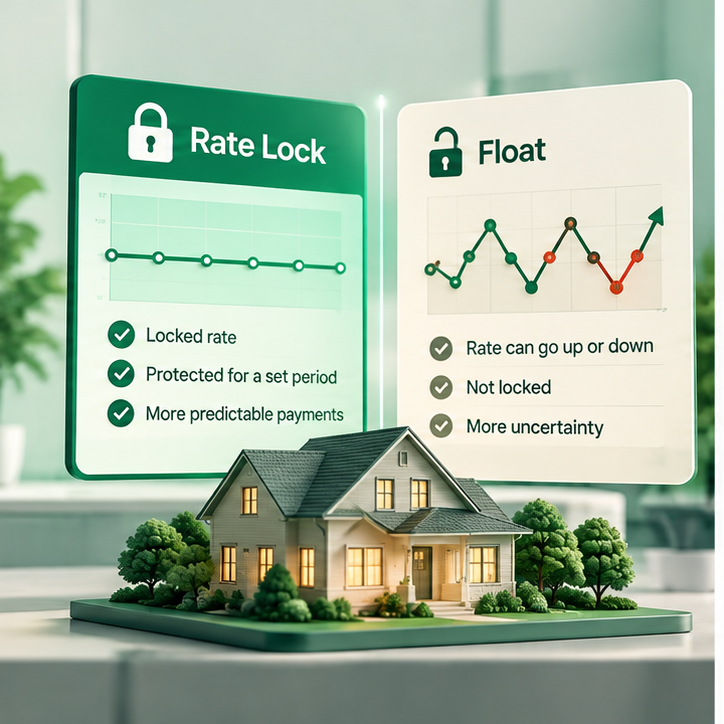
A mortgage rate lock is an agreement that protects specified loan pricing for a defined period, subject to the lock terms and no disqualifying changes to the application. Floating means the pricing has not been locked and can move before closing.
A lock does not guarantee loan approval or an on-time closing. Borrowers should understand the expiration date, required milestones, extension policy, and what happens if the loan or application changes.
Section 02
Mortgage Rate Lock vs Float
When a rate is floating, market changes may improve or worsen available pricing. When it is locked, the agreement generally protects the locked terms through the stated expiration date if applicable conditions are met.
The CFPB explains that a mortgage rate lock applies for a specified time and may depend on there being no changes to the application.
The decision is not a prediction contest. It should reflect the closing timeline, risk tolerance, contract deadlines, documentation readiness, and lock terms.
Section 03
What a Lock May Cover
The lock agreement may address the interest rate, points or credits, loan program, lock period, property, occupancy, loan amount, and other conditions. Review the actual written confirmation rather than relying on a text message that only says “locked.”
Confirm:
- Lock date and expiration date
- Loan program and term
- Property address
- Loan amount
- Rate and points or credits
- Extension policy
- Float-down policy, if any
- Conditions that can change the pricing
Section 04
Why Closing Delays Matter
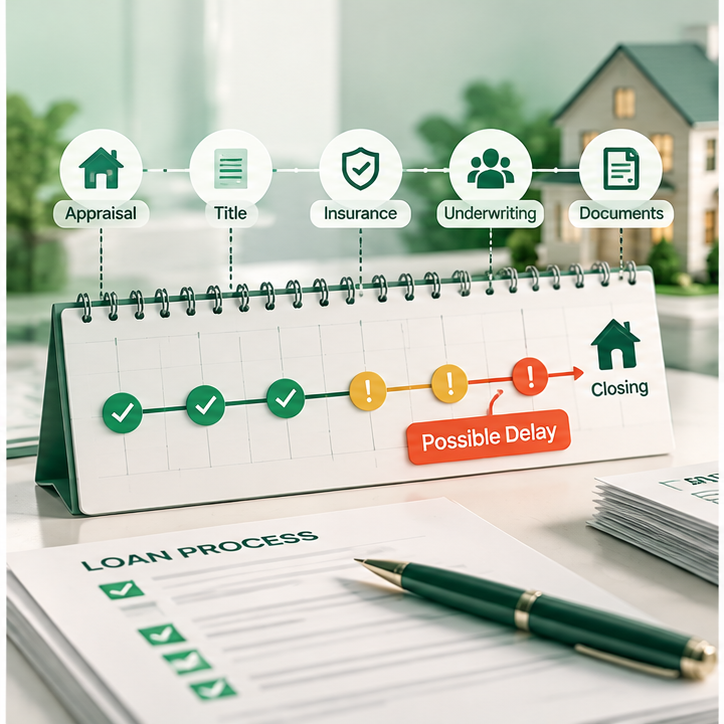
A rate lock normally ends on a specific date. If the loan cannot close and fund within the required period, an extension or new lock may be needed.
Delays can come from the borrower, lender, appraisal, title, insurance, seller, builder, condominium review, repairs, or other third parties. Responsibility for an extension cost depends on the lock agreement, lender policy, and cause of the delay.
Wonder Rates’ guide to mortgage closing delays explains how unresolved conditions and third-party timing can affect the final schedule.
Section 05
What Is a Rate-Lock Extension?
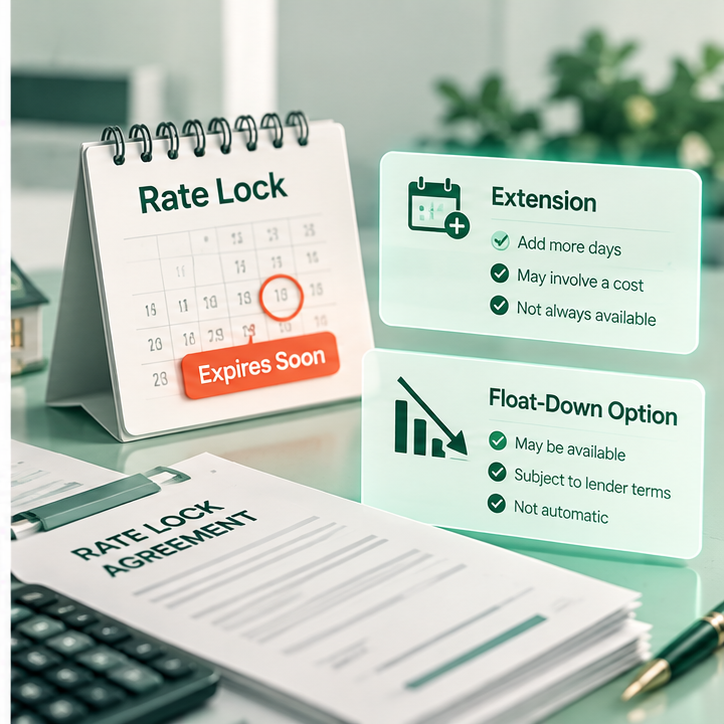
An extension adds time to an existing lock. It may involve a cost or pricing adjustment and is not always available on the same terms.
Ask these questions before the deadline:
- What is the last date the loan must fund?
- How many extension days are needed?
- Who is responsible for the extension?
- How will the cost or credit appear in the documents?
- Would relocking follow a different policy?
Do not wait until expiration day to identify a missing appraisal, insurance policy, title item, or borrower document.
Section 06
What If Market Rates Fall After You Lock?
A standard lock generally protects against worsening market pricing but does not automatically provide better pricing when the market improves. Some lenders or products may offer a float-down option under defined conditions.
The availability, timing, thresholds, fees, and required approval vary. A borrower should not assume a social media rate quote creates a right to change the existing lock.
Changing lenders late in the transaction can also affect appraisal use, disclosures, underwriting, contract deadlines, and closing certainty. Compare the full transaction, not only one advertised number.
Section 07
What Can Cause Locked Terms to Change?
Even within the lock period, material changes may require new pricing or eligibility review. Examples can include:
- Different loan program or term
- Change in loan amount or down payment
- Updated credit profile
- Different property type or occupancy
- Appraisal results affecting the structure
- Change in borrower or employment information
- Failure to meet lock-agreement conditions
The exact effect depends on the file and policy. Ask for a written explanation when terms change.
Section 08
A Timeline That Reduces Lock Risk
Before locking
Confirm the contract timeline, inspection issues, appraisal needs, insurance availability, title status, and major documentation gaps.
Immediately after locking
Review the confirmation for accuracy and note the expiration date. Complete required disclosures and conditions promptly.
One to two weeks before expiration
Ask whether the appraisal, title, insurance, underwriting, and closing documents are on track. Resolve known issues.
If a delay appears
Request written extension options and determine who must act. Coordinate with the agent and settlement provider without making promises the lender has not approved.
Section 09
Frequently Asked Questions
Does a Loan Estimate mean my rate is locked?
Not necessarily. The Loan Estimate indicates whether the rate is locked and, if so, provides relevant timing information.
Can I lock before finding a property?
Some lenders offer options, but ordinary lock requirements and availability vary. Ask how the property and closing date affect the policy.
Is a longer lock always better?
No. Longer periods may have different pricing or conditions. The useful period should fit the realistic transaction timeline.
Does a lock guarantee closing?
No. Approval remains subject to underwriting, property, documentation, program, and closing requirements.
Can a lock be extended more than once?
Possibly, depending on lender policy and the transaction. Each extension may have separate terms.
Section 10
Final Takeaway
A rate lock manages market risk for a defined period, not every risk in the mortgage. Review the written terms, choose a realistic duration, track the file well before expiration, and understand extension or float-down options before a delay forces the decision.
Talk to a loan officer about your purchase scenario →
Duc Pham, Mortgage Broker | NMLS# 844897
Wonder Rates, Inc. | NMLS# 1518655
Equal Housing Lender.
AZ, CA, CO, FL, GA, LA, MI, OK, PA, SC, TX, VA, WA, OH, AL, OR, NC
This article is for educational purposes only and is not a commitment to lend or a rate-lock agreement. Pricing, lock periods, extensions, float-down options, credits, costs, and eligibility depend on market conditions, the transaction, lender policy, and written loan documents.



