
Section 01
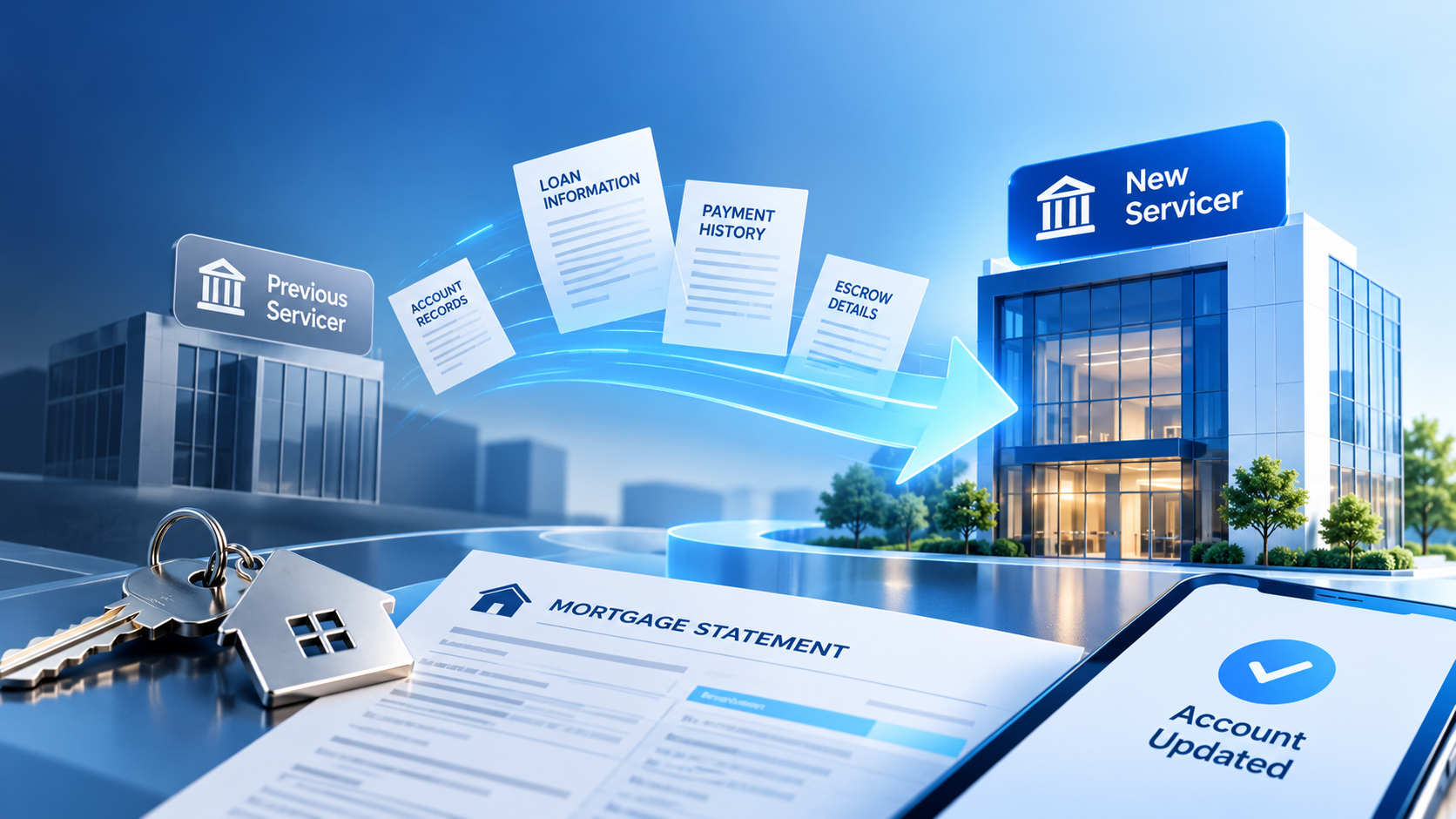
A mortgage servicer transfer changes the company that collects your payments and managers the account, but it does not automatically change your underlying loan terms. Receiving a transfer letter soon after closing can feel suspicious. Mortgage servicing transfers are common, but scammers also use public mortgage information. Verification matters.
Section 02
Understand the Three Different Roles
The lender originates or funds the mortgage. The loan owner or investor holds the economic interest. The servicer collects payments, maintains account records, manages escrow, and handles borrower communications.
One company can perform more than one role, and the roles can change over time. A servicing transfer does not necessarily mean the mortgage itself was rewritten.
Section 03
Verify the Transfer Before Changing Payment Instructions
Borrowers generally receive notices from the current and new servicers. Compare the effective date, account information, contact details, and payment instructions.
Use phone numbers from an existing mortgage statement or independently verified official website. Do not rely only on a number inside an unexpected email or text.
The CFPB explains what borrowers should know when a mortgage servicer changes, including notice and payment considerations.

Section 04
Follow the First-Payment Timeline
Before the effective date, confirm whether any payment is pending with the old servicer. Save confirmation numbers and bank records.
After the transfer:
- Create the new online account through a verified site
- Confirm the first payment due date
- Update bill pay or autopay
- Verify the principal balance
- Review the escrow balance
- Confirm insurance and tax information
- Check whether optional services transferred
- Save both servicers’ notices
Do not send duplicate payments unless instructed after a documented error review.
Section 05
Review Escrow Carefully
The old servicer should transfer relevant account information and funds as required. Compare the final old-servicer statement with the first new-servicer statement.
If the balance, tax, or insurance information appears wrong, contact the new servicer promptly with documentation. Wonder Rates’ guide to a mortgage escrow shortage explains how future bills and prior shortages can affect the required payment.
Also confirm that the insurer lists the correct mortgagee or servicer contact when a policy update is required. A servicing change does not mean the homeowner should cancel coverage.

Section 06
What If a Payment Is Misapplied?
Federal servicing rules provide protections during certain transfer periods, but the borrower should still act quickly. Keep proof of the payment date, amount, destination, account number, and bank confirmation.
Call the servicer and submit a written notice through the designated address or process when appropriate. A general customer-service mailing address may not be the correct address for an official notice of error.
Monitor credit reports and statements until the issue is resolved. Do not stop making future payments solely because a prior payment is disputed.
Section 07
Protect Yourself From Transfer Scams
After closing, property and mortgage information can become public. Scammers may send official-looking letters requesting payment, personal information, warranty fees, or deed services.
Warning signs include:
- Pressure to pay before the stated transfer date
- Instructions to use gift cards, cryptocurrency, or a personal account
- A website domain that differs slightly from the company name
- Refusal to provide written verification
- A claim that loan terms changed without supporting documents
- Requests for online banking passwords or security codes
Contact the known servicer when uncertain.
Section 08
Keep a Permanent Mortgage File
Store the Closing Disclosure, note, security instrument, payment history, transfer notices, escrow analyses, tax records, insurance documents, and important correspondence.
Wonder Rates explains why closing documents remain important in its article on mortgage closing delays and preparation. The file becomes equally valuable after closing when account information moves between companies.
Section 09
Frequently Asked Questions
Can the new servicer change my interest rate?
A servicing transfer alone does not rewrite the loan. Any rate change must follow the existing loan terms, such as an adjustable-rate provision.
Does the transfer affect my credit?
The transfer itself should not be treated like a new mortgage application. Payment errors should be disputed promptly with documentation.
What happens to autopay?
Do not assume it transfers. Review both notices and establish payment instructions through the verified new servicer.
What happens to escrow funds?
They are handled under servicing requirements, but borrowers should compare statements and report discrepancies.
Can I prevent the transfer?
Borrowers generally do not control whether servicing rights are transferred, subject to the loan documents and law.
Section 10
Final Takeaway
If your mortgage servicer changed after closing, treat it as an account-management change first: verify the notices, protect the first payment, compare balances and escrow, update insurance information when required, and keep complete records until the new account is operating correctly.
Need help reviewing your mortgage after closing? Talk with Wonder Rates →
Duc Pham, Mortgage Broker | NMLS# 844897
Wonder Rates, Inc. | NMLS# 1518655
Equal Housing Lender.
AZ, CA, CO, FL, GA, LA, MI, OK, PA, SC, TX, VA, WA, OH, AL, OR, NC
This article is for educational purposes only and is not a commitment to lend, legal advice, or servicing advice. Transfer procedures, payment protections, escrow requirements, and dispute rights depend on the loan, servicer, notices, and current law. Contact the verified servicer and qualified professionals about a specific account.



