
Section 01
 A piggyback loan uses two mortgages instead of one. It solves a specific math problem: how to put down less than 20% without paying for private mortgage insurance, or how to stay under the conforming loan limit on a higher priced home. It is not a special program with hidden benefits. It is a structure, and understanding the tradeoffs matters more than the acronym.
Section 02
What a Piggyback Loan Actually Is
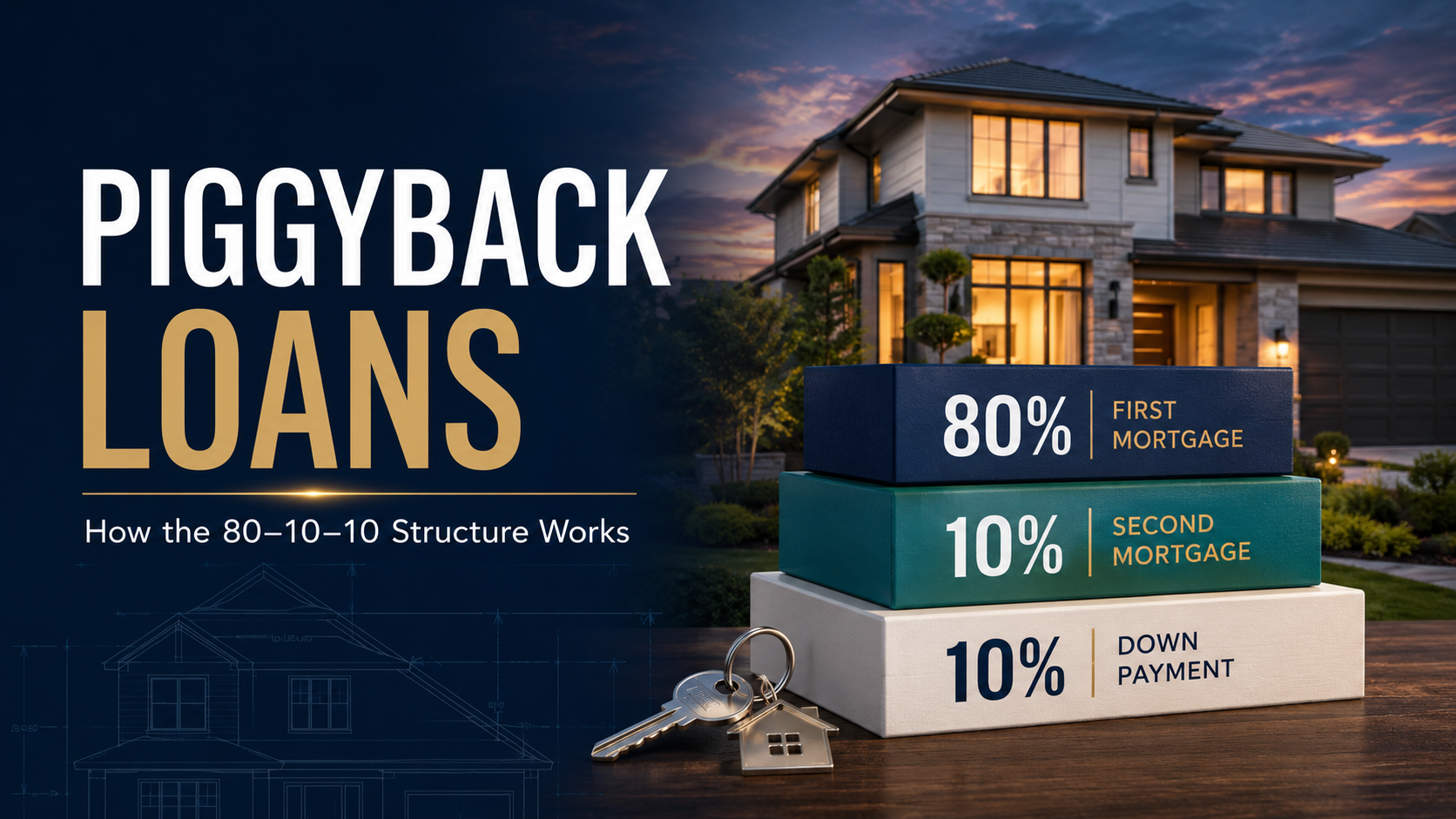
The most common piggyback structure is called an 80-10-10. A first mortgage covers 80% of the purchase price. A second mortgage covers 10%. The borrower brings the remaining 10% as a down payment. The first mortgage stays at 80% loan-to-value. Because of that, it generally avoids the private mortgage insurance requirement that applies to conventional loans above that threshold. If you are comparing the alternatives, our guide to what PMI is and when it may be canceled explains how mortgage insurance works on a conventional loan.
Other combinations exist depending on the goal. An 80-15-5 lowers therequired cash down payment further. A 75-15-10 is sometimes used specifically to keep the first mortgage below a jumbo threshold on a higher priced home. The exact structure a lender offers depends on the borrower’s down payment and credit profile. It also depends on the specific goal, whether that is avoiding PMI, avoidinga jumbo loan, or both.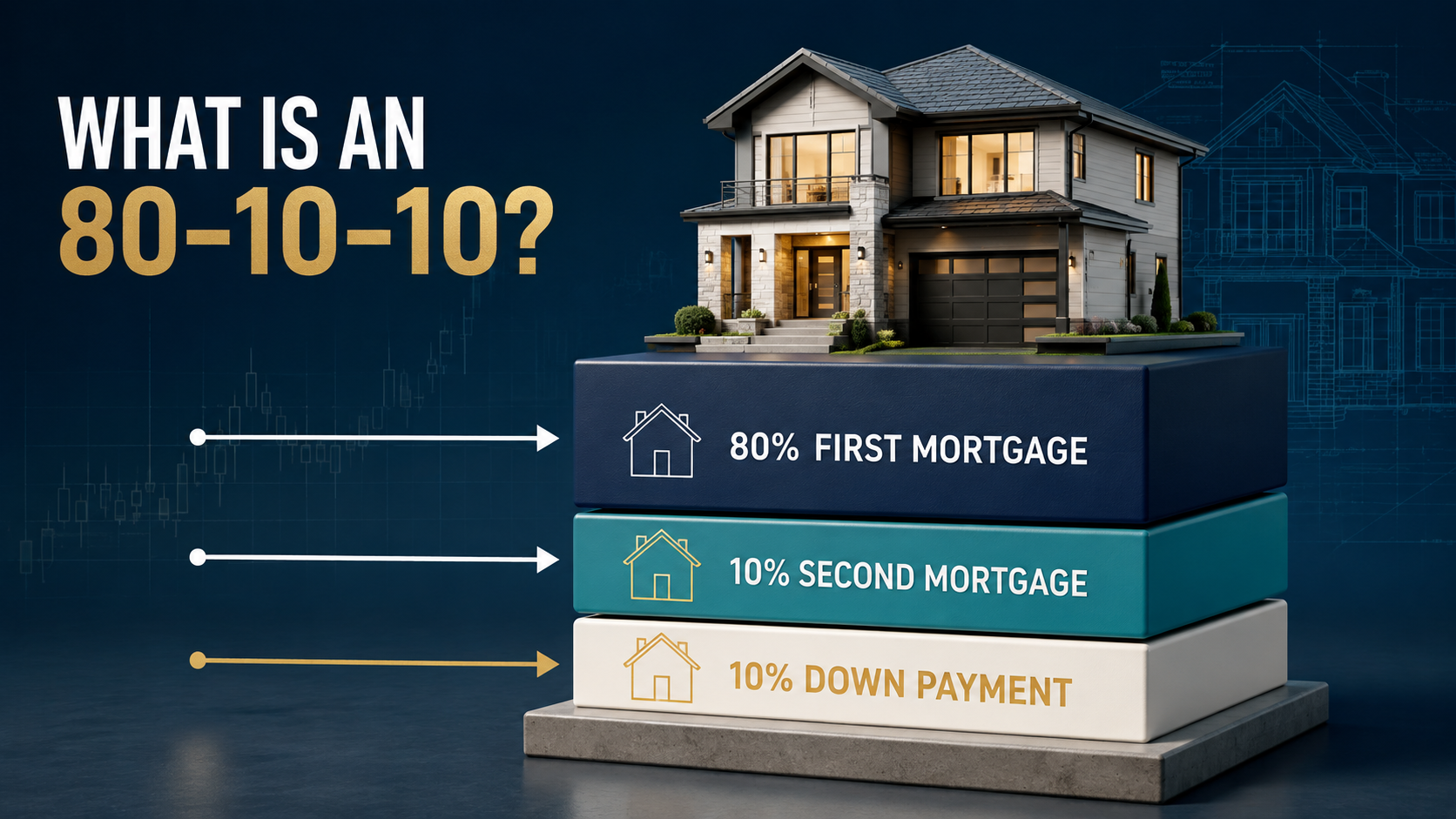
Section 03
Why Borrowers Consider This Structure
Avoiding PMI without a full 20% down payment
Private mortgage insurance is commonly required on a conventional first mortgage when the loan-to-value ratio is above 80%. A piggyback structure may allow a borrower to bring less cash upfront while keeping the first mortgage at or below that threshold.
The CFPB’s official guidance explains the federal rules for requesting PMI cancellation and automatic termination on many eligible mortgages. Whether PMI applies to a particular loan depends on the loan structure and applicable requirements.
Keeping the first mortgage within conforming limits
Sometimes a home’s price places the desired first mortgage near or above the conforming loan limit for the county. Splitting the financing between a first and second mortgage may keep the first loan within conforming limits.
This does not automatically make the piggyback structure less expensive or easier to qualify for. Borrowers should compare it with available jumbo options, including differences in pricing, reserves, documentation, and total payment. The Wonder Rates guide to jumbo loan requirements explains what may change when a loan exceeds the applicable limit.
Because limits can vary by county and are updated annually, review the FHFA’s official conforming loan limit information for the property’s location and applicable year.
Section 04
The Real Tradeoffs Worth Understanding
The second mortgage may cost more
The second loan in a piggyback structure is commonly a home equity loan or HELOC. A junior-lien loan may carry different pricing and repayment terms from the first mortgage. A HELOC commonly has a variable rate, while a home equity loan may have a fixed or adjustable rate depending on the product.
The CFPB explains the differences between a home equity loan and a HELOC, including how funds are accessed and how payments may work. Borrowers considering an equity-sharing product can also read the Wonder Rates comparison of a home equity investment and a HELOC.
Two loans mean two approvals and potentially two sets of costs
Borrowers generally need to qualify for both loans at the same time. The lender’s debt-to-income analysis includes the applicable payments from both mortgages. Depending on the lenders and products involved, borrowers may also face separate origination, appraisal, title, recording, or other closing-related costs.
The Wonder Rates overview of the mortgage underwriting process explains how lenders review income, assets, credit, debts, property information, and loan structure before final approval.
Refinancing later may require additional coordination
If the first and second mortgages are held by different lenders, refinancing the first mortgage later may require the second-lien holder to approve a subordination agreement or require the second loan to be paid off. That process can add time, documentation, and possible fees.
Before choosing a piggyback structure, ask how the second mortgage could affect a future refinance, sale, or payoff.
Avoiding PMI does not automatically mean saving money
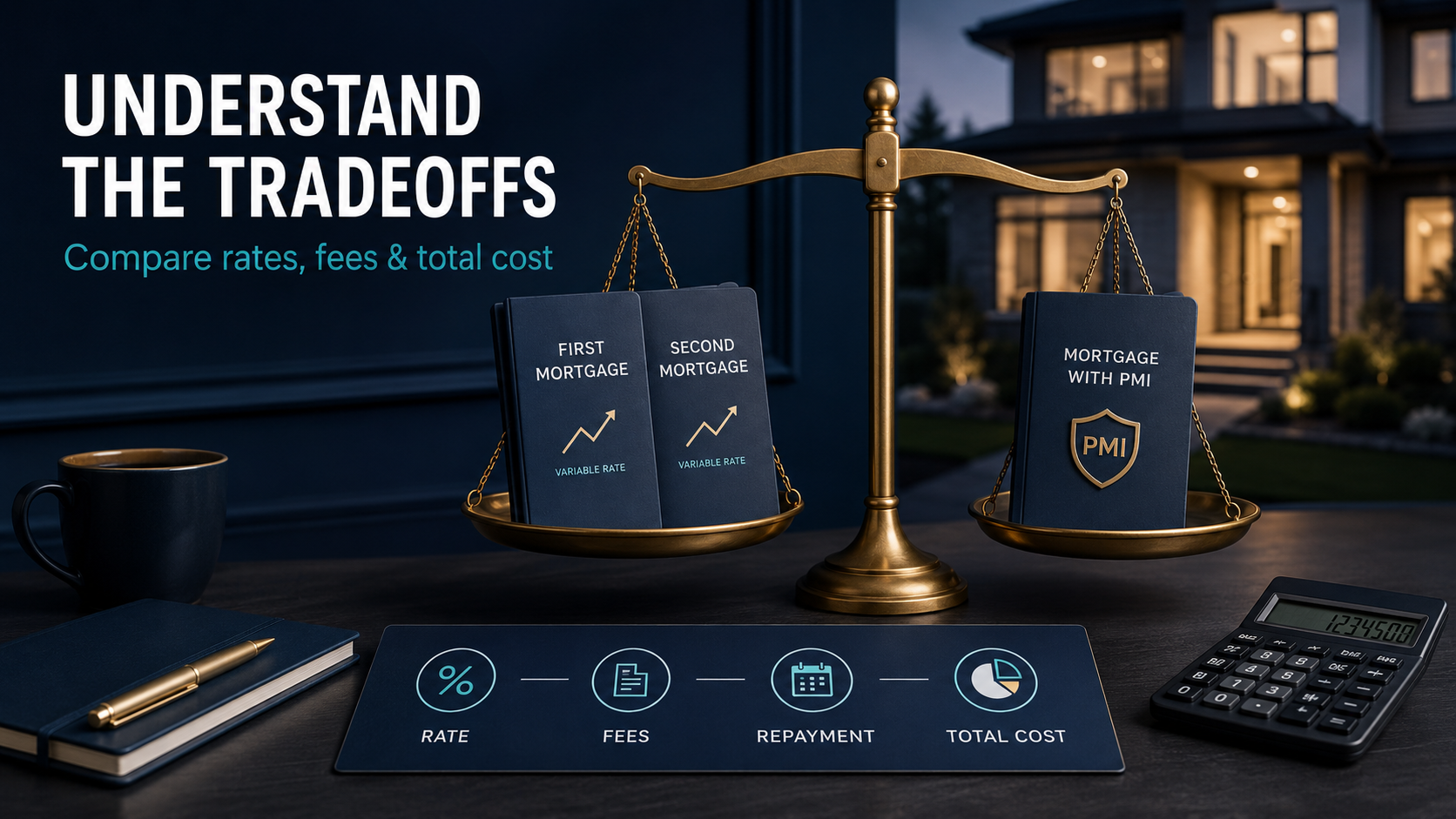
The relevant comparison is not simply “PMI versus no PMI.” It is the total cost and payment structure of both loans compared with the cost of a single mortgage that includes PMI.
Consider:
- The payment on the first mortgage
- The payment and rate structure of the second mortgage
- PMI on the single-loan option
- Closing costs for each structure
- The expected time before selling, refinancing, or paying off the second loan
- When PMI might become eligible for cancellation
- Whether either option includes points, credits, or prepayment terms
The Wonder Rates rate comparison calculator can help organize rate, payment, term, and closing-cost estimates for two scenarios. When modeling a piggyback structure, include the second mortgage payment and costs separately because a general calculator may not automatically combine both liens. Calculator results are educational estimates and are not a loan offer or approval.
Section 05
How the Two Loans Close Together
Both loans in a piggyback structure typically close at the same time, as part of the same transaction. The first mortgage is recorded in first lien position, and the second mortgage is recorded in second lien position, meaning the second lender would be paid after the first in the event of a foreclosure. Some lenders offer both loans directly, while others partner with a separate lender for the second mortgage. Either way, you will generally need to provide documentation for both loans, even if the process feels like a single transaction from your side of the table.
Section 06
Who May Consider a Piggyback Loan
Borrowers who want to preserve cash
A borrower may have enough funds for a larger down payment but prefer to retain money for reserves, repairs, moving costs, or other financial priorities. The benefit of keeping that cash should be compared with the cost and payment of the second mortgage.
Buyers near an applicable jumbo threshold
A piggyback structure may keep the first mortgage within the conforming limit for the county. Whether this produces a better overall result depends on the jumbo and conforming options actually available to the borrower.
Borrowers comfortable managing two loans
This structure involves two balances, potentially two payments, and possibly two servicers. It may fit borrowers who understand the added complexity and can comfortably manage the combined obligation.
Borrowers who qualify for both loans without stretching the budget
Piggyback financing does not remove the need to qualify. Lenders still evaluate the complete financial profile and the combined housing obligations. A structure that avoids PMI may not be appropriate if the second payment creates an uncomfortable monthly budget or reduces financial reserves too much.
Section 07
Questions to Ask Before Choosing an 80-10-10 Loan
Ask the loan officer to provide a written comparison addressing:
- What are the complete terms of the first and second mortgages?
- Is the second mortgage fixed rate or variable rate?
- What is the combined monthly payment?
- What closing costs apply to each loan?
- How does the structure compare with one mortgage that includes PMI?
- When could PMI potentially be canceled on the single-loan option?
- Would a jumbo loan provide a simpler or more competitive alternative?
- What happens to the second lien if the first mortgage is refinanced?
- Are there annual, inactivity, early-closure, or prepayment fees?
- What assumptions could change before closing?
A fair comparison should use the same property, purchase price, down payment, occupancy, credit profile, and expected holding period.
Section 08
Frequently Asked Questions
What is an 80-10-10 loan?
It is a piggyback structure in which a first mortgage covers 80% of the purchase price, a second mortgage covers 10%, and the borrower provides a 10% down payment. Actual availability and terms vary by lender and borrower qualifications.
Does a piggyback loan always save money compared with PMI?
No. The result depends on the second mortgage’s rate and payment, PMI cost, closing costs, loan terms, and how long the borrower expects to keep the financing. Both structures should be compared using the same transaction assumptions.
Can a piggyback loan help avoid a jumbo loan?
It may keep the first mortgage within the applicable conforming loan limit. However, the borrower still has a second mortgage, and the combined structure should be compared with available jumbo financing.
Is the second mortgage always a HELOC?
No. Some piggyback structures use a HELOC, while others may use a closed-end second mortgage. Rate type, repayment terms, fees, and availability differ by lender and product.
Is it harder to qualify for a piggyback loan than a single mortgage?
It can be more complex because the borrower must satisfy the requirements for two loans and the lender must account for both obligations. Approval depends on the complete application, property, loan programs, and lender requirements.
Section 09
Next Steps
If you are comparing PMI, jumbo financing, and a piggyback structure, start a mortgage review with Wonder Rates. A loan officer can compare the available scenarios using your property, down payment, credit profile, income, debts, timeline, and financial goals.
Duc Pham, Mortgage Broker | NMLS# 844897
Wonder Rates, Inc. | NMLS# 1518655
Equal Housing Lender.
AZ, CA, CO, FL, GA, LA, MI, OK, PA, SC, TX, VA, WA, OH, AL, OR, NC
This article is for educational purposes only and is not a commitment to lend. Loan approval is subject to creditworthiness, income verification, property eligibility, and current underwriting guidelines. Loan programs, interest rates, and lender fees may change without notice. Always review your official Loan Estimate before making a financing decision.



