
Section 01
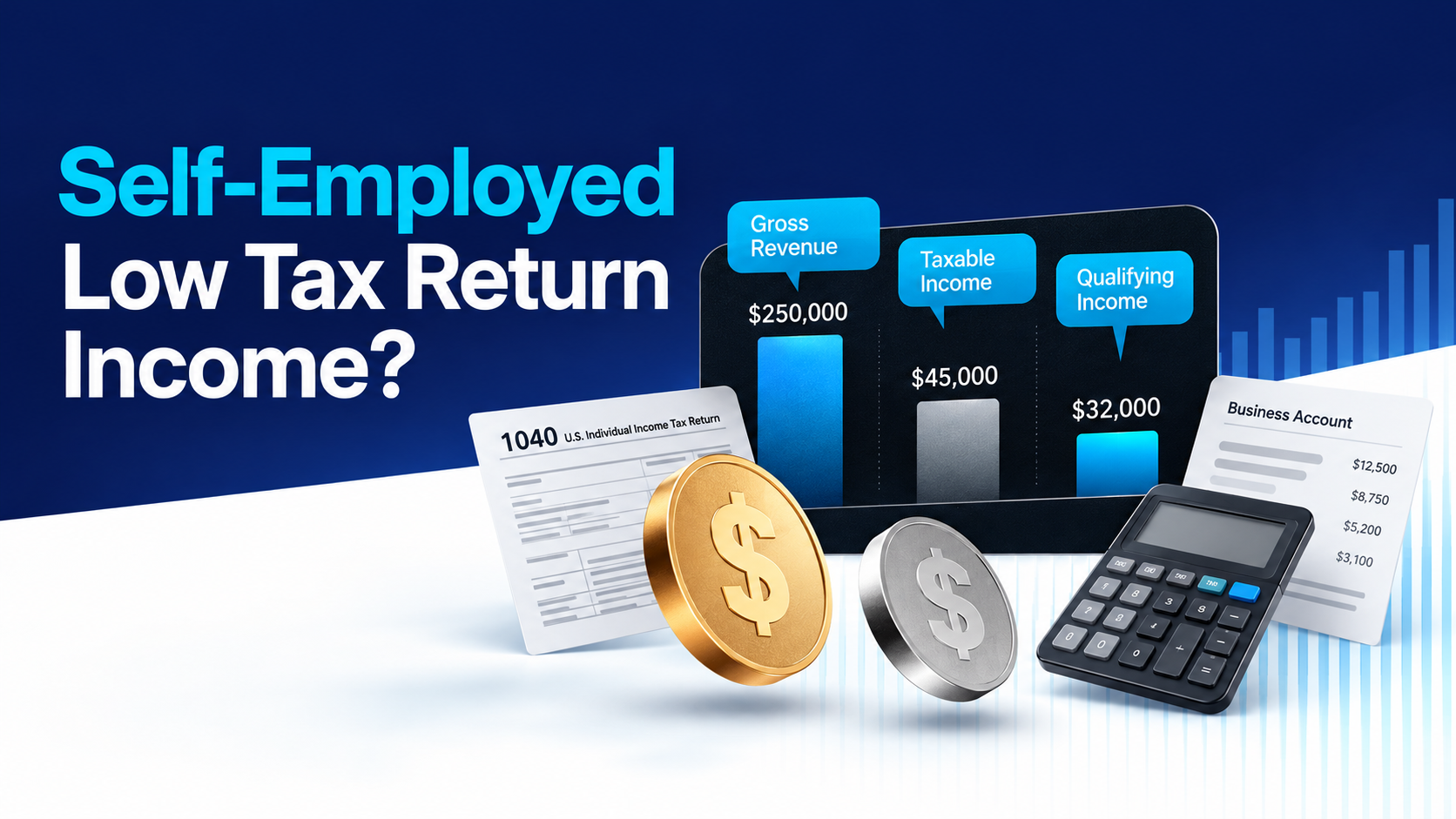
Self-employed owners may qualify for a mortgage even when tax returns show less income than the business collects, but lenders generally cannot use gross sales or cash received as personal qualifying income. They evaluate documented income, allowed adjustments, business obligations, stability, access to funds, and the rules of the selected loan program.
This issue is common for nail salon owners, restaurant operators, contractors, consultants, and other small-business owners. A tax strategy that reduces taxable income can also reduce the income visible to mortgage underwriting.
Section 02
Why Self-Employed Low Tax Return Income Creates Questions
A business can deposit substantial revenue while producing much less net income. Rent, payroll, supplies, equipment, insurance, merchant fees, vehicles, depreciation, and other expenses may reduce taxable profit.
The lender is not deciding whether the business is busy. It is deciding how much stable income is reasonably available to support the mortgage after legitimate business expenses and obligations.
Cash income must still be properly reported and documented. Undeposited or unreported cash generally cannot become qualifying income simply because the owner says the business earned it.
Section 03
Why Write-Offs Can Reduce Mortgage Qualification
Business deductions may lower the owner’s tax liability, but many deductions also lower the income used in underwriting. This creates a tradeoff that surprises borrowers who focus only on gross receipts.
Some noncash or one-time items may receive specific adjustments under a program’s calculation method. That does not mean every write-off is added back. The treatment depends on the tax form, business structure, ownership share, supporting schedules, and underwriting rules.
Fannie Mae’s official guidance on underwriting self-employed borrowers emphasizes income stability, business viability, and analysis of the documentation required for the file.
Section 04
What the Lender May Review
Depending on the program and file, the review may include:
- Personal and business tax returns
- Relevant tax schedules and K-1 forms
- Year-to-date profit and loss statement
- Business balance sheet when required
- Business and personal bank statements
- Ownership documents or business license
- Evidence the business remains active
- Current business debts and recurring obligations
- Explanation of significant income changes
A P&L statement can show current performance, but it does not automatically replace tax returns. The lender may compare it with bank activity and prior filings to determine whether the story is consistent.
Section 05
The Business Structure Changes the Analysis
A sole proprietor, partnership, S corporation, and C corporation do not report income in the same way. The lender may need to determine whether the borrower has access to business earnings and whether using business funds could harm operations.
For example, cash sitting in a business account may not be freely available for a down payment if withdrawing it would weaken payroll, inventory, or working capital. Documentation should explain both ownership and business impact.
Section 06
What If This Year Is Stronger Than the Tax Returns?
Current growth can help explain the business, but a recent increase does not automatically replace the documented history. Underwriters may examine whether the improvement is stable, supported by deposits, consistent with the industry, and likely to continue.
Borrowers should organize a clean file rather than submit an optimistic projection. Wonder Rates’ guide to a self-employed mortgage after a difficult tax year explains how a lender may distinguish a temporary setback from a continuing decline.
Section 07
Can a Bank Statement Loan Help?
Some non-agency programs evaluate eligible deposits or alternative documentation instead of relying only on the conventional tax-return method. These programs are often called bank statement loans, but their rules vary widely.
The review may distinguish business revenue from transfers, refunds, loans, and other non-income deposits. An expense factor may also be applied. Eligibility, down payment, reserves, property type, credit profile, and pricing can differ from traditional programs.
A bank statement program is not a way to use undocumented income. It is a different documentation method with its own underwriting standards.
Section 08
A Better Preparation Strategy
Before making an offer, self-employed borrowers can:
- Ask a loan officer which documents the likely program requires.
- Keep business and personal accounts clearly separated.
- Reconcile the P&L with actual bank activity.
- Prepare explanations for major one-time expenses or income changes.
- Avoid moving large amounts without a documented purpose.
- Review liquidity needs before using business funds.
- Discuss tax decisions with a qualified tax professional.
Do not change a tax return solely to obtain a mortgage without understanding the tax, legal, and financial consequences. A loan officer can explain mortgage documentation, but should not provide tax advice.
Section 09
Frequently Asked Questions
Can the lender use gross business deposits as my income?
Not automatically. Deposits may include revenue, transfers, refunds, or borrowed funds, and the business still has expenses.
Does a P&L replace tax returns?
Usually not for a traditional tax-return program. It may supplement historical documents and show current performance.
Can depreciation be added back?
Certain items may receive adjustments under the applicable calculation, but the treatment depends on the tax form and program. Do not assume the entire amount will be added back.
Should I stop taking business deductions before applying?
That is a tax decision. Consult a qualified tax professional and coordinate early with the loan officer so you understand the mortgage impact.
Is a bank statement loan easier?
It is different, not automatically easier. It still requires documentation, analysis, and compliance with the program’s eligibility rules.
Section 10
Final Takeaway
Low taxable income does not automatically end a self-employed mortgage application, but high revenue alone does not establish qualifying income. The strongest approach is to organize tax returns, current financial statements, bank activity, ownership records, and a clear explanation of business stability before choosing a loan program.
Talk with Wonder Rates about your self-employed mortgage options →
Duc Pham, Mortgage Broker | NMLS# 844897
Wonder Rates, Inc. | NMLS# 1518655
Equal Housing Lender.
AZ, CA, CO, FL, GA, LA, MI, OK, PA, SC, TX, VA, WA, OH, AL, OR, NC
This article is for educational purposes only and is not a commitment to lend or tax, legal, or accounting advice. Income calculations, documentation, and program eligibility depend on the borrower, business, lender, investor, and current guidelines. Consult a qualified tax professional before making tax decisions.



