
Section 01
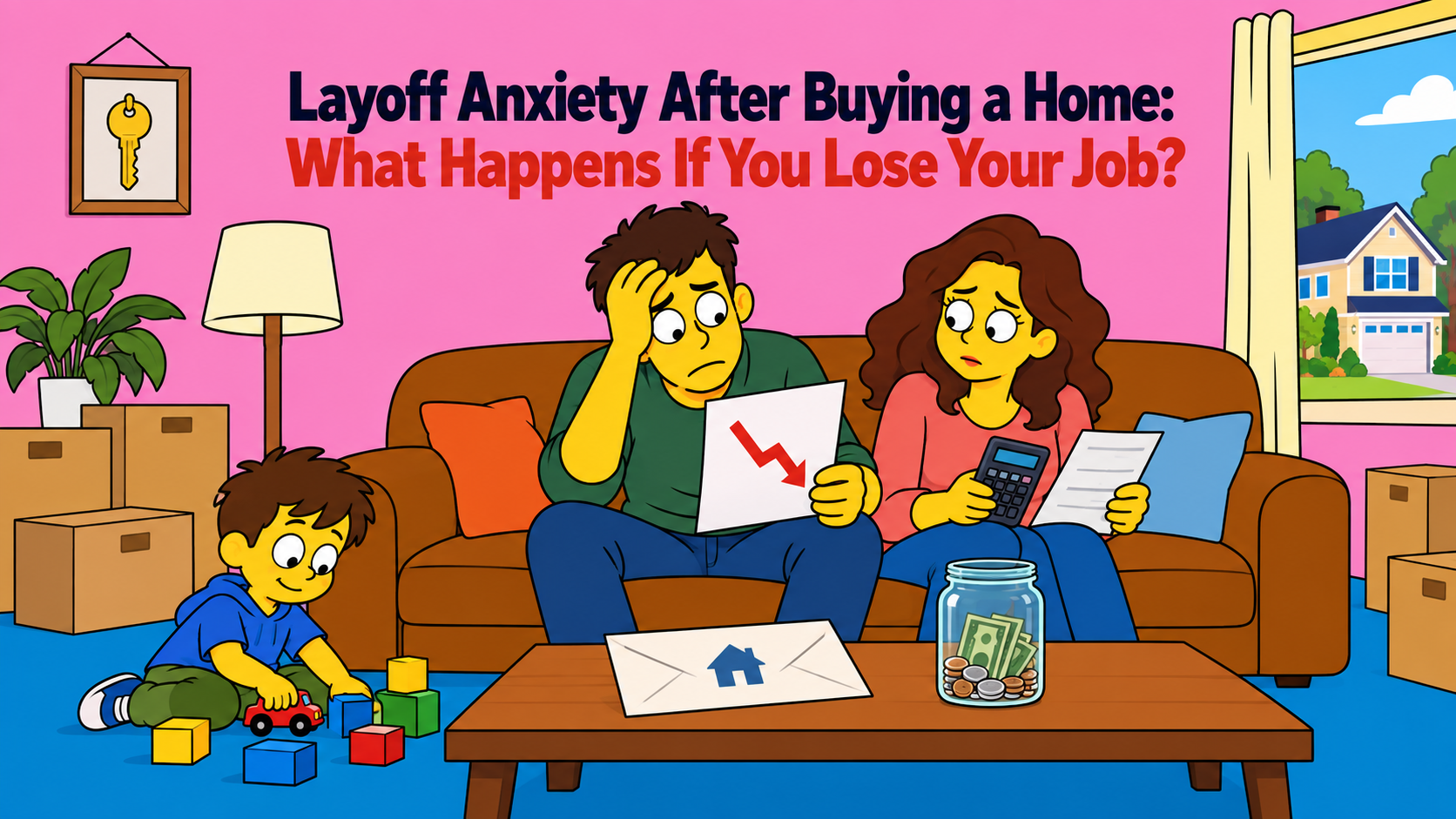
You just signed your mortgage. Three months later, your company calls a meeting, and the words you never wanted to hear come next: “We regret to inform you.”
That fear is real, and it is more common than most homebuyers want to admit. But this article is not here to talk you out of buying a home, and it is not here to tell you that buying a home puts you at risk of losing it. The real issue is simpler and a little less dramatic. A mortgage is not just a loan. It is a monthly obligation that can last for years, and that obligation does not pause just because your income does.
When your income is steady, a mortgage payment can fit comfortably into your monthly budget. But if that income suddenly drops or disappears, the same payment can feel like a very different kind of pressure. The Consumer Financial Protection Bureau (CFPB) treats loss of income as a genuine financial emergency, one that an emergency fund is specifically meant to help you manage.
Section 02
Mortgage Approval and Financial Resilience Are Not the Same Thing
This idea sits at the center of everything in this guide. A lender can confirm that you qualify for a mortgage based on your income, credit, and debts at the time you apply. What a lender cannot tell you is how long your job will last, how your income might change down the road, what unexpected expenses your household will face, or how long it might take you to find new work if you were laid off.
In short, qualifying for a mortgage is not the same as being financially prepared for every future shock. Both things matter, but they answer different questions.
Section 03
Why Job Stability Matters When You Take on a Mortgage
Your Mortgage Payment Does Not Disappear When Your Income Does
If you lose your job, your mortgage payment still comes due according to your loan terms. The lender does not pause the payment schedule because your paycheck stopped. This is one of the clearest and most important facts to understand before you buy a home, since it shapes how you should think about affordability from day one.
Homeownership Creates Both Fixed and Variable Obligations
Some homeownership costs are relatively predictable, like your principal and interest payment. Others can shift or appear without warning, including property taxes, homeowners insurance, HOA dues if your property has them, ongoing maintenance, repairs, and utilities. The CFPB advises homeowners to prepare for maintenance and repair costs and to build an emergency fund for the unexpected expenses that come with owning property.
Affordability Should Not Be Judged by a Normal Month Alone
A solid budget does not stop at asking, “Can I afford this payment right now?” It also asks a harder but more useful question: “If my income dropped for a while, what would happen to this payment?” Thinking through both questions before you buy gives you a much clearer picture of what you are actually taking on.
Section 04
The Real Risk Is Not the Mortgage Alone. It Is the Loss of Income

The Mortgage Itself Does Not Get More Expensive When You Lose a Job
Your loan terms do not change simply because your employment status changes. What changes is your ability to keep making the payments you already agreed to, and that shift in ability is really what deserves your attention.
An Income Shock Affects Your Entire Household Budget
When one source of income disappears, every other expense in your life is still waiting to be paid, including your mortgage, food, transportation, utilities, insurance, healthcare, and any other debt payments your household carries.
This Is Exactly Why Emergency Savings Matter So Much
An emergency fund creates liquidity precisely when your income is interrupted. The CFPB defines an emergency fund as cash set aside for unplanned expenses and financial emergencies, and it lists loss of income as one of the situations this type of fund is meant to help you handle.
Section 05
What Does an Emergency Fund Actually Do for a Homeowner?
An emergency fund is not extra money sitting around with nowhere to go. It is money deliberately set aside for situations your everyday budget was never designed to cover.
Job loss is one of the clearest examples. The CFPB includes loss of income among the situations emergency savings can help a household manage, and home repairs are another common one that homeowners specifically face. It is entirely possible to lose income and deal with an unexpected repair bill at the same time, and without savings, that combination often pushes households toward credit cards or other loans just to stay afloat. The CFPB has noted that relying on credit in these moments tends to make the original expense more costly once interest and fees are added.
Perhaps the most useful way to think about an emergency fund is this: an emergency fund does not prevent a layoff, but it can give you more time to respond to one. That extra time, even a few weeks or a couple of months, can make a meaningful difference in how a household handles a sudden loss of income.
Section 06
How Much Emergency Savings Should You Have Before Buying a Home?
There is no single number that fits every homebuyer, and you should be cautious of any guide that claims otherwise. The CFPB itself does not prescribe one universal emergency-fund amount. Instead, it encourages people to set a target based on their own circumstances and the types of unexpected expenses they are most likely to face.
A good starting point is listing your essential monthly expenses, meaning the costs you genuinely cannot skip, such as housing, food, utilities, transportation, insurance, minimum debt payments, essential healthcare, and childcare if that applies to your household. From there, the real question shifts from “How much have I saved?” to something more specific: “If my paycheck disappeared tomorrow, how long could this savings cover my essential costs?”
Income volatility plays a role here too. If your income comes from commissions, self-employment, seasonal work, or any other variable source, your situation may call for different planning than someone with a highly consistent paycheck. Neither situation is automatically safer or riskier. They simply call for different preparation. If you want a more practical framework for deciding how much emergency savings to keep, see our guide to how much emergency fund you may need when buying a home.
Section 07
Do Not Use Every Dollar for the Down Payment
The Down Payment Is Not the Only Cash You Will Need
Many first-time buyers focus almost entirely on saving for a down payment and forget the other costs that show up around the same time, including closing costs, prepaid items, moving expenses, immediate repairs, furniture, and reserves.
A New Home Can Create Costs Right After Closing
Not every buyer runs into this, but appliance failures, plumbing issues, HVAC problems, roof concerns, and general maintenance surprises are common enough that they deserve a place in your planning rather than an afterthought.
Cash to Close and Emergency Savings Serve Two Different Purposes
The money used to close on your home is not the same as the money you will want available afterward for genuine emergencies. Once it goes toward closing, it is no longer sitting in reserve, which is exactly why the two goals need to be planned separately.
Section 08
The Mortgage Payment Is Only Part of the Housing Budget
Your total housing cost is rarely just principal and interest. It typically includes property taxes, which are a recurring cost tied to your local area, and homeowners insurance, which protects the property and is usually required by your lender. If your property has an HOA, those dues become a regular part of your budget as well. Maintenance and repairs round out the picture, and while they do not always arrive as a predictable monthly bill, homeowners still need to budget for them over time. The CFPB recommends that prospective buyers prepare for property taxes, insurance, utilities, and repair costs, and that they build an emergency fund specifically for the unexpected expenses tied to owning a home.
If you want to estimate how the mortgage payment fits into your overall housing budget, you can use the Wonder Rates Mortgage Payment Calculator to compare different home-price and payment scenarios.
Section 09
A Mortgage That Looks Affordable on Paper Can Feel Very Different After a Layoff
When a household has two incomes, a given monthly housing cost can feel entirely manageable. If one of those incomes disappears, the mortgage payment itself has not changed, but the household’s cash flow has changed a great deal. If the household relies on a single income and that income is lost, the pressure grows even further. This is exactly why it helps to look at income stability and household structure together, rather than focusing on gross income alone.
It also helps to ask a slightly different question than most buyers start with. Instead of only asking, “How much do I qualify for?” it is worth also asking, “How much am I actually comfortable committing to?” These two numbers are not always the same, and recognizing the difference early can save a lot of stress later.
Section 10
Mortgage Qualification Is Not the Same as Personal Affordability
A lender evaluates whether you qualify for a mortgage based on the requirements of a specific loan program and its underwriting guidelines. Affordability is a separate and more personal judgment that only you can make, one that takes into account your lifestyle, your savings goals, your household plans, your income stability, and the future expenses you expect to face. The CFPB draws this same distinction, noting that how much you can borrow is not the same as how much you can comfortably afford once you factor in the mortgage and its related costs.
The gap between these two numbers exists because a lender cannot see your full picture. They do not know about your family plans, upcoming childcare needs, career changes on the horizon, personal risk tolerance, or the emergency savings goals that matter to you. Keeping this distinction in mind helps prevent a common misunderstanding, which is assuming that whatever a lender approves is automatically the right amount to borrow.
Section 11
What If You Lose Your Job Right After Closing?

The first thing to understand is that your mortgage obligation does not disappear along with your job. The next step is looking closely at your cash flow, which means identifying your available cash, your essential expenses, your mortgage payment, any other debt, health insurance costs, potential severance, and whether you qualify for unemployment benefits. It is worth knowing upfront that unemployment benefits generally replace only part of your previous income, not all of it, according to the CFPB.
If you sense that a missed payment might be coming, the most important step is contacting your mortgage servicer as early as possible. The CFPB specifically recommends this for any homeowner who is struggling or worried about falling behind, since servicers may have options available depending on the loan and the borrower’s circumstances, such as forbearance or a loan modification. The exact options available will depend on your specific loan and situation, so it is best not to assume any particular outcome. What matters most is not waiting until several payments have already been missed before reaching out.
Section 12
What Happens to Your Mortgage if You Are Laid Off?
A layoff does not mean your full mortgage balance suddenly comes due. That is a common misconception worth clearing up early. What can create real problems, however, is a pattern of missed payments, which may lead to late fees, delinquency, credit consequences, or servicing intervention depending on your loan terms and applicable rules.
This is exactly why early communication matters so much. If you know your income is about to be affected, reaching out to your servicer right away, rather than avoiding the conversation, tends to open up more options than waiting does. The CFPB is direct about this, advising struggling homeowners to contact their servicer immediately rather than letting the situation sit.
Section 13
Emergency Fund vs. Down Payment: Which Money Is Which?
It helps to think of your homebuying cash in three separate categories rather than one general pool. Down payment money goes toward completing the purchase transaction itself. Closing money covers closing costs and prepaid items that come due around the same time. Emergency savings, on the other hand, is money kept in reserve specifically for financial shocks that have nothing to do with the purchase.
Treating all three as one undivided bucket is a common mistake. A buyer can technically have enough money to close on a home and still end up with very little liquid savings afterward. Being able to close and being financially prepared after closing are two different positions, and understanding that difference before you buy can change how you plan your finances. If you want to understand the difference between money used to close and money kept available after closing, see our guide to cash reserves for a mortgage.
Section 14
A Simple Example: Two Buyers With the Same Mortgage
Consider two buyers, Buyer A and Buyer B, who purchase similar homes with the same monthly mortgage payment. Buyer A puts a comfortable amount toward the down payment but keeps a meaningful amount of savings in reserve after closing. Buyer B puts nearly all of their available cash toward the down payment and closing costs, leaving very little left over.
Several months later, both buyers experience a layoff at the same time, through no fault of their own. The mortgage payment is identical for both households, but the amount of liquid cash each one has available is not. This does not mean Buyer A is guaranteed to be fine or that Buyer B is guaranteed to struggle. It simply illustrates that liquidity changes how much financial flexibility a household has when the unexpected happens.
Example disclaimer: This example is illustrative only. Buyer A, Buyer B, their mortgage payments, savings amounts, and the job-loss scenario described are hypothetical and do not predict how long any household can sustain mortgage payments, nor do they guarantee any financial outcome. Actual results depend on income, expenses, household size, debt, benefits, savings, and other individual circumstances.
Section 15
What Counts as Financial Cushion Before Buying a Home?
Financial cushion is not one single number. It is a combination of factors working together, including liquid savings you can access quickly, income that is stable both in level and in source, debt that remains manageable alongside a mortgage payment, insurance coverage that protects your household from larger shocks, and enough room in your monthly budget to absorb something unexpected without immediate strain.
Section 16
Job Stability Is More Than "Do I Have a Job?"
One Employer vs. Multiple Income Sources
A household relying on a single employer generally experiences cash flow differently than one with multiple income sources, though having more sources does not automatically guarantee safety.
Fixed Salary vs. Variable Income
Commission-based pay, bonuses, and self-employment income tend to fluctuate more than a fixed salary, which is worth factoring into how much cushion feels appropriate.
Industry Concentration
If most of a household’s income depends heavily on a single industry, that household may face a different kind of layoff risk compared to one with income spread across different sectors. This is a financial planning consideration, not a judgment about which industries are safer than others.
Income Stability Can Change After Closing
Even when your income feels completely stable today, future employment is never guaranteed for anyone. That uncertainty, more than any specific industry or job title, is the core reason an emergency fund holds so much value.
Section 17
Do Not Build a Homebuying Budget Around Your Best Month
If part of your income comes from bonuses or commissions, it is tempting to treat your best month as the standard you can always count on. A more realistic budget looks at your income over time rather than your single strongest month, since loan programs and your own long-term stability both depend on a fuller picture. It is also worth remembering that lifestyle costs tend to rise after a home purchase, with furniture, moving expenses, repairs, home improvements, and utilities all competing for the same dollars. Spending every available dollar just to reach a target purchase price often leaves little room for what comes next.
Section 18
The First Year of Homeownership Deserves Extra Attention
Closing day is not the finish line for spending, even though it can feel that way. New homeowners frequently discover property-specific costs they did not fully anticipate, from maintenance and repairs to utility costs and, where applicable, HOA changes. This is exactly why post-closing liquidity matters so much. If a buyer closes with almost no savings left, an unexpected bill can create real pressure even while their job remains perfectly secure.
Section 19
Should You Buy a Home If Your Job Feels Unstable?
This question deserves more nuance than a simple yes or no. “Unstable” can mean very different things depending on the situation, including a probation period at a new job, a recent job change, variable income, uncertainty within an entire industry, a possible relocation, or a temporary contract position.
Rather than answering the question in the abstract, it helps to look at the whole financial picture together, including income, savings, debt, monthly housing costs, current employment situation, and how long you expect to stay in the home. Buying does not have to be a strict all-or-nothing decision. If your financial foundation is not quite ready, continuing to prepare is a perfectly reasonable path. If your financial position feels solid, exploring financing may make sense. Neither choice is inherently right or wrong for everyone.
Section 20
What Should You Ask Yourself Before Taking on a Large Mortgage?
Before committing to a mortgage payment, it helps to sit down and honestly answer a few questions. If your income stopped tomorrow, which bills would still need to be paid? How much cash would realistically remain after closing? How much of your total household income goes toward housing once every cost is included? Are there other major financial changes coming soon, such as childcare, tuition, a car purchase, relocation, or supporting family members? And finally, would you still feel reasonably comfortable if the next few months turned out to be financially tight? That last question is really about personal affordability, not about what a lender is willing to approve.
Section 21
What to Do Before Buying If Layoff Anxiety Is Your Biggest Concern
If job loss is the worry keeping you up at night, there are concrete steps you can take before you ever sign anything. Start by building liquid savings you can access without penalty or delay. Take time to understand your essential monthly spending so you know your true minimum cash flow needs. Resist the urge to use every available dollar for the purchase itself, and keep some liquidity in reserve. Make sure you fully understand your mortgage payment, including the total housing cost rather than just principal and interest. Once you close, know who your loan servicer is and how the payment process works. Finally, keep your important financial documents organized, since good documentation makes it much easier to manage bills, benefits, and accounts if a job loss ever does happen.
Section 22
If You Are Laid Off After Buying, Do Not Panic and Do Not Disappear
The first step is understanding your current cash position clearly and honestly. From there, prioritize your essential expenses so you know exactly where your money needs to go first. If payment trouble seems likely, contact your mortgage servicer right away, since the CFPB specifically recommends reaching out early rather than waiting. Take time to review any available income support, keeping in mind that unemployment benefits typically replace only part of your income and that eligibility depends on your state and individual circumstances. Throughout this process, continue monitoring your credit and communicate proactively with creditors if you are having trouble keeping up with payments, since the CFPB encourages this kind of early outreach during a job loss.
Section 23
The Bigger Lesson: Homeownership Needs a Cushion, Not Just a Down Payment
A down payment gets you to the closing table, but emergency savings are what help you handle everything that happens after. Mortgage approval answers a fairly narrow question: can this borrower qualify under a specific loan program’s requirements? Financial resilience answers a broader one: how much flexibility does this household actually have if something changes down the road?
Both questions matter, and neither one replaces the other. Buying a home is not only about being able to close on the purchase. It is also about being able to carry that responsibility well after closing day has passed.
Section 24
Is Buying a Home Too Risky If You Could Lose Your Job?
No financial decision is completely free of risk, and homeownership is no exception. But it is worth remembering that renting carries income risk too. If a renter loses their job, rent is still due every month, just as a mortgage payment would be. The real difference lies in how each type of obligation is structured, not in whether risk exists at all.
The more useful question is not “Can I eliminate risk entirely?” because the honest answer is almost always no. A more productive question is “How much financial shock can my household actually absorb?” That framing tends to lead to better decisions than trying to chase a risk-free option that does not really exist.
Section 25
What This Means for First-Time Homebuyers
Do not let the fear of a potential layoff alone make the decision for you, but do not ignore that risk either. Build a realistic budget that reflects your actual expenses, not just your best-case scenario. Keep meaningful liquidity after closing rather than spending every available dollar to get to the purchase. And take the time to understand what kind of help is available if your income does change, since the CFPB offers specific guidance covering mortgage servicing, unemployment benefits, credit protection, and spending adjustments during a job loss.
Section 26
Current Labor Market Context in 2026
It helps to look at where the labor market actually stands right now, rather than relying on assumptions. According to the Bureau of Labor Statistics, total nonfarm payroll employment rose by 162,000 in August 2026, and the unemployment rate held steady at 4.1 percent.
Data disclaimer: These figures reflect national labor market conditions for August 2026 only. They do not predict any individual worker’s job security, nor do they reflect conditions specific to a particular industry, company, or location.
At the same time, layoffs remain a real and ongoing part of the labor market. The Job Openings and Labor Turnover Survey (JOLTS) for July 2026 showed layoffs and discharges at approximately 1.7 million, a figure the Bureau of Labor Statistics described as little changed from the prior month.
Put together, these numbers do not point to a sudden nationwide wave of layoffs. But they also confirm that job loss remains a real and ongoing risk that household financial planning should account for, even during a period when national employment data looks relatively steady.
Section 27
Frequently Asked Questions About Losing Your Job After Buying a House
What happens to my mortgage if I lose my job?
Your mortgage obligation generally remains in place. If you expect payment trouble, contact your mortgage servicer as early as possible to understand what options may be available.
Can I keep my house if I lose my job?
It is possible, depending on your savings, other household income, available benefits, and any assistance programs you may qualify for. There is no guarantee either way, since every household’s situation is different.
How much emergency savings should I have before buying a house?
There is no universal number that applies to everyone. Your goal should reflect your essential expenses and your household’s specific circumstances. The CFPB does not prescribe one fixed emergency fund amount for all homebuyers.
Should I use all my savings for a down payment?
Generally, no. It is worth also planning for closing costs, moving expenses, potential repairs, and emergency savings kept separate from your down payment fund.
Does mortgage approval mean I can comfortably afford the payment?
Not necessarily. Qualification and personal affordability are two different concepts, and it is worth evaluating both before committing to a mortgage.
What should I do if I think I will miss my mortgage payment?
Contact your mortgage servicer as soon as possible. The CFPB recommends early communication for any homeowner facing payment difficulty.
Does unemployment replace my full salary?
Usually not. The CFPB notes that unemployment benefits generally replace only part of a worker’s previous income, and eligibility varies by state and individual circumstances.
Can I refinance after losing my job?
This should not be assumed. Refinancing eligibility depends on future income, credit, property value, lender requirements, and market conditions at the time you apply.
Is renting safer than buying if I am worried about layoffs?
There is no single answer that applies to everyone. Renters face income risk too, so the comparison should weigh the full financial obligations and flexibility of both options rather than assuming one is automatically safer.
Section 28
Final Takeaway: Buy the House, But Also Plan for the Bad Month
Mortgage planning should not stop at finding a payment you can afford when everything is going well. It should also include a clear sense of what your household would do if your income dropped, your job changed, an unexpected repair came up, a medical expense appeared, or one source of income disappeared entirely.
An emergency fund will not make a layoff disappear, and no amount of planning can guarantee income stability. But a financial cushion gives your household more flexibility when the unexpected happens, and the CFPB treats emergency savings as exactly the kind of tool that helps consumers manage financial shocks without leaning too heavily on credit or loans.
So before asking, “Can I afford this mortgage?” it is worth asking one more question: “How much room do I have if life does not go according to plan?”
If you are planning to buy a home and want to understand how your income, savings, and monthly housing costs may fit into a mortgage scenario, you can get started with Wonder Rates and speak with a licensed mortgage professional.
Section 29
Sources
CFPB, An Essential Guide to Building an Emergency Fund
Primary source for emergency savings, loss of income, and unexpected expenses. consumerfinance.gov
CFPB, Unexpected Job Loss
Source for mortgage servicer contact, unemployment benefits, credit guidance, and financial steps after job loss. consumerfinance.gov
CFPB, Financial Considerations of Buying a Home
Source for steady income, homeownership costs, repairs, and emergency fund guidance. consumerfinance.gov
Bureau of Labor Statistics, Employment Situation, August 2026
Source for current unemployment rate and payroll figures. bls.gov
Bureau of Labor Statistics, Job Openings and Labor Turnover Survey, July 2026
Source for layoffs and discharges data. bls.gov
Section 30
Disclaimer
This article is for general informational and educational purposes only. It is not financial, mortgage, real estate, tax, legal, employment, or investment advice. Homeownership involves financial obligations that can continue even if a homeowner’s income changes. Emergency savings, income stability, and financial cushion can help a household manage unexpected events, but they cannot eliminate financial risk entirely. Mortgage terms, payment obligations, servicing options, unemployment benefits, and eligibility for assistance all vary by loan, lender, state, and individual circumstances. Any examples in this article are hypothetical and are provided only to illustrate general concepts. Actual financial outcomes may differ. Readers should consult a qualified financial professional, tax professional, legal professional, or licensed mortgage professional regarding their individual situation.
Duc Pham, Mortgage Broker | NMLS# 844897,
Wonder Rates, Inc. | NMLS# 1518655 | DRE# 02047445 | DFPI# 60DBO-59134 |
Equal Housing Opportunity. Equal Housing Lender. |
Licensed in: AL, AZ, CA, CO, FL, GA, LA, MI, NC, OH, OK, OR, PA, SC, TX, VA, WA.