

Section 01
Many buyers start the homebuying process by browsing listings. But getting pre-approved first can help you understand your budget, strengthen your offer, and shop with more confidence.
A mortgage pre-approval is a lender’s review of your financial information to estimate how much you may qualify to borrow. The process, documentation, and timeline can vary depending on the lender, loan program, and your financial situation.
This guide explains what borrowers can generally expect, what documents may be requested, and how to prepare for the pre-approval process.
Section 02
Mortgage Pre-Approval Quick Answer
A mortgage pre-approval is a lender’s review of your financial information to estimate how much you may qualify to borrow. The Consumer Financial Protection Bureau mortgage guide provides additional information about the mortgage process and borrower rights. The process may involve reviewing your income, assets, debts, credit history, and other financial information depending on the lender’s process and loan program requirements.
Section 03
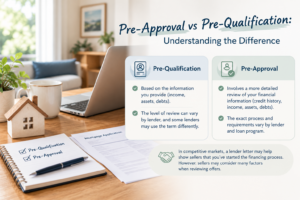
Pre-Approval vs Pre-Qualification: Understanding the Difference
These two terms are often used differently by lenders. Understanding what your lender means by each term can help you know what level of review has been completed.
A pre-qualification may be based on information you provide about your income, assets, and debts. The level of review can vary by lender, and some lenders may use the term differently.
A pre-approval generally involves a more detailed review of your financial information, which may include your credit history, income, assets, and debts. The exact process and requirements vary by lender and loan program.
In competitive markets, having a lender letter may help show sellers that you have started the financing process. However, sellers may consider many factors when reviewing offers.
Section 04
Documents Your Lender May Request
The documents needed for a mortgage pre-approval can vary by lender, loan program, and financial situation. Having your documents organized before you apply can help make the process smoother.
Common Documents for W-2 Employees:
Depending on your lender and loan program, W-2 borrowers may be asked to provide documents such as recent pay stubs, W-2 forms, tax returns if required, and statements for assets being used toward the transaction.
Common Documents for Self-Employed Borrowers:
Self-employed borrowers may be asked to provide additional documentation depending on their business structure, income type, lender requirements, and loan program. This may include tax returns, business records, profit and loss statements, or other supporting documents.
Common Documents for All Borrowers:
A government-issued photo ID. Your Social Security number for the credit pull. Contact information for your employer or employers. Explanations for any gaps in employment in the past two years. Documentation of any gift funds if family is contributing to the down payment.
| Document Category | W-2 Borrowers | Self-Employed Borrowers |
|---|---|---|
| Income verification | Pay stubs, W-2s, and other income documents if required | Tax returns, business records, and income documentation if required |
| Asset documentation | Statements for accounts relevant to the transaction | Personal or business asset documentation when applicable |
| Employment/business history | Employer information and verification | Business documentation when applicable |
| Additional documents | Explanations or supporting documents if requested | Additional documentation based on lender and loan program |
Documentation requirements vary by loan program and lender. Additional documents may be requested based on your specific financial situation.
Section 05
Typical Mortgage Pre-Approval Timeline
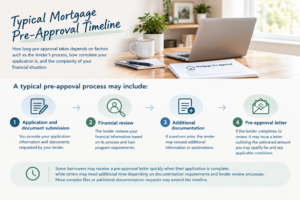
How long pre-approval takes depends on factors such as the lender’s process, how complete your application is, and the complexity of your financial situation.
A typical pre-approval process may include:
Application and document submission: You provide your application information and documents requested by your lender.
Financial review: The lender reviews your financial information based on its process and loan program requirements.
Additional documentation: If questions arise, the lender may request additional information or explanations.
Pre-approval letter: If the lender completes its review, it may issue a letter outlining the estimated amount you may qualify for and any applicable conditions.
Some borrowers may receive a pre-approval letter quickly when their application is complete, while others may need additional time depending on documentation requirements and lender review processes. More complex files or additional documentation requests may extend the timeline.
Section 06
Tips That Actually Speed Up the Process
Gather documents before you apply, not after. One common cause of delays is missing or incomplete documentation after submitting an application. Having everything organized into a single folder before the first conversation with a loan officer removes this friction entirely.
Provide all pages of every statement. Lenders need complete documents. A bank statement that says Page 3 of 5 requires Pages 1, 2, 4, and 5 as well. A document marked as having blank pages still needs those blank pages included. Submitting incomplete statements is one of the most common avoidable delays.
Explain unusual deposits before they are flagged. If your bank statements show large deposits that are not regular payroll, proactively provide a written explanation and supporting documentation. A gift from a family member, proceeds from a sold asset, or a tax refund all need to be documented. Providing this information early can help avoid unnecessary delays during the review process.
Avoid making major financial changes after you apply. Opening new credit accounts, financing a purchase, changing jobs, or making unusual financial moves after submitting your application can require the entire file to be re-underwritten. Keep your financial situation as stable as possible from application through closing.
Be responsive. Pre-approval timelines often slip not because of anything the lender does slowly but because the borrower takes three days to respond to a request for one additional document. Treat every request from your loan officer as urgent during the pre-approval phase.
Section 07
What Affects How Much You Are Pre-Approved For
Your pre-approval amount depends on several factors, including credit profile, income, monthly debt obligations, down payment, and the loan program you choose. Borrowers considering conventional loans can review current conforming loan limit information from the Federal Housing Finance Agency (FHFA) loan limits.
Two important factors lenders consider are credit score and debt-to-income ratio (DTI).
A credit score can influence available loan options and may affect pricing depending on the lender, loan program, and market conditions. In general, a stronger credit profile may help borrowers qualify for more options.
DTI helps lenders evaluate how much monthly debt a borrower may be able to manage based on income and existing obligations. Maximum DTI limits vary depending on the loan program, lender guidelines, and overall financial profile.
Higher monthly debt obligations can reduce the income available for a mortgage payment, which may affect borrowing capacity.
Section 08
How Long a Pre-Approval Stays Valid
Pre-approval letters include an expiration date determined by the lender. The timeframe can vary, and borrowers may need updated financial information if the letter expires before they find a home.
If you are actively searching for a home and your pre-approval expires before you find one, contact your loan officer to update the file. Your lender can let you know what information needs to be updated, which may include income, asset, or credit information depending on your situation.
For investors who move quickly when deals appear, treating pre-approval as a rolling process rather than a one-time event makes practical sense. Keeping your file current means you are ready to move the moment the right property comes available.
Section 09
Frequently Asked Questions
Does getting pre-approved affect my credit score?
Yes, a mortgage pre-approval usually requires a hard credit inquiry, which may cause a small temporary impact on your credit score. Mortgage inquiries made within a short shopping period are generally grouped together, allowing you to compare lenders without multiple separate impacts.
Can I get pre-approved if I am self-employed?
Yes. Self-employed borrowers may need additional documentation, such as personal and business tax returns. Lenders typically review taxable income shown on tax returns, so business deductions may affect qualifying income. See IRS tax guidance for individuals and businesses for official tax information. The right loan option depends on your financial situation.
What if my pre-approval comes in lower than the purchase price I was targeting?
A lower pre-approval amount can help identify what is limiting your borrowing power, such as income, debt, credit, or down payment. Discussing your options with a loan officer can help you understand what changes may improve your eligibility.
Section 10
Conclusion
If you are planning to buy a home in 2026 and have not started the pre-approval process yet, that conversation is most valuable now, before you find the property you want, not after.
Ready to understand your mortgage options? Contact Duc Pham or the Wonder Rates team to start your pre-approval conversation and learn what steps may fit your situation.
All timelines, documentation requirements, and program details in this article are for illustrative and educational purposes only and do not constitute an offer of credit or financial advice. Pre-approval requirements, timelines, and loan program guidelines vary by lender and are subject to change. Credit score impacts of hard inquiries vary by individual credit profile. Consult your loan officer for guidance specific to your situation.
Duc Pham, Mortgage Broker | NMLS# 844897 | 408-600-1900 | dp@wonderrates.com
Wonder Rates, Inc. | NMLS# 1518655 | DRE# 02047445 | DFPI# 60DBO-59134
Equal Housing Opportunity. Equal Housing Lender.
Licensed in: AL, AZ, CA, CO, FL, GA, LA, MI, NC, OH, OK, OR, PA, SC, TX, VA, WA