
Section 01
A low credit score does not automatically mean you cannot get a mortgage. It can shape which loan programs fit you, how much down payment you need, your interest rate, and how closely a lender checks the rest of your file. But the score itself is rarely the whole story.
Lenders look at the full picture. That means your credit history, your income, your monthly debts, your down payment, your savings, and the type of loan you want. A low score changes the shape of your application. It does not close the door on its own.
This guide walks through what “low credit score” actually means for a mortgage, what lenders check beyond the number, and what you can do to prepare.
Disclaimer: This article is for general educational purposes only and does not constitute financial, mortgage, tax, legal, or investment advice. Mortgage requirements, credit score requirements, underwriting standards, interest rates, fees, and loan program eligibility vary by lender, loan type, property, and borrower circumstances, and they change over time. A low credit score does not guarantee approval or denial. Always verify current requirements with a qualified mortgage professional before making a mortgage decision.
Section 02
Can You Get a Mortgage With a Low Credit Score?
Often, yes. A low score does not automatically mean a denial.
A Low Score Does Not Decide the Whole Application
Lenders weigh several things together. Your credit score is one piece. Your payment history is another. The Consumer Financial Protection Bureau (CFPB) similarly notes that mortgage lenders consider your credit score alongside factors such as your credit history, debt, savings, assets, and income. So are any late payments, collections, or past bankruptcy. Add your debt-to-income ratio, your income stability, your down payment, your savings, your loan program, and your property type. All of it adds up to one decision.
“Low Credit Score” Means Different Things for Different Loans
There is no single cutoff for “low.” A score that works fine for an FHA loan might not work for a conventional loan. A score that is fine for one lender might not meet another lender’s internal rules. The right question is not “is my score good enough?” It is “which loan program fits my score, and what else do I need to bring to the table?”
Why Two Borrowers With the Same Score Can Get Different Results
Example: Borrower A has a 610 credit score. She has steady W-2 income, low monthly debt, and six months of savings set aside. Borrower B also has a 610 credit score. He has two late payments from the past year, higher monthly debt, and almost no savings. Same score. Very different applications. Borrower A’s file likely looks much stronger to a lender, even though the credit number is identical.
This is a hypothetical example for illustration only. Actual underwriting decisions depend on the applicable loan program, lender requirements, borrower documentation, and complete financial profile.
Section 03
What Are the Mortgage Requirements With a Low Credit Score?
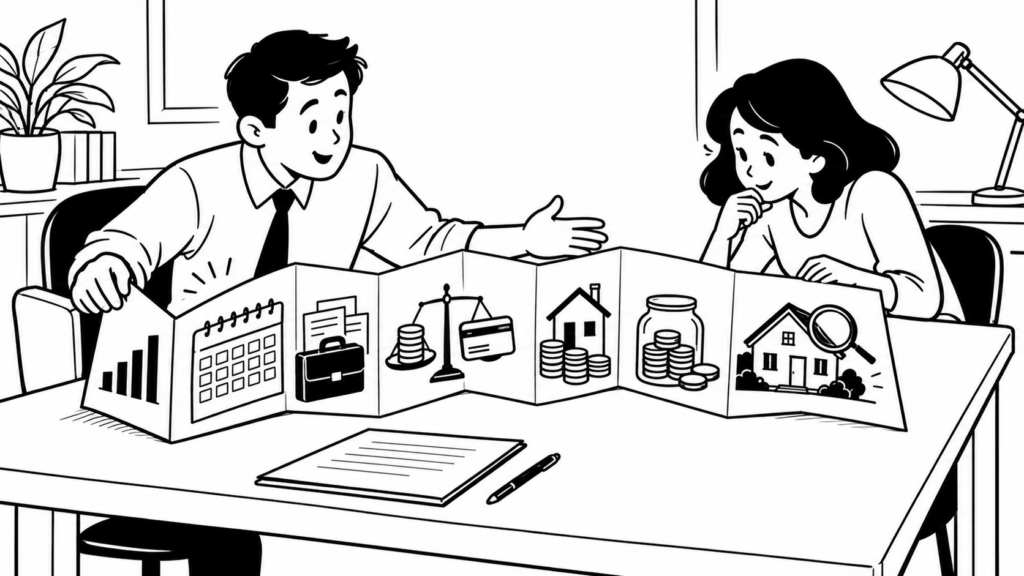
Here is what a lender actually looks at, beyond the score itself.
Credit History and Payment History
A score is a single number. Credit history is the story behind it. Lenders look at how recent your late payments are, how many you have had, and how serious they were. They also check for collections, charge-offs, or a past bankruptcy or foreclosure. Someone with an old, isolated late payment and a clean recent record often looks better to a lender than someone with the same score and a pattern of recent missed payments.
Stable and Verifiable Income
Lenders need to see that you can repay the loan. That means steady, documented income: a salary, hourly wages, self-employment income, commission, or bonus. A high income does not fully make up for a low credit score, but it does help build a stronger overall file.
Debt-to-Income Ratio
Your debt-to-income ratio, or DTI, compares your monthly debt payments to your monthly income. A low credit score paired with a high DTI makes an application harder, because both factors raise risk at the same time. Keeping your monthly debt manageable helps your file no matter what your score looks like.
Down Payment and Loan-to-Value Ratio
A bigger down payment lowers your loan-to-value ratio, or LTV, which is simply the loan amount compared to the home’s value. A lower LTV can make a file look stronger. If your credit score is on the lower end, a larger down payment is one of the more direct ways to strengthen your application. For a deeper explanation of how down payment and LTV interact, see our guide to Loan-to-Value Ratio.
Assets and Cash Reserves
Even with a low score, lenders still verify your funds. That includes money for closing costs, reserves left over after closing, and where your down payment money came from. Having cash in the bank after closing, not just enough to close the deal, can matter to an underwriter.
Property Eligibility
Lenders review the home itself, not just you. That includes whether it is a primary residence, a second home, or an investment property, along with the property type, the appraisal, its condition, and the loan-to-value ratio.
Section 04
Minimum Credit Score Requirements by Mortgage Loan Type
Conventional Mortgage Requirements
Conventional loans follow rules from Fannie Mae and Freddie Mac. As of November 16, 2025, Fannie Mae removed its long-standing 620 minimum score for loans run through its automated system, Desktop Underwriter (DU). That means a loan file can now be evaluated on its full risk profile rather than screened out by score alone. Manually underwritten conventional loans still generally require a 620 minimum. In practice, many lenders still prefer scores at or above 620, since a lower score can affect pricing and mortgage insurance availability even when the loan is technically eligible.
FHA Mortgage Requirements
FHA loans, insured by the Federal Housing Administration, have published national minimums. According to HUD Handbook 4000.1, a credit score of 580 or higher qualifies for the standard 3.5 percent down payment. A score between 500 and 579 can still qualify, but it requires a 10 percent down payment instead. Below 500, FHA financing is not available. Many individual lenders set their own minimum above the FHA floor, often in the 580 to 620 range, even though the federal rule technically allows lower.
VA Loan Requirements
VA loans do not have one single published minimum score from the Department of Veterans Affairs. Instead, the VA focuses heavily on a concept called residual income, the money left over each month after the mortgage payment and other debts. Lenders who offer VA loans set their own credit score requirements on top of VA eligibility rules, so your actual minimum depends on the specific lender you work with.
USDA Loan Requirements
USDA loans are not just about your credit score. Eligibility also depends on the property’s location, since USDA loans are limited to designated rural and some suburban areas, and on your household income, which must fall within USDA limits for the area. Credit, income, and property eligibility are all evaluated together, and specific lender requirements can vary.
Non-QM and Alternative Mortgage Programs
Some lenders offer non-QM, or non-qualified mortgage, programs built for borrowers who do not fit standard conventional or government guidelines. These programs can offer more flexibility on credit, but that flexibility often comes with a tradeoff: higher interest rates, higher fees, a larger down payment, or stricter requirements on assets. A low score does not automatically mean one of these programs is your best option. It is worth comparing the total cost, not just the fact that you are approved.
The figures above reflect commonly published guidance as of this writing. Lenders can apply stricter standards than the baseline rule, often called overlays, and agencies update their guidelines periodically. Confirm current requirements for a specific loan program with a licensed loan officer.
Section 05
How Credit Score Affects Mortgage Approval
A credit score helps a lender estimate how likely you are to repay a loan on time. A low score does not disqualify you, but it does raise the importance of everything else in your file.
A Low Score Can Make Other Strengths More Important
Stable income, a low DTI, a larger down payment, strong reserves, a long work history, and clean recent payments can all help balance out a lower score. None of these factors guarantee approval on their own. But together, they can make a lender more comfortable with a file that has a lower credit number attached to it.
Recent Credit Problems Can Matter More Than an Old Low Score
Example: Borrower C has a 590 score mostly because of a medical collection from four years ago, with a perfectly clean payment record since then. Borrower D also has a 590 score, but it comes from three late payments in the last six months. Both scores are the same. The pattern behind them is not. A lender reviewing Borrower D’s file is likely to have more questions about whether that pattern will continue.
These borrower profiles are illustrative only and do not represent guaranteed underwriting outcomes.
Section 06
How a Low Credit Score Can Affect Your Mortgage Rate and Costs
Credit Score and Mortgage Pricing
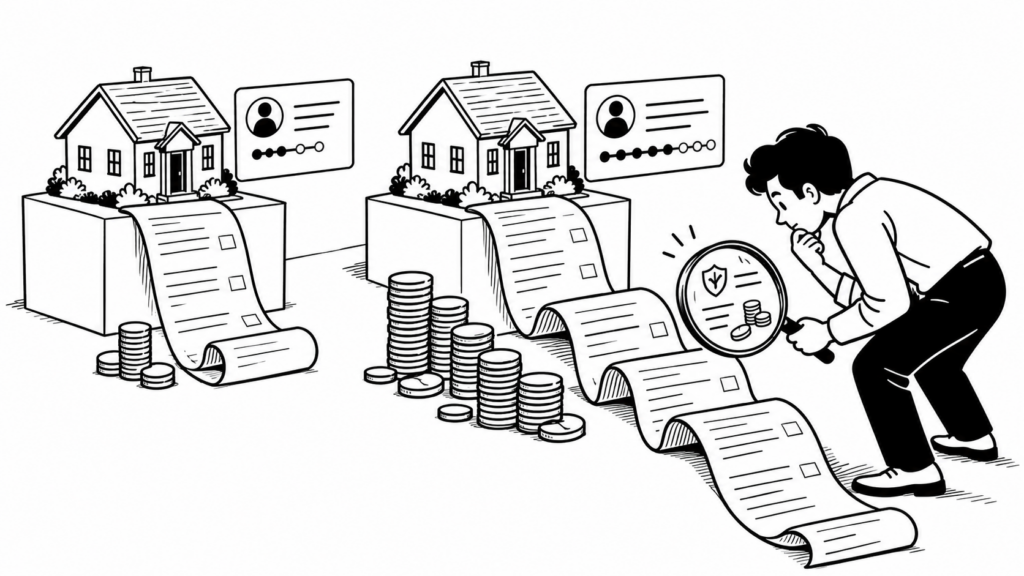
Lenders generally price loans based on risk. A lower credit score usually means a higher perceived risk, which can translate into a higher interest rate, different pricing adjustments, or different mortgage insurance costs.
Low Credit May Raise the Overall Cost of Borrowing
Illustrative example: On a $350,000 loan, a borrower with strong credit might be quoted a rate of 6.50 percent, while a borrower with a lower score on the same loan amount might be quoted 7.25 percent. On a 30-year fixed loan, that difference of 0.75 percentage points works out to roughly 175 dollars more per month in principal and interest alone, before taxes, insurance, or mortgage insurance are added. Over the life of the loan, that gap adds up to a meaningful amount of extra interest paid.
This is a simplified, hypothetical example used only to illustrate how rate differences affect a monthly payment. If you want to test how changes in the loan amount, interest rate, or down payment could affect your monthly payment, you can use the Wonder Rates Mortgage Payment Calculator as a planning tool. It does not reflect an actual rate quote, and real pricing depends on credit score, loan program, down payment, property, and current market conditions at the time of application.
Compare the Total Cost, Not Just the Rate
A low interest rate with high points and fees is not automatically the cheapest option. When you compare loan offers, look at the rate, the APR, any points, lender credits, mortgage insurance, closing costs, and the resulting monthly payment together, not the rate alone.
Section 07
How Much Down Payment Do You Need With a Low Credit Score?
Down Payment Requirements Depend on the Loan Program
There is no single universal down payment number. It depends heavily on the loan type and your specific credit score within that program.
A Larger Down Payment Can Change the Risk Profile
Putting more money down lowers your loan-to-value ratio and increases your equity in the home from day one. Depending on the loan program, it can also affect your mortgage insurance requirements and pricing.
Do Not Drain All Your Cash Just to Improve the Down Payment
Illustrative example: A borrower has $40,000 in savings. Putting all $40,000 toward the down payment might lower the loan amount, but it could leave almost nothing for closing costs, moving expenses, or an emergency fund right after closing. Keeping $30,000 for the down payment and $10,000 in reserve might result in a slightly higher loan amount, but it leaves real breathing room if something unexpected comes up in the first few months of owning the home.
The dollar amounts above are illustrative and do not represent a recommended down payment or required reserve amount for any specific borrower.
Section 08
Mortgage Requirements With a 580 Credit Score
A 580 score sits right at the FHA’s threshold for the lowest down payment option, 3.5 percent. That does not mean a 580 score guarantees approval. Lenders still look at your payment history, your DTI, your income, your assets, your down payment, and any recent credit activity before making a decision. Scores below 580, down to 500, can sometimes still qualify for FHA financing with a larger, 10 percent down payment, though many individual lenders will not go below 580 regardless of what FHA technically allows.
What to do before applying with a 580 score: review your full credit report for errors, avoid opening new credit accounts, organize your bank statements, document your income clearly, and figure out exactly how much cash you have available for a down payment and reserves.
A 580 credit score is used here only to illustrate how a borrower might think about preparation. Actual eligibility and terms vary by loan program and lender.
Section 09
Mortgage Requirements With a 600 Credit Score
A 600 score opens up more paths than a 580 score, including potential access to conventional financing depending on how the loan is underwritten, in addition to FHA. But 600 is not a magic number that guarantees a specific outcome.
Why outcomes can differ at 600: a 600 score with a clean recent payment history looks different from a 600 score with recent late payments. A 600 score paired with a low DTI looks different from a 600 score paired with a high DTI. A 600 score with strong savings looks different from a 600 score with almost no reserves.
What to prioritize before applying: your payment history first, since recent behavior often matters more than old history; your outstanding debt balances second; avoiding new credit third; clean documentation fourth; and building up cash reserves fifth.
Section 10
How Debt-to-Income Ratio Matters With Low Credit
DTI is calculated as your monthly debt payments divided by your gross monthly income, multiplied by 100. A $10,000 monthly income with $3,000 in monthly debt gives a DTI of 30 percent. If you want to see how lenders calculate DTI and how different types of debt can affect your mortgage application, see our guide to Debt-to-Income Ratio (DTI).
When a low credit score and a high DTI show up in the same file, risk adds up quickly in an underwriter’s eyes. To help your DTI before applying, pay down qualifying debts where it makes sense, avoid taking on any new monthly payment, and see whether any documented income you are not currently using could be added to your application.
Section 11
How Your Bank Accounts Matter When You Have Low Credit
Lenders still need to verify where your money comes from, regardless of your credit score. Large, unexplained deposits often require documentation before they can be counted toward your funds. Gift funds need to be documented according to the specific loan program’s rules. Unusual transfers right before applying can raise questions, so it helps to avoid them if you can plan ahead. Keeping enough cash on hand for both closing and reserves, rather than moving money around at the last minute, makes the process smoother.
Section 12
Can a Large Down Payment Offset a Low Credit Score?
A larger down payment can genuinely strengthen your overall file. It lowers your loan-to-value ratio and shows the lender you have skin in the game. But it does not erase credit requirements outright, and the loan program you choose still sets its own rules regardless of how much you put down.
Illustrative comparison: An $80,000 down payment that leaves a borrower with almost no cash left afterward is not automatically a stronger position than a $60,000 down payment that leaves the same borrower with $20,000 in reserves. A bigger down payment helps, but liquidity after closing matters too. Neither option is universally better; it depends on the rest of the borrower’s situation.
This comparison is hypothetical and for illustration only, and does not represent a recommendation for any specific borrower.
Section 13
Can You Get a Mortgage With Bad Credit and No Down Payment?
Low credit and no down payment are two separate issues, even though they often get lumped together. Some loan programs, such as VA loans for eligible veterans and certain USDA loans for eligible rural properties, can offer low or no down payment structures. But a low credit score can still create additional underwriting challenges even within those programs, since credit, income, and other factors are reviewed separately from the down payment question.
It is also worth remembering that being eligible is not the same as being comfortable. Before moving forward, look at the full monthly cost: principal, interest, taxes, insurance, any mortgage insurance, and ongoing maintenance, plus whatever reserves you will have left after closing.
Section 14
How to Improve Your Chances of Mortgage Approval With Low Credit
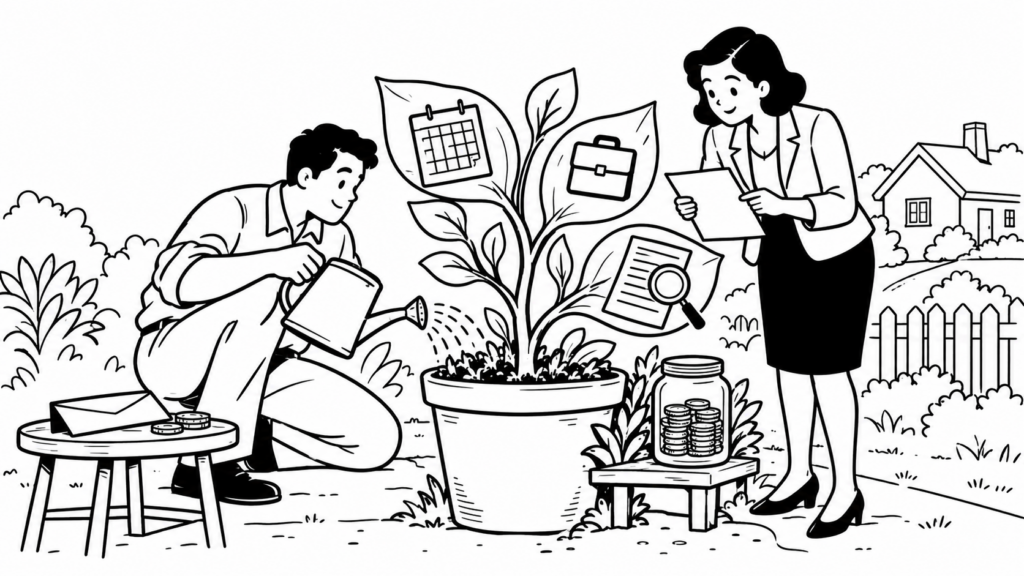
Start by reviewing your credit reports before you apply, so you can catch and dispute any errors early. Make every payment on time between now and closing, since recent history carries real weight. Avoid opening new credit accounts, even ones offering a tempting discount at checkout. Pay down revolving credit card balances where it makes sense for your overall cash position. Avoid large, unexplained financial changes in your bank accounts. Build and protect your cash reserves rather than spending them down unnecessarily. Prepare your income documentation early, including pay stubs, tax returns, and any self-employment records. And talk to a loan officer before making any major financial moves, since a change that seems harmless, like paying off a credit card the wrong way, can sometimes complicate your file instead of helping it.
Section 15
What Not to Do Before Applying for a Mortgage With Low Credit
Do not apply for several new credit cards in the months before applying. Do not finance a new car without first understanding how it will affect your application. Do not miss a payment while you are preparing to apply, even by accident. Do not move large amounts of money between accounts without being able to explain and document where it came from. Do not make unexplained cash deposits into your bank account. Do not assume that paying off every single debt is always the right move, since it can sometimes drain the cash reserves a lender wants to see. And do not hide financial problems from your lender.
Being upfront early is almost always easier than explaining a surprise after underwriting finds it on its own.
Section 16
Example: Buying a $400,000 Home With a Low Credit Score
Borrower profile (hypothetical):
- Purchase price: $400,000
- Credit score: 590
- Gross monthly income: $8,000
- Monthly debt: $1,800
- Available assets: $75,000
- Stable employment history
- No recent major credit event
What the lender may evaluate: credit history, debt-to-income ratio, down payment amount, assets and reserves, the chosen loan program, the property itself, and full documentation of income and funds.
What could make this application stronger: stable, well-documented income; a clean recent payment history; and more than enough assets to cover both the down payment and reserves after closing.
What could make it weaker: a high DTI if more debt were added; recent late payments showing up on the credit report; reserves that only barely cover closing with nothing left over; or large deposits in the bank account that cannot be clearly explained.
This scenario uses fictional borrower information and simplified numbers for educational purposes. It does not represent an actual mortgage offer, approval decision, required down payment, interest rate, or underwriting outcome. Actual requirements vary by lender, loan program, property, market conditions, and borrower circumstances.
Section 17
Example: Two Borrowers With the Same Low Credit Score
Borrower A has a 600 credit score, a 32 percent DTI, and six months of mortgage payments saved in reserves.
Borrower B has the same 600 credit score, a 52 percent DTI, and almost no savings beyond the down payment.
Same score. Very different risk pictures. This is the clearest way to see that credit score is one part of a mortgage application, not the entire application.
These borrower profiles are fictional and intended to demonstrate how underwriting factors interact together. They do not predict actual approval or loan terms for any real borrower.
Section 18
Should You Improve Your Credit Before Applying for a Mortgage?
Waiting may make sense if your score is actively recovering from a recent issue, if you have recent late payments that need time to age, if your revolving balances are high relative to your limits, or if you have no urgent deadline to buy.
Waiting may not be necessary if you already have an eligible loan path at your current score, if your income and assets are strong, if your current credit profile already fits a specific program, or if waiting would not meaningfully change your situation.
The real question is not whether your score could technically go higher. It is how much improvement is realistically worth the wait, given your specific timeline and goals.
Section 19
How Long Does It Take to Improve Credit Before Getting a Mortgage?
There is no single universal timeline. Payment history and credit utilization can shift within a couple of months of consistent, on-time payments and lower balances. Negative events like a collection, a bankruptcy, or a foreclosure generally take much longer to fade from your credit profile, often measured in years rather than months. Before making any major credit move on your own, it is worth understanding how that specific change could affect a mortgage application, since not every “credit improvement” tip actually helps in the context of buying a home.
Section 20
Low Credit Score vs. Other Mortgage Qualification Factors
| Factor | Why It Matters |
|---|---|
| Credit score | Helps estimate credit risk |
| Credit history | Shows your payment behavior over time |
| DTI | Measures your monthly debt burden |
| Income | Supports your ability to repay |
| Down payment | Affects your LTV and equity |
| Assets | Verifies your funds and reserves |
| Employment | Supports income stability |
| Property | Determines collateral and eligibility |
| Loan program | Sets the specific requirements that apply |
| Documentation | Backs up everything else in the file |
A credit score is easy to fixate on because it is one clean number. But the table above is really the full picture a lender sees. That is why “what is the minimum credit score?” is rarely the most useful question to ask.
Section 21
Mortgage Pre-Approval With a Low Credit Score
What Happens During Pre-Approval
A lender reviews your credit, your income, your assets, and your debts, then gives you a preliminary read on which loan programs might fit.
Why Pre-Approval Helps When Credit Is Less Than Ideal
Pre-approval can show you where you currently stand, what the main obstacles are, which documents you will need, and whether improving your credit first is actually worth the wait before you shop for a home. If you want to understand which mortgage options may fit your current credit, income, debt, and assets, you can get started with Wonder Rates and discuss your scenario with a licensed mortgage professional.
Pre-Approval Is Not Final Approval
Underwriting continues after you make an offer on a home, and the lender will re-verify your credit, income, and assets before closing. Pre-approval is a strong starting point, not a guarantee.
Section 22
Common Mistakes Borrowers With Low Credit Make
Assuming they automatically cannot buy a home, without ever checking what their actual options are. Chasing a single minimum credit score number without understanding how the rest of their profile fits together. Applying before reviewing their own credit reports for errors. Taking on new debt specifically to help cover the down payment. Using undocumented funds that cannot be traced or explained. Spending every available dollar on the down payment, leaving nothing in reserve. Hiding credit or financial problems from their lender instead of bringing them up early. Comparing lenders only by the advertised interest rate, without looking at the full cost of the loan.
Section 23
A 30-Day Preparation Checklist for a Mortgage With Low Credit
Week 1, review your credit: pull your credit reports, check for errors, review your late payments and balances, and avoid applying for any new credit.
Week 2, review your income and debts: gather pay stubs, W-2s, and tax documents if needed, list every monthly debt, and estimate your current DTI.
Week 3, organize your assets: pull your bank statements, confirm your down payment and closing funds, check your reserves, and gather documentation for any large deposits or transfers.
Week 4, discuss your loan options: review which programs might fit, talk through your down payment options, estimate your monthly payment, compare total costs across programs, and decide whether to apply now or work on your credit a bit longer first.
Section 24
Mortgage Requirements With a Low Credit Score: Complete Checklist
Credit: credit score, payment history, recent derogatory events, credit utilization, credit inquiries.
Income: employment, W-2 income, self-employment income, bonus or commission, other qualifying income.
Debt: monthly obligations, DTI, any new debt, credit card balances.
Assets: down payment, closing costs, reserves, bank statements, source of funds.
Property: property type, occupancy, appraisal, LTV.
Documentation: ID, income documents, asset statements, tax documents where applicable, explanations for any unusual financial activity.
Loan program: conventional, FHA, VA, USDA, or a non-QM or other applicable program.
Section 25
Key Takeaways: Mortgage Requirements With a Low Credit Score
A low credit score does not automatically mean you cannot get a mortgage. The loan program you choose matters as much as the number itself. Credit history matters alongside the score, not instead of it. DTI, income, down payment, assets, reserves, and the property all shape the outcome together. A larger down payment can help your overall risk profile, but it does not erase credit requirements on its own. Improving your credit before applying can help, but waiting is not always necessary, and it is not always the best use of your time. The most useful first step is understanding your complete borrower profile, not just chasing a single score.
If you are thinking about buying with a low credit score, you do not necessarily need to wait until your score hits a certain number. Understanding which part of your financial picture needs the most attention can help you decide what to do next, with real information instead of guesswork.
Section 26
Sources
- HUD FHA Single Family Housing Policy Handbook 4000.1
- Fannie Mae, Desktop Underwriter credit score policy update, effective November 16, 2025
- U.S. Department of Veterans Affairs, VA Home Loans
- USDA Rural Development, Single Family Housing Guaranteed Loan Program
Disclaimer: This article is for general educational purposes only and does not constitute financial, mortgage, tax, legal, or investment advice. Credit score requirements, down payment requirements, interest rates, mortgage insurance, loan program eligibility, and underwriting standards vary by lender, loan type, property, automated underwriting findings, and individual borrower circumstances, and they can change over time. All figures, percentages, and examples in this article are hypothetical and provided solely to illustrate general mortgage concepts. They are not guarantees of loan approval, interest rate, loan terms, or eligibility for any individual borrower. Always consult a licensed mortgage professional and verify current requirements before making a mortgage decision.
Duc Pham, Mortgage Broker | NMLS# 844897, Wonder Rates, Inc. | NMLS# 1518655 | DRE# 02047445 | DFPI# 60DBO-59134 | Equal Housing Opportunity. Equal Housing Lender. | Licensed in: AL, AZ, CA, CO, FL, GA, LA, MI, NC, OH, OK, OR, PA, SC, TX, VA, WA.