

Section 01
Buying a home is exciting, but figuring out how much you can borrow can feel confusing. You might have a home price in mind, a down payment saved, and a few neighborhoods you want to explore. But before you start making offers, it helps to know how a mortgage lender views your finances.
That’s where mortgage pre-approval comes in.
Mortgage pre-approval is an early review of your finances that helps estimate how much a lender may be willing to lend you. It can give you a clearer homebuying budget and show sellers that you’ve taken steps to prepare your financing.
But pre-approval isn’t a final mortgage approval. It also has an expiration date, and getting one may involve a credit check and financial documents.
This guide explains how mortgage pre-approval works, what documents you may need, how your credit score matters, and what happens when your pre-approval letter expires.
Section 02
What Is Mortgage Pre-Approval?
Mortgage pre-approval is a process in which a lender reviews your financial information to determine how much you may qualify to borrow.
The review may include your income, employment, credit history, existing debts, savings, and other assets. Depending on the lender, some of this information may be verified before a pre-approval letter is issued.
If the initial review supports your request, the lender may provide a mortgage pre-approval letter stating a potential loan amount.
For example, suppose a lender pre-approves you for a mortgage of up to $350,000. That doesn’t mean you should automatically borrow the full amount. It means the lender has reviewed your information and believes you may qualify for financing up to that amount, subject to additional conditions.
According to the Consumer Financial Protection Bureau’s guide to mortgage pre-approval, a pre-approval letter represents a lender’s tentative willingness to lend. It isn’t a guaranteed loan offer.
Final approval still depends on underwriting, verification of your financial information, and the property you choose.
Section 03
Why Mortgage Pre-Approval Matters
Getting pre-approved can make the early stages of buying a home easier to navigate.
Instead of searching based only on a price you hope to afford, you can begin with an estimate informed by a lender’s review of your finances.
Pre-approval can also help you:
- Understand a potential borrowing range before making an offer.
- Identify credit or documentation issues earlier.
- Show sellers that you’ve started preparing your financing.
- Discuss loan programs and down payment options with a loan officer.
- Plan your home search around a more realistic budget.
However, the maximum loan amount on a pre-approval letter isn’t necessarily the amount that fits your monthly budget.
You’ll still need to consider property taxes, homeowners insurance, mortgage insurance when applicable, HOA fees, maintenance, and your other financial obligations.
Section 04
Mortgage Pre-Approval vs. Prequalification: What's the Difference?
Prequalification and pre-approval are often used interchangeably, but the process behind each can differ.
Some lenders use prequalification for an initial estimate based on information you provide. They may use pre-approval for a more detailed review that includes supporting documents and credit information.
Other lenders use these terms differently.
| Feature | Prequalification | Pre-Approval |
|---|---|---|
| Main purpose | Initial borrowing estimate | Early assessment of potential financing |
| Financial information | May rely on self-reported details | May include a more detailed review |
| Document verification | Varies by lender | Varies by lender |
| Credit check | May or may not be required | Often included |
| Final loan approval | No | No |
The important difference isn’t simply the name of the letter. It’s how much of your financial information the lender has actually reviewed.
The CFPB’s explanation of prequalification and pre-approval notes that lenders use these terms differently, and neither letter guarantees a mortgage.
Before relying on a letter when making an offer, ask your lender which information has been reviewed and whether any important items still need verification.
Section 05
What Documents Do You Need for Mortgage Pre-Approval?
The documents required for mortgage pre-approval depend on your lender, loan program, employment situation, and financial profile.
A borrower with regular W-2 income may need different records than someone who is self-employed or earns income from multiple sources.
Still, most borrowers can prepare for the process by organizing a few key categories of documents.
1. Proof of Income
Lenders need to understand how much you earn and whether your income can support the proposed mortgage payment.
Depending on your situation, you may be asked for:
- Recent pay stubs.
- W-2 forms.
- Federal income tax returns.
- Documentation of bonuses, commissions, or overtime.
- Additional records for other qualifying income sources.
If you’re self-employed, the lender may request business and personal tax returns, profit-and-loss statements, or other documents needed to evaluate your income.
Not every borrower will need every document on this list. Your loan officer can explain what applies to your situation.
2. Employment Information
Your lender may ask about your current employer, job title, employment history, and how long you’ve been receiving your income.
A recent job change doesn’t automatically prevent you from getting pre-approved. However, it may require additional documentation, particularly if your income structure has changed.
For example, moving from a salaried position to self-employment can affect how a lender evaluates income.
The goal is to understand your employment and income history, not simply whether you’ve stayed with one employer for a certain number of years.
3. Bank Statements and Asset Documents
Lenders may review your assets to understand whether you have funds available for the down payment, closing costs, and any required reserves.
Common documents include:
- Recent checking and savings account statements.
- Investment or retirement account statements, when relevant.
- Documentation of gift funds, if applicable.
- Records showing the source of funds from an asset sale or transfer.
The lender may also need clarification about certain deposits or transfers.
For example, if a large amount of money recently entered your bank account, you may be asked to document where it came from.
You can learn more about this process in Wonder Rates’ guide to preparing your bank accounts before applying for a mortgage.
4. Identification and Personal Information
You’ll generally need to provide personal information so the lender can identify you, review your credit, and process your request.
Depending on the process, this may include a government-issued ID, Social Security number or other applicable identification information, current address, and residential history.
Use the lender’s secure document portal or another approved method when sharing sensitive information. Avoid sending personal financial documents through unsecured channels.
5. Debt and Financial Obligation Information
Your lender will also consider your existing monthly obligations.
These may include car loans, student loans, credit card payments, personal loans, and other debts.
This information helps the lender evaluate your debt-to-income ratio, commonly called DTI.
DTI compares your monthly debt payments with your gross monthly income.
For example, if your gross monthly income is $7,000 and your monthly debt payments total $2,100, your DTI would be 30%.
The debts included in the calculation and the qualifying DTI requirements depend on the loan program and underwriting guidelines.
For a broader explanation of how lenders evaluate applications, read What Do Mortgage Lenders Look For? The 3 C’s Explained.
Do You Need All These Documents Before Getting a Loan Estimate?
Not necessarily. A mortgage pre-approval and an official Loan Estimate serve different purposes.
For most covered mortgages, lenders must provide a Loan Estimate after receiving six pieces of application information: your name, income, Social Security number, property address, estimated property value, and desired loan amount.
They cannot require supporting documents as a condition of providing that Loan Estimate.
The CFPB’s guidance on Loan Estimate requirements explains this distinction.
A lender may still request financial documents during pre-approval or later underwriting. The specific requirements depend on the stage of the process.
Section 06
What Credit Score Do You Need for Mortgage Pre-Approval?
There is no single credit score that guarantees mortgage pre-approval across every loan program.
Your credit score matters, but lenders also consider your income, debt, assets, credit history, and the mortgage program you’re applying for.
Different programs and lenders have different eligibility requirements. Some programs may allow borrowers with lower credit scores, while others have stricter standards.
A higher score may help you qualify for more favorable loan terms, but it doesn’t guarantee approval or a particular interest rate.
The CFPB’s guide to credit scores and mortgage eligibility explains that lenders consider both credit scores and the broader financial picture.
What Else Do Lenders Look at Besides Your Score?
Your credit report contains more information than a single number.
Lenders may review your payment history, outstanding balances, recent credit applications, and other information relevant to your ability to repay a mortgage.
For example, two borrowers with similar credit scores may have different financial profiles.
One may have stable income and relatively low monthly debt. The other may have higher debt payments or recent changes in employment.
Their mortgage options may differ even if their scores are close.
If you’re preparing to apply, Wonder Rates’ article on rebuilding your credit score before a mortgage explains steps you can consider over time.
Section 07
Does Mortgage Pre-Approval Hurt Your Credit Score?
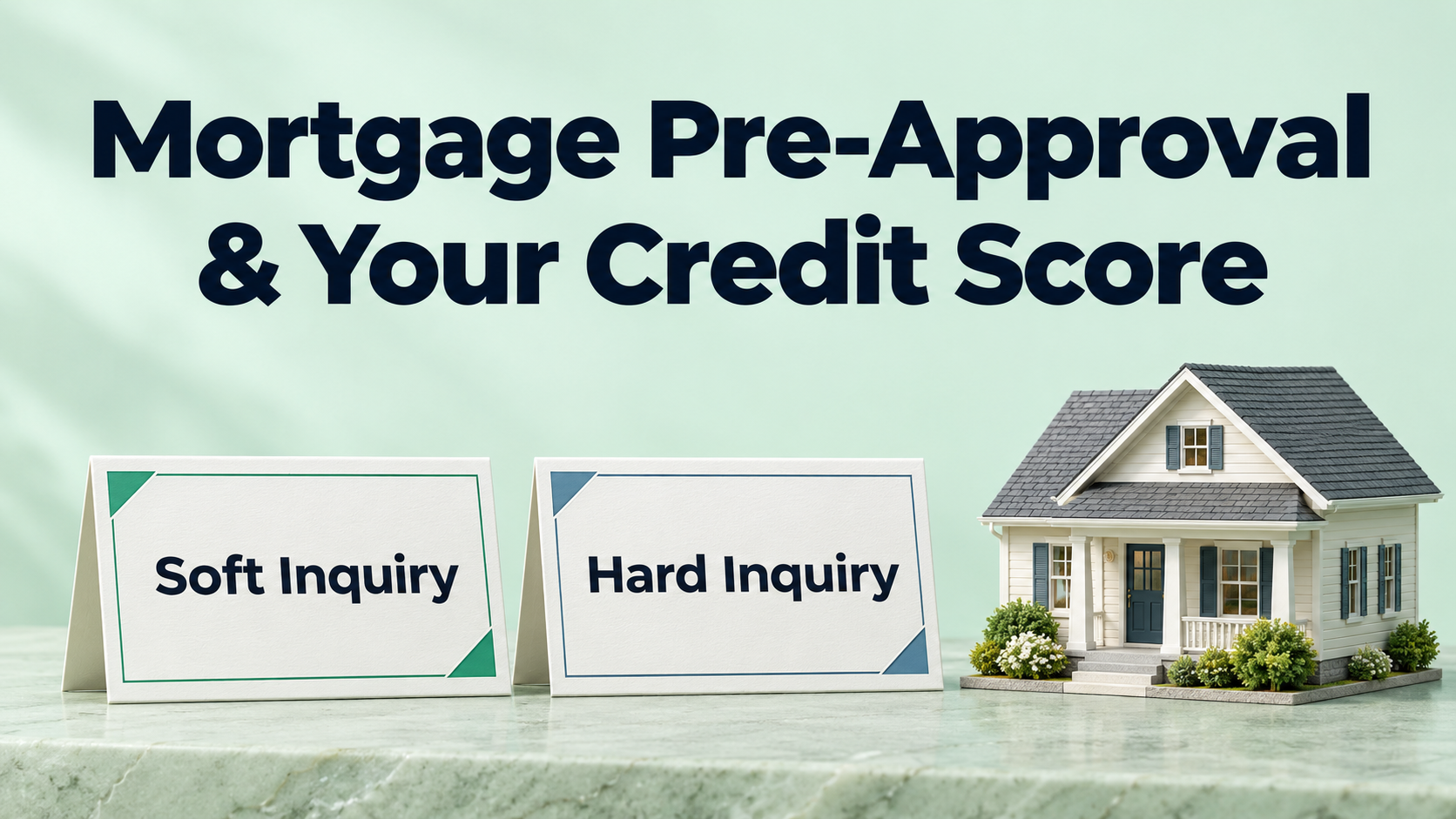
Mortgage pre-approval may involve a hard credit inquiry, which can have a small effect on your credit score.
However, not every initial mortgage inquiry works the same way.
Some lenders or mortgage brokers begin with a soft credit inquiry when you explore your options. A soft inquiry doesn’t affect your credit score. A hard inquiry may occur later when you move forward with a formal application.
For example, Wonder Rates explains in its credit and lending disclosures that its initial option-checking process uses a soft inquiry, while a hard inquiry occurs later with authorization when a borrower proceeds with a full loan application.
Because processes vary, ask whether your credit will be checked and whether the inquiry will be soft or hard before you proceed.
What Happens If You Compare Multiple Mortgage Lenders?
Shopping around for a mortgage doesn’t necessarily mean every credit inquiry will have a separate scoring impact.
Credit scoring models generally recognize that borrowers may compare several mortgage lenders within a short period.
According to the CFPB’s explanation of mortgage credit inquiries, multiple mortgage-related inquiries within a shopping window of approximately 14 to 45 days are generally treated as a single inquiry for scoring purposes, depending on the model.
The exact treatment can vary by credit scoring model.
This is one reason to organize your mortgage shopping within a relatively short period rather than spreading applications across many months.
Section 08
How Long Does Mortgage Pre-Approval Last?
Mortgage pre-approval commonly lasts about 30 to 90 days, depending on the lender. Some letters expire sooner, and others may have different validity periods.
The expiration date should be stated on your pre-approval letter.
The CFPB notes that many pre-approval letters are valid for approximately 30 to 60 days, while Freddie Mac’s pre-approval guidance describes a general range of 30 to 90 days.
Why does a pre-approval expire?
Because your financial situation can change.
Your income, employment, debts, assets, and credit information may be different several weeks or months after the original review.
Mortgage market conditions and loan program requirements can also change.
An expiration date gives the lender a point at which it may need to review updated information before continuing to rely on the earlier assessment.
What Happens If Your Mortgage Pre-Approval Expires?
An expired pre-approval doesn’t automatically mean you’re no longer eligible for a mortgage.
If you’re still looking for a home, contact your loan officer and ask what is needed to update your letter.
Depending on your situation, the lender may request:
- Updated pay stubs or employment information.
- More recent bank statements.
- Updated debt or asset information.
- A new credit review, when required.
If your financial situation hasn’t changed significantly, the update may be relatively straightforward. However, the lender still needs to determine whether the earlier pre-approval remains supportable.
Don’t assume your original loan amount or terms will remain unchanged.
When Should You Get Pre-Approved?
A practical time to request pre-approval is when you’re getting ready to search seriously for a home.
This gives you a chance to review your borrowing range before making offers while reducing the risk that your letter will expire too early.
However, starting earlier can also make sense if you’re unsure about your credit, income documentation, or down payment funds.
An early conversation with a loan officer may help you identify what needs attention before your home search becomes time-sensitive.
Section 09
How Long Does the Mortgage Pre-Approval Process Take?
The time required for mortgage pre-approval depends on the lender and the complexity of your financial information.
An initial online request may take only a few minutes to complete, but that doesn’t mean a lender has finished reviewing your finances or issued a verified pre-approval letter.
A straightforward file with readily available documents may move faster than a file involving self-employment, multiple income sources, complex assets, or information that requires clarification.
The most useful question to ask isn’t simply how fast you can receive a letter. It’s what the lender will review before issuing it.
For example, a letter based mainly on self-reported information may involve more verification later than one supported by a detailed document review.
Ask your loan officer which parts of your file have already been evaluated and what remains outstanding.
Section 10
How to Get Pre-Approved for a Mortgage: Step by Step
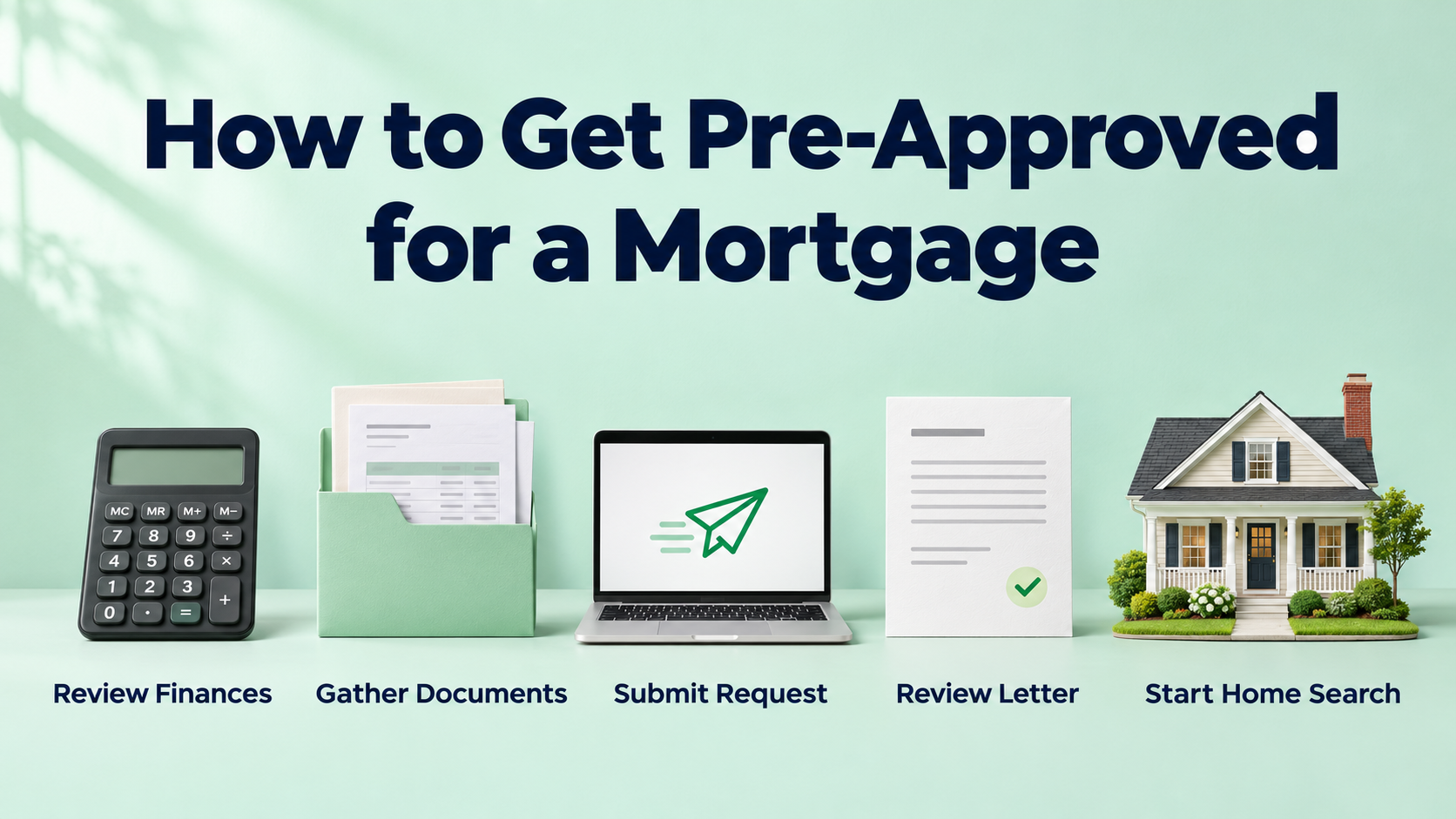
Although each lender has its own process, mortgage pre-approval generally follows a few basic steps.
Step 1: Review Your Financial Situation
Start by looking at your income, monthly debts, savings, and credit.
Think about how much you could comfortably spend on a home without putting pressure on your other financial priorities.
You can use the Wonder Rates Mortgage Payment Calculator to explore estimated monthly payments based on different home prices, down payments, interest rates, and loan terms.
The calculator is a planning tool, not a pre-approval or loan offer.
Step 2: Gather Your Documents
Organize the income, employment, asset, and debt information your lender requests.
If you’re self-employed, receive gift funds, or have recently changed jobs, mention those details early.
Providing accurate information from the beginning can help the lender identify questions that may require additional documentation.
Step 3: Submit Your Pre-Approval Request
You’ll typically provide information about your finances and the type of home you want to purchase.
The lender or mortgage broker will explain the next steps, including any credit review and document requests.
If you’re exploring your options through Wonder Rates, you can start with the home purchase process and learn how its loan officers review borrower information.
Step 4: Review Your Pre-Approval Letter
If a pre-approval letter is issued, review it carefully.
Pay attention to the proposed loan amount, expiration date, assumptions, and any conditions that still need to be satisfied.
Ask whether the lender has verified your income and assets, whether your credit has been reviewed, and what could change the amount stated in the letter.
Step 5: Start Your Home Search
Use your pre-approval as a guide, not as permission to spend the maximum amount.
Remember that the purchase price is only one part of homeownership.
Your monthly housing costs may include principal, interest, property taxes, homeowners insurance, mortgage insurance, HOA dues, and maintenance.
Keep your loan officer informed if your financial situation changes while you’re searching.
Section 11
What Can Change Your Mortgage Pre-Approval?
Getting pre-approved doesn’t mean your financial profile is frozen until closing.
Certain changes can affect your borrowing eligibility or require the lender to review your file again.
For example, taking out a new car loan may increase your monthly debt payments. A reduction in income could affect your ability to qualify. A large unexplained deposit may require additional documentation.
The property itself also matters. A lender still needs to evaluate the home you choose, including applicable appraisal, title, insurance, and property eligibility requirements.
During your home search, it’s helpful to avoid unnecessary financial changes and communicate with your loan officer before taking on new debt or making major changes to your employment or assets.
If something does change, explain it promptly rather than assuming it will not matter.
Section 12
Does Pre-Approval Guarantee Final Mortgage Approval?
No. Mortgage pre-approval is an early assessment, not a final credit decision.
After you find a property and move forward with a mortgage application, the lender may need to verify updated financial information and review the property.
The underwriting process may involve income and employment verification, asset documentation, credit review, appraisal, title review, insurance, and other program-specific requirements.
Even a borrower who was pre-approved may encounter issues if their financial situation changes or the property doesn’t meet the applicable loan requirements.
It’s also important to understand that a pre-approval letter is not the same as a Loan Estimate or an interest rate lock.
A Loan Estimate provides information about expected mortgage terms and costs for a particular application. A rate lock, when available and confirmed, is a separate arrangement with its own conditions and expiration date.
You can learn more about the broader application process in How to Get a Mortgage: Requirements and Steps.
Section 13
Mortgage Pre-Approval Checklist
Before requesting pre-approval, use this checklist to organize your next steps.
- Review your credit report for possible errors.
- Estimate your comfortable monthly housing budget.
- Gather recent income and employment documents.
- Organize bank statements and other asset records.
- Review existing debts and monthly payments.
- Ask whether the credit inquiry will be soft or hard.
- Confirm which financial information the lender will verify.
- Check the expiration date and conditions on your pre-approval letter.
You don’t need to have every detail figured out before speaking with a loan officer. The goal is to understand what information is needed and what steps come next.
Section 14
Frequently Asked Questions About Mortgage Pre-Approval
Can I get mortgage pre-approval without choosing a house?
Yes. Pre-approval is commonly requested before you find a specific property. It helps you understand a potential borrowing range while you search.
The lender will still need to evaluate the property later in the mortgage process.
How many times can I get pre-approved for a mortgage?
You can request pre-approval from more than one lender. However, each lender may have its own process, documentation requirements, and credit inquiry practices.
If hard credit inquiries are involved, the timing of your requests can affect how credit scoring models treat them.
Can I get pre-approved with a lower credit score?
Possibly. Eligibility depends on the loan program, lender requirements, and your overall financial profile.
There isn’t one credit score that guarantees pre-approval for every mortgage. A loan officer can explain which programs may be available based on your circumstances.
Do I need a 20% down payment to get pre-approved?
Not necessarily. Some mortgage programs allow qualified borrowers to purchase a home with less than 20% down.
Down payment requirements depend on the program and borrower eligibility. A smaller down payment may also affect mortgage insurance requirements and monthly costs.
Can I change lenders after getting pre-approved?
Yes. Getting a pre-approval letter generally doesn’t require you to use that lender for your final mortgage.
Once you have a property in mind, you can request and compare official Loan Estimates from multiple lenders to understand the terms and costs available to you.
What if my pre-approval amount is lower than expected?
Ask your loan officer which factors affected the amount.
Your income, debts, credit profile, down payment, or loan program may influence the result.
Understanding those factors can help you decide whether to adjust your home search or spend more time preparing before purchasing.
Section 15
Conclusion
Mortgage pre-approval is one of the most useful early steps in buying a home because it connects your home search with a lender’s initial review of your finances.
It helps you understand a potential loan amount, identify documents you may need, and prepare to make an offer when you find a property.
But it’s important to remember three things: pre-approval isn’t final approval, your credit and financial information matter, and your letter has an expiration date.
Before you start shopping, take time to understand what your lender has reviewed, how long your letter is valid, and what could affect your financing later.
If you’re planning to buy a home, Wonder Rates can help you explore mortgage options and understand the steps involved in preparing for pre-approval. You can get started with Wonder Rates to share your homebuying goals and learn what information may be needed next.
Disclaimer: This article is for general educational purposes only and does not constitute personalized financial, legal, tax, or mortgage advice. Pre-approval procedures, documentation requirements, credit score standards, and validity periods vary by lender, loan program, and borrower circumstances. A pre-approval letter does not guarantee final loan approval.
Duc Pham, Mortgage Broker | NMLS# 844897 | 408-600-1900 | dp@wonderrates.com
Wonder Rates, Inc. | NMLS# 1518655 | DRE# 02047445 | DFPI# 60DBO-59134
Equal Housing Opportunity. Equal Housing Lender.
Licensed in: AL, AZ, CA, CO, FL, GA, LA, MI, NC, OH, OK, OR, PA, SC, TX, VA, WA