
Section 01
3 Ways to Take Title When Buying a Home in the U.S.
When buying a home, most people focus on getting approved for a mortgage, locking in a good interest rate, and preparing for closing costs. One decision that often gets overlooked is how you’ll take title to the property.
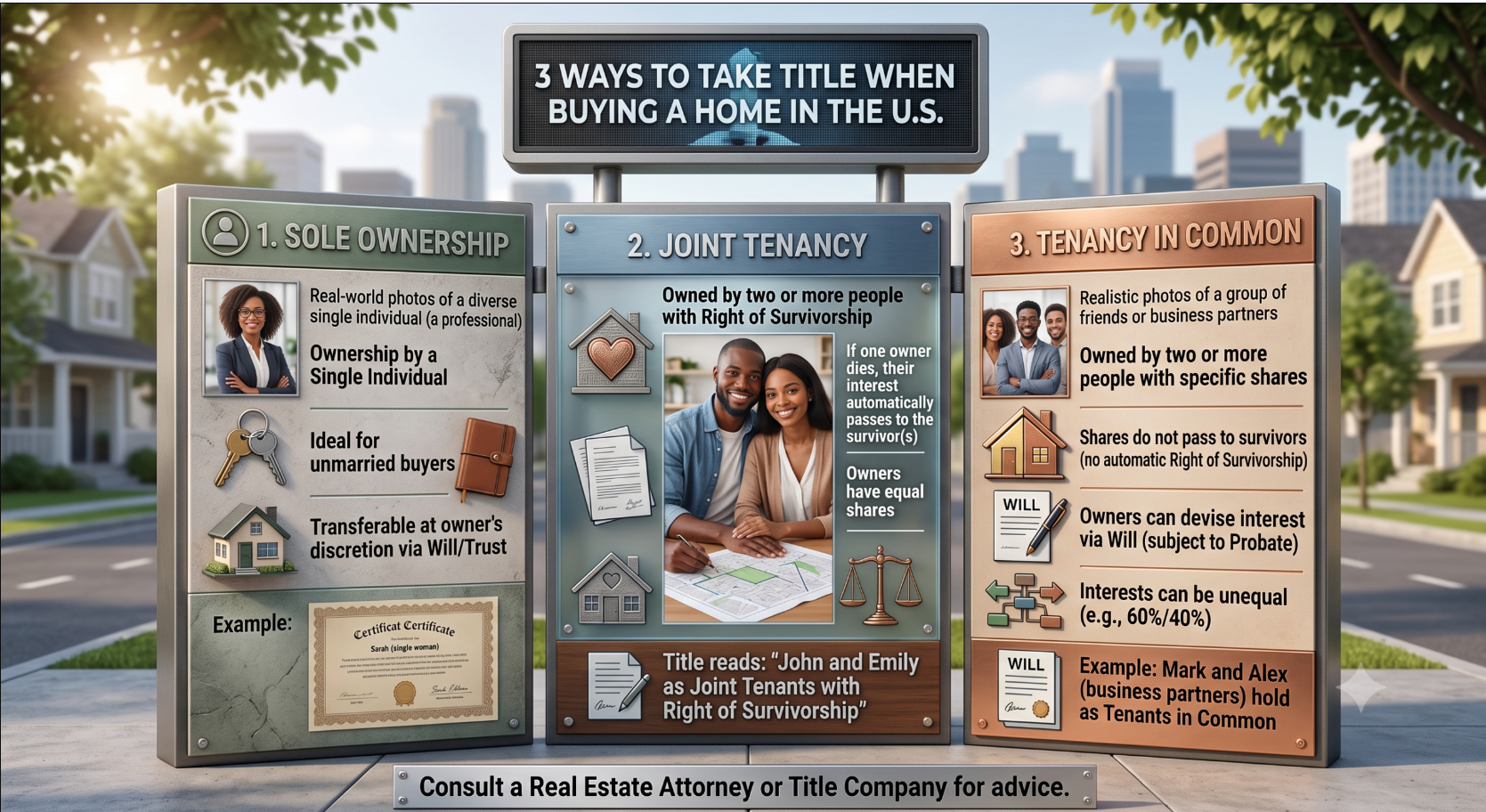
Taking title simply means deciding who will legally own the home. This choice doesn’t affect your mortgage rate, but it can affect your ownership rights, estate planning, and what happens to the property if one owner passes away.
There isn’t one option that’s best for everyone. The right choice depends on your family situation, financial goals, and future plans.
Section 02
Why Choosing the Right Ownership Structure Matters
Many buyers assume that the mortgage and the title are the same thing, but they’re actually different. The mortgage determines who is responsible for repaying the loan, while the title determines who legally owns the property. It’s possible for someone to be on the mortgage but not on the title, or vice versa.
Choosing the right ownership structure before closing can help prevent legal issues later. Whether you’re buying alone, purchasing with a spouse, or investing with family or friends, understanding your options now is much easier than changing the title after the transaction is complete.
1. Sole Ownership
Sole Ownership means one person holds legal title to the property. This is the most common choice for single buyers, but married individuals may also choose this option depending on their financial or estate planning goals.
The biggest advantage is simplicity. The owner has full control over the property and can decide whether to sell, refinance, or transfer ownership without another owner’s approval.
The main drawback is what happens after death. Unless additional estate planning has been completed, the property may need to go through probate before it can be transferred to heirs.
For example, if Sarah purchases a $600,000 home in her own name, she is the only legal owner. Any future decisions about that property are hers alone.
2. Joint Tenancy with Right of Survivorship
Joint Tenancy with Right of Survivorship (JTWROS) is one of the most common ownership structures for married couples. Under this arrangement, each owner has an equal interest in the property.

One of its biggest advantages is the right of survivorship. If one owner passes away, that person’s ownership interest automatically transfers to the surviving owner without going through probate.
For example, a husband and wife purchase a home together under Joint Tenancy. If one spouse dies, the surviving spouse automatically becomes the sole owner of the property. This can make the transfer process much faster and simpler than probate.
3. Tenancy in Common
Tenancy in Common (TIC) allows two or more people to own the same property while holding different ownership percentages. Unlike Joint Tenancy, ownership doesn’t have to be split equally.

For example, two business partners buy a rental property worth $800,000. One contributes $560,000 and owns 70%, while the other contributes $240,000 and owns 30%. Their ownership reflects each person’s investment.
Another important difference is inheritance. If one owner passes away, that share does not automatically transfer to the remaining owners. Instead, it becomes part of the owner’s estate and passes according to a will or state law.
| Ownership Type | Best For | What Happens After Death? |
|---|---|---|
| Sole Ownership | Single buyers | May go through probate |
| Joint Tenancy | Married couples or equal co-owners | Ownership automatically transfers to the surviving owner |
| Tenancy in Common | Friends, investors, siblings | Ownership passes through the owner’s estate |
Section 03
Which Option Is Right for You?
Each ownership structure offers different benefits.
If you’re buying alone, Sole Ownership is often the simplest choice. If you’re purchasing with a spouse and want ownership to transfer automatically after death, Joint Tenancy may make sense. If you’re buying with friends, family members, or business partners who are contributing different amounts, Tenancy in Common often provides greater flexibility.
Your ownership structure should match both your financial goals and your estate planning strategy. It’s worth discussing this decision before closing so everyone understands their rights and responsibilities.
Section 04
Final Thoughts
Choosing how to take title may seem like a small step compared to getting approved for a mortgage, but it can have long-term legal and financial consequences. The ownership structure you choose today could affect your ability to sell the home, transfer ownership, or pass the property to your heirs in the future.
Before closing, take a few minutes to understand your options and ask questions if you’re unsure. A well-informed decision today can save time, money, and legal complications years down the road.
Want to know what your monthly housing payment might be so you can estimate your DTI? Try the Wonder Rates team’s mortgage calculator before you talk to a loan officer.
Disclaimer: This article is for educational purposes only and should not be considered financial, tax, or legal advice.
Duc Pham, Mortgage Broker | NMLS# 844897,
Wonder Rates, Inc. | NMLS# 1518655 | DRE# 02047445 | DFPI# 60DBO-59134 |
Equal Housing Opportunity. Equal Housing Lender. |
Licensed in: AL, AZ, CA, CO, FL, GA, LA, MI, NC, OH, OK, OR, PA, SC, TX, VA, WA.