
Section 01
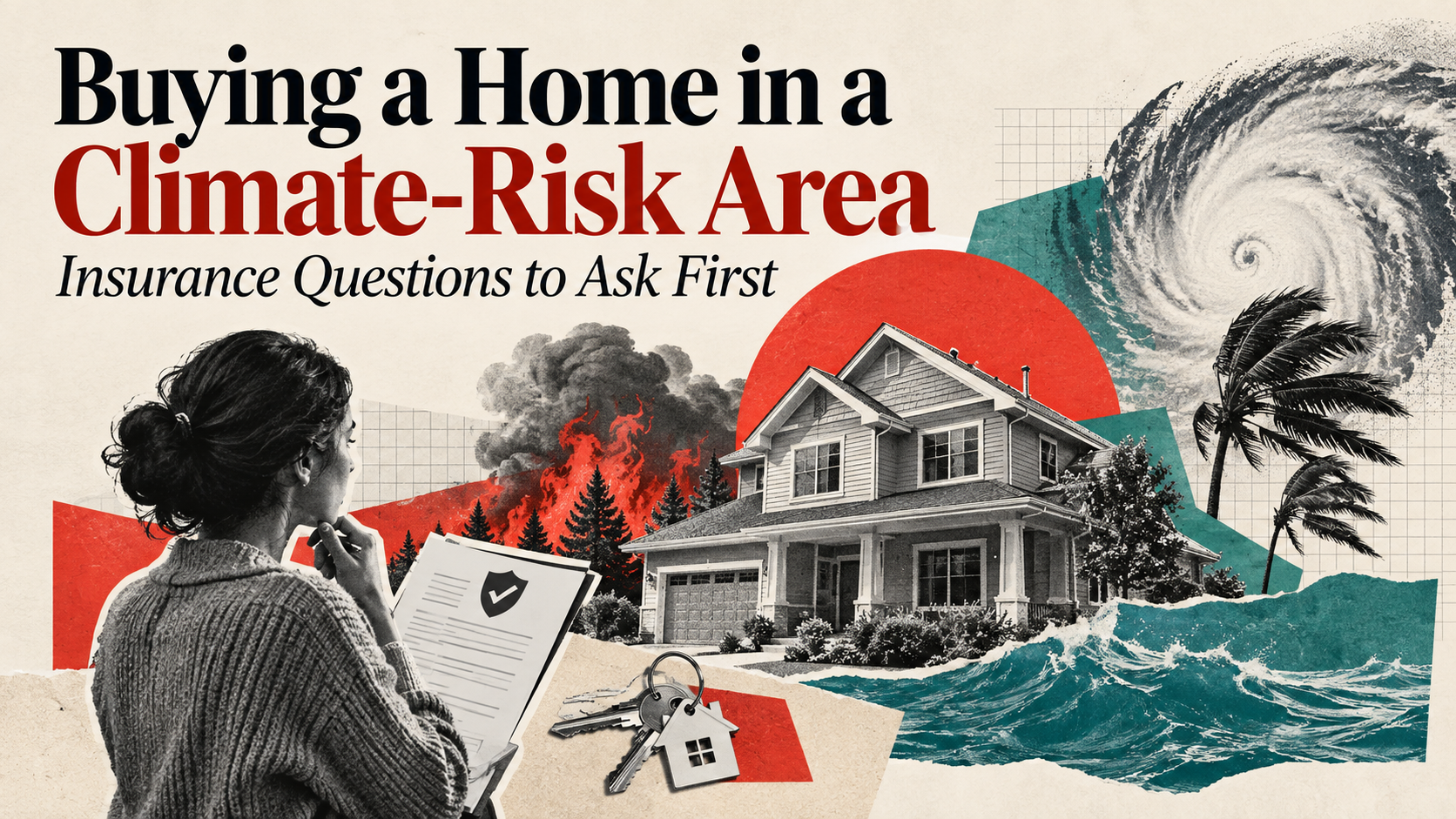
Climate-risk home buying requires buyers to verify insurance availability, coverage limits, deductibles, exclusions, mitigation features, and total ownership costs before removing contingencies. A property may be attractive and still create financing or affordability problems if adequate coverage is unavailable.
Flood, wildfire, hurricane, wind, heat, and other hazards affect properties differently. A broad map or seller statement is only the beginning of the review.
Section 02
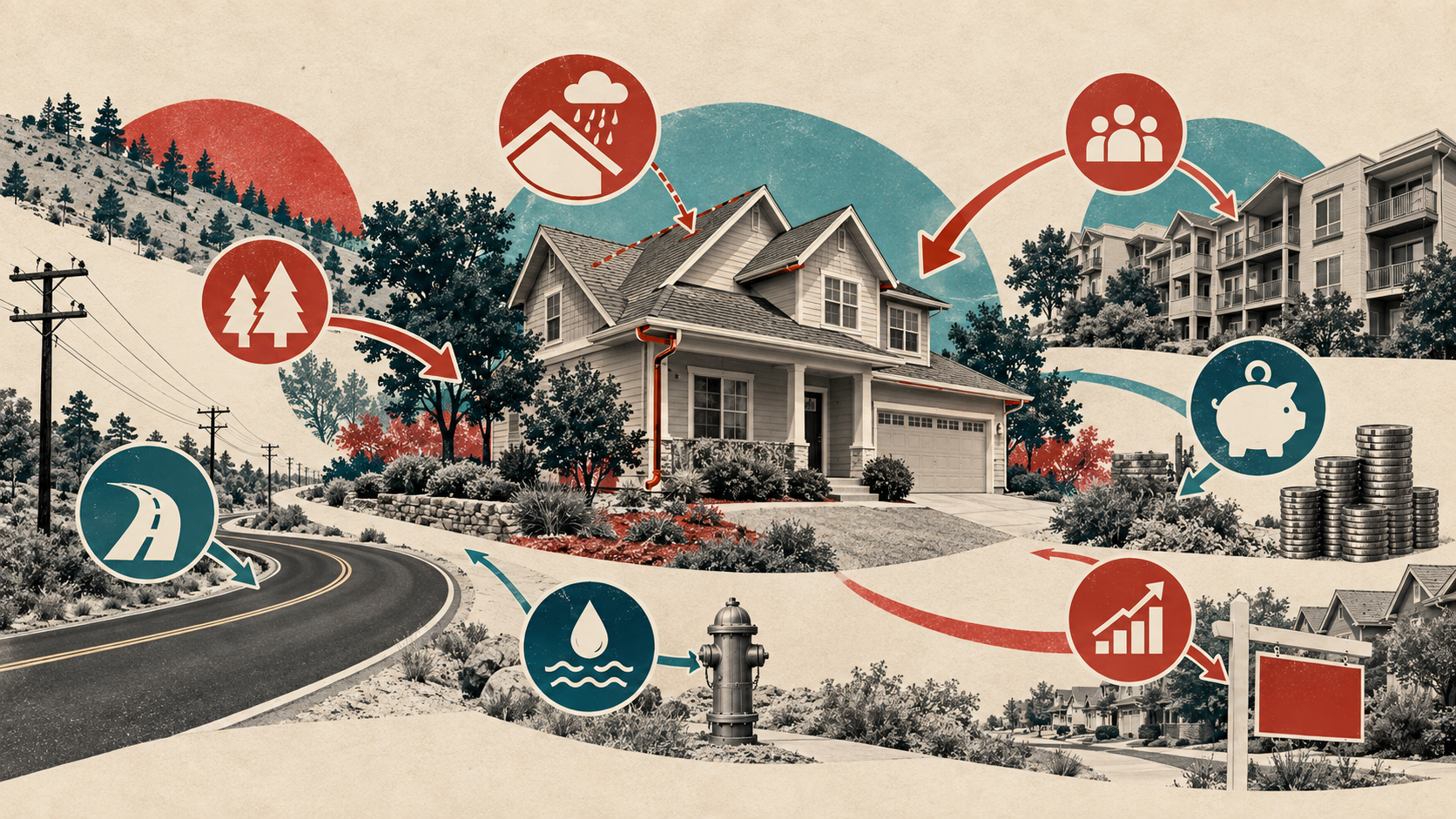
Follow the Risk Layers
- The location and official hazard record
- The physical condition of the property
- The insurance that can actually be bound
- The household’s deductible and reserve capacity
- The community and future resale picture
- Frequently asked questions
Section 03
Hazard and Insurance Are Related but Different
A property can face a hazard and still be insurable, while another property may have limited or expensive options because of location, construction, claims, roof age, vegetation, or carrier rules.
Obtain property-specific quotes early. A generic estimate cannot confirm that a carrier will bind coverage for the actual home and intended use.
The Consumer Financial Protection Bureau recommends obtaining written homeowners insurance quotes from several companies and comparing coverage amounts, premiums, and deductibles. For the specific property, also ask which underwriting conditions remain and when coverage can become effective.
Section 04
Move From the Map to the Property
Start with official sources and local disclosures. Search the property address through FEMA’s Flood Map Service Center, then review local floodplain information, drainage conditions, and seller disclosures. A mapped flood designation is one part of the investigation, not a guarantee against future flooding.

Section 05
Move From the Policy to the Household Budget
Understand deductibles
Ask the agent to translate every percentage deductible into dollars and explain what amount the percentage applies to. For example, a 2% deductible applied to a $500,000 dwelling coverage limit would mean a $10,000 deductible. This is an illustrative calculation, not a statement of the terms available for a particular home.
Read exclusions and sublimits
Coverage can exclude or limit water, mold, ordinance upgrades, earth movement, debris removal, landscaping, or temporary living expenses. Ask the insurance professional to explain material gaps.
Section 06
Move From the Building to the Wider Community
Inspect mitigation features
Roof condition, defensible space, drainage, shutters, impact protection, elevation, sump systems, and electrical updates may affect safety and insurability. Confirm condition rather than relying on listing language.
Investigate utilities and access
Wildfire and storms can interrupt electricity, water, roads, or communications. Consider backup needs, evacuation routes, and the cost of maintaining wells, septic systems, generators, or trees.
Review association and community risk
For condos and planned communities, master insurance, common-area exposure, reserves, deductibles, and special-assessment risk matter. The unit’s policy does not solve every association-level gap.
Budget beyond the current premium
Use the Wonder Rates Max Purchase Price Calculator to compare purchase-budget scenarios using realistic insurance estimates. Keep a separate allowance for deductibles, mitigation work, maintenance, and emergency reserves. Calculator results are educational estimates and do not confirm insurance availability, coverage, or loan approval.
Consider future resale
Future buyers will evaluate many of the same risks. Insurance availability, completed mitigation, disclosures, and repeated losses may influence marketability.
Section 07
Appraisal, Inspection, and Hazard Research
These are separate reviews. An appraisal addresses value and defined property considerations. An inspection evaluates condition within its scope. Hazard research and insurance underwriting address other risks.
Cathryn’s article about appraisal versus inspection explains why buyers should not treat one report as a substitute for the other.
Flood Considerations
Do not assume a standard homeowners policy includes flood coverage. FEMA explains that most homeowners insurance does not cover flood damage. Ask an insurance professional whether separate flood coverage is needed and what building, contents, and deductible limits would apply.
Confirm the effective date before relying on coverage. NFIP policies generally have a 30-day waiting period, with specified exceptions, including certain mortgage-related purchases. Private flood policies may follow different rules.
Wildfire Considerations
Examine roof and vent materials, vegetation, defensible space, slope, road access, water availability, and local fire resources. Confirm who is responsible for tree and brush maintenance.
Do not assume that a policy quote remains available after an inspection. Ask whether the carrier requires mitigation before binding or renewal.
Hurricane and Wind Considerations
Review roof age and permits, shutters or impact protection, garage-door strength, water intrusion, flood exposure, and separate wind coverage. Association master policies and deductibles deserve special attention in attached housing.
Insurance and Mortgage Approval
When insurance is required, coverage must meet applicable lender and program standards. A last-minute inability to bind acceptable coverage can delay or prevent closing.
Coverage can also change after purchase. Cathryn’s guide to a home insurance nonrenewal explains options and why immediate action matters.

Section 08
Questions to Ask the Insurance Professional
- Is this quote specific and bindable?
- Which inspections or documents remain?
- What are the major exclusions and deductibles?
- Is replacement-cost coverage available?
- Are flood, wind, earthquake, or wildfire policies separate?
- What mitigation could affect eligibility?
- How does rental or vacancy change coverage?
- What happens if the carrier does not renew?
Section 09
A Property-Level Risk File
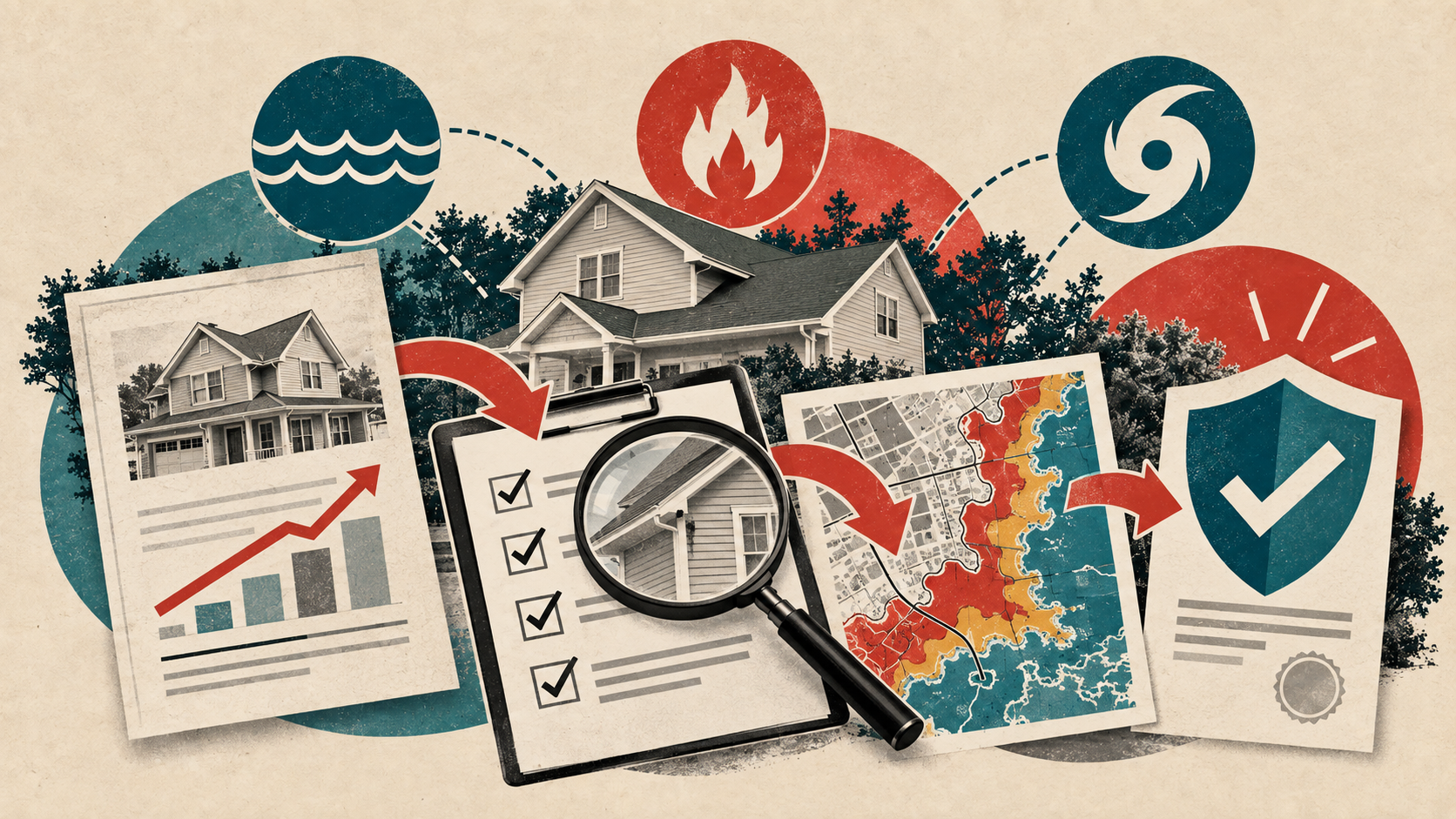
Create a folder for the specific home rather than collecting only neighborhood-level information. Include official hazard maps, seller disclosures, inspection reports, roof permits, insurance quotes, prior-claim information when available, mitigation certificates, association documents, utility history, and repair estimates.
Record the date and assumptions behind each insurance quote. A quote based on the wrong roof age, occupancy, square footage, or construction type may change during underwriting.
For a condo, add the master policy, deductibles, reserve information, and responsibility matrix showing which building components belong to the association or unit owner. A large master-policy deductible can create assessment exposure after a shared loss.
Section 10
Evaluate the Cost of Mitigation Before Closing
Mitigation can improve safety and may affect insurance eligibility, but the scope and cost should be verified. Obtain qualified estimates for roof work, drainage, shutters, defensible space, electrical upgrades, foundation drainage, or window protection as relevant.
Ask whether the work requires permits or association approval and whether it must be completed before coverage can bind. A seller credit does not make an impossible insurance condition disappear.
Section 11
Plan for a Coverage Change After Purchase
The policy available at closing may not remain unchanged forever. Keep records of improvements, photographs, permits, inspections, and maintenance. Respond quickly to inspection requests and renewal notices.
If a carrier exits the market or declines renewal, contact an insurance professional early and compare admitted, residual-market, or other lawful options available in the state. Review coverage and financial strength, not only premium.
The ownership budget should include a meaningful deductible reserve. Insurance transfers covered risk, but it does not eliminate deductibles, exclusions, maintenance, or the disruption of a claim.
Section 12
Frequently Asked Questions
Does being outside a flood zone mean no flood risk?
No. Maps are important but do not eliminate all risk.
Can I close without homeowners insurance if I pay cash?
A cash buyer may not face a lender requirement, but going uninsured can expose substantial assets. Legal or association requirements may also apply.
Does an inspection guarantee future insurance?
No. Insurers apply their own underwriting criteria, and coverage can change.
Can the lender accept any insurance policy?
The policy must meet applicable requirements. Confirm details early.
Should climate risk automatically stop a purchase?
Not necessarily. The buyer should understand the specific hazard, mitigation, coverage, total cost, and personal risk tolerance.
Section 13
Final Takeaway
Climate-risk home buying requires a property-specific investigation. Confirm hazards, inspections, insurance, deductibles, mitigation, community obligations, and reserves before the purchase becomes difficult to unwind. The goal is not fear. It is ownership with fewer surprises.
Before removing contingencies, ask for written answers to unresolved insurance and repair questions. Save all quotes, maps, inspections, permits, and mitigation records with the closing documents. These records may help with renewals, future improvements, claims, and resale. If the household cannot comfortably absorb the deductible or an interruption in coverage, the property may require a different financial plan even when the loan itself can be approved.
If insurance costs or coverage requirements could affect your purchase, talk with a Wonder Rates loan officer about your homebuying scenario. Review the financing implications with the lender and confirm policy availability, exclusions, and effective dates with a licensed insurance professional before committing to the purchase.
Duc Pham, Mortgage Broker | NMLS# 844897
Wonder Rates, Inc. | NMLS# 1518655
Equal Housing Lender.
AZ, CA, CO, FL, GA, LA, MI, OK, PA, SC, TX, VA, WA, OH, AL, OR, NC
This article is for educational purposes only and is not a commitment to lend or insurance, legal, engineering, or environmental advice. Loan approval is subject to creditworthiness, income verification, property eligibility, acceptable insurance, and current underwriting guidelines. Hazards, maps, coverage, premiums, and requirements may change without notice.



