
Section 01
A home title lock service generally monitors public records and alerts an owner to certain changes, but it does not physically or legally lock the deed. Homeowners should understand the service’s limits and compare it with county alerts, credit protection, title insurance, and secure document practices.
Advertisements can make it sound as if a stranger can take a home with one online form. Deed fraud is serious, but fear should not replace a clear understanding of what monitoring can and cannot do.
Section 02
Myth Versus Reality
- What title fraud actually means
- What the service promises
- What the service can really do
- What title insurance covers differently
- Practical protection without panic
- Frequently asked questions
Section 03
What Is Home Title Fraud?
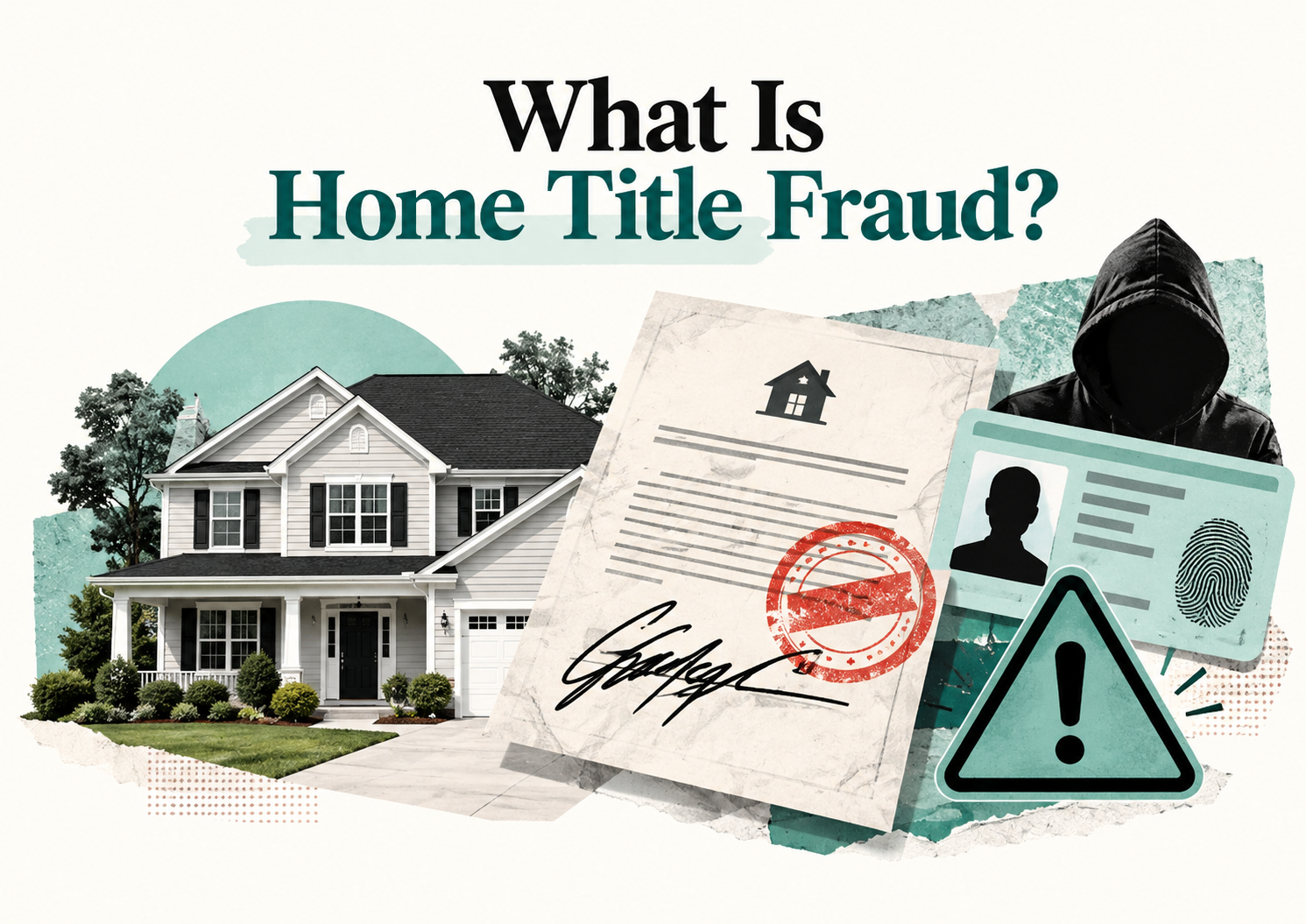
Title or deed fraud can involve identity theft, forged documents, false transfers, fraudulent liens, or attempts to borrow against property using stolen information. Public land records are necessary for real estate ownership, but criminals may exploit personal information and weak verification.
The Federal Trade Commission explains that home title lock is not an actual lock. These services generally monitor records and notify the owner after a filing appears.
Section 04
What Home Title Lock Advertising Often Leaves Out

Myth: The service blocks anyone from touching the deed
Reality: A monitoring service does not prevent every filing
The service may alert the owner, but it usually does not control the county recorder or stop a document from being submitted.
Myth: An alert automatically restores the title
Reality: An alert is not the same as legal restoration
If a fraudulent document appears, correcting the record can require contact with the recorder, law enforcement, an attorney, the lender, or an insurer. Read the service agreement to see what assistance is actually included.
Myth: Monitoring replaces title insurance
Reality: Title insurance serves a different purpose
Owner’s title insurance generally addresses covered title problems under the policy. A monitoring subscription watches for selected activity. Neither should be described as a universal guarantee.
Myth: Watching the deed solves every identity risk
Reality: Credit freezes can address a related risk
Deed fraud and new-account identity theft are different, but stolen personal information may be used in several ways. The FTC describes how credit freezes and fraud alerts can make unauthorized credit harder to open.
Buyers who want to understand how ownership records and other property information are reviewed before closing can also read Wonder Rates’ guide to what happens during mortgage underwriting.
Myth: Paid monitoring is the only alert option
Reality: Some counties offer alerts
Local recorder or clerk offices may provide free notification programs. Availability and coverage vary, so homeowners should confirm the program directly with the county.
Myth: Every property has the same risk profile
Reality: Vacant and inherited properties deserve extra attention
Properties without regular occupants may allow suspicious mail, notices, or physical changes to go unnoticed. Keep ownership, tax, insurance, and contact records current.
Section 05
Title Monitoring, Title Insurance, and Homeowners Insurance
These products address different risks:
| Product or service | Primary purpose |
|---|---|
| Title monitoring | Alerts the owner to selected public-record activity |
| Owner’s title insurance | Addresses covered title defects under the policy |
| Lender’s title insurance | Protects the lender’s covered interest |
| Homeowners insurance | Addresses covered property and liability losses |
Coverage details, exclusions, deductibles, and claim procedures matter. Wonder Rates’ article about a home insurance nonrenewal explains why maintaining property coverage is separate from monitoring title records.
Buyers should review title documents, insurance requirements, and anticipated housing expenses as parts of one homeownership budget. The Wonder Rates Mortgage Payment Calculator can estimate principal, interest, taxes, homeowners insurance, PMI, and HOA costs. Its results are educational estimates and do not include every optional protection service or determine final loan terms.
Section 06
Practical Steps to Protect Your Property

- Enroll in official county property alerts if available.
- Review property tax bills and recorded-document notices.
- Secure deeds, loan documents, and identity records.
- Use strong passwords and multi-factor authentication.
- Freeze credit when appropriate.
- Check mail and the property regularly if it is vacant.
- Keep the county, servicer, insurer, and HOA informed of address changes.
- Be cautious with unsolicited home-equity or foreclosure offers.
- Never transfer a deed without independent legal advice.
Section 07
What to Do After a Suspicious Filing
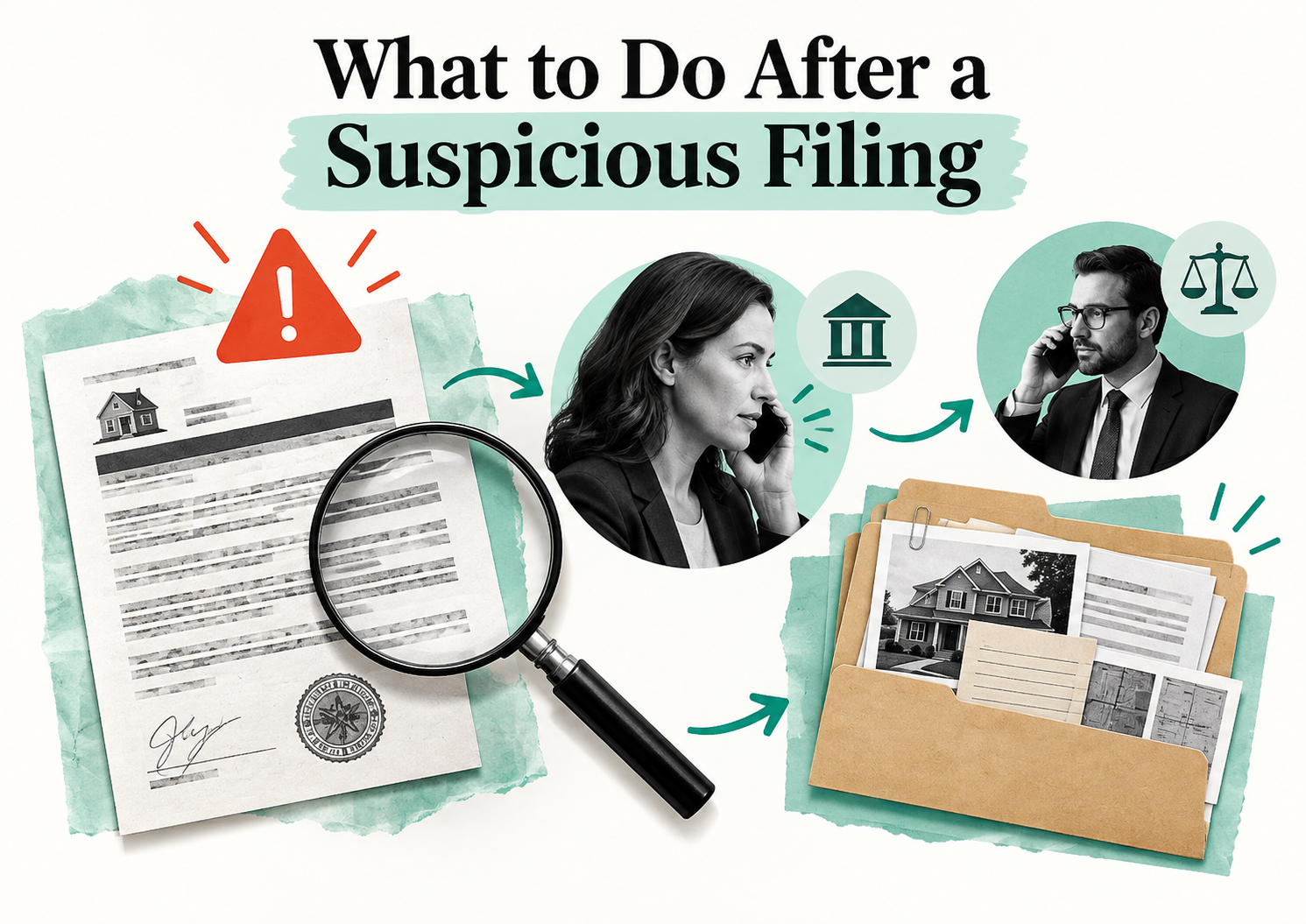
Obtain a copy of the recorded document from the official county recorder. Contact the recorder’s fraud unit if one is available, local law enforcement, an attorney, the mortgage servicer, the title insurer, and other appropriate organizations.
Create an incident log with dates, names, report numbers, correspondence, and copies of relevant documents. Do not pay an unknown person who claims they can quietly remove the filing.
If the problem involves stolen personal information, use IdentityTheft.gov to create an official recovery plan. If a mortgage or lien appears, contact the named institution using contact information obtained independently from its official website or a verified account statement.
Homeowners planning another purchase after identity theft should also review what to fix before buying a home after identity theft. Credit reports, account disputes, fraud alerts, freezes, documentation, and the timing of a new mortgage application may all require attention.
Section 08
How to Evaluate a Paid Service
Read the contract and ask:
- Which counties and document types are monitored?
- How quickly are alerts delivered?
- Does the service prevent filings or only report them?
- Is legal assistance included or merely referred?
- What losses, if any, are covered?
- Are there deductibles, limits, or exclusions?
- Can the owner cancel easily?
Do not buy based only on a frightening advertisement.
Section 09
Higher-Risk Situations Deserve a Clear Monitoring Plan
Some properties require more active oversight. These include vacant homes, inherited property, rentals managed from another state, homes owned through trusts or entities, and property belonging to an older adult who no longer handles mail personally.
For a vacant property, arrange regular physical checks, secure mail, and keep utilities and taxes current. For inherited property, update the recorder, tax authority, insurer, and mortgage servicer through the proper legal process. Do not assume that a will alone updates public title.
When an older relative owns the home, agree on who reviews tax notices, loan statements, insurance correspondence, and unsolicited offers. Use a valid power of attorney when appropriate rather than sharing passwords informally.
Section 10
How to Read a Suspicious Property Notice
First, identify the sender. Government-looking envelopes may come from private companies selling copies of deeds or monitoring subscriptions. Compare the notice with the official county website and call the recorder using a number obtained independently.
Second, determine whether the document reports a real recorded filing, a marketing claim, or a request for payment. Never send identity documents or fees simply because the notice includes the correct property address.
Third, preserve the envelope and contents if fraud may have occurred. These details can help investigators trace the source.
Section 11
Annual Property-Security Review
Once a year, confirm that tax bills, insurance, loan statements, and HOA notices reach the correct address. Review county records, credit reports, beneficiaries, trust information, and emergency contacts. Update passwords and remove account access that is no longer needed.
This routine is less dramatic than buying a product after seeing an alarming advertisement, but consistent recordkeeping often makes suspicious activity easier to identify quickly.
Section 12
Frequently Asked Questions
Can someone legally own my home just by filing a fake deed?
A fraudulent filing does not make the fraud legitimate, but it can create a serious cloud on title that requires prompt action.
Is title lock the same as title insurance?
No. One generally monitors records, while the other provides policy-based coverage for specified title risks.
Can I monitor my deed myself?
Many owners can check public records or use county alerts, although systems vary.
Does paying off the mortgage prevent deed fraud?
No. A debt-free property can still be targeted for identity or deed fraud.
Should older parents use a title-lock service?
The family should compare the service with county alerts, credit freezes, document security, and trusted oversight. Evaluate actual features rather than the label.
Section 13
Final Takeaway
Home title lock services can provide monitoring, but they do not create an invisible barrier around a deed. The strongest protection is layered: secure personal information, monitor official records, maintain current contact details, review insurance, and act quickly when something looks wrong.
Homeowners who choose a paid service should keep using the same basic protections. Monitoring works best as one layer in a broader record-security plan, not as permission to ignore tax notices, credit reports, insurance mail, or county records.
If you are preparing to buy and want help reviewing title, insurance, estimated payments, and financing questions together, start a home-purchase review with Wonder Rates.
Duc Pham, Mortgage Broker | NMLS# 844897
Wonder Rates, Inc. | NMLS# 1518655
Equal Housing Lender.
AZ, CA, CO, FL, GA, LA, MI, OK, PA, SC, TX, VA, WA, OH, AL, OR, NC
This article is for educational purposes only and is not a commitment to lend, legal advice, insurance advice, or an endorsement of any title-monitoring product. Services, coverage, laws, and recording procedures vary. Consult qualified professionals if you discover suspicious property or identity activity.