
Section 01
A buyer finds a home with a newly finished garage, an extra bedroom, an enclosed patio, or an expanded living area. The place looks well maintained, and the listing even counts that extra space in the square footage. Then, somewhere in the mortgage process, the buyer learns the addition might not actually have the required building permit.
Here is why that matters. Your lender evaluates two things at once: your ability to repay, and the property that secures the loan. An addition without the required permit can raise real questions about the accuracy of the reported square footage, the quality and safety of the work itself, local zoning compliance, market value, and insurability. But here is the answer worth holding onto through the rest of this guide: an unpermitted addition does not automatically mean every mortgage application gets denied. The actual outcome depends on the nature of the work, local requirements, the appraisal findings, your loan program, and your lender’s underwriting decision. This guide covers how lenders evaluate unpermitted work, how appraisers handle that extra space, which property issues can affect eligibility, what documents to gather, and how to address the problem before closing.
Disclaimer: This article is provided for general informational and educational purposes only and does not constitute mortgage, financial, legal, construction, engineering, or real estate advice. Building permit requirements, zoning regulations, inspection procedures, and legalization options vary by jurisdiction and by the nature of the work performed. Mortgage eligibility and appraisal treatment depend on the applicable loan program, investor guidelines, lender policies, property condition, valuation, and individual circumstances. An appraisal does not establish legal permit status or certify compliance with building codes. The examples in this article are hypothetical and do not guarantee mortgage approval, a particular appraised value, permit approval, or a specific closing outcome. Readers should verify requirements with the relevant local building authority, mortgage lender, and appropriately qualified professionals before making financial or property decisions.
Section 02
What Is an Unpermitted Addition?
An unpermitted addition is an extension, conversion, or alteration to a property that was completed without a building permit the relevant local authority actually required. Permit requirements vary by jurisdiction and by the scope of the work itself. A project that needs a permit in one city might be handled completely differently somewhere else.
Three situations often get lumped together, but they are genuinely different: a missing permit, a permit that was issued but never got finalized, and work that violates zoning or building codes outright. Each one can call for a different remedy, so do not treat them as interchangeable.
Common Examples of Unpermitted Additions
A bedroom or family room added onto the original footprint. A garage converted into living space. An enclosed patio or sunroom. A second-story extension. A bathroom or kitchen added as part of an expansion. An accessory dwelling unit, or ADU, built without required approvals. Here is something worth remembering: how a room looks tells you nothing about whether it was legally permitted. A room being used as a bedroom does not automatically mean it meets local requirements for a legal bedroom either.
Missing Permits Versus Unpermitted or Noncompliant Construction
Missing permit documentation means the owner simply cannot locate the records, even though the work might genuinely have been permitted. Unpermitted work means the required permits may never have been obtained at all. An unfinalized permit means a permit exists, but required inspections or sign-offs never got completed. A code or zoning violation means the work does not comply with applicable requirements, whether or not a permit was ever issued. Check local building department records before concluding an addition is definitely unpermitted. Missing paperwork in a seller’s own files is not, by itself, proof that no permit exists anywhere.
Why the Type of Addition Matters for a Mortgage
A decorative enclosure, an additional living room, and a conversion involving plumbing, electrical systems, or structural changes create very different underwriting questions from each other. Your lender and appraiser need to understand the actual improvement, its condition, how it is used, and whether it affects value or marketability. A structural concern or unsafe electrical work is a far more serious issue than paperwork that simply went missing.
Section 03
How Unpermitted Additions Affect Mortgage Approval
Mortgage eligibility is never determined by a single permit-status checkbox. Your lender evaluates the property using the appraisal, the applicable program requirements, and whatever other information bears on collateral eligibility.
Fannie Mae’s appraisal guidance states this plainly: if the appraiser identifies an addition that does not have the required permit, the appraiser must comment on the quality and appearance of the work and its impact, if any, on the market value of the subject property. Freddie Mac’s guidance addresses required permits in its own appraisal guidance too. Neither statement means every property with unpermitted work automatically gets rejected. It means the appraiser has to say something about it, not that the finding is an automatic disqualifier.

Property Eligibility and Collateral Risk
The home itself serves as collateral for the mortgage. If an addition creates real uncertainty about the property’s condition, legal use, or marketability, your lender may need more information before deciding whether it meets applicable property requirements. There is a real difference between an underwriting concern and an automatic denial. Depending on the facts and applicable guidelines, your lender might proceed as-is, require clarification or corrective action, or determine the property simply does not meet the loan’s requirements.
Appraisal and Marketability Concerns
An appraiser has to accurately describe the property and weigh factors that could influence market value. Unpermitted space may not contribute value the same way legally permitted, comparable finished space does. If the addition is unusual, poorly built, or out of step with the local market, the appraiser may need to explain its actual effect on value and marketability. The appraised value should never simply assume every advertised square foot is legally equivalent to the home’s original living area.
Safety, Soundness, and Structural Concerns
Missing permits become a much bigger deal when they are tied to possible structural defects, unsafe wiring, inadequate plumbing, improper exits, or other genuine safety issues. For FHA-insured mortgages, HUD’s property acceptability framework requires the property to meet applicable standards for being safe, sound, and secure. That does not mean every missing permit automatically violates those standards. The actual property condition and the relevant requirements are what determine the outcome, not the mere absence of paperwork.
Why the Lender May Request Additional Review
Your lender might request clarification about the addition’s permit status. Review the appraisal and its supporting comments closely. Ask for available permit records or local authority documentation. Require further inspection or evaluation where appropriate. Or confirm whether the property meets the applicable loan program’s requirements. Exactly which of these happens depends on the specific findings and your lender’s authority under the loan program you are using.
Section 04
How Appraisers Evaluate Unpermitted Additions
A lot of buyers assume a professionally finished room automatically counts as legal living area, or that an appraiser must ignore any space without a permit entirely. Both assumptions miss the mark.
The Appraiser Must Describe the Addition Accurately
The appraisal has to reflect the property’s actual features and condition. If an addition lacks the required permits, Fannie Mae’s guidance requires the appraiser to comment on the quality and appearance of that work and its impact, if any, on market value. An appraiser reports and analyzes the property. The appraisal itself does not replace a local building department’s permit determination, and it does not replace a specialist’s structural inspection either.
Can Unpermitted Square Footage Be Included in the Appraisal?
It depends on the applicable measurement and reporting standards, the nature of the specific area, and the facts of the property itself. Do not assume unpermitted space always gets excluded from every part of an appraisal. Fannie Mae’s guidance focuses on accurate reporting and requires the appraiser to assess the unpermitted addition’s impact on value, not to automatically zero it out. The appraiser also has to follow applicable rules for reporting above-grade and below-grade areas and finished living space.
Three concepts need to stay separate in your head here. Physical area is simply how much space actually exists. Reported living area is how that space qualifies for measurement and reporting under applicable standards. Contributory value is how much the area actually adds to market value, based on real market evidence and the appraiser’s own analysis. A room can physically exist without being treated identically to the home’s permitted, standard living area for every single appraisal purpose.
How Comparable Sales Affect the Valuation
Appraisers lean on comparable properties to support their value conclusion. If the addition is atypical, its contribution to value can be genuinely hard to pin down, since comparable homes may not have similar space or similar permit issues. The appraiser may need to explain how the addition stacks up against similar properties, and whether buyers in that specific market seem to accept, discount, or avoid this type of improvement altogether.
Why an Appraisal Does Not Legalize the Addition
An appraisal estimates market value for the mortgage. It does not issue a building permit, it does not certify compliance with local code, and it does not establish that an addition is legally approved for its current use. Verify permit status directly with the relevant local building department, and bring in appropriately qualified professionals whenever construction or code compliance is genuinely in question.
Section 05
Do Unpermitted Additions Affect the Appraised Value of a Home?
The effect on value can be positive, neutral, or negative, depending on the addition’s quality, utility, market acceptance, legal status, and any costs or risks tied to it. An unpermitted addition does not automatically increase value just because it adds more space, and it does not automatically reduce value by some fixed percentage either.
When an Addition May Contribute Value
An addition can genuinely add value when it offers functional space that buyers in the local market actually want. The appraiser weighs its condition, its utility, its design, and evidence pulled from comparable sales. Any contribution to market value here is not necessarily equal to the value of permitted living space of the same exact size, though. It is usually worth something less.
When the Addition May Have Limited or Negative Value
Value can be limited when the space is poorly finished, has an unusual layout, cannot legally be used as intended, or would require significant corrective work to pass muster. A buyer might also discount the property simply because the permit status creates uncertainty, or signals additional costs waiting down the road.
How a Lower Appraisal Can Affect Financing
The appraised value is one of the factors used to calculate your loan-to-value ratio, or LTV. If the appraised value comes in lower than the contract price, you might need to bring additional funds to closing, renegotiate the price, or explore other options available under the transaction and loan program. If you are comparing different purchase-price or financing scenarios, the Wonder Rates Mortgage Payment Calculator can help you estimate how the loan amount may affect your monthly payment. A lower appraisal does not automatically mean your lender rejected you. It can change your financing terms, though, and it can create a separate issue if the appraisal also flags property eligibility concerns on top of the valuation gap.
Why Listing Square Footage Should Be Checked Carefully
Listing information can include space that is not reported or valued the same way as permitted living area. Ask how the seller actually arrived at the advertised square footage, and do not assume the listing, the tax records, the floor plan, and the appraisal will all show identical figures. They often do not.
Section 06
Mortgage Requirements for Unpermitted Additions by Loan Type
Conventional Mortgage Requirements
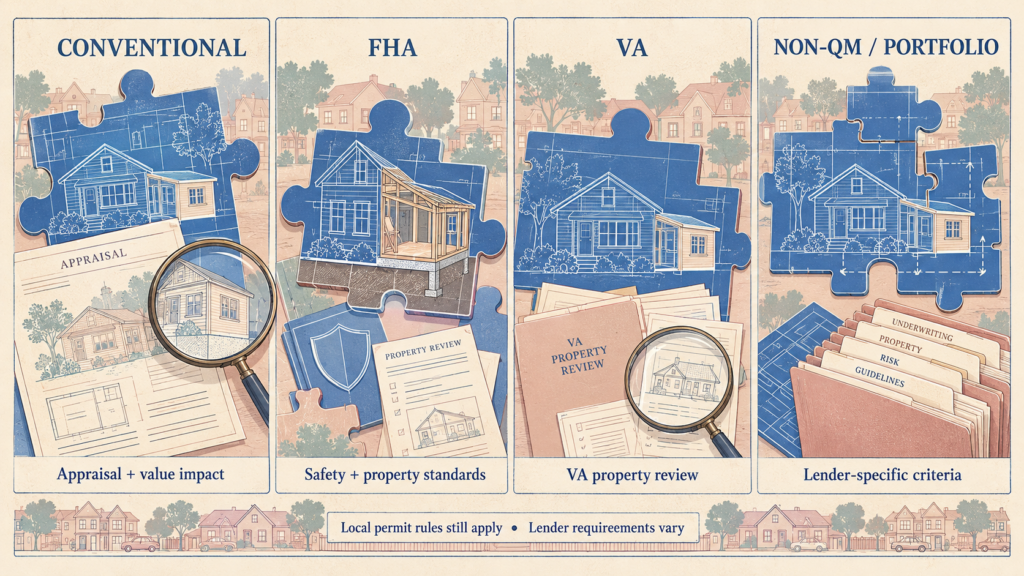
Fannie Mae and Freddie Mac both have appraisal guidance addressing additions or alterations made without required permits. Fannie Mae requires appraisers to comment on the quality and appearance of the addition and assess its impact, if any, on market value. Freddie Mac’s guidance similarly calls for appraisal commentary about the quality and appearance of work completed without required permits. None of this means every property with unpermitted work is automatically eligible. Your lender still has to assess the full appraisal, property eligibility, legal-use questions, safety issues, and any applicable investor or lender requirements layered on top.
FHA Mortgage Requirements
FHA-insured mortgages have to meet HUD’s property acceptability requirements, including applicable standards for safety, soundness, and security. If you want a broader overview of what FHA requires from the property itself, see our guide to FHA Property Requirements. An unpermitted addition can raise questions about structural condition, legal use, or compliance, but the actual effect depends on the real property and the applicable guidance, not a blanket rule. Confirm with your lender whether the addition creates a safety or soundness concern, whether the appraisal needs further review or corrective work, whether documentation from the local authority is required, and whether the property meets the applicable FHA requirements overall. FHA does not automatically reject every home with unpermitted work, and an addition is not automatically acceptable just because no obvious defects are visible either.
VA Mortgage Requirements
VA-backed mortgages are subject to VA appraisal and property requirements, plus your individual lender’s own underwriting. Your lender has to determine whether the property meets the applicable requirements, and whether anything the appraisal identifies needs further action. VA does not universally accept or universally reject unpermitted additions. Confirm the specific issue directly with your VA lender, and review any appraisal conditions or property-related requirements that apply to your particular transaction.
Non-QM and Portfolio Mortgage Options
Non-QM and portfolio lenders sometimes use underwriting frameworks that differ from standard agency loans. Different underwriting criteria never eliminate local permit laws, potential safety issues, title concerns, or the basic need to determine whether the property is acceptable collateral in the first place. Some lenders have more flexibility in particular circumstances, while others apply stricter property rules than the agencies do. Ask about eligibility, required documentation, valuation, pricing, and any attached conditions before assuming an alternative product magically solves the problem.
Why Lender Overlays Matter
Lenders can layer on additional requirements within the bounds of whatever program they are using. A property one lender is willing to review might be completely unacceptable to another, depending on the loan product and the specific findings on file. Get a property-specific review rather than relying on a general statement about your loan type.
Section 07
What Buyers Should Check Before Making an Offer on a Property With Unpermitted Additions
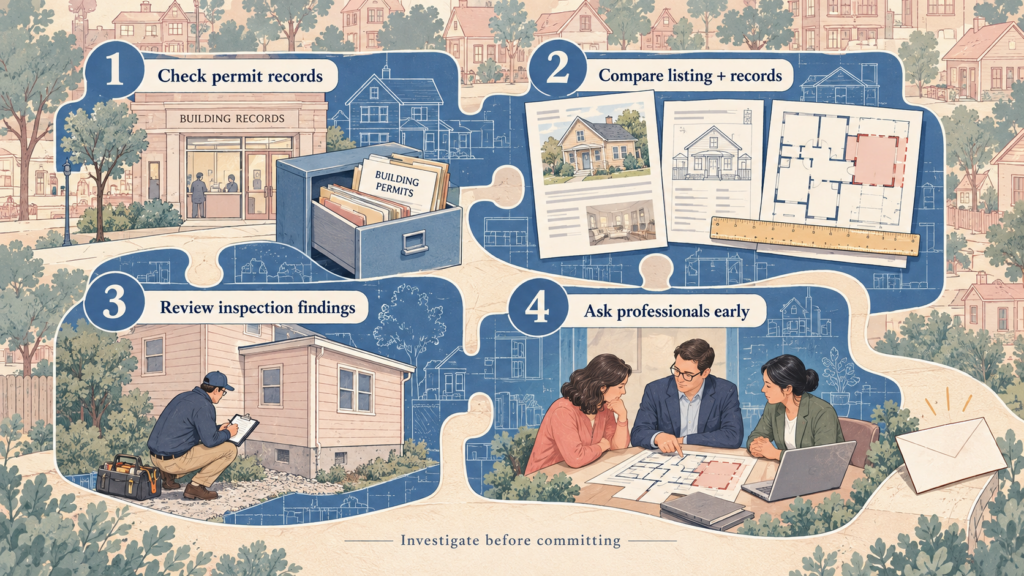
Investigate permit status early, ideally before you give up contractual protections or make a nonrefundable commitment. The exact protections and deadlines here depend on your purchase contract and local law.
Review Local Building Department Records
Check available permit records for the original construction and any later additions or alterations. Ask the seller directly whether permits were obtained and whether required inspections were actually completed. Online records can be incomplete, especially for older homes or jurisdictions with limited digital archives. You may need to contact the local building department directly to confirm the real status.
Compare Listing Details With Public Records and the Physical Property
Compare the advertised square footage, the bedroom and bathroom count, the property records, and any available floor plans against each other. Differences do not automatically prove the work is illegal, but they are a solid reason to investigate further. If the seller describes a converted garage as a bedroom, or presents an enclosed patio as standard living space, ask directly how that area is documented and whether its current use is actually allowed.
Review Inspection Findings and Possible Safety Concerns
Use a qualified home inspector for a general inspection, and bring in an appropriately licensed contractor, structural engineer, electrician, plumber, or other specialist when the circumstances call for it. A standard home inspection does not necessarily establish permit compliance, and it does not certify that every part of an addition meets building code either. You may need separate professional evaluations beyond the standard inspection.
Ask the Lender and Real Estate Professionals Early
Disclose known permit concerns to your loan officer, and ask how the issue could affect the appraisal, property eligibility, and closing conditions. Your real estate agent, and where appropriate a real estate attorney, can help clarify your contractual options and the seller’s actual obligations. The best time to discover a permit problem is before it becomes a last-minute closing crisis, never after.
Section 08
How to Resolve an Unpermitted Addition Before Closing
There is no single remedy that fits every unpermitted addition. The right path depends on the local authority’s requirements, the type and condition of the work, your purchase contract, and your lender’s property requirements.
Option 1: Determine Whether Permits Already Exist
Before assuming the addition needs to be legalized from scratch, verify whether the original permit or final inspection record can actually be located. A seller can have incomplete records even when the relevant authority has documentation sitting right there on file. If a permit was issued but final inspection was never completed, the required next steps look different than a project where no permit was ever obtained at all.
Option 2: Explore an After-the-Fact Permit or Legalization Process
Some jurisdictions let owners seek permits for existing work after the fact, though the process and eligibility vary widely. The local authority might require plans, inspections, engineering reports, opening up concealed construction, or corrective work before approving anything. Do not promise yourself an after-the-fact permit will definitely get granted. Some additions simply cannot be approved in their current form because of zoning, setbacks, structural limitations, or other requirements that cannot be waived.
Option 3: Complete Required Repairs or Modifications
If the local authority or a qualified professional identifies real deficiencies, the owner may need to fix them. Depending on the issue, this could mean structural work, electrical or plumbing corrections, changes to exits, or other modifications. Clarify the scope of work, the permits needed, the inspections required, and the final sign-offs before assuming the addition is actually ready for mortgage closing.
Option 4: Remove or Restore the Addition if Required
In some situations, the authority requires removal or restoration rather than legalization. Whether this is necessary depends on local law and the specific facts of the property. Never agree to a costly remedy without understanding who is actually responsible for it, how long it might take, and whether the mortgage transaction can even proceed during that period.
Coordinate the Remedy With the Mortgage Timeline
Your lender needs to determine whether the proposed solution actually satisfies its requirements. Completing construction work does not automatically resolve every appraisal, title, zoning, or documentation issue on its own. Confirm which records will be needed once the work is done, and leave time for inspections, approvals, appraisal updates, and lender review before you count on a specific closing date.
Section 09
Can You Refinance a Home With Unpermitted Additions?
Why a Refinance Appraisal Can Identify Existing Unpermitted Work
A refinance generally involves its own assessment of the property securing the new loan. An appraiser might spot an addition that differs from the available property records, or that lacks evidence of required permits, even if you have lived there for years without an issue. Your lender may need to assess the addition’s condition, reported area, market value, and effect on property eligibility, same as a purchase transaction would.
How the Addition May Affect the Refinance Amount
The appraised value affects your LTV and the equity actually available for a refinance. If the addition contributes less value than you expected, you might qualify for a smaller loan amount than anticipated, or need to reconsider the transaction entirely. This valuation impact is not a fixed discount, and it cannot be calculated from the permit status alone.
What Homeowners Should Do Before Applying
Review your permit records. Gather available plans and approvals. Ask your lender whether the known addition is likely to need further documentation. If there are structural or code concerns, investigate them before counting on the expected refinance proceeds for anything specific. Refinancing does not automatically legalize an addition or remove outstanding compliance concerns.
Section 10
Common Mistakes to Avoid With Unpermitted Additions and Mortgages
Assuming an unpermitted addition automatically means mortgage denial. The mere existence of unpermitted work is never, by itself, a universal answer to eligibility. The actual condition, value impact, legal use, applicable loan program, and lender’s own assessment are what decide this.
Assuming a finished room is equivalent to permitted living space. A room’s appearance does not establish that it meets every requirement for its current use, and it does not mean it will be valued identically to permitted space either.
Assuming the appraiser can approve or legalize the addition. An appraiser’s job is to describe and value the property for the appraisal assignment. Permit approvals and code compliance belong to the relevant authorities and qualified professionals, not the appraiser.
Relying only on the seller’s verbal assurance. Verify permit status yourself, and get available written documentation. A seller genuinely believing the work was done correctly is not the same thing as an official permit record or an inspection sign-off.
Waiting until the appraisal or closing to investigate. Late discovery tends to trigger extra inspections, unexpected costs, contract disputes, or outright delays. Investigate material discrepancies early, and coordinate with your lender before committing to any particular remedy.
Section 11
Final Checklist for Getting a Mortgage on a Property With Unpermitted Additions
Identify the exact addition or alteration and how that space is currently used. Check local building department records for permits, inspections, and final approvals. Compare the listing’s square footage and room count against available records. Review the property inspection, and get specialist evaluations where appropriate. Ask your lender how the addition could affect appraisal, eligibility, or closing conditions. Confirm whether the appraiser needs to comment on the addition or clarify its contribution to value. Determine whether further permits, inspections, repairs, legalization, or removal might be required. Review your purchase contract and its deadlines with the appropriate real estate professionals. Keep written records of permits, approvals, inspection results, and completed work.
A property with an unpermitted addition can still be financeable in plenty of circumstances, but never assume extra square footage automatically boosts appraised value, and never assume missing permits can simply be ignored. Verifying the property’s condition, permit status, and lender requirements early is the single most effective way to avoid an avoidable surprise down the road.
Section 12
Sources
- Fannie Mae Selling Guide, B4-1.3-05, Improvements Section of the Appraisal Report
- Fannie Mae Selling Guide, B4-1.3-04, Site Section of the Appraisal Report
- Freddie Mac Single-Family Seller/Servicer Guide, Section 5605.5, Improvements Analysis
- HUD Single Family Housing Policy Handbook 4000.1
This article also touches on loan-to-value ratio when discussing appraisal value and financing, and FHA property requirements when discussing safety, soundness, and security standards.
Duc Pham, Mortgage Broker | NMLS# 844897, Wonder Rates, Inc. | NMLS# 1518655 | DRE# 02047445 | DFPI# 60DBO-59134 | Equal Housing Opportunity. Equal Housing Lender. | Licensed in: AL, AZ, CA, CO, FL, GA, LA, MI, NC, OH, OK, OR, PA, SC, TX, VA, WA.



