Section 01
 A piggyback loan uses two mortgages instead of one. It solves a specific math problem: how to put down less than 20% without paying for private mortgage insurance, or how to stay under the conforming loan limit on a higher priced home. It is not a special program with hidden benefits. It is a structure, and understanding the tradeoffs matters more than the acronym.
Section 02
What a Piggyback Loan Actually Is
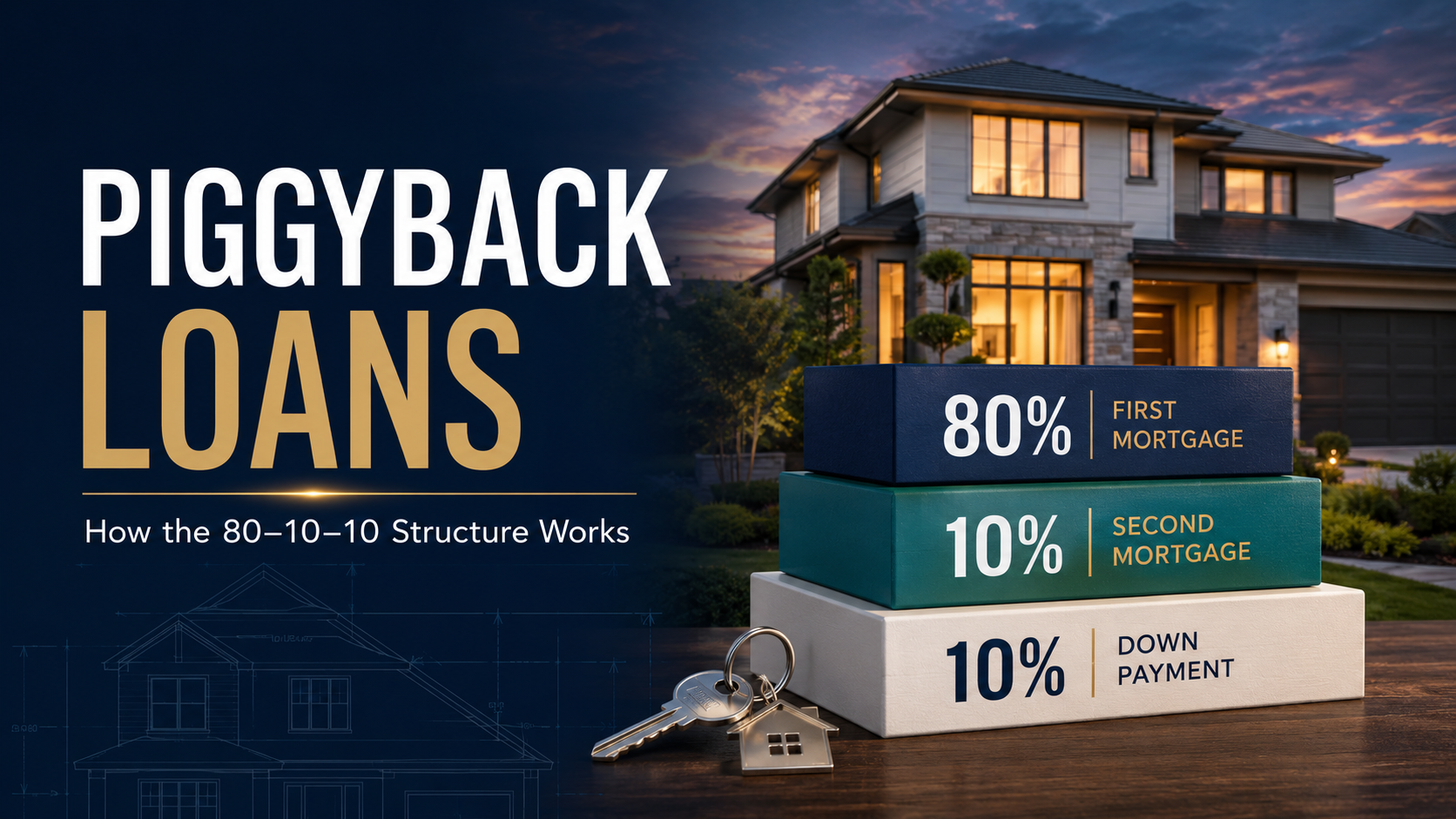
The most common piggyback structure is called an 80-10-10. A first mortgage covers 80% of the purchase price. A second mortgage covers 10%. The borrower brings the remaining 10% as a down payment. The first mortgage stays at 80% loan-to-value. Because of that, it generally avoids the private mortgage insurance requirement that applies to conventional loans above that threshold. If you are comparing the alternatives, our guide to what PMI is and when it may be canceled explains how mortgage insurance works on a conventional loan.
Other combinations exist depending on the goal. An 80-15-5 lowers therequired cash down payment further. A 75-15-10 is sometimes used specifically to keep the first mortgage below a jumbo threshold on a higher priced home. The exact structure a lender offers depends on the borrower’s down payment and credit profile. It also depends on the specific goal, whether that is avoiding PMI, avoidinga jumbo loan, or both.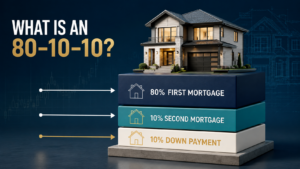
Section 03
Why Borrowers Consider This Structure
Avoiding PMI without a full 20% down payment. Private mortgage insurance is typically required on a conventional loan when the down payment is below 20%. A piggyback structure lets a borrower bring less cash upfront while keeping the first mortgage at or below the 80% threshold where PMI would otherwise apply. The CFPB’s PMI guidance explains the federal cancellation and automatic-termination rules that apply to many eligible mortgages.
Staying under the jumbo loan limit. Sometimes a home’s price is close to the conforming loan limit for the county. Splitting the financing into a first and second mortgage can keep the primary loan within conforming guidelines. This can potentially help a borrower avoid the stricter credit, down payment, and reserve requirements that may come with jumbo financing. Our full guide to jumbo loan requirements covers what changes once a loan exceeds that limit. Because limits can vary by county and change each year, borrowers can also review the FHFA’s official 2026 conforming loan limit information.
Section 04
The Real Tradeoffs Worth Understanding
The second mortgage usually costs more. The second loan in a piggyback structure, often a home equity loan or HELOC, typically carries a higher interest rate than the first mortgage, and if it is a HELOC, that rate is usually variable rather than fixed. For a closer look at how these products differ, read our comparison of home equity financing and HELOCs. The CFPB also provides an official HELOC guide covering variable rates, fees, draw periods, repayment and risks.
Two loans mean two sets of underwriting and often two closing costs. Borrowers generally need to qualify for both loans at the same time, and combined debt-to-income calculations include both payments. Depending on whether the two loans come from the same lender or different lenders, this can also mean two separate sets of closing costs. Our overview of the mortgage underwriting process explains how a lender reviews income, assets, credit and property information.
Refinancing later can be more complicated. If the first and second mortgages are held by different lenders, refinancing either loan down the road may require coordinating between both, which is not always straightforward.
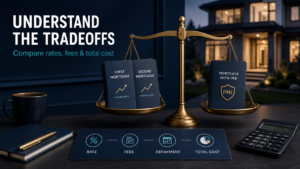
Whether it saves money depends on your specific numbers. Comparing the combined cost of two loans against the cost of PMI on a single loan takes some math. You need to look at your specific rate, your PMI cost, and how long you expect to keep the loan. That last part matters most: will you pay it off, refinance, or reach enough equity to have PMI removed before the piggyback costs add up? There is no single answer that applies to every borrower. The two paths can end up costing similar amounts, depending on those specific numbers.
Section 05
How the Two Loans Close Together
Both loans in a piggyback structure typically close at the same time, as part of the same transaction. The first mortgage is recorded in first lien position, and the second mortgage is recorded in second lien position, meaning the second lender would be paid after the first in the event of a foreclosure. Some lenders offer both loans directly, while others partner with a separate lender for the second mortgage. Either way, you will generally need to provide documentation for both loans, even if the process feels like a single transaction from your side of the table.
Section 06
Who Tends to Consider a Piggyback Loan
Borrowers with strong credit and stable income who want to preserve cash. Piggyback structures generally require qualifying for two loans at once, which tends to work best for borrowers with a strong overall financial profile rather than those already stretching to qualify for one mortgage.
Buyers purchasing near their county’s jumbo threshold. Sometimes a home is priced just above the conforming loan limit. A piggyback structure can sometimes keep the primary loan within conventional guidelines instead of triggering jumbo requirements. This depends on the lender and the specific numbers involved.
Borrowers comfortable managing two loan payments. This structure means two separate loans, two payment schedules, and potentially two lenders to communicate with. It tends to suit borrowers who are comfortable with that added complexity in exchange for the potential savings.
Section 07
Frequently Asked Questions
- What is an 80-10-10 loan?
It is a piggyback loan structure where a first mortgage covers 80% of the purchase price, a second mortgage covers 10%, and the borrower provides the remaining 10% as a down payment. This structure is commonly used to avoid PMI without a full 20% down payment. - Does a piggyback loan always save money compared to paying PMI?
Not always. Whether it saves money depends on the interest rate on the second loan, how long you plan to keep the mortgage, and how quickly you would otherwise reach enough equity to remove PMI. This varies significantly by borrower and should be compared using your specific numbers. - Can a piggyback loan help me avoid a jumbo loan?
In some cases, yes. Keeping the first mortgage within the conforming loan limit by using a second mortgage for part of the financing can help a borrower avoid jumbo loan requirements, depending on the lender and the specific structure used. - Is the second mortgage in a piggyback loan always a HELOC?
Not always, though a HELOC is common. Some piggyback structures use a fixed-rate second mortgage instead. Terms vary by lender. - Is it harder to qualify for a piggyback loan than a single mortgage?
Generally, yes, since the borrower needs to qualify for two loans simultaneously, and combined debt-to-income calculations include both payments. This structure tends to work best for borrowers with strong credit and stable income.
Section 08
This Article Is for General Education
This article is for educational purposes only and is not a commitment to lend. Piggyback loan structures, terms, and availability vary significantly by lender and can change over time.
Next Steps
If you are weighing PMI against a piggyback structure, or trying to stay under the jumbo threshold on a specific home, Wonder Rates can run the numbers for your specific situation.
[Talk to a loan officer about your options →]
Duc Pham, Mortgage Broker | NMLS# 844897
Wonder Rates, Inc. | NMLS# 1518655
Equal Housing Lender.
AZ, CA, CO, FL, GA, LA, MI, OK, PA, SC, TX, VA, WA, OH, AL, OR, NC
This article is for educational purposes only and is not a commitment to lend. Loan approval is subject to creditworthiness, income verification, property eligibility, and current underwriting guidelines. Loan programs, interest rates, and lender fees may change without notice. Always review your official Loan Estimate before making a financing decision.