
Section 01
What Is a Letter of Explanation (LOE)? Why One Page Can Make or Break Your Mortgage Approval
Many borrowers panic when they hear these words from their loan officer:
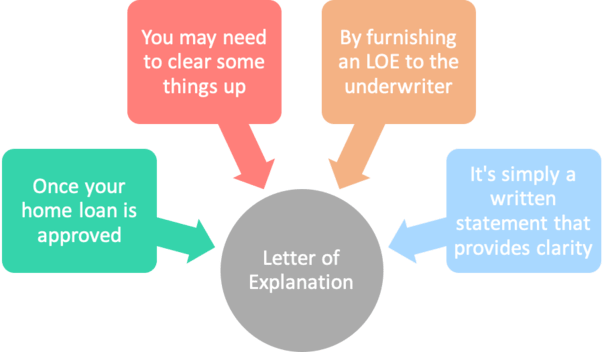
“The underwriter needs a Letter of Explanation.”
Some assume their loan has been denied.
Others think they did something wrong.
In reality, neither is usually true.
A Letter of Explanation (LOE) is one of the most common documents in mortgage underwriting. Most borrowers will never hear about it until the lender asks for one. Yet a good LOE can help keep a loan moving, while a poor one can slow the process or create more questions.
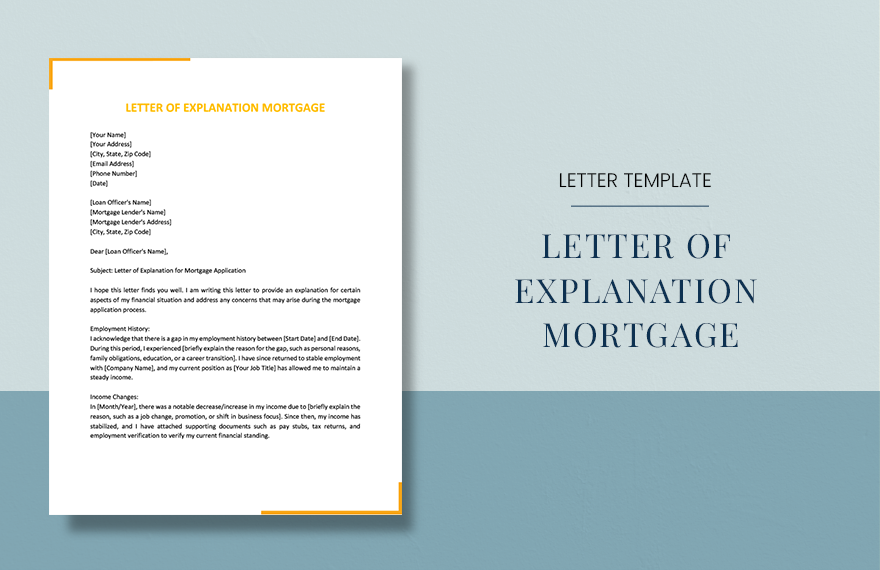
The goal of an LOE is simple. It fills in the gaps that numbers cannot explain. Your credit report, tax returns, and bank statements tell the lender what happened. The LOE explains why it happened.
Understanding how lenders use an LOE can help you avoid delays and respond with the right information the first time.
Section 02
What Is a Letter of Explanation?
An LOE provides context, not excuses
Many borrowers think an LOE is a letter asking the lender for sympathy.
It isn’t.
An LOE is a factual document that helps the underwriter understand something unusual in your financial profile. It gives context when the documents alone do not tell the full story.
For example, a bank statement may show a $35,000 deposit. The money may be completely legitimate, but the underwriter still needs to know where it came from.
The LOE explains the source. The supporting documents prove it.
The explanation and the documentation work together.
Section 03
Why do underwriters ask for an LOE?
Mortgage underwriting is built on a simple principle: every important financial event should be supported by clear documentation. When an account activity, income record, or financial transaction falls outside the normal pattern, the underwriter needs additional information to understand what happened before making a lending decision.
This doesn’t mean the borrower has done anything wrong or that the loan is likely to be denied. In most cases, it simply means the file contains a question that needs to be answered so the lender has a complete and well-documented picture of the borrower’s financial situation.
Section 04
The Most Common Reasons an Underwriter Requests an LOE
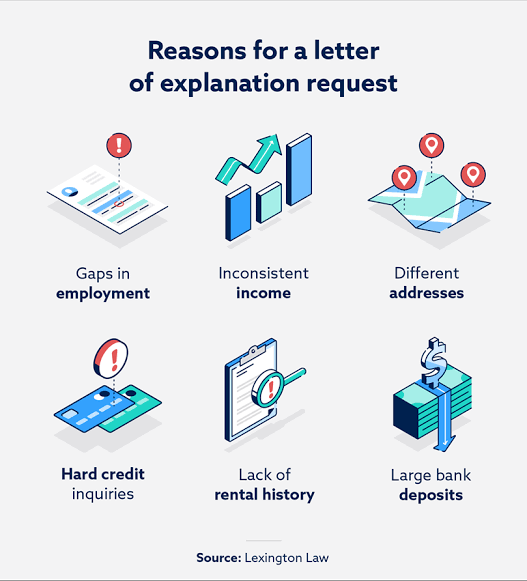
Large deposits
Large deposits are one of the most common reasons an underwriter requests a Letter of Explanation. Imagine your bank account normally receives deposits of $4,000 to $6,000 each month, then suddenly shows a $50,000 deposit. From the lender’s perspective, that transaction stands out because it could affect the borrower’s available assets or even the source of funds used for the purchase.
The money may come from selling a vehicle, liquidating investments, receiving a year-end bonus, a family gift, or transferring funds between accounts. None of these situations is necessarily a problem, but each requires different supporting documents. An LOE helps explain what happened so the underwriter knows exactly which records to review instead of making assumptions.
Employment gaps
An employment gap does not automatically hurt a mortgage application, but it usually raises questions that need to be answered. Borrowers may take time away from work because of a layoff, a career change, school, parental leave, or family responsibilities. Without additional context, however, the employment history may appear incomplete.
For example, a borrower may have worked continuously for ten years, taken eight months off to care for a parent, and then returned to full-time employment. A short, factual LOE explaining the reason for the gap and the date employment resumed gives the underwriter a much clearer picture of the borrower’s work history and financial stability.
Section 05
Credit Issues Often Require More Than a Credit Score
Late payments
A credit report tells an underwriter when a payment was late, but it doesn’t explain why it happened. That’s where an LOE becomes valuable. The goal isn’t to excuse the late payment—it is to provide enough context for the underwriter to determine whether the issue was temporary or part of a larger financial pattern.
For instance, a borrower may have one 30-day late payment caused by a medical emergency but maintain a perfect payment history before and after that event. When supported by documentation, an LOE helps show that the late payment was an isolated incident rather than evidence of ongoing financial difficulty.
Collections or disputed accounts
Old collection accounts often surprise borrowers during the mortgage process. Some have already been paid, while others may still be under dispute or waiting to be resolved. Regardless of the situation, the underwriter needs to understand the history behind the account before completing the file review.
A well-written LOE explains when the account occurred, its current status, and any actions the borrower has taken to resolve it. When paired with supporting documents, the explanation helps the underwriter evaluate the issue based on facts rather than assumptions.
Section 06
The Best LOEs Are Short, Clear, and Supported by Documents
More words don’t create a better explanation
Many borrowers believe a long explanation will strengthen their case, but the opposite is often true. An underwriter isn’t looking for a detailed life story—they simply need enough information to understand an unusual financial event and verify it with documentation.
A strong LOE usually answers four simple questions.
| Question | Example |
|---|---|
| What happened? | A large deposit appeared in my account. |
| Why did it happen? | I sold my vehicle. |
| When did it happen? | March 14, 2026. |
| Can you document it? | Attached are the bill of sale and bank deposit record. |
Once those questions are answered clearly, the underwriter can usually move through the file much more efficiently.
Documents matter more than explanations
An explanation alone rarely resolves an underwriting condition. The supporting documents are what give the explanation credibility. Think about these two responses to the same question.
One borrower writes, “The money is mine, so there shouldn’t be a problem.” Another writes, “The deposit came from the sale of my boat on May 2. Attached are the signed bill of sale, the buyer’s payment confirmation, and my bank statement showing the deposit.” The second response is much stronger because every statement is supported by evidence. Mortgage underwriting is based on documentation, not personal opinions.
Section 07
Common LOE Mistakes That Slow Down Mortgage Approval
Giving more information than necessary
A common mistake is providing far more information than the lender requested. If the underwriter asks about one deposit, the LOE should focus on that deposit rather than describing every financial event from the past year. Extra information often creates new questions that weren’t part of the original review.
A focused explanation is usually the most effective one. Answer the specific question, provide the requested documents, and avoid introducing unrelated details unless your loan officer advises otherwise.
Guessing instead of stating facts
An LOE should always be based on facts that can be verified. Statements such as “I think,” “Maybe,” or “I’m not sure” create uncertainty because they suggest the borrower isn’t confident about the information being provided.
If you’re unsure how to explain a transaction, speak with your loan officer before writing the letter. A clear explanation supported by documentation is far more helpful than an incomplete answer or an educated guess.
Section 08
An LOE Doesn't Mean Your Loan Is in Trouble
Most mortgage files include at least one LOE
Many borrowers assume an LOE request means their mortgage is about to be denied. In reality, Letters of Explanation are a normal part of mortgage underwriting, even for borrowers with excellent credit, stable income, and substantial assets.
An underwriter may simply need clarification about a large deposit, an employment gap, or another item that doesn’t fit the usual pattern. The request is part of the documentation process, not a sign that the loan has become risky.
Underwriters are looking for one consistent financial story
The purpose of underwriting is to determine whether all of the documents support the same financial picture. If your income matches your tax returns, your assets match your bank statements, and your LOE explains anything unusual, the underwriter can review the file with much greater confidence.
Consistency reduces uncertainty, and fewer unanswered questions often lead to fewer underwriting conditions. That usually means a smoother approval process and fewer surprises before closing.
Section 09
Final Thoughts
A Letter of Explanation is one of the simplest documents in the mortgage process, but it often plays an important role in underwriting.
The purpose of an LOE is not to defend yourself or convince the lender to approve the loan. Its purpose is to explain unusual financial events so the underwriter can understand the complete picture.
The strongest LOEs are clear, factual, and supported by documentation. They answer the underwriter’s questions without adding unnecessary information.
If your lender requests an LOE, don’t assume something is wrong. In many cases, it is simply another step toward a well-documented loan file and a successful closing.
Disclaimer: Wonder Rates NMLS #1518655, Duc Pham NMLS #844897. Equal Housing Lender. Rates and terms are subject to change. This article is for educational purposes only and should not be considered financial, tax, or legal advice.
Duc Pham, Mortgage Broker | NMLS# 844897,
Wonder Rates, Inc. | NMLS# 1518655 | DRE# 02047445 | DFPI# 60DBO-59134 |
Equal Housing Opportunity. Equal Housing Lender. |
Licensed in: AL, AZ, CA, CO, FL, GA, LA, MI, NC, OH, OK, OR, PA, SC, TX, VA, WA.