

Section 01
What Is the ATR/QM Rule?
If you’ve ever applied for a mortgage, you’ve probably wondered:
- Why does the lender ask for so many documents?
- Why does one large bank deposit require pages of explanations?
- Why can something as simple as changing jobs trigger additional underwriting conditions?
Many borrowers assume these are just internal policies that vary from one lender to another.
In reality, most of these requirements stem from one of the most important regulations in the U.S. mortgage industry: the Ability-to-Repay/Qualified Mortgage Rule (ATR/QM Rule).

Ironically, very few borrowers have ever read this regulation, yet almost every residential mortgage is evaluated under its framework.
Understanding ATR/QM doesn’t just explain why lenders request extensive documentation it also gives you insight into how underwriters evaluate risk before approving a loan.
Section 02
The ATR Rule Was Created to Protect More Than Just Borrowers
After the 2008 financial crisis, millions of mortgages went into default.
One of the major contributing factors was that many loans had been approved without adequately evaluating whether borrowers could realistically repay them.
In many cases, lending decisions were based more on the assumption that home prices would continue rising than on the borrower’s long-term repayment capacity.
When the housing market declined, the consequences extended far beyond homeowners.
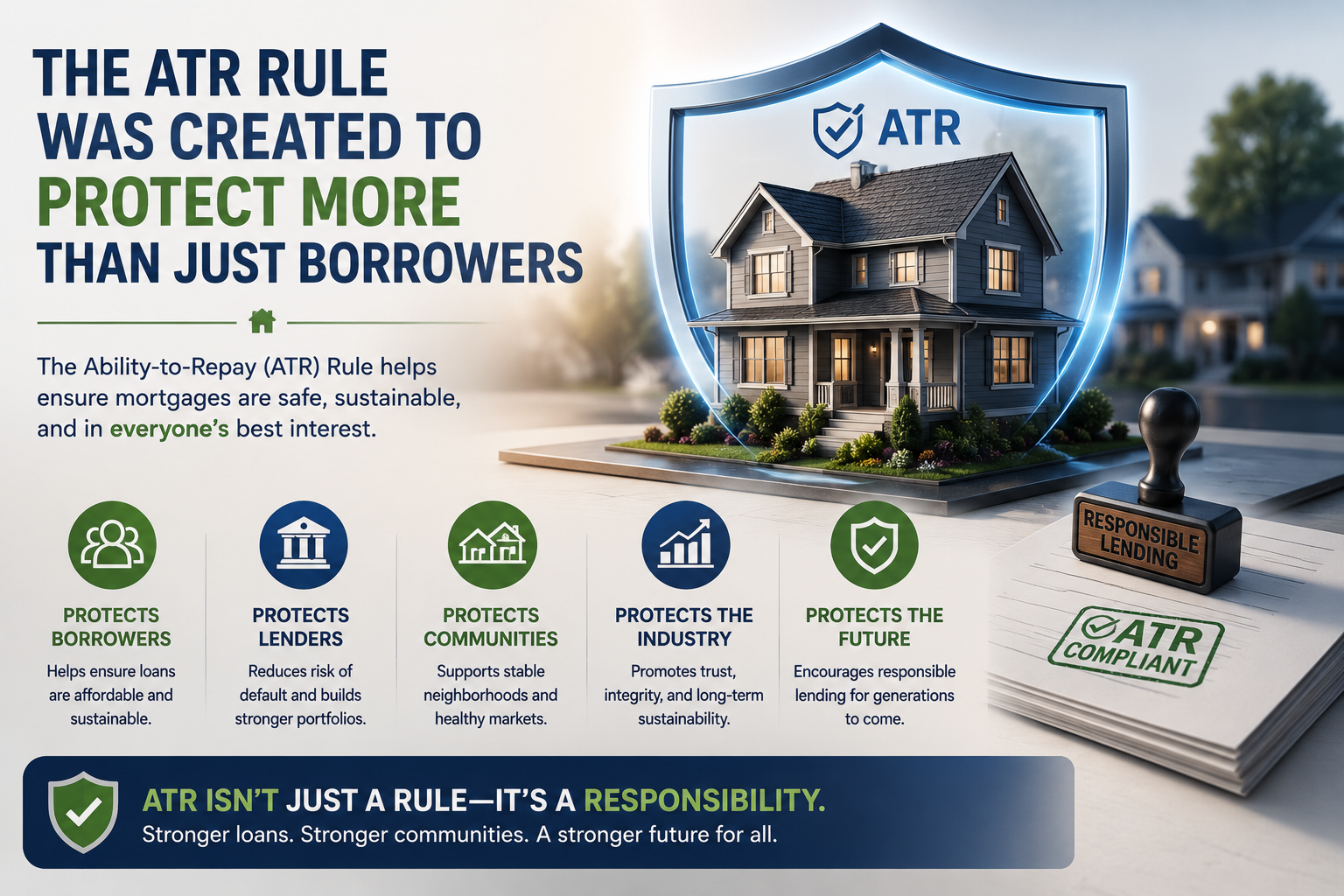
Banks, investors, and the broader mortgage-backed securities market all absorbed significant losses.
This is why the ATR Rule was introduced.
Many articles describe ATR as a rule that protects consumers from borrowing more than they can afford.
While that’s true, it only tells part of the story.
From a regulatory and risk management perspective, ATR was designed to ensure that every mortgage is supported by verifiable financial evidence rather than assumptions or speculation.
Section 03
Most Borrowers Don't Realize Their Mortgage May Be Sold After Closing
One of the least understood aspects of the mortgage industry is what happens after your loan closes.
Many borrowers assume the lender that originated their mortgage will keep it for the next 30 years.
In reality, many loans are later:
- sold to investors;
- transferred into the secondary mortgage market;
- or bundled into Mortgage-Backed Securities (MBS).
That means an underwriting decision doesn’t affect only the original lender.
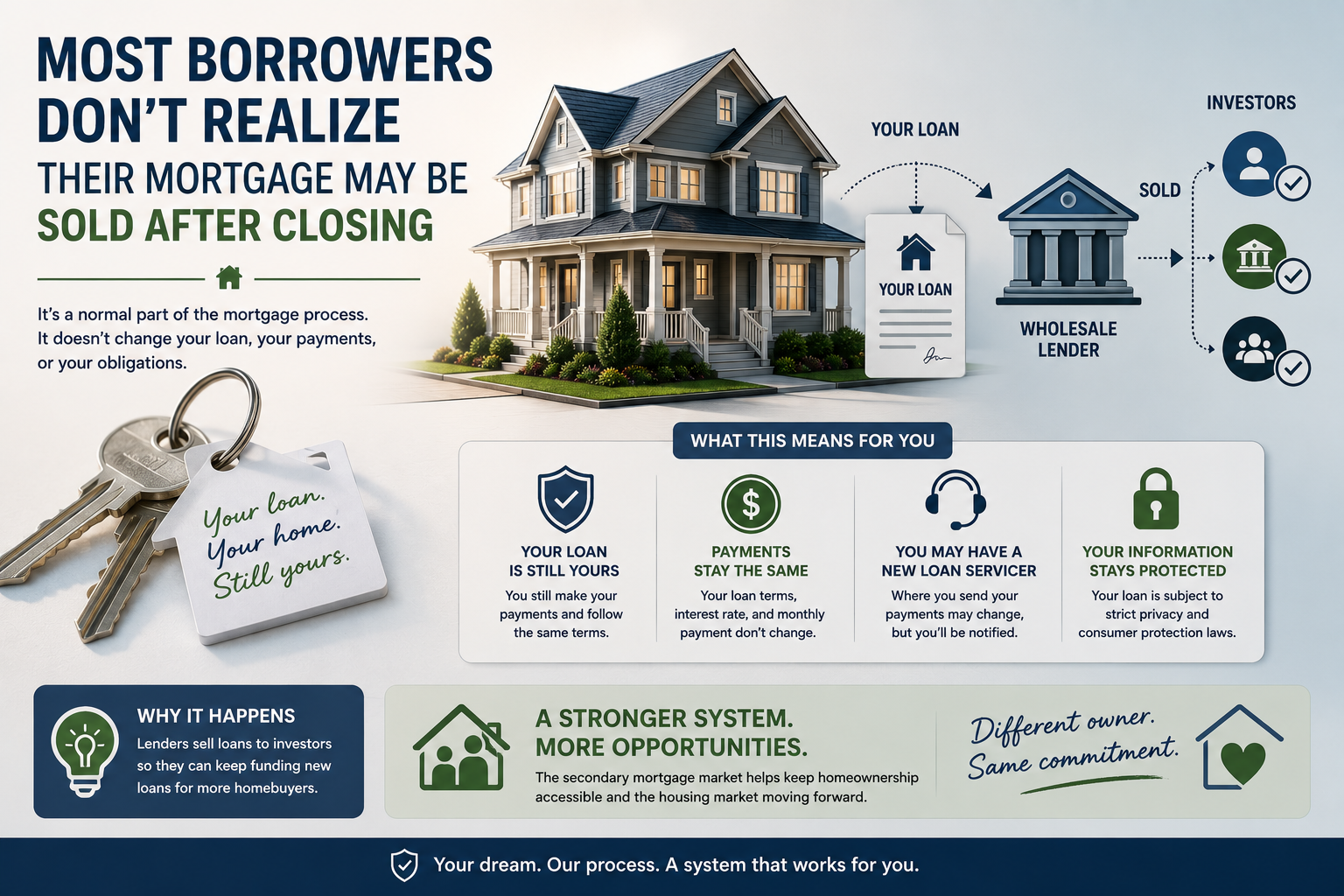
A poorly underwritten mortgage can ultimately create risk for investors and the broader financial system.
This is why ATR isn’t simply a consumer protection rule.
It also serves as one of the foundational safeguards supporting stability throughout the mortgage market.
Section 04
What Does ATR Actually Require Lenders to Prove?
Many borrowers mistakenly believe ATR requires lenders to guarantee that they’ll be able to make mortgage payments for the next 30 years.
That’s impossible.
No lender can predict whether you will:
- change careers five years from now;
- experience a business downturn;
- face unexpected medical expenses;
- or encounter an economic recession.
Instead, ATR requires lenders to make a reasonable and good-faith determination that, at the time the loan is originated, the borrower has the ability to repay the mortgage using verified financial information.
This distinction is extremely important.
Lenders are not underwriting your future.
They’re underwriting the quality and reliability of today’s financial data.
Section 05
Why Underwriters Care So Much About Stable Income
Many people believe lenders simply prefer W-2 employees over self-employed borrowers.
That’s not entirely accurate.
What lenders value most is stable and predictable income.
Consider these two borrowers:
| Borrower | Income Profile |
|---|---|
| Borrower A | Earns a consistent W-2 salary of $10,000 per month for the past four years. |
| Borrower B | Owns a successful business averaging $180,000 annually, but income fluctuates significantly from year to year. |
Borrower B may earn more overall.
However, from an underwriting perspective, the lender must determine whether that income is likely to continue consistently enough to support future mortgage payments.
That’s why a borrower’s qualifying income may be lower than their actual earnings.
Section 06
ATR Explains Why Lenders Can't Simply Accept Your Word
One of the core principles behind ATR is documentation.
Imagine a borrower deposits $120,000 into their bank account just before closing.
The borrower explains:
“It’s a gift from my parents.”
For an underwriter, that explanation alone isn’t sufficient.
ATR requires lending decisions to be supported by objective, verifiable evidence.
Depending on the loan program, the lender may request:
| Documentation | Purpose |
|---|---|
| Gift Letter | Confirms the funds are a gift rather than a loan. |
| Donor’s Bank Statement (when required) | Verifies the donor has sufficient funds. |
| Proof of Wire Transfer | Documents the movement of funds. |
| Borrower’s Updated Bank Statement | Confirms receipt of the gift funds. |
Many borrowers view these requests as unnecessary.
However, if the loan is ever audited or reviewed by investors or regulators, the lender must demonstrate that every underwriting decision was supported by proper documentation.
Section 07
Qualified Mortgage Isn't "A Better Loan" It's Stronger Legal Protection ( Safe habor )
This is one of the most misunderstood concepts in mortgage lending.
Many borrowers assume Qualified Mortgage (QM) is simply another mortgage program like FHA or Conventional.
It isn’t.
QM is a legal classification for loans that meet specific regulatory standards.
Its greatest significance lies in legal protection.
If a borrower later claims that the lender approved a mortgage they couldn’t reasonably afford, a Qualified Mortgage generally provides the lender with stronger legal defenses demonstrating compliance with the Ability-to-Repay Rule.
In other words, QM doesn’t certify that a loan is perfect.
Instead, it establishes a framework that reduces legal and regulatory risk for lenders.
Section 08
Does Non-QM Mean a High-Risk Loan?
Not necessarily.
This is one of the biggest misconceptions in today’s mortgage market.
A Non-QM loan simply means the mortgage doesn’t meet the technical definition of a Qualified Mortgage.
It does not automatically mean the borrower is financially risky.
For example:
An experienced real estate investor may own:
- an $8 million real estate portfolio;
- multiple LLCs;
- rental income that fluctuates seasonally;
- substantial liquid assets.
This borrower may not fit traditional QM guidelines.
However, the lender may still be able to demonstrate Ability-to-Repay through alternative documentation, such as bank statement programs, asset-based qualification, or cash-flow analysis.
The difference is that Non-QM lending generally requires lenders to assume greater responsibility in documenting and supporting their underwriting decisions.
Section 09
Every Document You Submit Is Answering the Same Question
Borrowers often become frustrated when underwriters request:
- a Letter of Explanation;
- updated pay stubs;
- new bank statements;
- employment verification;
- gift documentation.
At first glance, these requests appear unrelated.
In reality, every document serves the same purpose:
Can the lender demonstrate—with objective evidence—that the borrower had the ability to repay this mortgage when the loan was originated?
If the answer isn’t fully supported by the documentation, additional underwriting conditions will likely follow.
This is why mortgage brokers sometimes seem to ask for “one more document.”
In most cases, they’re simply helping ensure the loan file satisfies regulatory and investor requirements.
Section 10
What ATR Cannot Do
It’s important to understand the limits of the ATR Rule.
ATR cannot predict:
- future layoffs;
- economic recessions;
- divorce;
- illness;
- changes in interest rates;
- unexpected life events.
It also doesn’t guarantee that a borrower will never experience financial hardship.
What ATR does require is that, at the time the mortgage is originated, the lender’s decision is based on verified information, reasonable analysis, and documented evidence.
That’s why receiving mortgage approval doesn’t necessarily mean you’ve chosen the best loan for your long-term financial goals.
Affordability is still a personal financial decision—not merely an underwriting decision.
Section 11
Final Thoughts
The ATR/QM Rule forms one of the most important foundations of today’s mortgage industry.
Although most borrowers never read the regulation, nearly every document requested during underwriting—from income verification and employment history to asset documentation and source-of-funds verification—is ultimately tied to one fundamental principle:
Every mortgage should be approved based on verified facts, not assumptions.
Understanding how ATR works gives borrowers a clearer view of the underwriting process. Rather than seeing documentation requests as unnecessary obstacles, you’ll recognize them as part of a regulatory framework designed to promote responsible lending, reduce systemic risk, and strengthen the long-term stability of the U.S. mortgage market.
Disclaimer: This article is provided for educational purposes only and should not be considered financial, tax, or legal advice. Mortgage regulations may change over time, and underwriting requirements vary depending on the loan program and individual borrower circumstances.
Duc Pham, Mortgage Broker | NMLS# 844897,
Wonder Rates, Inc. | NMLS# 1518655 | DRE# 02047445 | DFPI# 60DBO-59134 |
Equal Housing Opportunity. Equal Housing Lender. |
Licensed in: AL, AZ, CA, CO, FL, GA, LA, MI, NC, OH, OK, OR, PA, SC, TX, VA, WA.