
Section 01
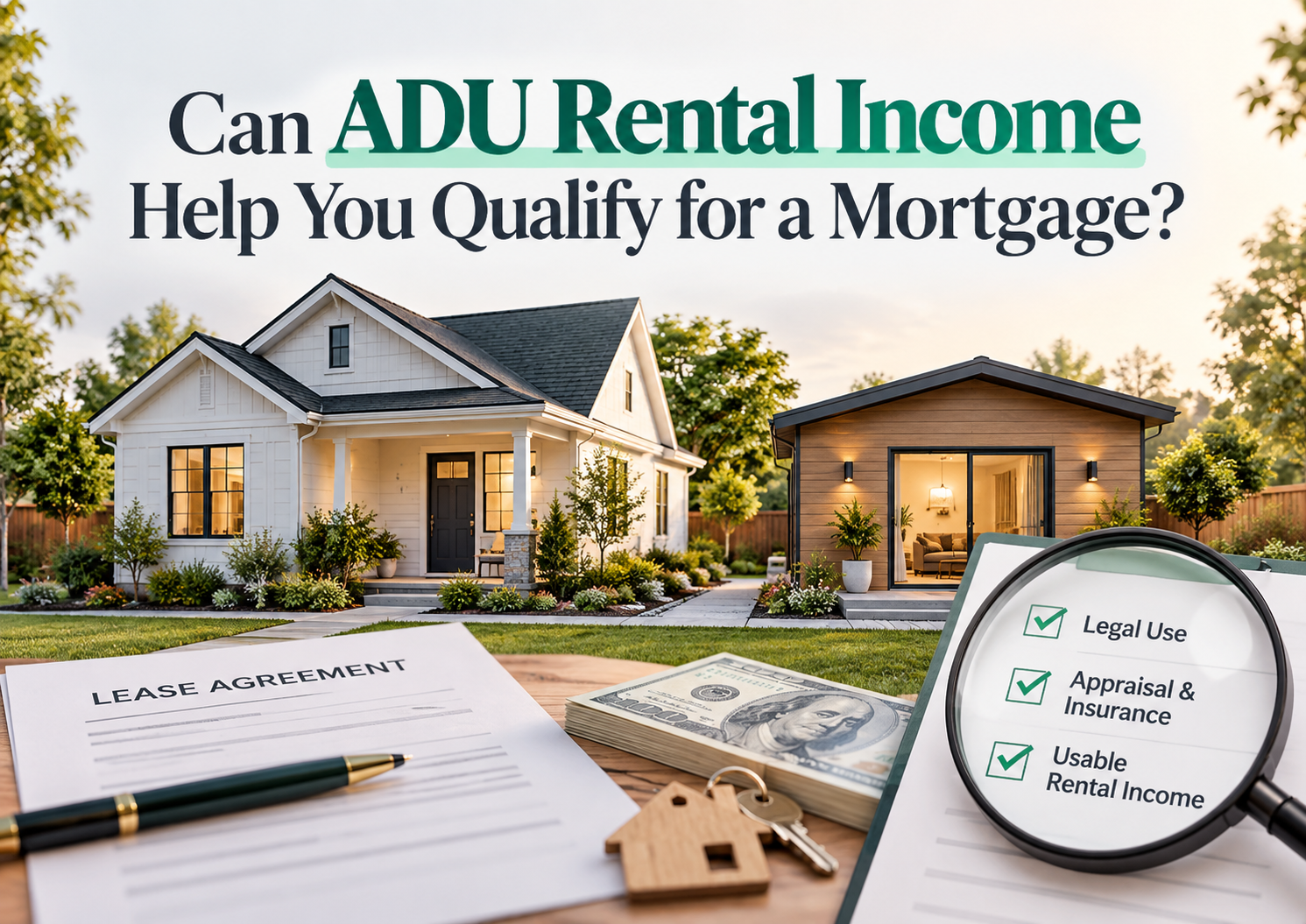
ADU rental income may be considered in certain mortgage transactions, but it is not automatically usable because a property has a second living area. The lender must evaluate the unit’s legal status, appraisal, occupancy, documentation, and applicable loan-program rules.
An accessory dwelling unit can support multigenerational living or provide rental income. It can also create financing problems when a conversion lacks permits, the layout does not meet property standards, or the expected income is not documented in an acceptable way.
Section 02
The Three-Gate Test
- Gate one: Is it a real and legal ADU?
- Gate two: How will the property be appraised and insured?
- Gate three: Can any rent be used for qualification?
- Four common property scenarios
- Frequently asked questions
Section 03
What Is an ADU?
An ADU is an additional residential living unit located on the same property as a primary dwelling. It may be attached, detached, inside the main home, or created through a garage or basement conversion.
Labels used in listings are not enough. “Guest house,” “in-law suite,” and “casita” do not prove that the space is a legal ADU or that rent can be used for qualification.
Section 04
Gate One: Is It a Real and Legal ADU?

The unit must be identified correctly
The appraiser and lender evaluate the physical characteristics, utilities, access, kitchen, bathroom, and relationship to the primary dwelling. A second kitchen alone does not establish an ADU.
Legal status matters
Permits, zoning, certificates, and local use rules can affect property eligibility. Unpermitted space may create safety, value, insurance, and financing concerns.
Ask the local planning or building department for records rather than relying only on the seller’s statement.
Section 05
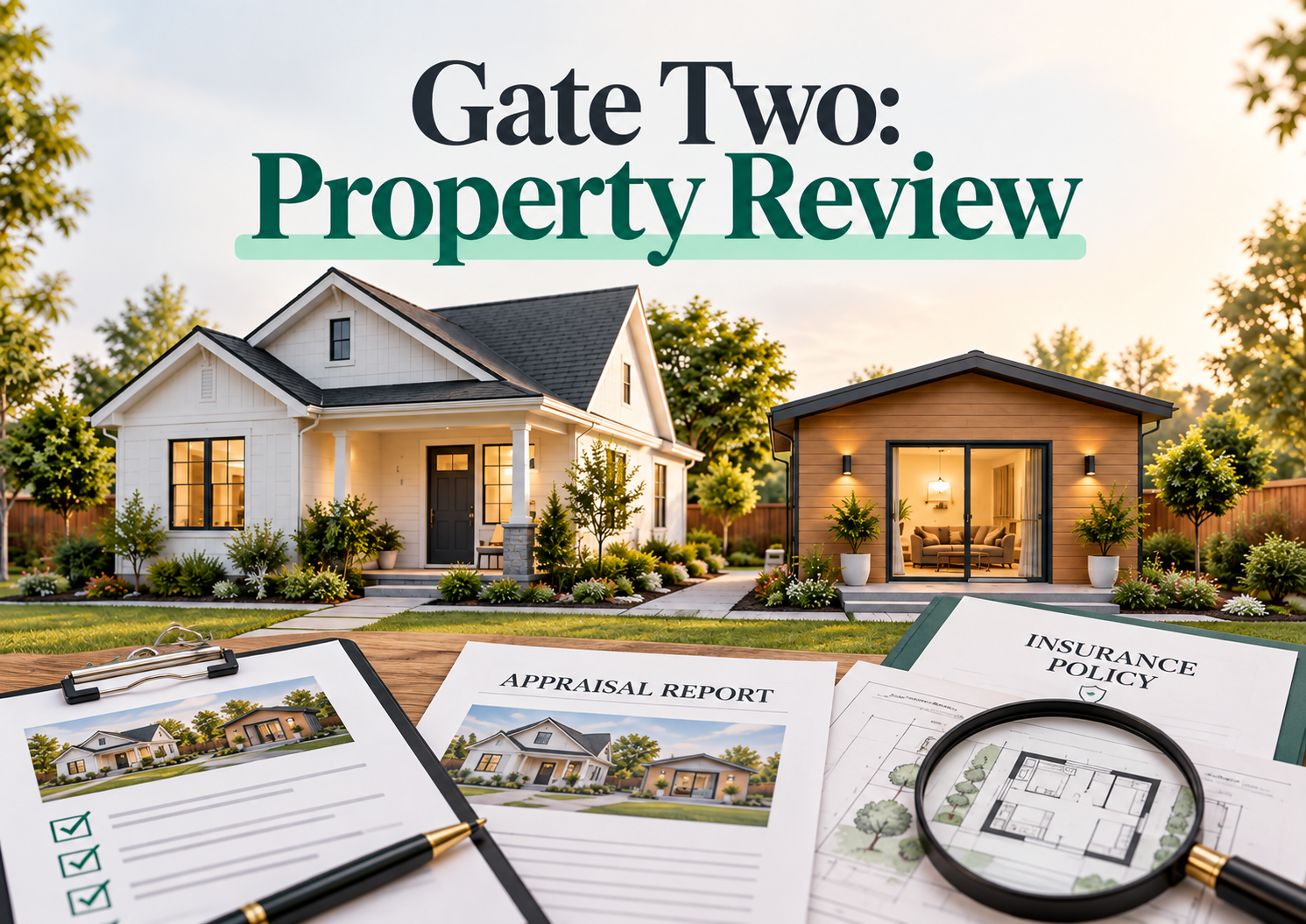
Gate Two: How Will the Property Be Reviewed?
Not every program treats income the same way
Loan programs can differ on eligible property types, owner occupancy, rental documentation, income calculations, and required borrower history. The lender should evaluate the actual transaction before the buyer counts rent in the budget.
Existing rent differs from future rent
An executed lease and documented receipt may be evaluated differently from projected market rent on a vacant unit. An appraiser’s market-rent opinion does not automatically mean the full amount can be used.
Section 06
Gate Three: Can the Rent Support Qualification?

Vacancy and expenses matter
Gross rent is not the same as dependable cash flow. The property can experience vacancy, repairs, utilities, management, insurance, and tenant-related costs.
Owner occupancy still matters
The borrower should accurately describe who will live in the primary dwelling and ADU. A plan to operate both spaces as rentals may change the occupancy classification and eligible programs.
Short-term rental projections require caution
Vacation-rental estimates can be volatile and may conflict with zoning, HOA rules, insurance, or program requirements. Do not assume nightly-rental projections will be treated as qualifying income.
Section 07
How the Appraisal and Inspection Differ
The appraisal may describe the ADU, analyze comparable properties, and address value or marketability. It does not replace a property inspection, permit review, or contractor evaluation.
Cathryn’s guide to appraisal versus inspection explains why buyers need both perspectives. A converted garage can appear functional while still having electrical, moisture, ventilation, or permitting problems.
Section 08
Documents to Gather
- Building permits and final approvals
- Zoning or use confirmation
- Current lease, if applicable
- Evidence of rent received
- Property tax and insurance information
- Utility setup and shared-expense details
- Appraisal and market-rent forms when required
- HOA documents and rental restrictions
- Floor plan or property listing details
The exact documentation depends on the property and program.
Fannie Mae’s official property eligibility guidance provides program-specific information relevant to special property features. Other loan programs may treat ADUs differently.
Section 09
Questions to Ask Before Making an Offer
- Is the unit legally permitted?
- Can it be rented under current local and HOA rules?
- Is the current tenant’s lease transferable?
- Which utilities are separate?
- Does the insurance quote cover the intended use?
- Will the lender consider any rental income?
- What happens if the appraiser classifies the space differently?
- Can the household afford the home without uninterrupted rent?
Section 10
Four ADU Scenarios That Need Different Analysis
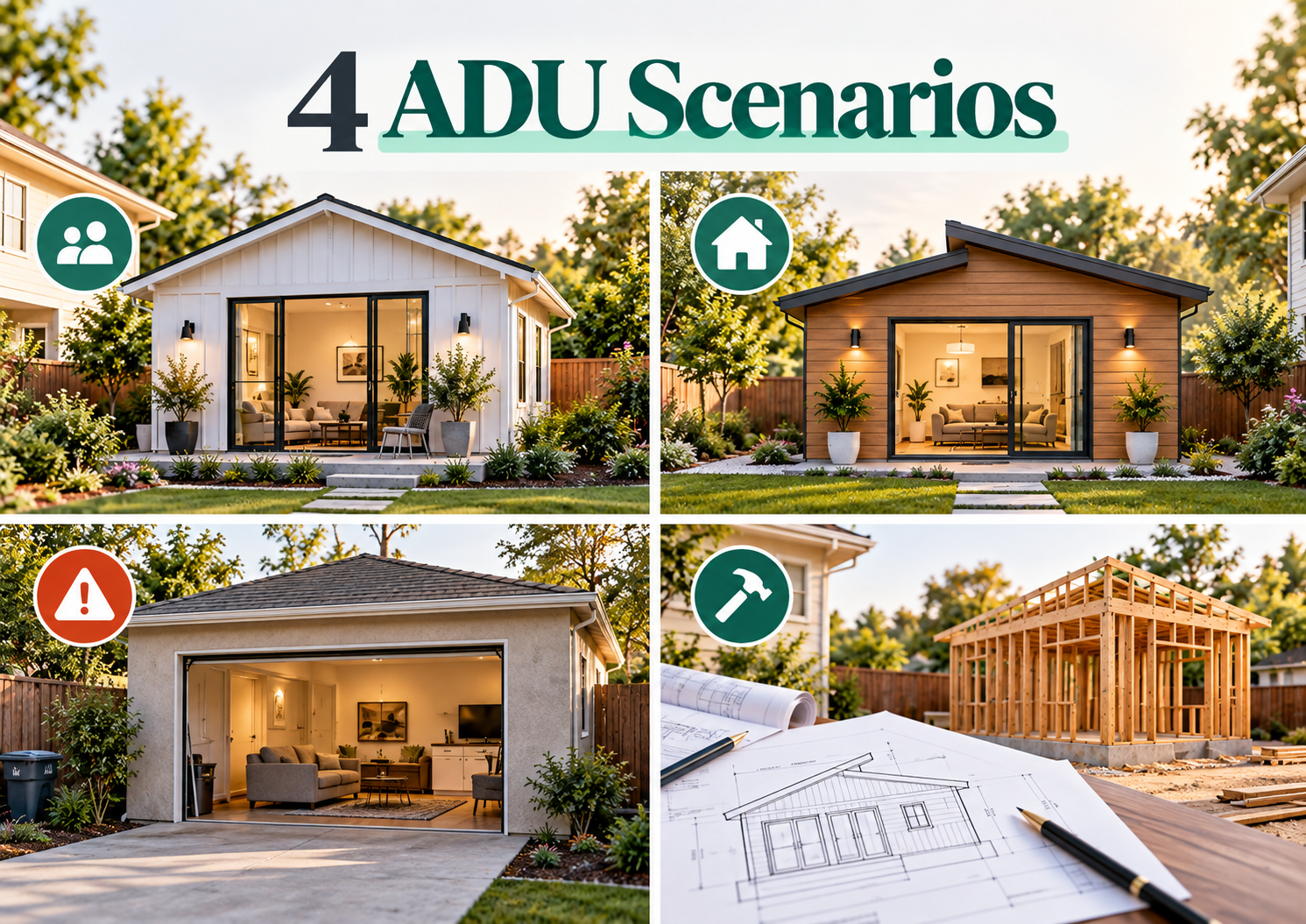
Existing permitted unit with a tenant
This is often the easiest scenario to document because the property records, lease, and rent history already exist. The lender still needs to determine whether the unit and income meet the selected program’s rules.
Vacant permitted unit
The appraiser may provide a market-rent opinion when required, but the lender decides whether projected income is eligible and how much can be used. The household should budget for marketing, vacancy, and initial repairs.
Unpermitted garage conversion
The space may look finished while lacking approvals for electrical, plumbing, fire separation, egress, or occupancy. The appraiser, lender, insurer, and local authority may view the issue differently. Buyers should not promise future legalization before understanding feasibility and cost.
Future ADU construction
A plan to build after closing does not create current rental income. The owner must evaluate zoning, design, permits, utilities, construction financing, insurance, and the time before the unit can legally be occupied.
Section 11
Build a Conservative Ownership Budget
Start with the property’s housing expenses without rent. Then add a separate rental projection that includes vacancy, utilities paid by the owner, routine maintenance, larger repairs, insurance changes, licensing, and management.
This approach answers two different questions: what the lender may count and what the household can safely manage. Approval does not eliminate the possibility of an empty unit or an unexpected repair.
If family will occupy the ADU, discuss rent, utilities, privacy, parking, caregiving, and what happens if the arrangement changes. A written family agreement may prevent misunderstandings even when it is not a formal lease.
Section 12
Insurance and Ongoing Ownership
Tell the insurance professional about the ADU and expected occupant. A family member, long-term tenant, and short-term guest use can create different coverage questions.
Coverage also needs continuing review. Cathryn’s article on a home insurance nonrenewal shows why insurability is not merely a closing requirement.
Section 13
Frequently Asked Questions
Can I count rent from my parents?
Treatment depends on the actual arrangement, documentation, occupancy, and program. A family contribution is not automatically rental income.
Can an illegal ADU be financed?
Property eligibility depends on the nature of the issue, local rules, appraisal, safety, and program. Ask for review before relying on the space or income.
Can I use projected Airbnb income?
Do not assume projected short-term rental revenue is eligible. Local restrictions and program rules may also limit the use.
Does an ADU always increase appraised value?
No. Value depends on market evidence, quality, legality, utility, and buyer demand.
Can I build an ADU after closing?
Potentially, subject to zoning, permits, financing, insurance, and budget. Future construction should not be treated as guaranteed qualifying income for the current purchase.
Section 14
Final Takeaway
An ADU rental income mortgage strategy begins with the property, not the rent estimate. Confirm legality, condition, appraisal treatment, occupancy, insurance, and the loan program’s documentation rules. Then build a budget that can withstand vacancy and repairs.
Before relying on an ADU, ask the lender for a property-specific review and ask the local authority for the available permit record. Keep the insurance agent, inspector, appraiser, and real estate professional focused on their separate roles. When their information conflicts, pause and resolve the difference in writing. A legal unit, an appraised market rent, and mortgage-eligible income are related concepts, but they are not automatically the same conclusion.
Duc Pham, Mortgage Broker | NMLS# 844897
****Wonder Rates, Inc. | NMLS# 1518655
Equal Housing Lender.
AZ, CA, CO, FL, GA, LA, MI, OK, PA, SC, TX, VA, WA, OH, AL, OR, NC
This article is for educational purposes only and is not a commitment to lend, legal advice, or a representation that rental income will qualify. Loan approval is subject to creditworthiness, income verification, property eligibility, occupancy, appraisal, and current underwriting guidelines. Local laws and program requirements may change without notice.