

Section 01
You may still decide to buy a home with rising mortgage rates if the payment fits a durable household budget, the purchase supports your long-term plans, and you are not relying on a future refinance to make the home affordable. Rising borrowing costs reduce purchasing power, but they can also reduce competition and create more room to negotiate with sellers.
The decision should not come from predicting next month’s rate. It should come from comparing today’s complete purchase scenario with the cost and flexibility of waiting.
Section 02
Why Rising Rates Change the Buying Decision
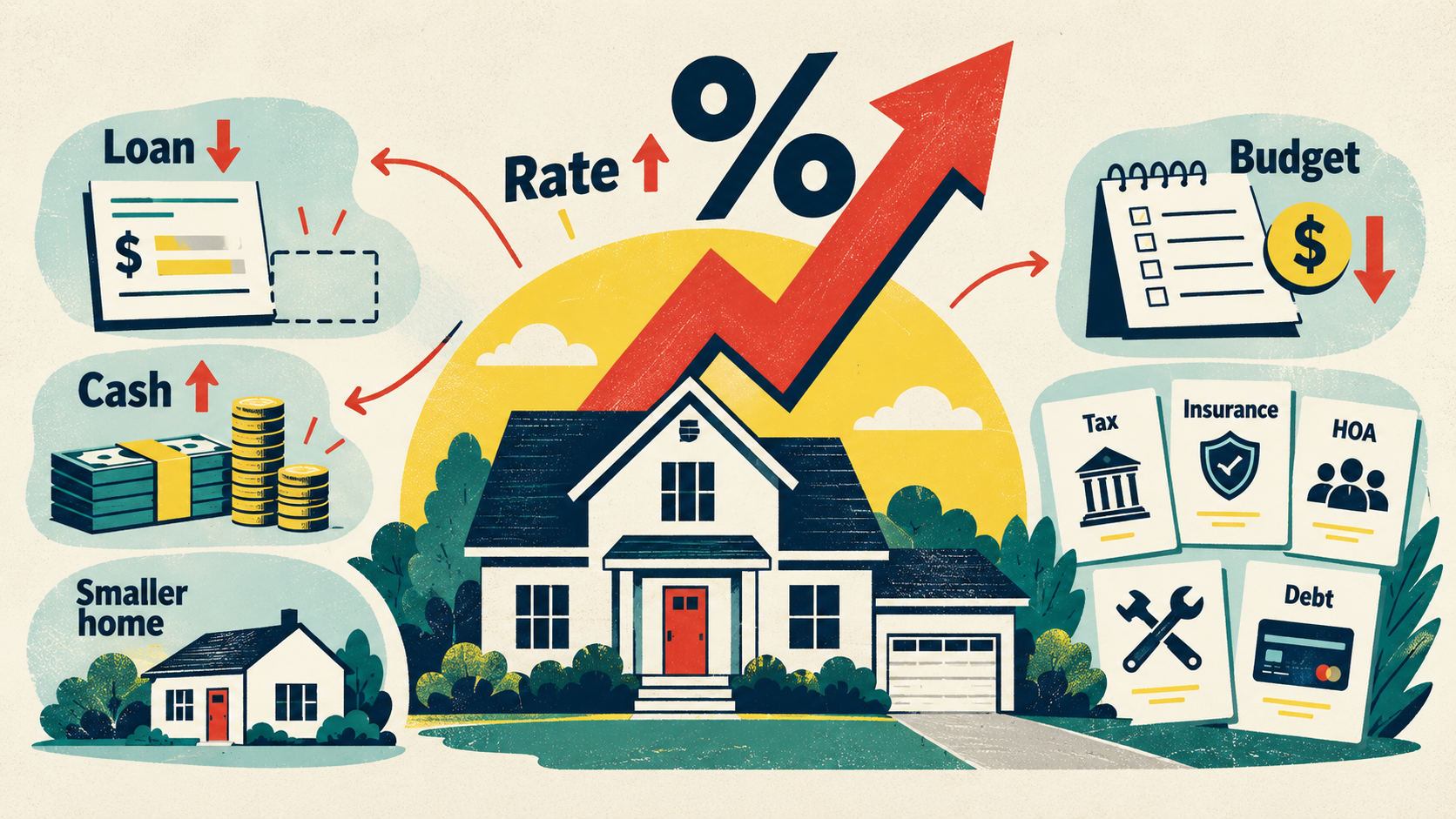
Mortgage rates affect more than the interest portion of a payment. When the borrowing cost rises, a buyer may need to lower the loan amount, increase cash at closing, choose a different property, or accept less room in the monthly budget.
Rates are only one part of affordability. Buyers must also consider property taxes, homeowners insurance, mortgage insurance when applicable, HOA dues, maintenance, utilities, and existing monthly debts.
The Freddie Mac Primary Mortgage Market Survey tracks broad weekly mortgage-rate movement. It is a market benchmark, not a personalized quote. An individual rate depends on the loan program, credit profile, property, loan structure, timing, points, and lender.
Section 03
Should You Wait for Mortgage Rates to Fall?
Waiting can be reasonable when the current payment would strain the budget, employment is uncertain, reserves are limited, or the buyer expects a major life change. Waiting solely because rates might decline is a different decision.
No one can guarantee when rates will fall or what home prices, inventory, rent, income, and competition will look like at that time. A lower future rate could bring more buyers back into the market and reduce negotiating leverage. A higher future rate could reduce purchasing power further.
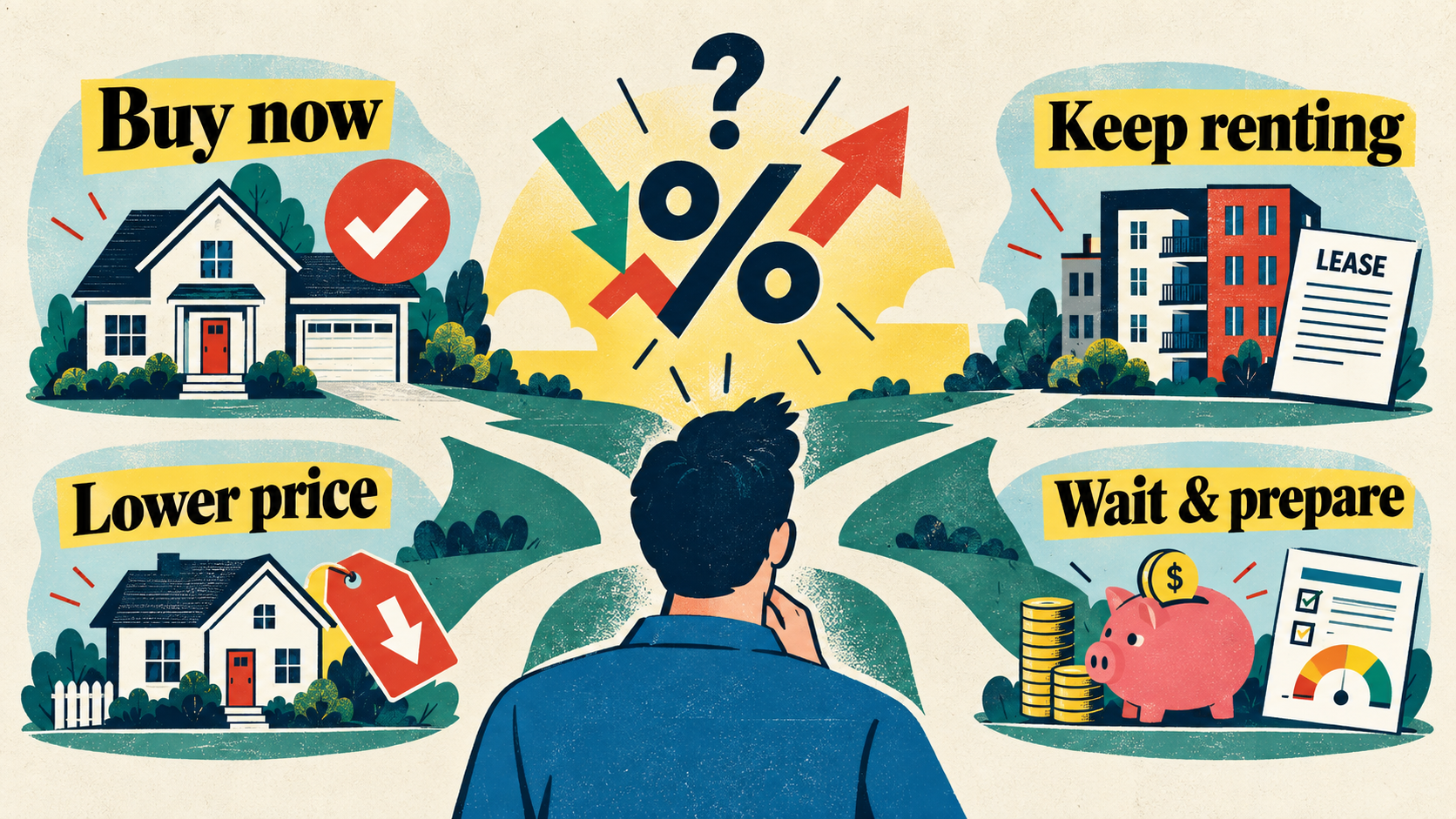
The useful comparison is not “today’s rate versus a hoped-for rate.” It is:
- Buy an affordable home under today’s verified terms.
- Continue renting and preserve flexibility.
- Reduce the target price and buy with more room in the budget.
- Pause to improve credit, reduce debt, or build reserves.
Section 04
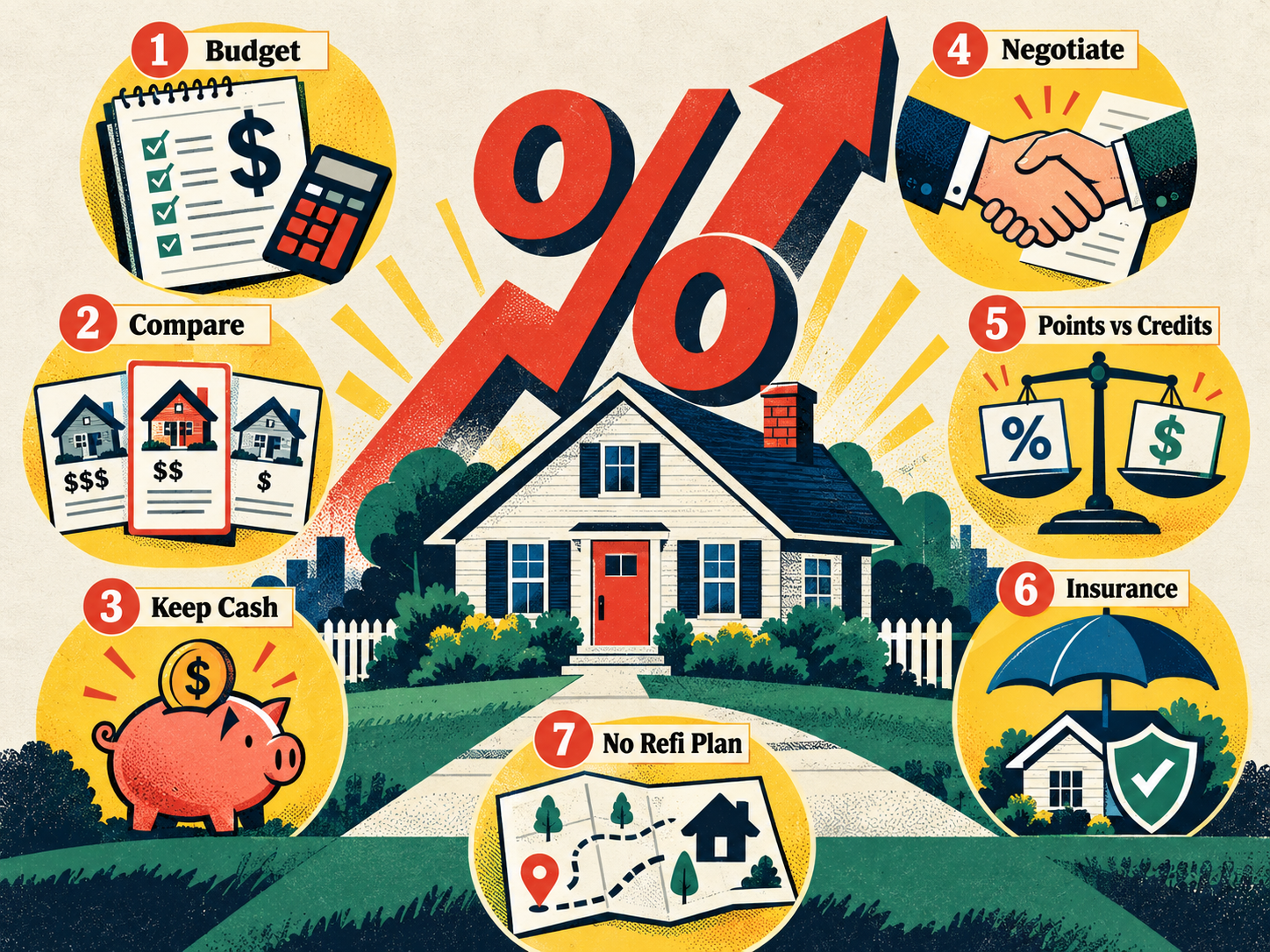
7 Smart Moves When You Buy a Home With Rising Mortgage Rates
1. Set the payment ceiling before the price ceiling
Start with the maximum housing expense that fits the household’s real budget. Then work backward to a purchase range. A lender’s maximum qualification is not automatically a comfortable payment.
Include childcare, transportation, health expenses, savings, home maintenance, and irregular family obligations. If the budget only works by eliminating emergency savings, the target may be too high.
2. Compare multiple price points
Ask the loan officer to prepare scenarios at several purchase prices using the same general assumptions. This shows whether a modest price reduction creates meaningful breathing room.
Do not focus only on principal and interest. Compare estimated taxes, insurance, HOA dues, mortgage insurance, funds to close, and reserves.
3. Preserve cash after closing
Using every available dollar for the down payment may lower the loan amount, but it can leave the household unprepared for repairs or income disruption. A smaller purchase with stronger reserves may be safer than a larger down payment that empties the bank account.
Property condition matters because an unexpected repair can quickly consume the remaining funds. Cathryn’s guide to home appraisal versus home inspection explains why buyers need to understand both reviews.
4. Negotiate the whole transaction
When buyer competition slows, sellers may consider price reductions, closing-cost credits, repairs, or other concessions. The strongest choice depends on what the buyer needs.
A price reduction lowers the financed purchase amount. A seller credit may reduce eligible closing costs or fund a permitted buydown. Credits are limited by loan-program and transaction rules and cannot create unrestricted cash back.
5. Compare points and lender credits carefully
Discount points involve paying more at closing in exchange for a lower rate. Lender credits generally reduce upfront costs in exchange for different loan pricing.
The CFPB explains the tradeoff between points and lender credits. Ask for comparable Loan Estimates rather than comparing one rate without its costs.
6. Verify insurance before committing extra cash
Insurance availability and premium can materially affect the housing expense. A low purchase price does not solve a property that is difficult or expensive to insure.
Cathryn’s article on what to do when home insurance is not renewed shows why coverage should be reviewed before the closing deadline.
7. Build a plan that works without refinancing
A future refinance may become available, but it is not guaranteed. The borrower would need to meet future credit, income, equity, property, program, and market requirements.
Buy only when the current obligation is manageable. Treat a possible refinance as an option, not the foundation of affordability.
Section 05
Seller Credits, Price Reductions, and Buydowns
These tools solve different problems:
| Tool | Main effect | Key limitation |
|---|---|---|
| Price reduction | Lowers purchase price | Monthly effect may be smaller than expected |
| Seller credit | Helps with eligible closing costs | Subject to program and transaction limits |
| Discount points | Changes rate through upfront cost | Requires break-even analysis |
| Temporary buydown | Reduces initial scheduled payments | Permanent note terms still control later payments |
| Larger down payment | Reduces loan amount | Uses more cash and may reduce reserves |
A temporary buydown should not be confused with qualifying at an artificially low payment. Underwriting requirements determine which payment must be used. The borrower should understand the permanent terms and what happens after the temporary period ends.
Section 06
Buy Now and Refinance Later?
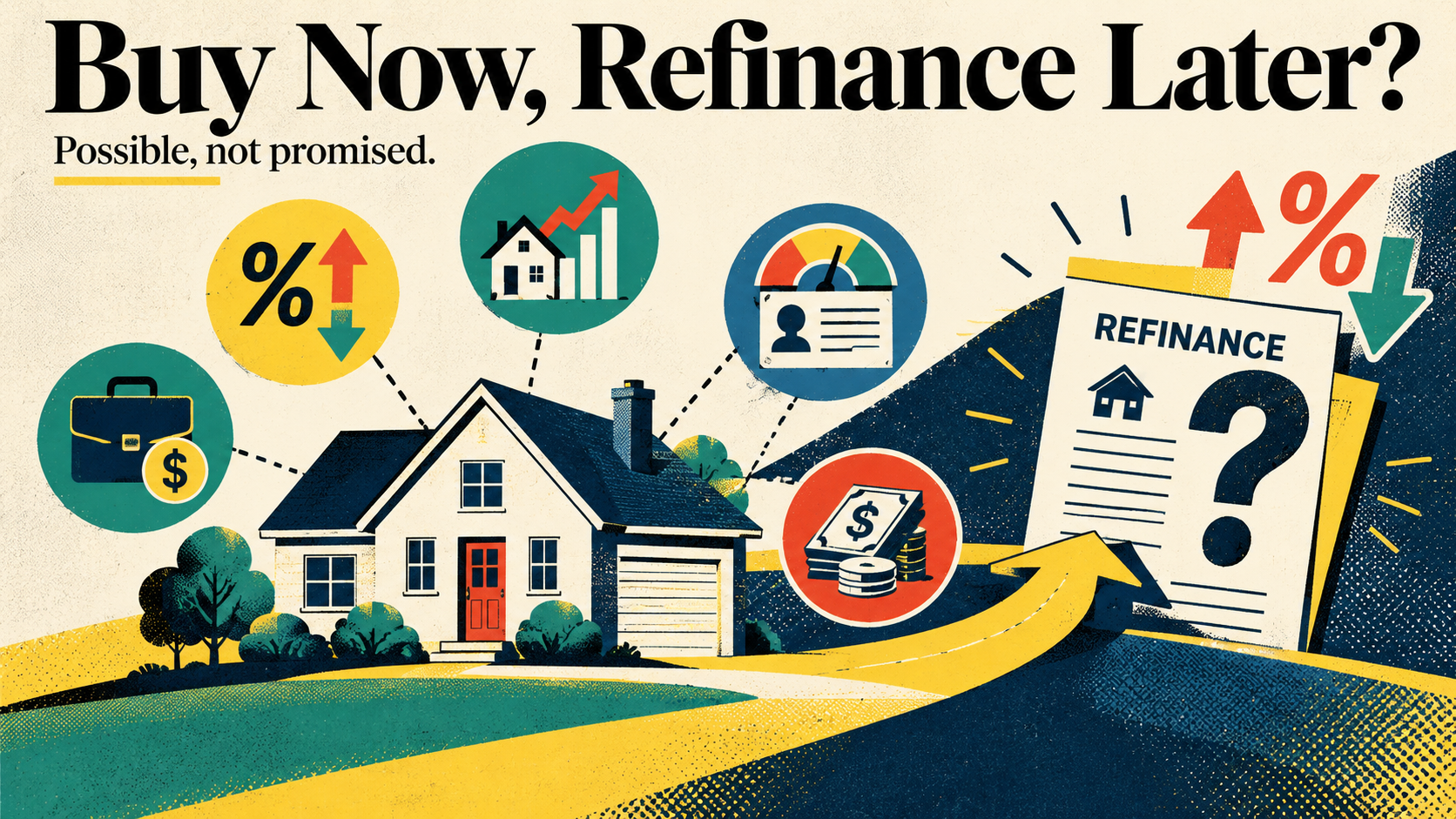
“Buy now, refinance later” can be a possibility, but it should never be presented as a promise. Refinancing generally requires a new application, valuation, underwriting review, closing costs, and an available loan that creates enough benefit.
Rates may decline, remain elevated, or rise. Home value may also change. Employment, debts, credit, and property eligibility may be different when the borrower applies.
Buyers who find an eligible loan with assumable features may want to understand that separate path. Cathryn’s guide to how assumable mortgages work explains why the existing loan, seller equity, servicer process, and buyer qualification all matter.
Section 07
Decision Checklist
Before moving forward, ask:
- Does the payment fit without future overtime, bonus, or refinancing?
- Will sufficient emergency savings remain after closing?
- How long do I realistically expect to keep the home?
- Have I included insurance, taxes, HOA dues, and maintenance?
- Did I compare price reduction, seller credit, points, and down-payment options?
- Is the property condition acceptable?
- Would continuing to rent provide valuable flexibility?
- Am I buying because the home fits, or because I fear missing out?
If several answers remain uncertain, pause before waiving contingencies or increasing earnest money.
Section 08
Frequently Asked Questions
Is it always a bad time to buy when rates are rising?
No. The answer depends on affordability, time horizon, reserves, local inventory, property quality, and personal plans. A rate trend alone does not decide whether a specific purchase is appropriate.
Should I make a larger down payment?
It may reduce the loan amount, but it also uses cash. Compare the payment benefit with the value of keeping reserves.
Are seller credits better than a lower price?
Not universally. Credits may provide more immediate help with eligible closing expenses, while a price reduction lowers the purchase amount. Program limits and personal needs determine the better option.
Should I pay discount points?
Compare the upfront cost with the expected monthly difference and likely ownership horizon. Points may be less valuable if the loan is paid off or refinanced before the cost is recovered.
Can I count on refinancing when rates fall?
No. A future refinance depends on future eligibility, equity, property condition, costs, and available loan terms.
Section 09
The Bottom Line
You can buy a home with rising mortgage rates when today’s complete scenario is affordable and supports your long-term plans. The right response is not automatically to buy or wait. It is to lower uncertainty through verified numbers, multiple scenarios, careful property review, and protected reserves.
Choose a home and loan that work now. Any future improvement should be treated as an opportunity, not a requirement.
Duc Pham, Mortgage Broker | NMLS# 844897
****Wonder Rates, Inc. | NMLS# 1518655
Equal Housing Lender.
AZ, CA, CO, FL, GA, LA, MI, OK, PA, SC, TX, VA, WA, OH, AL, OR, NC
This article is for educational purposes only and is not a commitment to lend. Loan approval is subject to creditworthiness, income verification, property eligibility, and current underwriting guidelines. Loan programs, interest rates, and lender fees may change without notice. Always review your official Loan Estimate before making a financing decision.