
Section 01
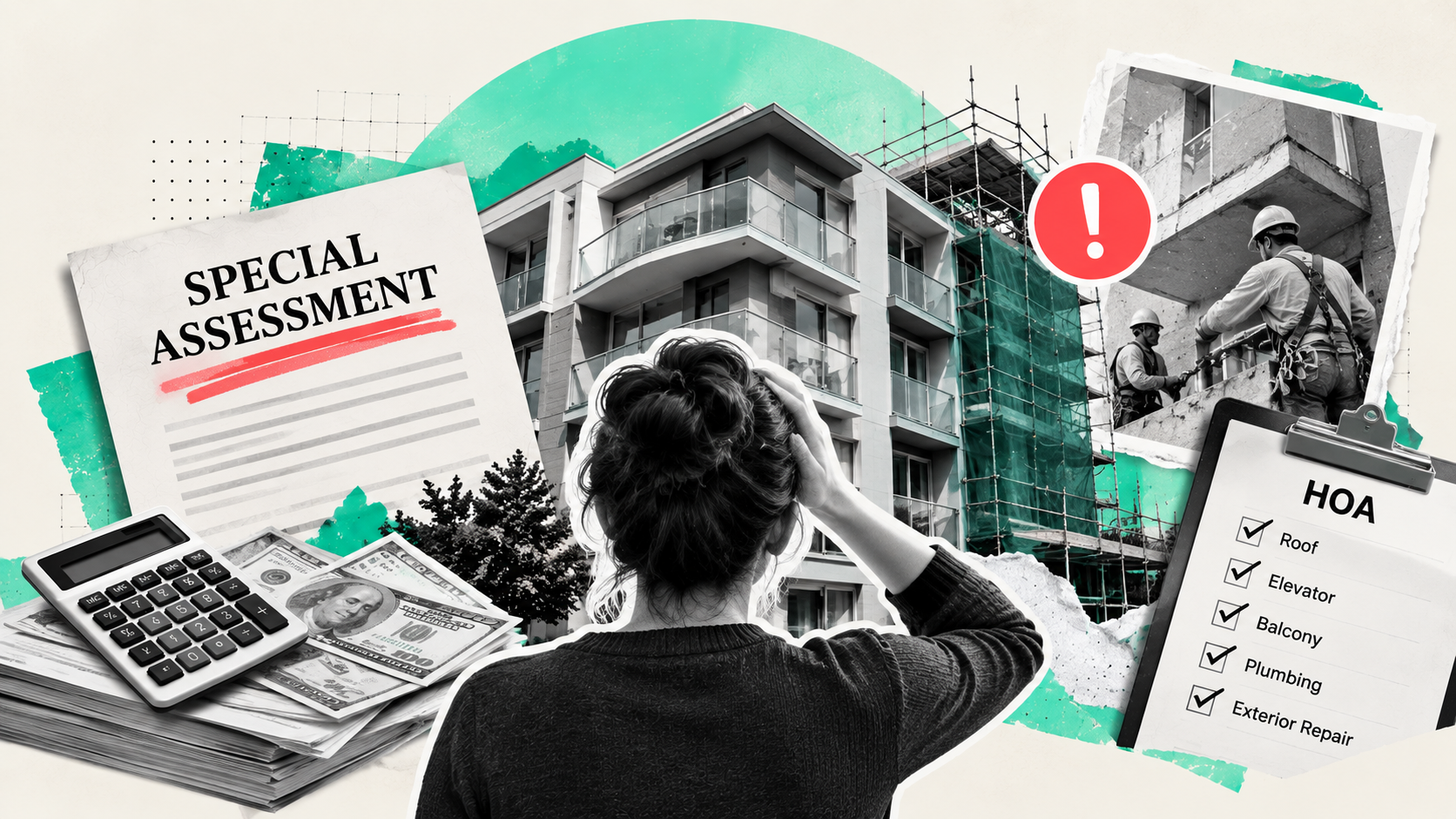
A condo special assessment is an extra charge an association may impose on unit owners for a major expense that regular dues or reserves cannot fully cover. It can affect a buyer’s cash requirement, monthly budget, contract negotiation, and the lender’s review of the condominium project.
The assessment amount is only one part of the issue. Buyers should also understand why it was imposed, whether the underlying work involves safety or structural concerns, how much has been collected, whether more assessments are expected, and who must pay under the purchase contract.
Section 02
What Is a Condo Special Assessment?
Condominium owners normally pay regular association dues for operations, maintenance, insurance, management, and reserve contributions. A special assessment is a separate charge approved under the association’s governing documents and applicable state law for a specific need.
The association may collect it as one lump sum or through installments. The obligation can exist even when a particular owner did not vote for the project or does not personally use the affected component.
Examples may include roof replacement, elevators, balconies, plumbing, exterior repairs, paving, insurance deductibles, legal expenses, or work identified through an inspection. The stated reason matters because an assessment connected to deferred maintenance or safety issues raises different questions from an elective improvement.
A special assessment is not automatically evidence that a project is unacceptable. It may show that the association is actively funding necessary work. Buyers need the complete context.
Section 03
Why Condo Special Assessments Matter to Mortgage Buyers
A buyer is purchasing both an individual unit and an interest in a shared project. The project’s condition, insurance, finances, litigation, governance, and maintenance can affect the unit’s use, cost, value, and financing.
Lenders may review the project under the requirements of the proposed loan program. Fannie Mae’s current condominium project standards, for example, address project eligibility and reviews. Other investors, agencies, lenders, and insurers may apply different requirements.
The lender’s project review is not a substitute for the buyer’s legal, financial, or property due diligence. A loan approval does not promise that dues will remain stable, repairs will finish on schedule, or another assessment will not occur.

Section 04
7 Condo Special Assessment Risks to Review
1. The buyer may owe the assessment after closing
The seller may have paid the assessment, may be paying installments, or may expect the buyer to assume future installments. The result depends on the assessment documents, governing documents, contract, closing instructions, negotiations, and applicable law.
Do not rely on a listing comment such as “assessment paid.” Request written evidence showing the total assessment, unit allocation, amounts paid, remaining balance, due dates, and whether the association can adjust the amount.
2. The assessment can increase cash needed to close
If the contract assigns some or all of the assessment to the buyer, the obligation may require additional funds at closing or soon afterward. Even when the seller pays it, the buyer still needs reserves for regular dues, repairs inside the unit, moving, and other ownership costs.
Funds needed for an assessment are separate from the down payment and closing costs. Buyers using family assistance should review the documentation requirements for down payment gift funds before transferring money.
3. Installments can change the monthly budget
An installment may function like another required housing expense, but its treatment depends on the loan program and documentation. The lender may need to understand the amount, duration, payment status, and party responsible.
The buyer should include the assessment alongside principal, interest, taxes, insurance, association dues, utilities, and maintenance. A payment that appears temporary can still strain the budget during the first years of ownership.
4. The underlying condition may affect project eligibility
The reason for the assessment can matter more than its size. If it funds work related to structural integrity, safety, significant deferred maintenance, habitability, or insurance, the lender may need more documents before deciding whether the project meets applicable standards.
The appraisal does not necessarily resolve the project review. An appraiser develops an opinion of value under the assignment, while the lender may separately review HOA questionnaires, meeting minutes, engineering reports, budgets, inspections, and insurance information. The guide to appraisal versus inspection explains why different reports answer different questions.
5. The approved assessment may not cover the final cost
Construction costs can change. Work may reveal additional damage, insurance may not cover the expected amount, owners may fail to pay, or the project scope may expand. Ask whether the contract is fixed, whether contingencies exist, and whether the board has discussed another assessment or dues increase.
No document can eliminate uncertainty, but current minutes, contractor information, reserve studies, and professional reports can reveal whether the budget is complete or preliminary.
6. Resale and refinance options may be affected
A future buyer or lender may review the same condition and assessment. An unresolved repair, inadequate insurance, delinquent assessment, or project eligibility issue can complicate resale or refinance even if the current buyer can close.
Owners evaluating future financing should understand that a mortgage recast and a refinance solve different problems. Neither automatically corrects an ineligible condominium project.
7. Contract deadlines may expire before answers arrive
HOA documents, lender questionnaires, engineering reports, insurance certificates, and board responses can take time. Buyers should know the contract deadlines for review, financing, inspection, and cancellation, then work with their real estate agent and attorney as appropriate.
Do not waive a condominium-document or financing protection without understanding what information remains missing. The legal effect of a contingency depends on the contract and state law.

Section 05
Documents to Request Before Buying
The available package varies by project and jurisdiction. Buyers may request or review:
- The assessment notice and board resolution.
- The unit’s total allocation, paid amount, and remaining balance.
- Payment schedule and delinquency status.
- Board and owner meeting minutes.
- Current budget and recent financial statements.
- Reserve study or reserve analysis, when available.
- Engineering, structural, inspection, or repair reports.
- Contractor proposals, contracts, permits, and project schedule.
- Master insurance evidence and deductible information.
- Pending litigation or claim information.
- HOA questionnaire and project disclosures.
- Governing documents addressing assessments and transfers.
Read the documents together. A reserve study may identify a future need, minutes may show how the board discussed it, and the assessment notice may explain the chosen funding plan.
Buyers considering a newly completed project should also compare the risks in new construction versus an existing home rather than assuming a newer unit eliminates association-level concerns.
Section 06
How a Lender May Review a Condo Special Assessment
The lender determines which project review applies to the proposed loan. The review may consider the purpose of the assessment, current work, completion status, owner delinquencies, reserves, budget, insurance, litigation, and whether the project has critical repair or safety concerns.
One lender’s decision is not a universal ruling on the building. Program eligibility, investor requirements, documentation, and lender overlays can differ. Wonder Rates explains why one mortgage lender may reach a different decision, but another review is not a promise of approval.
The buyer should submit documents early and avoid making assumptions based on a neighbor’s loan. A different unit, transaction date, program, occupancy, or project condition can produce a different analysis.

Section 07
Questions to Ask the Seller and Association
Ask direct, written questions:
- What specific work or expense does the assessment fund?
- Is the assessment final, or can the amount change?
- How much is allocated to this unit?
- What has the seller paid, and what remains?
- Who is responsible after closing under the contract?
- Has work started, and what is the completion schedule?
- Are permits, engineering reports, and contracts available?
- Are owners delinquent on assessment payments?
- Has the board discussed another assessment or dues increase?
- Are insurance claims or litigation connected to the work?
First-time buyers may also use the broader questions to ask a loan officer when comparing the financing timeline and project-review process.
Section 08
Frequently Asked Questions
Does the seller have to pay a condo special assessment?
Not always. Responsibility depends on the contract, assessment terms, governing documents, negotiations, closing arrangements, and applicable law. Obtain written confirmation rather than relying on custom or verbal statements.
Can a condo special assessment stop mortgage approval?
It can affect the review, especially when related to safety, structural concerns, deferred maintenance, finances, or insurance. The lender must apply the requirements of the actual program and project review.
Is a paid assessment no longer relevant?
Payment resolves only the monetary obligation shown. The underlying property condition, repair progress, project finances, insurance, or future assessments may still matter.
Should a buyer cancel because there is an assessment?
An assessment alone does not determine the decision. The buyer should evaluate the reason, documents, total cost, project condition, financing, contract rights, reserves, and professional advice.
Section 09
Review the Project, Not Just the Unit
A condo special assessment can be a manageable funding plan or a warning of a larger project problem. The difference becomes clearer only after reviewing the underlying condition, association records, payment responsibility, repair plan, and loan requirements.
Before closing, confirm the numbers in writing, submit project documents early, protect contract deadlines, and preserve enough cash for ownership after the transaction. A desirable unit should not distract from the financial and physical health of the building around it.
Duc Pham, Mortgage Broker | NMLS# 844897
****Wonder Rates, Inc. | NMLS# 1518655
Equal Housing Lender.
AZ, CA, CO, FL, GA, LA, MI, OK, PA, SC, TX, VA, WA, OH, AL, OR, NC
This article is for educational purposes only and is not legal, engineering, insurance, financial, or tax advice and is not a commitment to lend. Condo requirements, contracts, assessments, insurance, and loan guidelines vary. Loan approval is subject to the complete application, project eligibility, property review, and current underwriting requirements. Consult qualified professionals before making a decision.