

Section 01
A supplemental property tax bill can arrive after a home purchase when the taxing authority reassesses the property following a change in ownership or new construction. It may cover the difference between the prior assessed value and the new assessed value for part of the tax year.
This bill can surprise buyers because it may arrive separately from the regular property-tax bill and may not be fully collected through the existing mortgage escrow account.
Section 02
Why a Supplemental Property Tax Bill Appears After Closing
The purchase price, assessed value, taxable value, and seller’s prior tax bill are not always the same. After the deed records, the local assessor may process a reassessment using the rules of that jurisdiction.
In California, county assessors commonly issue supplemental assessments after certain ownership changes or completed new construction. The California State Board of Equalization explains the state’s supplemental assessment process. Buyers should still consult the official assessor and tax collector for the property’s county because timing and procedures vary.
How California Calculates the Supplemental Assessment
Under California’s supplemental assessment process, the assessor compares the new assessed value with the prior assessed value. The resulting difference is used to calculate the additional tax or potential refund for the applicable period.
California’s fiscal year runs from July 1 through June 30. The supplemental adjustment generally starts on the first day of the month after the reassessment event.
Why You May Receive Two Supplemental Bills
For a single event occurring from January through May, California generally issues two supplemental bills: one for the remainder of the current fiscal year and another for the following fiscal year. Events from June through December generally produce one bill. Multiple reassessment events can generate additional bills.
Receiving two bills does not necessarily mean the same period was taxed twice. Compare the event date and fiscal period shown on each notice. California State Board of Equalization
Section 03
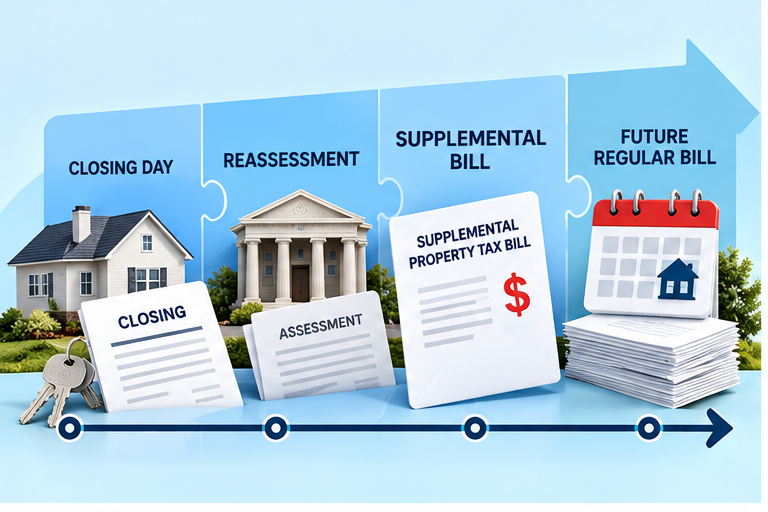
A Simple Timeline
Closing day
The settlement statement may include tax prorations between buyer and seller. These are transaction adjustments, not a promise that no later assessment will occur.
Reassessment
The assessor processes the ownership change and determines the new taxable value under applicable law.
Supplemental bill
The tax collector may issue one or more bills covering the applicable period. Processing can take time, so the bill may arrive months after closing.
Future regular bill
Later regular tax bills may reflect the updated assessment, which can also affect escrow projections.
Section 04
Why Escrow May Not Pay It Automatically
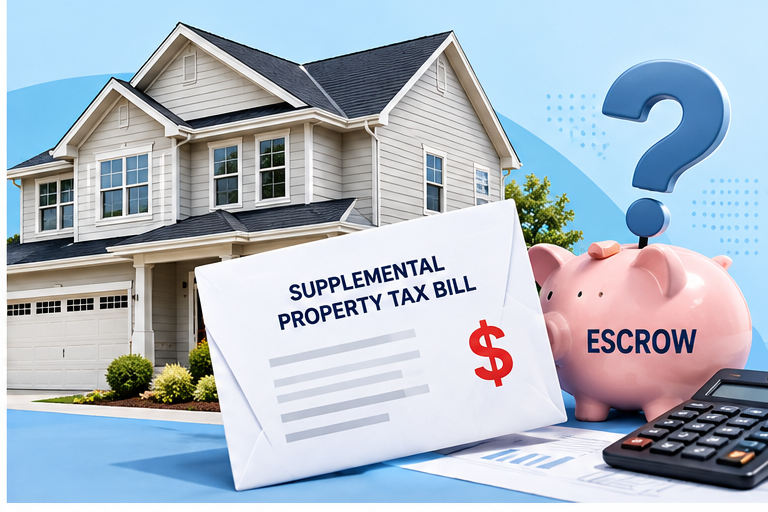
Mortgage escrow accounts are generally designed around known tax and insurance obligations. A separately issued supplemental bill may not be included in the original analysis.
Do not assume the servicer will receive or pay it. Read the bill, contact the taxing authority to verify it, and ask the servicer whether the specific bill is included in escrow.
In California, supplemental bills are sent directly to the property owner rather than automatically to the mortgage lender. Contact your servicer about the specific bill and obtain confirmation of who will pay it. Do not assume that forwarding the bill completes the payment.
Keep the bill, correspondence, and payment confirmation together, and verify the delinquency date with the county tax collector.

Section 05
How It Can Affect the Mortgage Payment
The principal-and-interest portion of a fixed-rate mortgage does not change because property taxes increase. The total payment can still change if the escrow portion is adjusted to reflect higher future taxes or repay a shortage.
Wonder Rates explains this distinction in its guide to a mortgage escrow shortage.
Section 06
Do Not Budget From the Seller's Tax Bill
The seller may have owned the property for many years, qualified for exemptions, or had a taxable value that does not carry over to the buyer. Using the seller’s current bill as the buyer’s future budget can create a false sense of affordability.
Before making an offer, ask for a conservative property-tax estimate based on local rules and the contemplated purchase. The estimate is still not a final tax determination.
Use the Wonder Rates Max Purchase Price Calculator to explore an estimated homebuying budget using property-tax assumptions appropriate for your purchase. Separately set aside funds for a possible supplemental bill.
This calculator does not calculate California supplemental assessments or determine your final tax liability. Request a property-specific estimate from the county and review the ongoing escrow assumptions with your lender.
Section 07
New Construction Can Create More Confusion
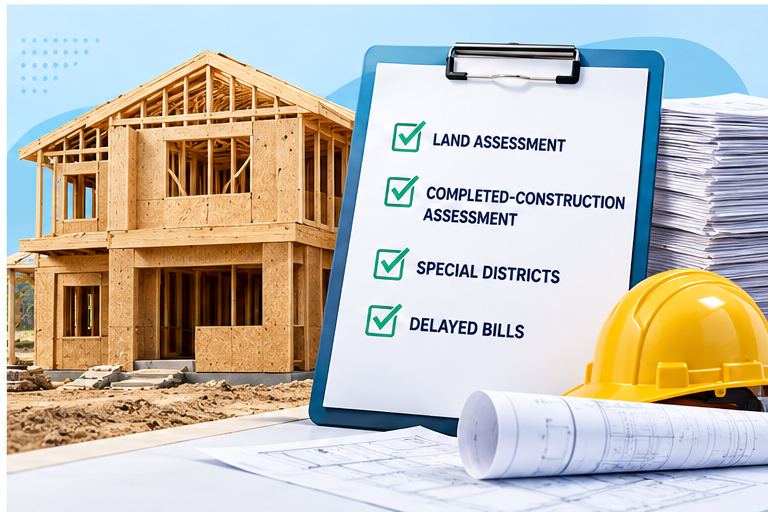
Newly built homes may involve land assessments, completed-construction assessments, special districts, and delayed bills. The amount shown at an early sales stage may not reflect the final completed property.
Ask the builder, lender, settlement provider, assessor, and tax collector separate questions. Each party has a different role, and a builder’s estimate does not bind the taxing authority.
Ask for separate estimates of the ongoing annual property taxes and any anticipated supplemental bills. Record which figures are based on land alone and which include the completed home.
Before committing to the purchase, identify how much cash would remain after closing and whether you could cover an unexpected bill without relying on credit. Revisit the reserve when the assessment notice or updated tax information arrives.
Section 08
How Buyers Can Prepare
- Identify the county assessor and tax collector before closing.
- Ask how ownership changes are reassessed.
- Budget using a current-purchase estimate, not only the seller’s bill.
- Save the Closing Disclosure and tax-proration details.
- Watch for mailed notices after closing.
- Verify unexpected bills through an official government contact.
- Ask whether the servicer will pay a supplemental bill.
- Maintain a reserve for taxes and other first-year ownership costs.
Wonder Rates’ overview of the costs of owning a home can help buyers build a budget beyond the mortgage payment.
What to Check When a Supplemental Bill Arrives
Review the document before paying or forwarding it:
| Item | What to verify |
|---|---|
| Property identification | Address and assessor’s parcel number match your property |
| Document type | Whether it is an assessment notice or an actual payment bill |
| Reassessment event | The purchase or construction event referenced |
| Covered period | Which fiscal year and period the bill addresses |
| Payment details | Installments, payment instructions, and delinquency dates |
| Escrow handling | Whether the servicer has confirmed payment responsibility |
Use independently verified county contact information if anything looks unfamiliar. Keep a note of whom you contacted, the date, and any explanation provided.
If the value appears wrong, ask the assessor about the review process. If the question concerns an amount due or payment posting, ask the tax collector. For closing adjustments, consult the settlement provider. Directing each question to the appropriate office can make the issue easier to resolve.
Section 09
Watch for Property-Tax Scams
Ownership records are public in many places. Buyers may receive official-looking solicitations for assessment reviews, deed copies, or tax services.
Verify the sender and payment instructions through the assessor or tax collector’s official website. Do not send money based only on a letter that uses the property address and purchase date.
Section 10
Frequently Asked Questions
Is a supplemental bill the same as the regular tax bill?
No. It may cover a reassessment for a specific period and can be issued separately.
Did the title company make a mistake?
Not necessarily. Closing prorations and later reassessment bills serve different purposes.
Will my escrow account pay it?
Do not assume so. Contact the servicer about the exact bill and verify the due date independently.
Can I appeal the assessed value?
Appeal rights, deadlines, and procedures depend on the jurisdiction. Contact the local assessor and consider qualified legal or tax advice.
Does every state use the same supplemental-tax process?
No. Reassessment rules and billing practices vary widely. Use the official local authority for the property.
Section 11
Final Takeaway
A supplemental tax bill is a timing and reassessment issue that can appear well after the excitement of closing. Budget from the buyer’s likely assessed value, monitor official mail, verify who must pay the bill, and prepare for a future escrow adjustment.
Before closing, talk with a Wonder Rates loan officer about the property-tax and escrow assumptions in your purchase scenario. Confirm assessment and billing questions separately with the county assessor and tax collector so your budget accounts for both ongoing payments and potential supplemental bills.
Duc Pham, Mortgage Broker | NMLS# 844897
Wonder Rates, Inc. | NMLS# 1518655
Equal Housing Lender.
AZ, CA, CO, FL, GA, LA, MI, OK, PA, SC, TX, VA, WA, OH, AL, OR, NC
This article is for educational purposes only and is not a commitment to lend or tax, legal, escrow, or property-assessment advice. Reassessment rules, exemptions, billing, appeals, and servicer practices vary by jurisdiction and transaction. Consult the official local assessor and tax collector.