Section 01
Closing day can feel like the finish line of the homebuying process. After weeks of submitting documents, reviewing disclosures, completing inspections, working through underwriting, and preparing funds, you finally sit down to sign the closing documents. It is natural to think that once the last signature is on the page, everything is finished.
In practice, signing is an important milestone, but there can still be steps involved in completing the transaction. The exact process varies by state and local practice, but understanding what happens around and after closing can help you know what documents to expect, what records to keep, and what still needs your attention as a new homeowner.
Section 02
Signing, Funding, and Recording Are Different Steps
One of the easiest things for a first-time buyer to misunderstand is the difference between signing the loan documents and the remaining steps required to complete the transaction. Depending on local practice, these events do not necessarily happen at exactly the same time.
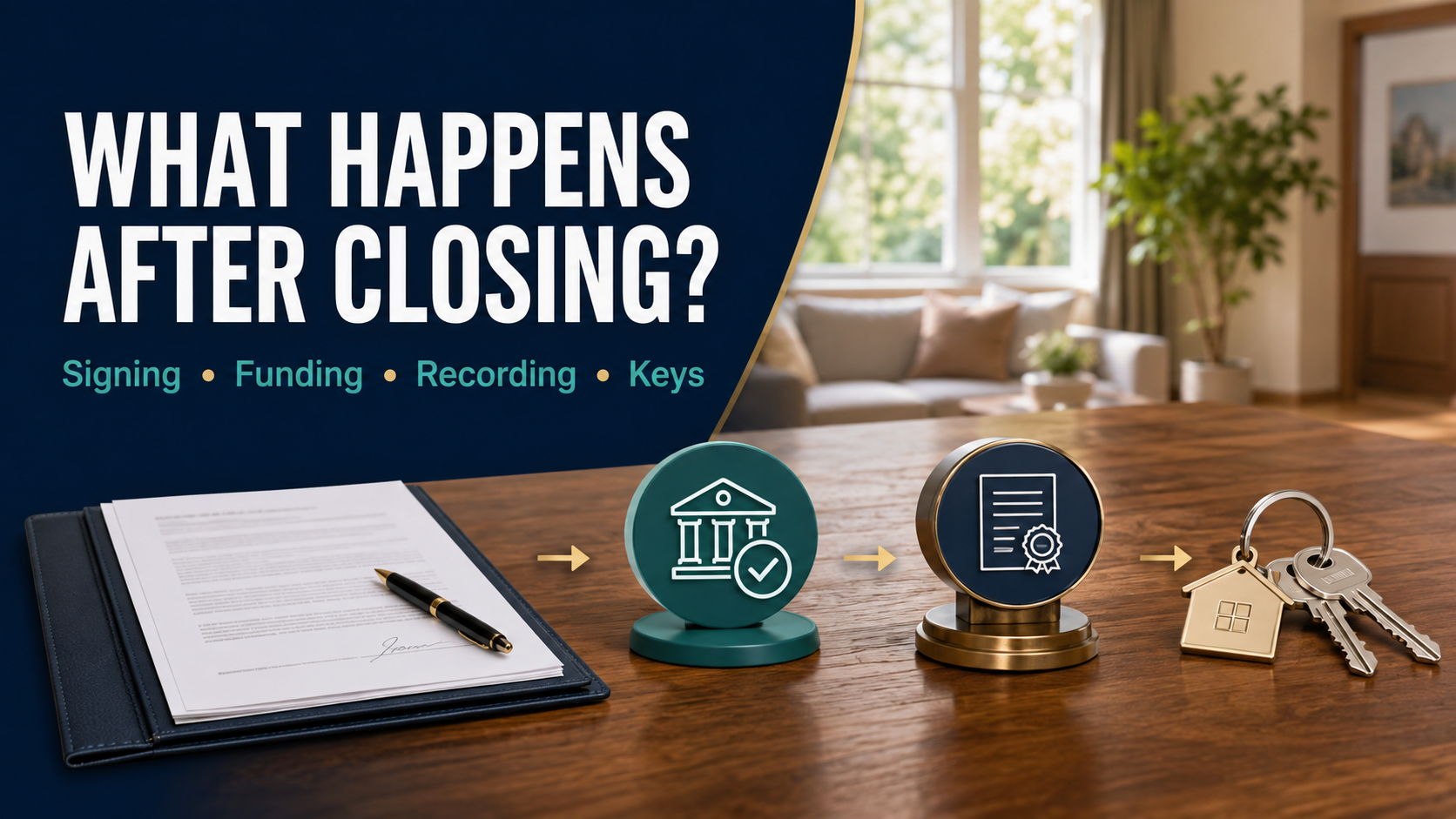
The Home Buyer Guide describes a process in which the escrow officer schedules the signing appointment and informs the buyer of funds due at settlement. Once the loan is consummated, the funding package is sent to the lender for review. The lender reviews the signed loan documents and authorizes loan funding. The escrow process then includes preparing recording instructions, submitting the necessary documents for recording, recording the documents, and disbursing funds.
The specific sequence and terminology can vary because real estate closing practices differ by state and are subject to local laws and customs. This is why buyers should confirm the expected closing and possession timeline for their particular transaction rather than assuming that signing automatically means every remaining step has already occurred.
Section 03
When Do You Actually Get the Keys?
For most buyers, this is the question that matters most on closing day. Unfortunately, there is no universal rule that says every buyer receives the keys immediately after signing.
The timing of possession can depend on the transaction documents and local closing practices. Signing the documents alone should therefore not be treated as a universal signal that possession has already transferred.
If you are scheduling movers, deliveries, utilities, or contractors around closing, confirm the expected possession and key-delivery timing with the appropriate professionals handling your transaction. A little flexibility can prevent a stressful situation if the final closing steps take longer than expected.
Section 04
Do Not Make Major Financial Changes Before Funding
Another common mistake is treating the loan as completely finished too early. Even if you received an approval earlier in the process, the Home Buyer Guide notes that a lender may re-verify certain information before funding.
For example, changing jobs can create a problem, particularly if the new position pays less or is in a different field. The guide specifically notes that a lender may contact an employer to re-verify employment shortly before funding.
Large purchases can also create issues. Buying furniture, financing a new car, or making another purchase that reduces verified funds or increases debt may affect loan qualification. The guide notes that lenders may check credit or re-verify funds at the last minute. It also recommends avoiding unnecessary bank changes or moving verified funds to another institution before those funds are needed for the purchase.
The practical takeaway is simple: until your transaction has completed, avoid making significant changes to employment, debt, credit, or verified funds without first discussing them with your loan officer.
Section 05
Keep Your Closing Documents
Once the transaction is complete, resist the temptation to throw all of the paperwork into a drawer and forget about it. Your home purchase creates a collection of records that may remain useful long after closing.
Keep the important documents associated with the purchase and financing in a secure place. Maintaining organized records can make it easier to answer questions later regarding the transaction, your financing, title, insurance, or the property itself.
It can also be useful to maintain records relating to future home improvements and maintenance. A house is a long-term asset, and keeping an organized property file from the beginning can save time years later.
Section 06
Understand Your Title Insurance
Title insurance is another item buyers may encounter during the closing process without fully understanding what it does.
According to the Home Buyer Guide, title insurance provides coverage for certain losses arising from defects in title that generally occurred before the buyer acquired ownership. Examples can include previously undetected fraud or forgery that could later jeopardize the owner’s interest in the property.
There is also an important distinction between an owner’s policy and a lender’s loan policy. The guide explains that the loan policy protects the mortgage lender’s interest, while the owner’s policy protects the buyer’s equity according to the terms of the policy.
The owner’s title insurance premium is generally paid once at the close of escrow, while who pays for the owner’s and loan policies can vary depending on local custom.
Keeping the applicable title policy with your permanent property records makes it easier to locate if a title issue arises later.
Section 07
Watch for Your Recorded Property Documents
Recording is another reason signing and completing the transaction should not always be thought of as one simultaneous event.
As part of the escrow process described in the Home Buyer Guide, the escrow officer prepares recording instructions and submits the applicable documents for recording. The documents are then recorded and funds disbursed.
Keep the final recorded property documents you receive with your other important homeownership records. If you are unsure which documents you should expect after your particular closing, ask your escrow or title professional because procedures can vary by location.
Section 08
Build a Homeownership Record From Day One
Closing ends the purchase transaction, but it begins your life as the homeowner. One useful habit is creating a permanent file for the property rather than treating your closing paperwork as something you will never need again.
Keep purchase and financing records, title-related documents, insurance information, and records for significant improvements or repairs together. Whether you keep physical copies, digital copies, or both, make sure important information can be located easily.
This can become especially useful if you later sell the home, refinance the mortgage, need to review an insurance matter, or simply need documentation relating to work performed on the property.
Section 09
What to Confirm Before You Leave the Closing Process
Before treating the transaction as fully behind you, make sure you understand what still happens next. Confirm when the transaction is expected to complete under your local process, when possession or keys are available under your agreement, and which final documents you should expect to receive.
You should also know who to contact if a question arises regarding your loan, title, escrow, or closing paperwork. Saving those contacts alongside your closing documents is much easier than trying to find them several years later.
Most importantly, do not make major financial changes simply because you have signed documents if your loan has not yet completed the applicable funding and closing process.
Section 10
Frequently Asked Questions
Does signing closing documents mean I officially own the house?
Not necessarily at that exact moment in every transaction. Signing, lender funding, recording, disbursement, and possession can occur at different stages depending on state law and local closing practices. Confirm the timeline for your specific transaction with the professionals handling the closing.
Can I buy a car after signing my mortgage documents?
Be careful about taking on new debt before your loan has completed funding and the transaction is finished. The Home Buyer Guide warns that a major purchase that increases debt or reduces verified funds can affect loan qualification, and a lender may check credit or funds near the end of the process.
Can I change jobs right before closing?
A job change can affect the loan. The guide notes that lenders may re-verify employment shortly before funding, and a change to a lower-paying job or different field may affect qualification. Discuss any employment change with your loan officer before making it.
Should I move my down payment money to another bank before closing?
The Home Buyer Guide recommends avoiding unnecessary bank changes or moving verified funds to another institution after the lender has verified them and before the funds are needed for the purchase. If a transfer is necessary, discuss it with your loan officer first.
What is the difference between owner’s and lender’s title insurance?
The lender’s loan policy protects the mortgage lender’s interest, while an owner’s policy protects the buyer’s interest according to the terms and coverage of that policy.
Should I keep my closing documents after buying the home?
Yes. Keeping your purchase, financing, title, insurance, and relevant property records organized can make future questions about the property much easier to handle.
Section 11
The Bottom Line
Closing day is a major milestone, but signing the documents should not always be viewed as the moment every part of the transaction is automatically complete. Depending on the closing process in your location, lender review, funding, recording, disbursement, and possession may involve additional steps.
Until the applicable closing and funding process is complete, continue treating your finances carefully. Avoid major purchases, unnecessary movement of verified funds, or employment changes without first talking to your loan officer. Once the transaction is finished, keep your closing, title, insurance, and property records organized so you can find them when you need them.
Buying the house may end at closing. Managing the house starts immediately afterward.
Section 12
Next Steps
If you are approaching closing and are unsure what happens between signing your documents and receiving the keys, Wonder Rates can walk you through the mortgage side of the process and help you understand what to expect before funding.
Talk to a loan officer about your home purchase →
Duc Pham, Mortgage Broker | NMLS# 844897 | 408-600-1900 | dp@wonderrates.com
Wonder Rates, Inc. | NMLS# 1518655 | DRE# 02047445 | DFPI# 60DBO-59134
Equal Housing Opportunity. Equal Housing Lender.
Licensed in: AL, AZ, CA, CO, FL, GA, LA, MI, NC, OH, OK, OR, PA, SC, TX, VA, WA
This article is for general educational purposes only and is not legal, tax, or financial advice or a commitment to lend. Closing, funding, recording, disbursement, possession, title procedures, and other requirements vary by transaction, state law, contract terms, and local practices. Loan approval and funding remain subject to applicable lender and underwriting requirements.