

Section 01
Business funds for down payment and closing costs may be acceptable in some mortgage transactions, but access to a business account does not automatically make every dollar eligible. The lender may need to verify ownership, the source of funds, account history, sufficient business liquidity, and whether withdrawing the money could harm operations or qualifying income.
Before transferring funds, a self-employed buyer should coordinate with the lender and appropriate tax or business professionals. Moving money first and explaining it later can create new documentation questions at the most time-sensitive point in the transaction.
Section 02
Why Business Funds for Down Payment Need Careful Review
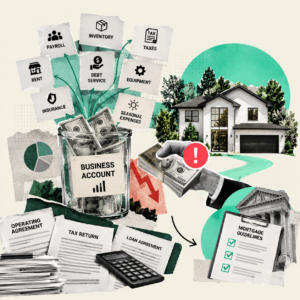
Money in a business account may be used for payroll, inventory, taxes, rent, debt service, equipment, insurance, or seasonal expenses. A large withdrawal can affect the company’s ability to operate even when the account balance appears high on one statement.
The legal owner of the funds also matters. A sole proprietor, partner, shareholder, or member may have different rights to withdraw money. Other owners, loan agreements, corporate documents, or tax consequences may limit access.
Mortgage guidelines vary by program, lender, automated underwriting findings, and transaction. Fannie Mae’s guidance on depository accounts and business assets illustrates that a lender may need to evaluate ownership and the effect of a withdrawal. It is an investor example, not a universal rule for every loan.
Section 03
7 Checks Before Using Business Funds for Down Payment
1. Confirm ownership of the business
The lender may need to verify the borrower’s ownership percentage and authority over the account. Documents can include business tax returns, K-1s, corporate records, operating agreements, partnership agreements, business licenses, or a letter from an appropriate professional.
Signing authority alone may not establish beneficial ownership. An employee or bookkeeper can sometimes transact on an account without owning the funds.
2. Confirm the funds belong to the business
Review the account title, statements, deposits, and transfers. Large recent deposits may require explanation and sourcing. Borrowed money, customer deposits, tax proceeds, insurance proceeds, or funds belonging to another owner may not be freely available for a home purchase.
Do not move money through several accounts to make the source less visible. Mortgage underwriting follows the paper trail. Clear, direct transfers supported by complete statements are easier to evaluate.
Self-employed borrowers can review the broader documentation issues in Wonder Rates bank statement loan guide for self-employed buyers, while recognizing that business-fund rules depend on the actual program.
3. Measure the effect on business liquidity
Liquidity describes the cash and assets available to meet near-term obligations. A business with a large balance may also have payroll, rent, supplier invoices, taxes, loan payments, or upcoming capital needs.
The lender may ask whether the withdrawal will negatively affect operations. Depending on the file, this may involve business statements, a cash-flow review, current financial information, tax returns, or confirmation from an accountant. No single calculation applies to every business.
The borrower should separately ask: after closing, can the company still operate through a slow month, unexpected repair, tax payment, or customer delay?
4. Determine how the withdrawal will be characterized
Moving money from a business to an owner can be recorded as a draw, distribution, reimbursement, payroll, loan, or another transaction. The correct treatment depends on the entity, books, tax facts, and governing documents.
A mortgage lender does not provide tax or legal advice. Ask a CPA, enrolled agent, attorney, or other qualified professional how the transfer should be documented. Avoid labeling the transaction yourself simply to make the mortgage file look easier.
5. Preserve the complete paper trail
Keep the business statement showing the funds before transfer, proof of the transfer, the personal statement showing receipt, and records supporting ownership and authority. If funds go directly to escrow or the settlement agent, retain the wire confirmation and closing documentation.
Screenshots may not show the account owner, full number, statement period, or transaction details. Use complete official records when requested and upload them through the lender’s approved secure channel.
The same principle applies when another person provides money. Review the requirements for documenting down payment gift funds rather than mixing a gift with business transfers.
6. Avoid unexplained changes during underwriting
Do not make a large transfer, open a new account, draw on a business line, repay an owner loan, or change payroll without asking how the action may affect the application. The lender may need updated statements, explanations, or a new analysis.
Mortgage underwriting may reverify information before closing. Wonder Rates’ guide to the mortgage underwriting process explains why new financial activity can create additional conditions.
7. Preserve personal reserves after closing
Using every available dollar for the down payment can leave both the household and business exposed. Consider closing costs, moving, repairs, association dues, taxes, insurance, working capital, and required reserves.
A larger down payment is not automatically better if it removes the cash needed to operate the business. The article on paying down a mortgage versus preserving money for other goals provides a broader framework for liquidity decisions, although the mortgage program and business needs control the specific analysis.

Section 04
Documents the Lender May Request
The file may require some combination of:
- Recent business bank statements.
- Personal bank statements receiving the transfer.
- Business and personal tax returns.
- K-1s or ownership schedules.
- Corporate, partnership, or LLC documents.
- Current profit-and-loss statement or balance sheet.
- Evidence of business obligations.
- Explanation and source for large deposits.
- CPA or accountant information when permitted and appropriate.
- Wire or transfer confirmations.
- Documentation showing the withdrawal is authorized.
This is not a universal checklist. Submit only what the lender requests through approved channels and respond to questions with complete, accurate information.

Section 05
How Business Structure Can Affect the Analysis
Sole proprietorship
The owner and business may be closely connected for tax and account purposes, but the lender still needs to verify the account, source, and effect of the withdrawal.
Partnership or multi-member LLC
An ownership share does not necessarily permit unilateral withdrawal. The partnership or operating agreement and other owners’ rights may matter.
S corporation or C corporation
Corporate funds are not automatically personal funds. Ownership, authority, distributions, loans, payroll, and tax treatment require careful documentation.
Entity names do not decide the mortgage outcome by themselves. The lender reviews the actual documents, ownership, cash flow, and program requirements.

Section 06
Common Mistakes to Avoid

Transferring funds before asking the lender
The transfer may create a large deposit, reduce business liquidity, or change the documentation required. Discuss the proposed movement first.
Using gross revenue as available cash
Revenue is not the same as profit or distributable cash. The business may owe expenses, taxes, refunds, debt, or payments to other owners.
Mixing business and personal transactions
Commingling can make the paper trail harder to understand and may create legal or accounting concerns. Follow professional guidance and maintain clear records.
Expecting the CPA to approve the mortgage
A CPA can explain accounting and tax facts, but the lender applies underwriting rules. A letter does not replace required documents or ensure acceptance.
Changing the business after pre-approval
New debt, ownership changes, reduced liquidity, or changed compensation can affect the application. Tell the loan officer before making a material change.
Borrowers should also understand why mortgage decisions may differ between lenders. A different program may use different requirements, but complete disclosure remains necessary.
Section 07
Alternatives to Withdrawing Business Funds
Depending on the transaction, a borrower may consider:
- Using seasoned personal savings.
- Reducing the purchase budget.
- Delaying the purchase while building personal reserves.
- Using eligible gift funds.
- Selling an eligible personal asset with documentation.
- Choosing a permitted financing structure with a different cash requirement.
- Keeping more working capital and making a smaller down payment when allowed.
Every alternative has tradeoffs. Do not add debt or move funds solely to change the appearance of the application. Ask the lender to evaluate the actual options.

Section 08
Frequently Asked Questions
Can I transfer business money to my personal account before applying?
You may have legal authority to transfer funds, but the lender may still need to verify the source, ownership, transfer, and effect on the business. Ask before moving the money.
Does owning 100 percent of the business make the funds automatically acceptable?
No. Full ownership can simplify one question, but the lender may still review account history, obligations, liquidity, business viability, and program requirements.
Can business funds be used for reserves?
Potentially, depending on the program and documentation. Funds counted for closing and reserves must be evaluated under the applicable requirements, and the same dollars cannot be counted twice.
Will using business funds reduce qualifying income?
It can affect the analysis if the withdrawal weakens the business or changes financial information. The result depends on the complete file and program.
Should I ask my CPA before using the money?
Yes, for accounting and tax implications. Also ask the lender about mortgage documentation and underwriting. Each professional answers a different part of the decision.
Section 09
Protect the Business and the Home Purchase
Business funds for down payment can help a self-employed buyer complete a purchase, but the money must be eligible, traceable, accessible, and reasonable to withdraw. The strongest file explains the transaction before funds move.
Start with ownership, source, liquidity, characterization, and documentation. Then compare the desired down payment with the working capital and personal reserves needed after closing. Buying a home should not leave the business unable to support the income used to qualify.
Duc Pham, Mortgage Broker | NMLS# 844897
****Wonder Rates, Inc. | NMLS# 1518655
Equal Housing Lender.
AZ, CA, CO, FL, GA, LA, MI, OK, PA, SC, TX, VA, WA, OH, AL, OR, NC
This article is for educational purposes only and is not legal, accounting, tax, or financial advice and is not a commitment to lend. Business ownership, funds, documentation, loan programs, and underwriting requirements vary. Loan approval is subject to the complete application and current guidelines. Consult qualified professionals before transferring business funds or making a financing decision.