
Section 01
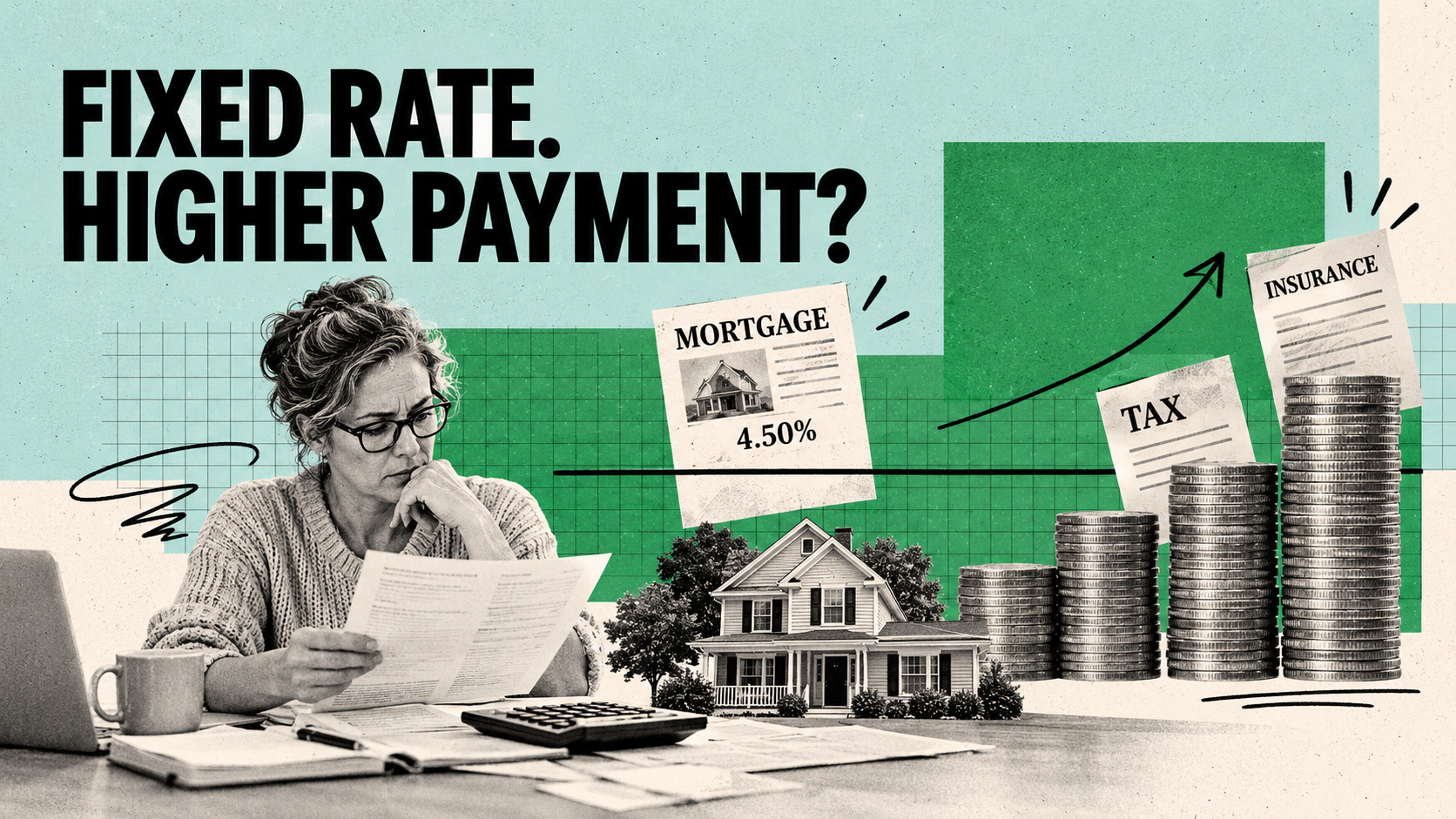
A fixed-rate mortgage payment increase can happen even when the note rate and scheduled principal-and-interest payment remain unchanged. The total amount sent to the servicer may also include property taxes, homeowners insurance, mortgage insurance, an escrow shortage, or a temporary buydown adjustment.
Start by comparing the old and new mortgage statements line by line. Identify whether the change appears under principal, interest, escrow, mortgage insurance, fees, or another category before deciding what action to take.
Section 02
What a Fixed-Rate Mortgage Actually Fixes
A standard fixed-rate mortgage generally keeps the note rate fixed for the stated loan term. For a fully amortizing loan paid according to schedule, the scheduled principal-and-interest amount generally remains stable.
The total monthly amount can include more than principal and interest. The CFPB explains the typical structure of a total monthly mortgage payment as principal, interest, mortgage insurance when applicable, and escrow for taxes and homeowners insurance.
HOA dues, utilities, maintenance, and certain assessments may also affect the cost of owning the home even when they are paid separately from the mortgage servicer.
Section 03
Six Reasons a Fixed-Rate Mortgage Payment May Increase
| Possible cause | What may have changed | Where to check |
|---|---|---|
| Property taxes | Tax bill, assessment, exemption, or local tax rate | Tax bill, assessor or tax collector, escrow statement |
| Homeowners insurance | Premium, coverage, deductible, carrier, or policy status | Renewal notice, declarations page, escrow statement |
| Escrow shortage or deficiency | Prior collections did not meet the account’s required target | Annual escrow analysis |
| Escrow cushion or projection | Servicer updated projected bills and permitted target balance | Escrow analysis and Regulation X disclosures |
| Temporary buydown schedule | Borrower-paid portion increased according to the buydown agreement | Closing documents and payment schedule |
| Mortgage insurance or another servicing item | Required amount, cancellation status, fee, or correction changed | Mortgage statement, loan documents, servicer explanation |
These categories do not apply identically to every loan. Review the actual documents rather than assuming the most common cause is the correct one.
Section 04
1. Property Taxes Changed
Property taxes are established by state and local law, not by the mortgage lender. A bill may change because of a new assessment, tax-rate adjustment, loss or expiration of an exemption, supplemental assessment, new local charge, correction, or another event permitted by the jurisdiction.
A purchase does not produce the same reassessment result everywhere. Some jurisdictions reassess after a change in ownership, while others apply different schedules, caps, classifications, or exemptions. Do not estimate the future tax bill only from what the seller paid.
Compare the tax bill used in the escrow analysis with the bill from the appropriate local authority. If the bill appears wrong, contact the assessor or tax collector about the assessment. The servicer generally does not determine the property’s taxable value.
Wonder Rates’ guide to a supplemental property-tax bill after a home purchase explains why an additional bill may arise in jurisdictions that use that process.
Section 05
2. Homeowners Insurance Premiums Changed
An insurance premium can change at renewal because of coverage, replacement-cost estimates, deductibles, claims history, property characteristics, local risk, insurer pricing, or market availability. If the premium is paid through escrow, an increase can raise the future monthly escrow deposit.
A policy lapse or cancellation can create a different and potentially more serious issue. The servicer may require evidence of acceptable coverage and may obtain lender-placed insurance when applicable under the loan and servicing rules. Lender-placed coverage can differ from the homeowner’s own policy and should be addressed promptly.
Compare the insurer’s renewal notice and declarations page with the amount shown in the escrow analysis. Contact the insurer or licensed insurance professional about coverage and pricing questions. Do not reduce essential coverage merely to lower the mortgage payment without understanding the risk and lender requirements.
Wonder Rates’ article about homeowners insurance premiums and mortgage qualification explains how insurance can affect housing expense before and after closing.
Section 06
3. The Escrow Account Has a Shortage or Deficiency
An escrow account holds funds collected by the servicer for property-related charges such as taxes and insurance. Because those future bills are estimated, the account may not contain the required amount when the servicer performs an analysis.
Regulation X defines and governs escrow analysis for covered loans. The CFPB’s official escrow-account rule addresses annual statements, payment limits, cushions, shortages, deficiencies, and surpluses.
A shortage and a higher future escrow projection can occur at the same time:
- The prior account may be below its target balance.
- Future tax or insurance bills may now be projected at a higher amount.
Paying a shortage does not necessarily return the payment to the old amount. If the ongoing bills remain higher, the future monthly escrow deposit may also remain higher.
Wonder Rates provides a more detailed explanation of mortgage escrow shortages and payment changes.
Section 07
4. The Servicer Updated the Escrow Projection or Cushion
The annual analysis projects payments into and out of the escrow account during the next computation year. It also evaluates the balance against the permitted target and cushion.
The new statement should show the projected bills, monthly escrow deposit, account balance, and any shortage, deficiency, or surplus. Compare each projected bill with the original source.
Do not assume every shortage must be repaid through the same options. The CFPB’s mortgage-servicing FAQs explain how the permitted treatment can depend on the amount and whether the account involves a shortage or deficiency.
Ask the servicer to explain the available options for the specific account. Confirm how any voluntary payment would affect the future required amount before sending it.
Section 08
5. A Temporary Buydown Reached Its Next Step
A temporary buydown can reduce the borrower’s required payment during an introductory period using funds established for that purpose. The payment then follows the agreed schedule until it reaches the full payment associated with the note.
The underlying note rate can remain fixed while the amount the borrower is responsible for paying increases according to the buydown schedule. This is different from an adjustable-rate mortgage.
The CFPB includes a temporary buydown among the reasons a monthly mortgage payment may change.
Review the buydown agreement, closing documents, and payment schedule. An expected scheduled change is not the same as an escrow adjustment or servicer error.
Section 09
6. Mortgage Insurance, Fees, or a Servicing Correction Changed
Mortgage insurance rules differ by loan type, origination date, loan-to-value ratio, payment history, and other requirements. Do not assume mortgage insurance will automatically disappear when a balance reaches a particular percentage.
If the mortgage-insurance amount changes or a cancellation request is pending, ask the servicer which rule and loan terms apply. Government-insured and conventional mortgages may follow different requirements.
Also check whether the increase includes a late fee, returned-payment charge, optional product, repayment-plan amount, or correction. These are not the same as a normal escrow increase.
A servicing transfer by itself does not permit the new servicer to rewrite the note rate or loan terms. Wonder Rates’ guide to a mortgage servicing transfer explains what homeowners should verify when payments move to a new company.
Section 10
How to Read the Annual Escrow Analysis
Review the notice in this order:
- Confirm the property address, loan number, and analysis period.
- Compare last year’s projected taxes and insurance with what was actually paid.
- Review next year’s projected bills.
- Identify any shortage, deficiency, surplus, or cushion.
- Separate the repayment of a prior shortfall from the new ongoing deposit.
- Compare the effective date and new total payment with the monthly statement.
- Verify tax and insurance figures with the responsible authority or insurer.
The goal is to identify whether the payment contains a temporary shortage-repayment amount, a permanent change in ongoing expenses, or both.
Use the Wonder Rates Mortgage Payment Calculator to organize a preliminary principal, interest, tax, insurance, mortgage-insurance, and HOA estimate. It does not calculate a servicer’s escrow shortage or replace the annual analysis.
Section 11
What to Do if the Numbers Appear Wrong
Contact the mortgage servicer and request a clear explanation. Keep copies of the escrow statement, mortgage statements, tax bills, insurance documents, and correspondence.
If the servicer appears to have used an incorrect amount, ask where to send a written information request or notice of error. The CFPB advises borrowers experiencing escrow or impound account problems to contact the servicer promptly and describes additional steps that may be available.
If a tax or insurance bill itself is wrong, the issue may need to be addressed with the taxing authority or insurer as well. Continue following payment instructions unless the servicer or a qualified professional tells you otherwise. Ignoring the new required amount can create delinquency and credit consequences.
Section 12
How Buyers Can Prepare Before Closing
Before purchasing a home:
- Estimate the tax bill under local rules rather than relying only on the seller’s bill
- Obtain an insurance quote for the actual property and coverage
- Review the Projected Payments section of the Loan Estimate
- Ask whether the loan includes a temporary buydown
- Understand whether taxes and insurance will be escrowed
- Keep reserves for ownership-cost changes and repairs
- Read the first annual escrow analysis when it arrives
The Wonder Rates home-buying costs checklist covers additional costs buyers should consider beyond principal and interest.
Section 13
Frequently Asked Questions
Can a fixed-rate mortgage payment change every year?
The scheduled principal-and-interest amount generally remains stable, but the total payment may rise, fall, or remain unchanged when escrowed expenses or other components change.
Does paying the escrow shortage restore the old payment?
Not necessarily. It may resolve the prior shortfall, but the ongoing deposit can remain higher if projected taxes or insurance remain higher.
Can the servicer change my fixed interest rate?
Not simply because taxes, insurance, or escrow changed. Review the note and contact the servicer if the interest line appears different from the loan terms.
Is refinancing the best solution to an escrow increase?
Not automatically. Refinancing creates a new loan and may involve qualification, current market terms, closing costs, and new escrow funding. Taxes and insurance do not disappear because the mortgage is refinanced.
Section 14
Find the Component That Changed
A fixed-rate mortgage payment increase does not automatically mean the rate changed. Separate principal and interest from escrow, mortgage insurance, fees, and scheduled payment features. Then verify each changing amount with the appropriate source.
Wonder Rates can help buyers estimate a complete housing payment before closing and explain how mortgage structures affect the payment. Existing homeowners should contact their servicer for account-specific escrow calculations and repayment options.
Review a complete home-buying payment estimate with Wonder Rates
Duc Pham, Mortgage Broker | NMLS# 844897
Wonder Rates, Inc. | NMLS# 1518655
Equal Housing Lender.
AZ, CA, CO, FL, GA, LA, MI, OK, PA, SC, TX, VA, WA, OH, AL, OR, NC
This article is for educational purposes only and is not a commitment to lend, tax advice, legal advice, or insurance advice. Mortgage-payment components, escrow analyses, property-tax rules, insurance premiums, mortgage-insurance requirements, servicing practices, and repayment options vary by loan, location, servicer, insurer, and individual circumstances. Review your loan documents and account notices, and contact the appropriate servicer, taxing authority, insurer, or qualified professional for guidance.