
Section 01
A fixed-rate mortgage is a home loan with an interest rate that stays the same for the life of the loan. According to the Consumer Financial Protection Bureau (CFPB), the rate on a fixed-rate mortgage is set when you take out the loan and will not change. On a standard loan that is paid down on schedule, that also means your principal and interest payment stays the same each month. Still, your total monthly payment can change, because property taxes, homeowners insurance, and mortgage insurance can go up or down. The rate is fixed. Your housing costs are not.
In this guide, you will learn how a fixed-rate mortgage works and what your monthly payment includes. We will also compare 15-year and 30-year terms, look at fixed-rate vs. adjustable-rate loans, cover the pros and cons, and explain refinancing. By the end, you will have a clear way to decide whether a fixed-rate mortgage fits your situation.
Section 02
What Is a Fixed-Rate Mortgage?
Fixed-Rate Mortgage Definition
A fixed-rate mortgage has an interest rate that is set by the loan terms when you close. The rate does not go up or down with the market during the loan. For a standard loan that is paid off on a set schedule, your monthly principal and interest payment usually stays the same. That gives you a predictable payment you can plan around.
What Does “Fixed Rate” Mean?
The word “fixed” describes your interest rate. It does not mean every cost of owning your home is fixed. Here is a simple way to sort it out.
What stays fixed:
- Your interest rate
- Your scheduled principal and interest payment
What may change:
- Property taxes
- Homeowners insurance
- Mortgage insurance
- HOA dues
- Amounts collected through your escrow account
Keeping these two lists separate will help you avoid surprises later.
Section 03
How Does a Fixed-Rate Mortgage Work?
You Borrow a Principal Amount
When you buy a home, you usually pay part of the price upfront as a down payment. The rest is your loan amount, also called the principal. For example, if a home costs $500,000 and you put $100,000 down, you borrow $400,000.
Your Interest Rate Is Set for the Loan
Your rate is set by your loan terms. It does not change just because market rates rise or fall later. If rates go up next year, your rate stays where it is.
You Make Scheduled Monthly Payments
Each month, you make a payment. It covers principal and interest, and it may also include property taxes, homeowners insurance, and mortgage insurance if your loan has them. It helps to keep two numbers in mind: your principal and interest payment, and your total monthly payment.
The Loan Amortizes Over Time
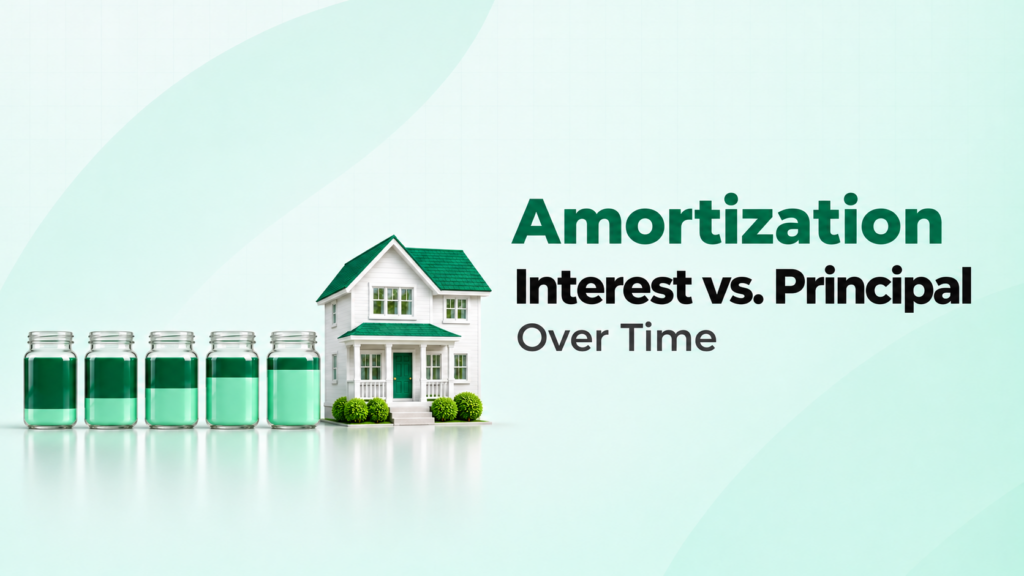
Amortization means paying off a loan little by little on a set schedule. The CFPB explains that with a typical fixed-rate loan, your combined principal and interest payment stays the same, but the split between the two changes over time.
Early on, more of each payment goes to interest, because your balance is high. As your balance goes down, more of each payment goes to principal. If you make every payment on schedule, the loan is paid off by the end of the term.
Section 04
What Is Included in a Fixed-Rate Mortgage Payment?
Principal
Principal is the part of your payment that lowers your loan balance. It is only one part of your monthly payment.
Interest
Interest is the cost of borrowing. Each month, it is figured from your interest rate and the balance you still owe.
Property Taxes
Many lenders collect property taxes as part of your payment and hold them in an escrow account. Your taxes are not fixed just because your rate is. They can rise if your home is reassessed or local tax rates change.
Homeowners Insurance
Insurance premiums can change at renewal. If your insurance is paid through escrow, the monthly amount collected can change too.
Mortgage Insurance
Some loans include mortgage insurance, such as private mortgage insurance, or PMI, on certain conventional loans. Not every fixed-rate mortgage has it.
HOA Fees and Other Housing Costs
HOA dues are usually paid separately, not as part of your mortgage payment. They are not part of principal and interest, but they still belong in your housing budget.
Section 05
Does a Fixed-Rate Mortgage Payment Stay the Same?
Principal and Interest Usually Stay the Same
On a typical fixed-rate loan that is paid down on schedule, your principal and interest payment stays the same from the first payment to the last.
Your Total Monthly Housing Payment Can Still Change
Your total payment can still go up or down. Common reasons include:
- Higher property taxes
- Higher homeowners insurance premiums
- An escrow shortage, when your escrow account does not have enough to cover the bills
- Mortgage insurance changing or ending, where that applies
- Higher HOA dues
The CFPB notes that while your principal and interest payment generally stays the same, your escrow payment can change. For example, if your home rises in value, your property taxes typically rise as well.
Section 06
What Are Common Fixed-Rate Mortgage Terms?
The term is how long you have to repay the loan. Here are the most common choices.
30-Year Fixed-Rate Mortgage
A 30-year fixed-rate mortgage spreads payments over 360 months. With the same rate and loan amount, it usually has a lower monthly principal and interest payment than a shorter loan. But if you keep it for the full term, you will pay more interest overall.
20-Year Fixed-Rate Mortgage
A 20-year loan is a middle ground. The payment is higher than on a 30-year loan, but you pay off the home sooner.
15-Year Fixed-Rate Mortgage
A 15-year loan has a higher monthly payment. In return, you pay down principal faster. You may also pay less interest overall, assuming a similar rate and that you keep the loan for the full term.
Does a Longer Loan Term Mean a Higher Interest Rate?
Not always. Your rate depends on many things, including the lender, the market, the loan program, your credit, the term, any points you pay, and the property. The CFPB notes that the loan term affects your rate, your monthly payment, and how much interest you pay overall. Compare real quotes for each term rather than assuming one will always cost more.
Section 07
How Is a Fixed-Rate Mortgage Payment Calculated?
The Main Factors
Three things drive your principal and interest payment: the loan amount, the interest rate, and the loan term.
Principal and Interest Formula
The CFPB explains that fixed-rate payments are figured with a standard formula. Here it is:
M = P × [r(1 + r)^n] ÷ [(1 + r)^n − 1]
- M = your monthly principal and interest payment
- P = the principal, or loan amount
- r = the monthly interest rate, which is the yearly rate divided by 12
- n = the total number of monthly payments, such as 360 for a 30-year loan
You do not need to do this by hand. A calculator can do the math for you.
Why the Payment Can Stay the Same While Interest Changes
Each month, interest is figured on the balance you still owe. As that balance shrinks, the interest part of your payment gets smaller. Since the total payment stays the same, the principal part grows to fill the gap. That is how the payment stays steady while the mix inside it changes.
Section 08
How to Estimate Your Fixed-Rate Mortgage Payment
What You Need to Estimate a Payment
To get a useful estimate, gather:
- The home price
- Your down payment
- The loan amount
- The interest rate
- The loan term
- Property taxes
- Homeowners insurance
- PMI, if it applies
- HOA dues, if they apply
Use the Wonder Rates Mortgage Payment Calculator
The Wonder Rates Mortgage Payment Calculator can estimate your principal, interest, taxes, insurance, PMI, and HOA dues in one place. Results are estimates, not loan offers.
Why a Calculator Is Only a Starting Point
A calculator cannot approve you for a loan. Your actual rate depends on your finances and the property, and your taxes and insurance may differ from your estimate. Underwriting also matters. Your final terms come from the actual loan process and your Loan Estimate.
Section 09
Fixed-Rate Mortgage vs. Adjustable-Rate Mortgage
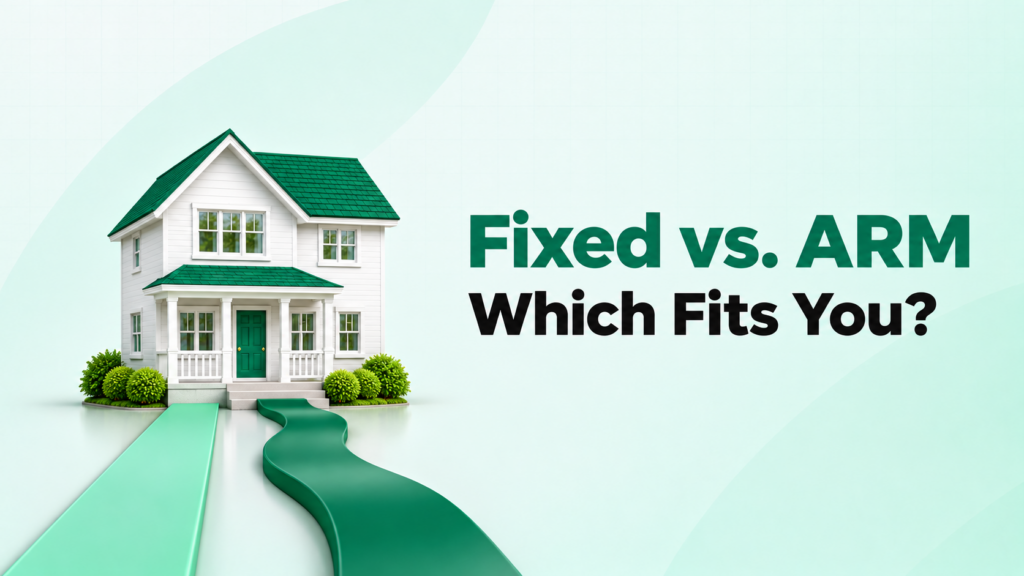
Fixed-Rate Mortgage
With a fixed-rate loan, your rate stays the same for the life of the loan. Your principal and interest payment is stable and predictable, and you are protected if rates rise later.
Adjustable-Rate Mortgage
An adjustable-rate mortgage, or ARM, usually starts with a fixed rate for a set period. After that, the rate can change on a regular schedule. According to the CFPB, many ARMs start at a lower rate than fixed-rate loans, but once the introductory period ends, the payment is likely to go up. The new rate is based on a market index plus a set margin, subject to any caps in the loan.
Fixed vs ARM Comparison Table
| Feature | Fixed-Rate Mortgage | ARM |
|---|---|---|
| Interest rate | Stays fixed under loan terms | Can adjust |
| P&I payment | Generally stable | Can change |
| Future rate risk | Lower | Higher |
| Initial rate | May be higher | Often lower |
| Long-term predictability | Higher | Lower |
| Best fit | Borrowers prioritizing predictability | Borrowers whose plans support ARM risk |
This table is a general comparison, not a recommendation for any one borrower.
Fixed-Rate Mortgage vs ARM: Which Is Better?
Neither one is better for everyone. The right choice depends on how long you plan to keep the loan and how much risk you are comfortable with. Your budget, your future plans, and whether you could handle a higher payment later matter too. Comparing the two side by side with real numbers can help.
Section 10
What Are the Advantages of a Fixed-Rate Mortgage?
Predictable Principal and Interest Payments
Your principal and interest payment stays the same, which makes it easier to plan.
Protection From Rising Mortgage Rates
If market rates go up, your rate does not follow them. Your existing loan stays at the rate you locked in.
Easier Long-Term Budgeting
A steady payment can be a big help if you plan to stay in your home a long time, your income is fairly steady, or you value stability.
Easier to Understand
With a fixed-rate loan, you do not need to track an index, a margin, adjustment dates, or rate caps. It is one rate for the whole loan.
Section 11
What Are the Disadvantages of a Fixed-Rate Mortgage?
The Initial Rate May Be Higher Than Some ARMs
Some ARMs start with a lower rate than a fixed-rate loan. Stability has a price, and sometimes it is worth paying.
You May Pay More Interest With a Longer Term
A 30-year loan keeps your payment lower, but it also means more years of interest if you keep it for the full term.
You Do Not Automatically Benefit When Market Rates Fall
If rates drop, your rate stays the same. To get a lower rate, you would usually need to refinance, which means qualifying for a new loan and paying closing costs.
Refinancing Is Not Guaranteed
You may be able to refinance later if rates and your finances make it worthwhile and you qualify for a new loan. But the CFPB warns borrowers not to assume they will be able to sell or refinance, since home values can fall and finances can change.
Section 12
When Does a Fixed-Rate Mortgage Make Sense?
You Plan to Stay in the Home for Many Years
The longer you stay, the more you benefit from a steady rate.
You Prefer Predictable Payments
If knowing your payment ahead of time gives you peace of mind, a fixed rate can help.
Your Budget Has Limited Flexibility
If a higher payment down the road would strain your budget, a fixed rate removes that risk from the loan itself.
You Do Not Want Future Rate Adjustment Risk
If you would rather not worry about rate changes, a fixed-rate loan keeps things steady.
You Want a Simpler Long-Term Mortgage Structure
A fixed-rate loan is easier to understand and track over time.
Even so, a fixed-rate mortgage is not the best choice for everyone. It depends on your goals and finances.
Section 13
When Might an ARM Be Worth Considering Instead?
You Expect to Move Before the ARM Adjustment Period
If you are fairly sure you will sell before the rate can change, an ARM’s lower starting rate may be appealing. Keep in mind that plans can change.
The Initial ARM Payment Fits Your Budget Better
A lower starting payment can help some buyers, as long as they plan for possible increases later.
You Understand and Can Manage Future Payment Risk
The CFPB suggests asking how high your rate and payment could go and whether you could still afford the loan at the maximum the contract allows.
You Are Comparing the Entire Loan, Not Just the Starting Rate
Look at the full loan, including how it adjusts, the caps, and the total costs. Do not judge an ARM by its starting rate alone.
Section 14
What Is the Difference Between a Fixed-Rate Mortgage and a Rate Lock?
These two terms get mixed up a lot.
Fixed-Rate Mortgage
A fixed-rate mortgage is a type of loan. It describes how your interest rate works for the life of the loan.
Rate Lock
A rate lock holds a quoted interest rate for a set period before closing. According to the CFPB, a rate lock means your rate will not change between the offer and closing. That holds as long as you close within the set time frame and your application does not change. Our guide on Rate Lock Explained covers how locking works.
Why They Are Not the Same Thing
| Fixed-Rate Mortgage | Rate Lock |
|---|---|
| Describes the loan’s interest-rate structure | Describes how a quoted rate is held before closing |
| Applies to the loan | Applies during the loan process |
| Rate remains fixed according to loan terms | Lock has a specific expiration period |
A rate lock protects a quote. A fixed rate protects the loan. You can even lock the rate on an ARM, which shows how different the two ideas are.
Section 15
Can You Refinance a Fixed-Rate Mortgage?
What Refinancing Means
Refinancing replaces your current mortgage with a new one. Our guide on mortgage refinancing explains the basics.
Why Someone Might Refinance
People refinance to lower their rate, change their loan term, switch loan types, or, in some cases, take cash out of their home’s equity.
What to Compare Before Refinancing
Before you refinance, compare the new rate, the closing costs, and the new loan term. Then look at the monthly payment and the total interest. Finally, check how long it would take to recover your costs and how long you expect to keep the loan.
Why Lower Rate Does Not Automatically Mean Better Loan
A lower rate is not automatically a better loan. For example, if you refinance into a new 30-year loan after several years of payments, you may lower your rate but stretch your payoff over more years. That can add interest over time, even with a lower rate.
Section 16
Example: How a Fixed-Rate Mortgage Works
Let’s walk through a made-up example.
- Home price: $500,000
- Down payment: $100,000
- Loan amount: $400,000
- Fixed rate: 6.50%
- Term: 30 years
With these numbers, the monthly principal and interest payment would be about $2,528.27. That amount stays the same for all 360 payments, and the rate stays at 6.50% under the loan terms.
What changes is the split inside the payment:
| Payment | Interest | Principal | Total P&I |
|---|---|---|---|
| 1 | $2,166.67 | $361.61 | $2,528.27 |
| 120 | $1,840.54 | $687.73 | $2,528.27 |
Now add taxes and insurance. If taxes are $500 a month and insurance is $150 a month, the total payment is about $3,178.27. If property taxes later rise to $550 a month, the total payment becomes about $3,228.27. The principal and interest part does not change, but the total payment does.
For comparison, a 15-year loan with the same amount and rate would have a principal and interest payment of about $3,484.43. Over the full term, it would charge about $227,197 in interest, compared with about $510,178 on the 30-year loan.
Disclaimer: This is a hypothetical educational illustration only. The interest rate, payment amount, property taxes, insurance, loan terms, and other figures are not a quote, offer, or guarantee of financing. Actual mortgage pricing and eligibility vary based on the borrower, property, loan program, lender, market conditions, and underwriting. In practice, 15-year and 30-year loans often have different rates.
Section 17
What Factors Affect the Interest Rate on a Fixed-Rate Mortgage?
Credit Profile
Your credit history and score can affect the rate a lender offers.
Loan-to-Value Ratio
Your loan-to-value ratio compares your loan to the home’s value. A larger down payment lowers it, which can affect pricing.
Loan Amount
Larger or smaller loans may be priced differently, especially loans above the conforming limit.
Loan Term
Different terms, such as 15 or 30 years, can come with different rates.
Loan Program
Conventional, FHA, VA, and other programs each have their own pricing.
Property Type and Occupancy
A main home, a second home, and a rental property can be priced differently. So can condos and multi-unit homes.
Market Conditions
Rates move with the broader market and the economy.
Discount Points
Paying discount points upfront can lower your rate. No single factor, such as a certain down payment, guarantees the best rate.
Section 18
Fixed-Rate Mortgage and APR: What Is the Difference?
Interest Rate
The interest rate is used to figure the interest charged on your loan.
APR
The APR, or annual percentage rate, reflects your interest rate plus certain loan costs, shown as a yearly rate. The CFPBexplains how the two differ.
Why You Should Not Compare Mortgage Offers by Rate Alone
A low rate can come with high fees. So compare the rate, the APR, points, lender fees, closing costs, the loan term, the monthly payment, and the total cost. The easiest way to do this is with official Loan Estimates. Our guide to the Loan Estimate vs. Closing Disclosure explains what can change after you apply.
Section 19
How Do You Know If You Can Afford a Fixed-Rate Mortgage?
Qualification Is Not the Same as Affordability
A lender may approve you for a certain loan amount. That does not mean it is the right amount for your household budget.
Look Beyond Principal and Interest
Add up principal and interest, property taxes, insurance, mortgage insurance, HOA dues, maintenance, utilities, and your other debts. Lenders also look at your debt-to-income ratio, which compares your monthly debts to your income.
Consider Your Future Budget
Think ahead. Plan for changes in income, emergency savings, childcare, retirement, and other goals. A payment that feels fine today should still feel manageable in a few years.
Section 20
Common Misconceptions About Fixed-Rate Mortgages
“Fixed Rate Means My Entire Payment Can Never Change”
False. The rate and principal and interest stay the same, but taxes, insurance, and other costs can change your total payment.
“A Fixed Rate Means I Cannot Refinance”
False. You can refinance a fixed-rate loan if you qualify and it makes sense for you.
“A Fixed Rate Is Always Better Than an ARM”
Not always. The right choice depends on your plans, budget, and comfort with risk.
“The Lowest Interest Rate Is Always the Cheapest Mortgage”
False. Fees, points, and the loan term all affect your total cost.
“30-Year Fixed Means I Must Keep the Loan for 30 Years”
False. The loan term is not a required ownership period. You can sell, refinance, or pay off the loan early, depending on your loan terms.
Section 21
Fixed-Rate Mortgage Checklist
Before you choose a fixed-rate loan, ask:
- What is the interest rate?
- What is the APR?
- What is the loan term?
- What is the monthly principal and interest payment?
- What is the estimated total monthly payment?
- Are taxes collected through escrow?
- Is homeowners insurance included?
- Is mortgage insurance required?
- Are there discount points?
- What are the closing costs?
- Is the rate locked?
- What happens if closing is delayed?
- How long do you expect to keep the home?
- How does the fixed option compare with an ARM?
Section 22
What to Know Before Choosing a Fixed-Rate Mortgage
A fixed-rate mortgage gives you a steady interest rate and a steady principal and interest payment for the life of the loan. That stability can make long-term budgeting easier. But it does not mean every cost of owning a home stays fixed, since taxes, insurance, and other costs can change. The best choice depends on how long you plan to stay, your budget, your comfort with risk, the loan terms, and the other options available to you. So compare the full cost of each loan, not just the advertised rate.
Section 23
Explore Your Mortgage Options
Your actual rate and payment depend on your credit, income, down payment, the property, and the loan program. Want to see how a fixed-rate mortgage could fit your purchase? You can get started with Wonder Rates and review potential loan options based on your financial profile.
If you are getting ready to buy, you can also explore home purchase options.
Section 24
Disclaimer
This article is provided for general educational and informational purposes only and does not constitute mortgage, financial, investment, tax, legal, or real estate advice. It is not a commitment to lend, an offer to lend, or a guarantee of loan approval, interest rate, APR, payment, terms, or eligibility.
Fixed-rate mortgage characteristics, interest rates, fees, down payment requirements, mortgage insurance requirements, qualifying criteria, underwriting standards, and loan program availability vary by lender, loan program, borrower qualifications, property type, occupancy, loan amount, credit profile, debt-to-income ratio, loan-to-value ratio, market conditions, and other factors. Guidelines and program requirements may change over time.
A fixed-rate mortgage generally keeps the contractual interest rate unchanged during the applicable loan term. However, the total monthly housing payment may change because of property taxes, homeowners insurance, mortgage insurance, escrow adjustments, HOA dues, or other costs. Borrowers should review their Loan Estimate and Closing Disclosure and confirm the specific terms of their loan before making a financing decision.
All numerical examples in this article are hypothetical and provided solely to explain general mortgage concepts. They are not mortgage quotes, rate offers, payment guarantees, or predictions of actual loan terms. Calculator results are estimates based on the information entered and may differ from actual loan terms and costs.
Refinancing is not guaranteed to be available or beneficial in the future. A borrower may need to meet current credit, income, asset, property, and underwriting requirements, and refinancing may involve closing costs and other expenses.
Please consult a licensed mortgage professional regarding your specific mortgage situation and appropriate tax, legal, financial, or real estate professionals regarding matters outside the scope of mortgage financing. For more information, see Wonder Rates Disclosures.
Duc Pham, Mortgage Broker | NMLS# 844897, Wonder Rates, Inc. | NMLS# 1518655 | DRE# 02047445 | DFPI# 60DBO-59134 | Equal Housing Opportunity. Equal Housing Lender. | Licensed in: AL, AZ, CA, CO, FL, GA, LA, MI, NC, OH, OK, OR, PA, SC, TX, VA, WA.