Section 01
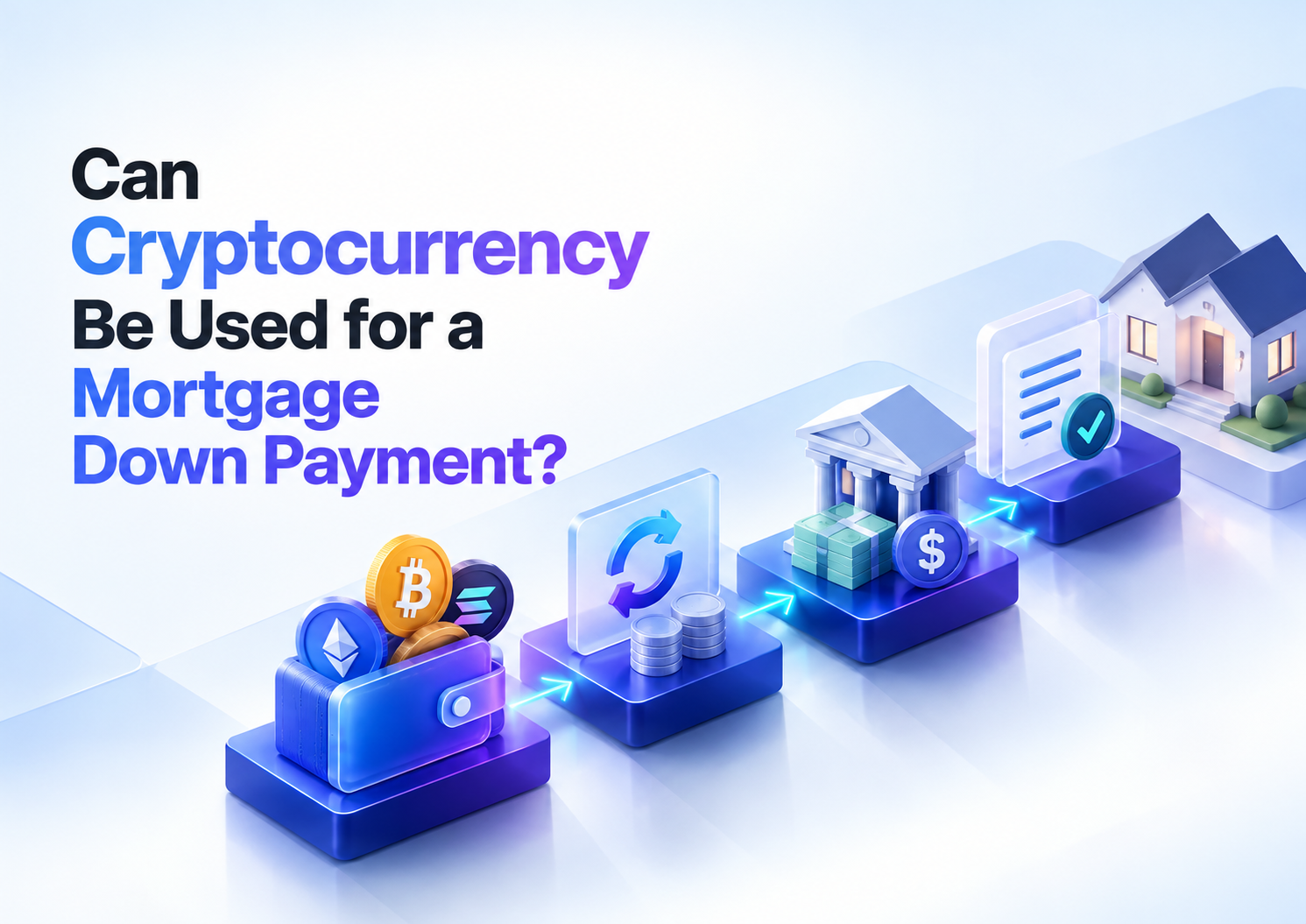
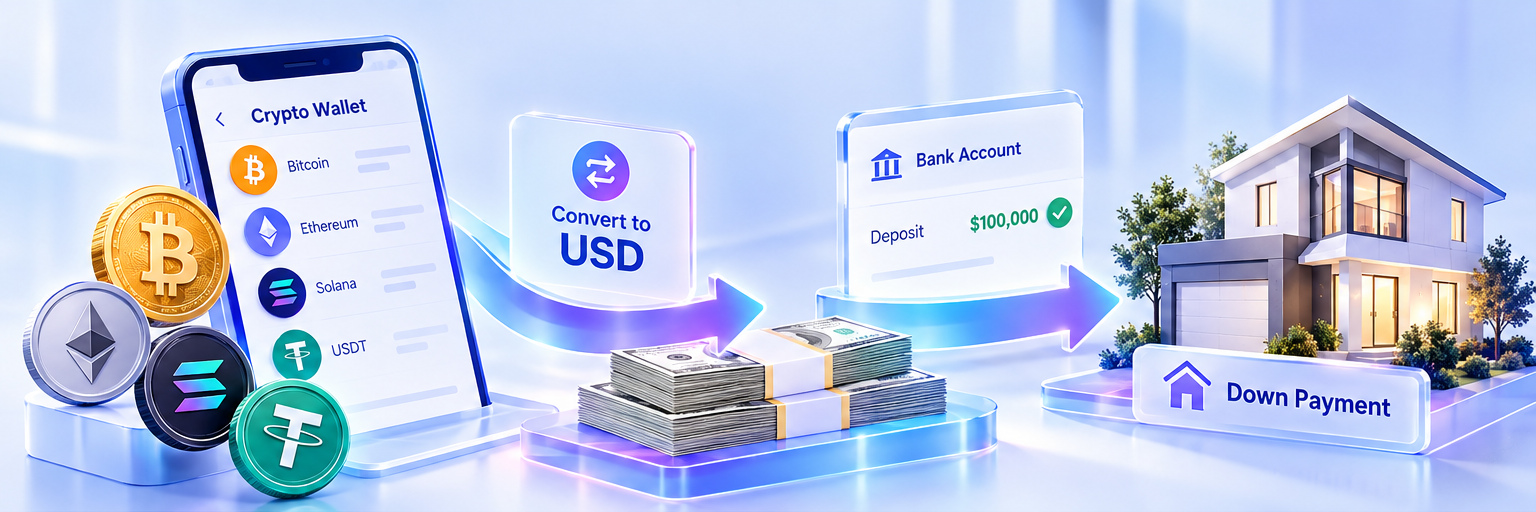
A cryptocurrency mortgage down payment may be possible only after the digital asset is converted into an acceptable form, documented, and reviewed under the selected loan program. Owning cryptocurrency does not mean a borrower can send coins directly to the closing agent or treat an exchange screenshot as verified cash.
The important questions are where the asset came from, who owns it, how it was converted, where the proceeds were deposited, and whether the complete paper trail satisfies the lender’s requirements. Borrowers should discuss the plan with their loan officer before selling or transferring cryptocurrency.
Section 02
Cryptocurrency Is Not the Same as Cash in a Bank Account
Mortgage underwriting separates the value of an asset from its eligibility for a specific purpose. A crypto account may show a substantial market value, but the lender still has to determine whether the funds can be verified and used for the down payment, closing costs, or reserves.
Fannie Mae’s official guidance on virtual currency in mortgage asset assessment explains that virtual currency generally must be exchanged into U.S. dollars before it can be considered for eligible asset purposes. Requirements can differ across programs and lenders, so this guidance should not be treated as a universal rule for every mortgage.
This distinction also applies to income. Crypto received as compensation does not automatically become qualifying income simply because it has a dollar value. Fannie Mae separately states that income paid or earned in virtual currency is not eligible qualifying income under its guidance.
Section 03
What the Lender May Need to Verify
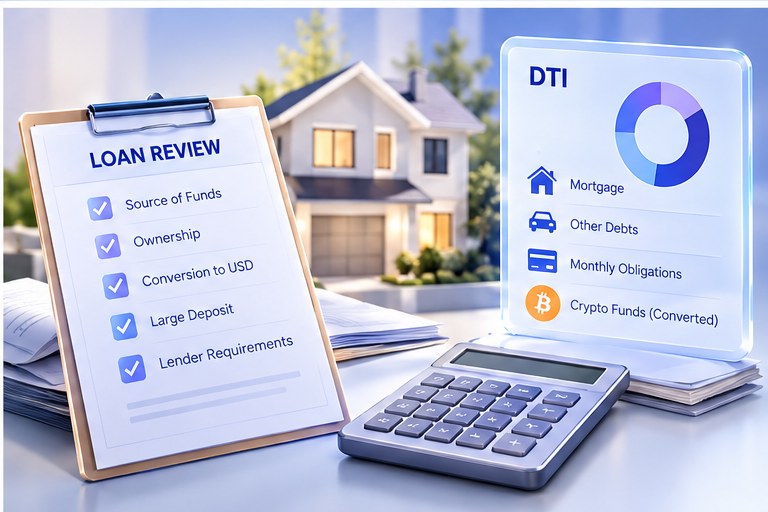
The lender may need evidence supporting several parts of the transaction:
- The borrower owns or controls the crypto account.
- The asset existed before it was sold.
- The transaction history is consistent with the amount converted.
- The sale occurred through an identifiable platform or permitted channel.
- The U.S. dollar proceeds reached an account belonging to the borrower.
- The funds were not borrowed or provided by an undisclosed third party.
- Any unusually large deposit has an acceptable explanation and paper trail.
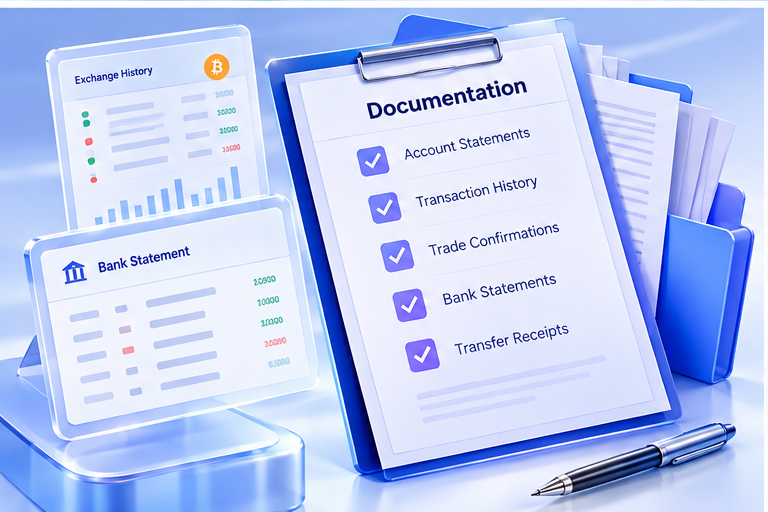
Possible records may include account statements, exchange transaction histories, trade confirmations, wallet records, transfer receipts, bank statements, and evidence matching the sender, recipient, dates, and amounts. The exact documentation depends on the loan program, lender, platform, and transaction.
Borrowers should not assume that a screenshot showing a current balance proves ownership, acquisition history, conversion, or transfer into a bank account.
Section 04
Why the Conversion Should Be Planned Before Closing
Cryptocurrency prices can change quickly. If a borrower plans to use a specific dollar amount for closing, a sudden price decline may create a shortage. Waiting until the final days before closing can also leave too little time to sell the asset, transfer the proceeds, resolve an exchange hold, explain a large deposit, or produce missing documentation.
Converting too early has tradeoffs as well. The borrower gives up future exposure to the asset and may create a taxable event. Mortgage professionals can explain documentation and loan requirements, but they should not provide tax or investment advice. A borrower considering a sale should consult an appropriately qualified tax professional about the possible consequences.
The safest operational approach is to tell the loan officer:
- Which cryptocurrency is held.
- Where and how it is stored.
- How much may be needed for closing.
- Which bank account will receive the proceeds.
- When the borrower expects to convert it.
The loan officer can then confirm the lender’s current documentation expectations before the borrower initiates the transaction.
Section 05
Large Deposits Can Create Additional Questions
When converted proceeds arrive in a checking or savings account, the deposit may be large compared with the account’s normal activity. That does not automatically make the money unacceptable, but the lender may need to connect the deposit to the cryptocurrency sale.
Wonder Rates’ guide to large deposits during mortgage underwriting explains why unexplained transfers can delay a file. The cleanest paper trail usually shows the crypto account, the sale, the transfer, and the receiving bank account without unexplained intermediate steps.
Avoid moving the same funds through several personal, business, or family accounts unless the lender has reviewed the plan. Every additional transfer can create another documentation question.
Section 06
Do Not Mix Personal and Business Funds Casually
Self-employed borrowers sometimes purchase digital assets through a business account or move proceeds between business and personal accounts. Using business funds for a personal home purchase can require additional analysis because the lender may need to determine ownership, access, and whether withdrawing the funds could affect business operations.
Before moving money from a company account, review Wonder Rates’ explanation of using business funds for a mortgage down payment. Tax, entity, and accounting questions should be addressed with qualified professionals.
Section 07
Cryptocurrency and Reserves Are Separate Questions
A borrower may have enough converted funds for the down payment but still need acceptable assets after closing. Reserves are funds remaining after the transaction that may be required or considered as part of the overall risk review.
If crypto is intended to support reserves, ask whether it must also be converted and documented before closing. Do not assume the lender will count the market value shown in a wallet or exchange account. Wonder Rates’ guide to mortgage cash reserves explains why accessible, documented funds can matter beyond the down payment.
Section 08
A Practical Documentation Timeline
Before pre-approval
Tell the loan officer that cryptocurrency is part of the asset picture. Provide enough information to determine whether the selected lender and program can consider it.
Before making an offer
Confirm how much cash the purchase may require. The Wonder Rates Down Payment Calculator can estimate down payment and closing-cost needs, but it does not determine asset eligibility or final cash to close.
Before converting the asset
Ask which statements, histories, and transfer records the lender expects. Confirm the bank account that will receive the proceeds.
After conversion
Save the trade confirmation and complete transaction history. Keep the bank statement or account activity showing the incoming deposit.
Before closing
Avoid unnecessary movement of the funds. Respond promptly if underwriting requests updated statements or clarification.
Section 09
Common Mistakes to Avoid
Selling without preserving the transaction history
An exchange may provide several reports. Download the records that show ownership, sale details, fees, dates, and transfer destination before account access changes.
Sending cryptocurrency directly to another party
Do not send cryptocurrency to a seller, real estate professional, closing agent, or another person unless the transaction has been explicitly approved through the proper legal and lending process. Standard mortgage closings generally require verified U.S. dollar funds through approved channels.
Borrowing against cryptocurrency without disclosure
A loan secured by crypto may create a repayment obligation or encumbrance. Disclose borrowed funds and new debt to the loan officer instead of assuming that the lender will see only the cash deposit.
Converting at the last minute
Exchange holds, bank reviews, transfer limits, market volatility, and documentation gaps can all affect timing.
Treating one program’s rule as universal
Conventional, government-backed, portfolio, and non-QM programs can apply different standards. Lender overlays may also affect what is accepted.
Section 10
Frequently Asked Questions
Can I use Bitcoin directly for a mortgage down payment?
Generally, the lender and closing process will require acceptable U.S. dollar funds rather than a direct cryptocurrency transfer. The conversion and documentation requirements must be confirmed for the selected program.
Does cryptocurrency count as mortgage income?
Owning cryptocurrency is not income. Compensation paid in cryptocurrency and investment gains also require separate analysis. Under Fannie Mae guidance, income paid or earned in virtual currency is not eligible qualifying income.
How long must converted cryptocurrency stay in my bank account?
There is no single answer for every loan. The lender may focus on verifying the source and complete transfer rather than applying one universal waiting period. Confirm the current requirement before moving the funds.
Will selling cryptocurrency affect my taxes?
It may. Mortgage professionals do not replace tax advisers. Consult a qualified tax professional before selling or transferring digital assets.
Section 11
The Bottom Line
A cryptocurrency mortgage down payment requires more than showing that the asset has value. The borrower may need to convert it, document ownership and the sale, trace the proceeds into an acceptable account, and preserve enough funds for closing and reserves.
If cryptocurrency is part of your purchase plan, ask Wonder Rates to review the asset documentation before you move or sell the funds.
Duc Pham, Mortgage Broker | NMLS# 844897
Wonder Rates, Inc. | NMLS# 1518655
Equal Housing Lender.
AZ, CA, CO, FL, GA, LA, MI, OK, PA, SC, TX, VA, WA, OH, AL, OR, NC
This article is for educational purposes only and is not a commitment to lend, tax advice, legal advice, or investment advice. Asset documentation and eligibility depend on the loan program, lender, transaction, and current underwriting requirements. Cryptocurrency values may fluctuate. Consult qualified professionals before making tax, legal, or investment decisions.